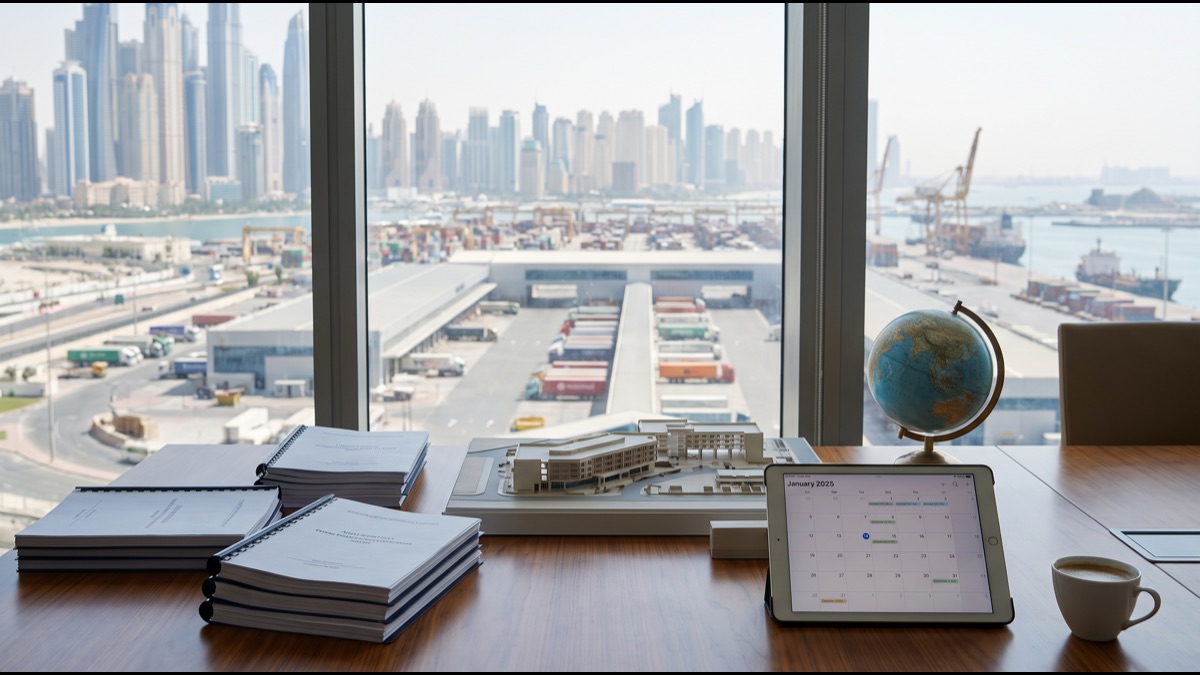
What Are Dubai Free Zones?
Dubai is home to more than 30 free zones — designated areas where businesses operate under special regulatory frameworks that differ from mainland UAE company law. These zones were created to attract foreign investment, boost economic diversification, and position Dubai as a global trade and business hub.
A free zone company allows 100 percent foreign ownership, full repatriation of profits and capital, and exemption from personal and corporate income taxes for a guaranteed period. Each free zone is governed by its own authority and tailored to specific industries, from commodities trading and finance to technology, media, and logistics.
Since the first free zone opened at Jebel Ali in 1985, the model has transformed Dubai's economy. Today, free zone companies contribute billions of dirhams to Dubai's GDP and employ hundreds of thousands of workers. For entrepreneurs, investors, and multinational corporations, understanding how Dubai free zones work is the first step toward establishing a presence in one of the world's most business-friendly cities.
Key Benefits of Dubai Free Zones
Setting up in a Dubai free zone offers advantages that are difficult to match elsewhere in the region. Here are the core benefits every prospective business owner should understand:
100 Percent Foreign Ownership
Unlike mainland companies, which historically required a local Emirati sponsor holding at least 51 percent ownership, free zone companies can be fully owned by foreign nationals. This gives investors complete control over their business decisions, profits, and strategic direction without needing a local partner.
Tax Exemptions
Free zone companies enjoy zero corporate tax on qualifying income, zero personal income tax, and no customs duties on imports and exports within the free zone. While the UAE introduced a 9 percent corporate tax on mainland profits exceeding AED 375,000 in 2023, most free zone entities that meet substance requirements continue to benefit from a 0 percent rate on qualifying income. This tax-efficient structure makes Dubai highly competitive compared to global jurisdictions.
Full Repatriation of Capital and Profits
Business owners can transfer 100 percent of their capital and profits out of the UAE without restrictions or currency controls. This is a critical advantage for international investors who need flexibility in moving funds across borders.
Simplified Customs and Logistics
Companies operating in free zones benefit from streamlined customs procedures. Goods imported into a free zone are not subject to customs duties until they enter the UAE mainland. Many free zones, particularly JAFZA and Dubai South, are strategically located next to seaports and airports, reducing logistics costs and transit times.
Dedicated Regulatory Frameworks
Each free zone has its own licensing authority, simplifying the regulatory process. Businesses deal with a single authority for licensing, visa processing, and compliance rather than navigating multiple government departments.
Types of Free Zones
Dubai's free zones are broadly categorized by industry focus. Choosing the right type depends on your business activity:
- Trading Free Zones: Designed for import, export, and distribution companies. JAFZA and DMCC are prime examples.
- Industrial Free Zones: Cater to manufacturing, assembly, and heavy industry. JAFZA and Dubai Industrial City fall into this category.
- Service, Media, and Technology Free Zones: Target consultancies, digital agencies, IT firms, and media companies. Dubai Internet City, Dubai Media City, and DTEC are popular choices.
- Financial Free Zones: Focused on banking, insurance, asset management, and fintech. DIFC is the leading financial free zone in the region.
- Logistics and Aviation Free Zones: Built around airports and ports. Dubai South and Dubai Airport Freezone serve logistics, cargo, and aviation businesses.
DMCC — Dubai Multi Commodities Centre
DMCC is one of the world's most interconnected free zones and the premier destination for commodities trading. Headquartered in the Jumeirah Lakes Towers (JLT) district, DMCC is home to over 24,000 companies spanning commodities, precious metals, diamonds, food products, and technology.
Key features:
- Full foreign ownership and 0 percent personal and corporate income tax
- World-class infrastructure with flexible office solutions from flexi-desks to premium tower offices
- Strong regulatory framework recognized by the Global Financial Centres Index
- Access to DMCC Tradeflow, a proprietary platform for secure collateral management
- Visa allocations ranging from 1 to over 100 depending on office size
Best for: Commodities traders, precious metals dealers, fintech startups, professional services firms, and businesses seeking a prestigious Dubai address.
JAFZA — Jebel Ali Free Zone Authority
JAFZA is the oldest and largest free zone in the UAE, established in 1985 adjacent to the Jebel Ali Port — the ninth-busiest container port in the world. It hosts over 9,500 companies from more than 100 countries, making it the logistics and industrial backbone of Dubai.
Key features:
- Direct access to Jebel Ali Port and Al Maktoum International Airport
- Wide range of license types: trading, industrial, service, and e-commerce
- Large warehousing and light industrial facilities available on lease
- 24/7 customs clearance and bonded logistics support
- Multi-year license packages with cost savings for long-term commitments
Best for: Manufacturing, logistics, warehousing, import-export trading, and businesses that depend on sea and air freight connectivity.
DIFC — Dubai International Financial Centre
DIFC is the leading financial hub for the Middle East, Africa, and South Asia (MEASA) region. It operates under a common law framework based on English law principles, distinct from the UAE civil law system, making it particularly attractive to international banks, law firms, and asset managers.
Key features:
- Independent regulator (Dubai Financial Services Authority) with English-language common law courts
- 0 percent tax rate on profits for 50 years, guaranteed by law
- Over 3,000 registered companies including 20 of the world's top 25 banks
- World-class commercial and residential towers in the heart of Dubai
- Strict licensing criteria ensuring only qualified financial institutions operate
Best for: Banks, insurance companies, asset managers, wealth advisors, fintech firms, law firms, and professional services serving the financial sector.
Dubai South (Dubai World Central)
Dubai South is a 145-square-kilometer master-planned city built around Al Maktoum International Airport, the world's future largest airport upon full completion. It includes the Dubai Logistics District, Aviation District, Residential District, and Commercial District.
Key features:
- Strategic location adjacent to Al Maktoum International Airport and the proposed Etihad Rail network
- Competitive license and lease rates compared to older free zones
- Focus on aviation, logistics, e-commerce, and light manufacturing
- Large land plots available for custom-built facilities
- Visa allocations tied to office and warehouse space
Best for: E-commerce fulfilment centres, aviation services, logistics providers, and businesses planning to scale operations around Dubai's future main airport.
Other Notable Free Zones
Beyond the big four, Dubai offers specialized free zones for nearly every sector:
- Dubai Internet City (DIC): The region's largest tech hub, hosting Microsoft, Oracle, Google, and thousands of startups.
- Dubai Media City (DMC): Home to BBC, CNN, Reuters, and hundreds of production companies, advertising agencies, and publishers.
- Dubai Silicon Oasis (DSO): A technology park with a focus on semiconductors, electronics, and advanced manufacturing.
- Dubai Technology Entrepreneur Centre (DTEC): One of the largest startup hubs in the MENA region, offering subsidized licenses and co-working spaces.
- Dubai Design District (d3): The creative heart of Dubai, dedicated to design, fashion, and architecture.
Free Zone Comparison Table
| Free Zone | Best For | License Cost (AED) | Visa Quota | Office Options |
|---|---|---|---|---|
| DMCC | Commodities, trading, fintech | 15,000–50,000 | 1–100+ | Flexi-desk, office, tower |
| JAFZA | Logistics, manufacturing, trade | 15,000–35,000 | 1–unlimited | Warehouse, office, land |
| DIFC | Finance, banking, legal | 25,000–75,000 | 1–unlimited | Office, retail |
| Dubai South | Aviation, logistics, e-commerce | 10,000–25,000 | 1–50+ | Office, warehouse, land |
| DIC / DMC | Technology, media | 12,000–30,000 | 1–50+ | Office, co-working |
| DSO | Tech manufacturing | 15,000–30,000 | 1–50+ | Office, light industrial |
| DTEC | Startups, tech | 7,500–15,000 | 1–10 | Co-working, office |
Step-by-Step Setup Process
Establishing a company in a Dubai free zone is straightforward if you follow the correct sequence. Here is the standard process:
Step 1: Choose Your Free Zone and Activity
Identify the business activity you plan to conduct and match it with the free zone that specializes in that sector. Each free zone publishes a list of approved activities.
Step 2: Select a Legal Structure
Most free zones offer three main structures: Free Zone Establishment (FZE) for a single shareholder, Free Zone Company (FZC) for multiple shareholders, and Branch Office for existing foreign companies.
Step 3: Reserve a Company Name
Submit your proposed trade name to the free zone authority for approval. Names must comply with UAE naming conventions and cannot include religious or political references.
Step 4: Submit Documentation
Standard documents include passport copies of shareholders, proof of address, a business plan (for some activities), and a No Objection Certificate (NOC) if the shareholder holds a UAE residence visa.
Step 5: Sign the Legal Documents
Once the application is approved, you will receive a Memorandum of Association and Articles of Association to sign. Some free zones allow digital signatures.
Step 6: Pay Fees and Receive Your License
After payment, the free zone issues your business license, incorporation certificate, and shareholder certificates. This typically takes 3 to 14 working days depending on the zone.
Step 7: Open a Corporate Bank Account
With your license and corporate documents, you can open a business bank account. Most UAE banks require the physical presence of shareholders and a minimum balance.
Step 8: Apply for Visas
Once your company is registered, apply for investor, employee, and dependent visas through the free zone authority's immigration portal.
Costs Breakdown
The total cost of setting up in a Dubai free zone depends on the zone, license type, office space, and number of visas. Here is a general breakdown:
- License Fee: AED 7,500 to AED 75,000 annually, depending on the free zone and activity.
- Office Rent: Flexi-desk packages start from AED 15,000 per year. Physical offices range from AED 25,000 to AED 200,000+ depending on size and location.
- Visa Costs: Approximately AED 3,000 to AED 5,000 per visa, including medical tests, Emirates ID, and health insurance.
- Bank Guarantee: Some zones require a refundable security deposit.
- Renewal Fees: Annual license and office renewal fees apply, often similar to the initial setup cost.
Startup-friendly zones like DTEC offer packages under AED 15,000 all-inclusive, while premium zones like DIFC can exceed AED 100,000 annually for a full-service setup.
Visa Options for Business Owners
Free zone companies can sponsor residence visas for owners, employees, and dependents. The number of visas you are entitled to depends on the size of your office space:
- Investor Visa: Valid for 2 to 3 years, renewable. Requires ownership of a free zone company.
- Employee Visa: Sponsored by the free zone company for hired staff. Valid for 2 to 3 years.
- Dependent Visa: Available for spouses and children. The sponsor must meet minimum salary requirements.
Golden Visa holders who establish a free zone company may benefit from 10-year residency without the need for repeated renewals, provided they meet the investment criteria.
FAQ
Can a foreigner own 100 percent of a Dubai free zone company?
Yes. One of the primary advantages of Dubai free zones is that they allow 100 percent foreign ownership with no requirement for a local Emirati partner or sponsor.
Do free zone companies pay corporate tax in the UAE?
Free zone companies that meet substance requirements and earn qualifying income typically benefit from a 0 percent corporate tax rate. However, companies must register for corporate tax and comply with filing requirements. Non-qualifying income or failure to meet substance rules may result in a 9 percent tax.
Can a free zone company trade directly in the UAE mainland?
Free zone companies can sell goods to the mainland through a local distributor or by establishing a mainland branch. They cannot directly engage in commercial activities within the UAE mainland without additional licensing arrangements.
What is the cheapest free zone in Dubai?
DTEC and Dubai South offer some of the most affordable startup packages, with all-inclusive costs starting around AED 7,500 to AED 15,000 annually. Costs vary based on visa count and office type.
How long does it take to set up a free zone company?
Most free zone companies can be established within 3 to 14 working days, assuming all documentation is complete. Express processing is available in some zones for an additional fee.
How many visas can a free zone company get?
Visa quotas depend on the free zone and office size. A flexi-desk may allow 1 to 3 visas, while larger offices can support 10, 50, or even unlimited visas in zones like JAFZA and DIFC.
Is it easy to open a corporate bank account?
Opening a corporate bank account in the UAE requires physical presence, corporate documents, and proof of business activity. The process typically takes 2 to 4 weeks. Banks may request additional documentation for compliance purposes.
What happens if I do not renew my free zone license?
Failure to renew your license results in fines, visa cancellation, and potential blacklisting. Free zones typically send multiple reminders before expiry. It is advisable to renew at least 30 days in advance.
Do I need a physical office in a free zone?
Most free zones require some form of office space, even if it is a flexi-desk or shared workspace. A few zones offer "virtual" packages for specific activities, but these are becoming less common due to regulatory tightening.
Can I get a UAE Golden Visa through a free zone company?
Yes. Entrepreneurs who establish a free zone company with significant investment or annual revenues may qualify for the UAE Golden Visa, which grants 10-year residency. Specific thresholds vary and should be confirmed with the free zone authority.
Sources
- DMCC — Dubai Multi Commodities Centre — Official website for company setup, licensing, and regulations
- JAFZA — Jebel Ali Free Zone Authority — Official portal for Jebel Ali Free Zone services and facilities
- DIFC — Dubai International Financial Centre — Official site for financial free zone registration and legal framework
- Dubai South — Official website for Dubai World Central free zone
- U.AE Government Portal — Official UAE government portal for business setup and corporate tax information
- UAE Ministry of Finance — Corporate tax regulations and free zone substance requirements
- DTEC — Dubai Technology Entrepreneur Centre — Startup hub licensing and visa information
About the Author
The doyouknow.app Editorial Team specializes in business formation, regulatory guides, and investment insights for the UAE, Saudi Arabia, and the wider Gulf region. We monitor policy updates from official government channels and free zone authorities to ensure our guides remain accurate and actionable.
Loved This Article?
Share it on WhatsApp → Share on WhatsApp
Get more UAE business guides in your inbox — Subscribe to our newsletter for weekly updates on Dubai business, visas, and investment opportunities.