Introduction
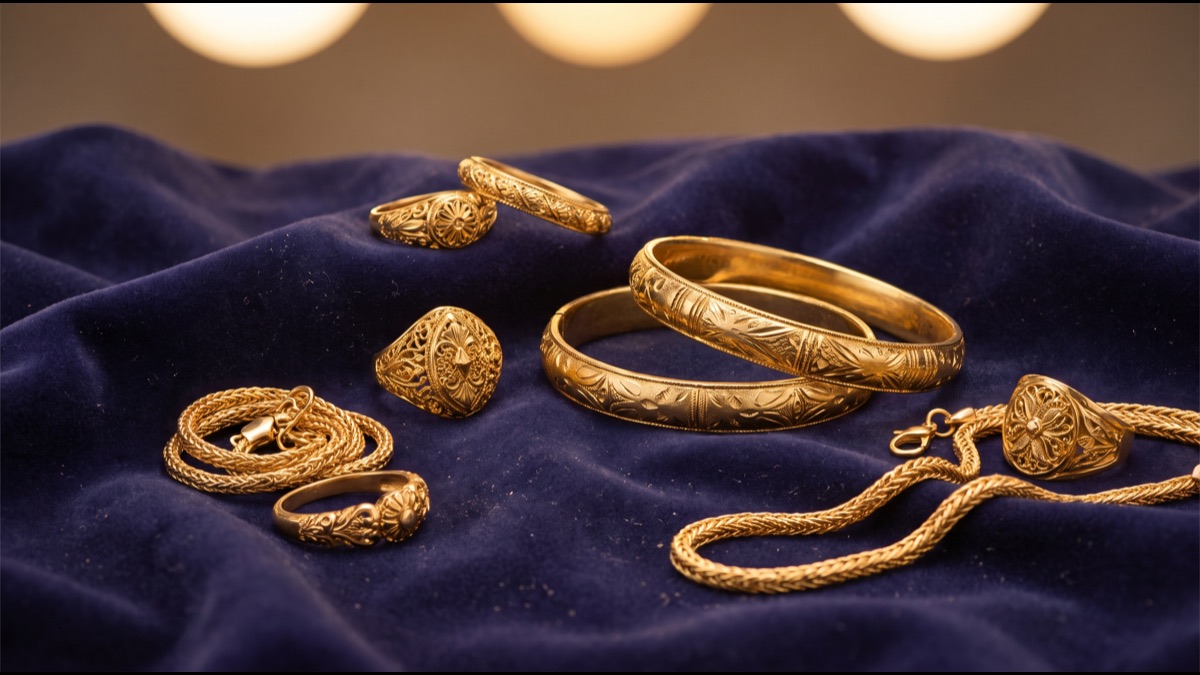
Ask an Egyptian family where their savings sit and there is a fair chance the answer includes a drawer of bangles or a few coins wrapped in tissue. Gold prices in Egypt are followed with the intensity other countries reserve for football scores, and for good reason: in an economy that has seen repeated currency devaluations and bouts of high inflation, gold has long served as the household store of value of first resort, doubling as wedding gifts, dowry components, and emergency capital.
Yet the way gold is priced in Egypt confuses many buyers. Why does the shop quote a different number from the website? What does 21-karat actually mean? And why does the price jump every time the pound wobbles? This explainer breaks down the karat system, the daily pricing formula tracked by the Gold Division of the Federation of Egyptian Chambers of Commerce, and gold's role as a hedge against the weakening pound. Prices move daily, so figures here are indicative ranges rather than live quotes.
What 24K, 21K, and 18K Actually Mean
A karat measures purity: how much of a piece is pure gold out of 24 parts. 24-karat gold is effectively pure, at 99.9 percent, and is soft, which is why it is sold mainly as bars and coins for investment rather than as jewelry meant for daily wear. 21-karat gold is 87.5 percent pure, alloyed with other metals for hardness, and it is the dominant standard in Egypt: most traditional jewelry, and most gold bought as savings, is 21K. 18-karat gold is 75 percent pure, cheaper per gram, and common in modern designs and diamond settings, while 14K appears at the budget end.
Egypt also has its own popular savings unit: the gold pound, a coin weighing 8 grams of 21-karat gold, widely given at engagements and births. Because buyers think in these units, daily price boards in Egyptian gold shops typically list the gram price for 24K, 21K, and 18K side by side, plus the gold pound price, all denominated in Egyptian pounds.
How the Daily Price Is Set
No Egyptian authority fixes gold prices; the local price is derived from two moving parts. The first is the international benchmark price of gold in US dollars per troy ounce, a unit of about 31.1 grams, tracked by bodies such as the World Gold Council. The second is the dollar exchange rate of the Egyptian pound, published by the Central Bank of Egypt. Divide the ounce price by 31.1, convert at the current exchange rate, and multiply by the karat's purity, and you have the raw gram price before any shop additions.
On top of that raw figure, jewelry carries workmanship charges, known locally as masna'eya, which cover design and crafting and vary widely by piece and retailer, plus small assay and stamping fees. This is why the number on a price board and the number on an invoice differ, and why selling old jewelry back recovers only the metal value: the workmanship you paid is not refunded. The Gold and Jewelry Division at the Federation of Egyptian Chambers of Commerce publishes indicative gram prices and market commentary that shops and platforms broadly follow, while actual retail quotes still vary from one seller to another, making comparison worthwhile.
Gold as a Hedge Against the Pound
The reason gold dominates Egyptian savings culture is visible on any long-term chart. A gram of 21-karat gold cost well under 1,000 Egyptian pounds in 2020. After the currency slid through successive devaluations, the same gram traded around 3,200 pounds in the wake of the March 2024 flotation, and by the mid-2020s it had climbed past 5,000 pounds as global gold prices also rallied to repeated record highs. A saver who held pounds in a drawer lost purchasing power at every step; a saver who held gold saw its pound price rise roughly in line with the currency's decline.
That pattern explains the reflex: whenever the pound comes under pressure or inflation accelerates, demand for gold coins and small bars spikes, sometimes creating local premiums above the international price. Gold's rival for savers' money is the banking system itself: when the central bank raised interest rates sharply, high-yield savings certificates temporarily pulled funds away from gold by offering guaranteed returns above 20 percent. Neither asset is a perfect shield, gold prices can fall as well as rise, and short-term swings are common, but across Egypt's recent economic history, gold's role as the traditional hedge against a weakening currency has only grown stronger.
Sources
- World Gold Council — Gold Prices — International benchmark gold price data used to derive local gram prices
- Central Bank of Egypt — Official exchange rates and monetary policy that drive the pound side of the formula
- Daily News Egypt — Report on how Egyptian gold prices jumped after the March 2024 pound flotation
- Ahram Online — Business — Egyptian market coverage including gold and currency developments
FAQ
What is the difference between 21K and 24K gold?
Karat measures purity out of 24 parts. 24K is about 99.9 percent pure and is sold mainly as bars and coins, while 21K is 87.5 percent pure, harder, and the standard for Egyptian jewelry and savings pieces. A gram of 24K therefore costs more than a gram of 21K by the ratio of their purity.
How is the gold price per gram calculated in Egypt?
Shops derive it from the international ounce price in dollars divided by 31.1 grams, converted at the current dollar exchange rate, then multiplied by the karat purity. Jewelry invoices add workmanship charges and small assay fees on top, which is why retail quotes differ from the raw metal price.
Why is 21-karat gold so popular in Egypt?
It balances purity with durability: 21K jewelry withstands daily wear better than soft 24K, carries most of the metal's value, and enjoys the deepest resale market in Egypt. Tradition reinforces the standard, since wedding gold, gifts, and the 8-gram gold pound coin are all conventionally 21K.
Is gold a good hedge against inflation in Egypt?
Historically, gold's pound price has risen broadly in step with Egypt's currency devaluations and inflation, preserving purchasing power for long-term holders. But prices are volatile in the short run and past performance guarantees nothing, so Egyptians typically treat gold as long-term savings rather than a quick trade.
What is a gold pound in Egypt?
Despite the name, it is a gold coin, not currency: a standard unit weighing 8 grams of 21-karat gold. Its price equals roughly eight times the 21K gram price plus a modest minting premium, and it is a popular gift and savings format.
About the Author
doyouknow.app Editorial Team — We derive our market explainers from primary sources such as the World Gold Council and the Central Bank of Egypt, and we describe fast-moving prices as indicative ranges rather than live quotes.
Loved This Article?
Share it on WhatsApp → Share on WhatsApp
Get more guides in your inbox — Subscribe to our newsletter for weekly surprising stories from Egypt, Saudi Arabia, Dubai, and beyond.