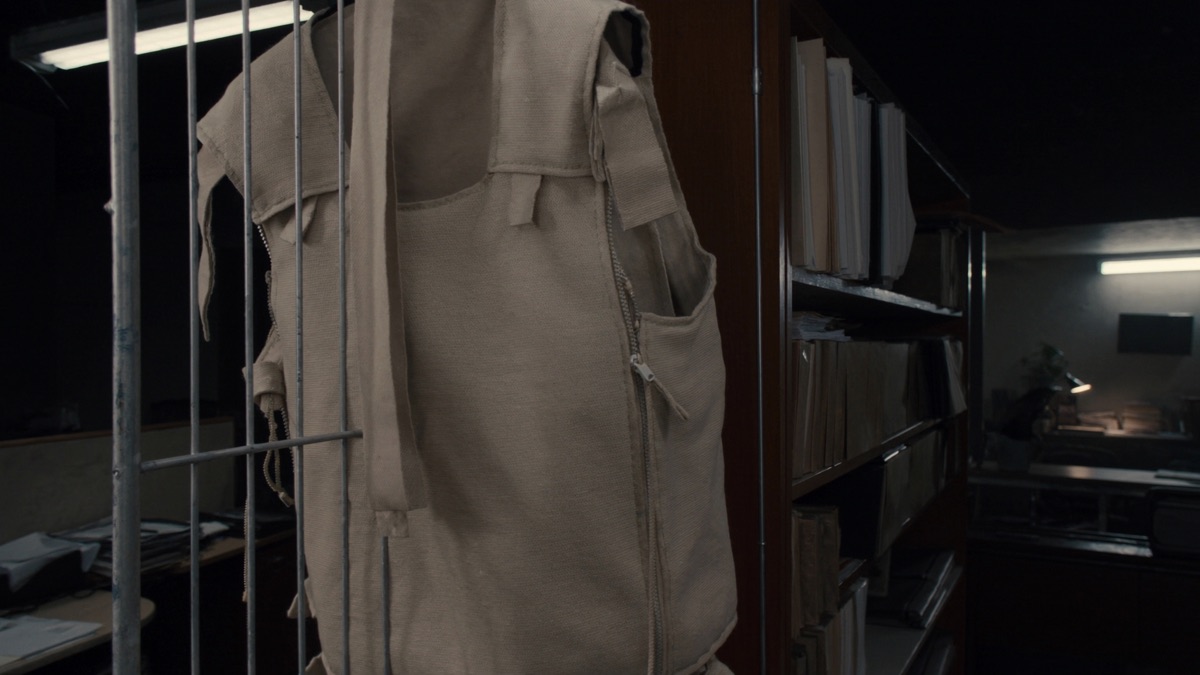
A Vest Doesn't Block a Bullet — It Catches One
A soft body-armor panel does not work like a wall or a shield stopping a projectile outright. Instead, dozens of layers of ultra-strong woven fiber act like a tightly stretched net: the bullet's pointed tip pushes into the weave, and the fibers around the impact point stretch and grab it, converting the bullet's forward momentum into tension spread across thousands of interlocking fiber strands.
As the bullet decelerates, its kinetic energy has to go somewhere, and the vest's job is to spread that energy sideways across the widest possible area of fabric rather than letting it concentrate on the small patch of skin directly behind the impact. A vest that does this well can stop a handgun round within a few centimeters of penetration, leaving the fibers deformed into a small cone-shaped dimple on the back side.
Why Aramid Fibers Like Kevlar Are So Good at This Job
Most soft armor is woven from aramid fibers — a class of synthetic polymer best known by the DuPont trade name Kevlar — chosen because the molecular chains inside each fiber are aligned almost perfectly straight and bonded by extremely strong hydrogen bonds running along the fiber's length. That alignment gives aramid an unusually high tensile strength for its weight, meaning a thin strand can absorb enormous stretching force before it finally snaps.
Ounce for ounce, aramid fiber is roughly five times stronger than steel at resisting being pulled apart, yet it remains flexible enough to be woven into cloth and worn comfortably under a shirt. That combination — steel-beating tensile strength plus textile-level flexibility — is what makes it possible to build armor that stops a fast-moving projectile without being rigid like a breastplate.
How Dozens of Fabric Layers Work Together
A single layer of aramid weave would tear through almost instantly, so vests stack anywhere from sixteen to over forty layers of fabric on top of each other, each one woven in a tight cross-hatch pattern. When a bullet strikes, the first layers absorb and slow it slightly while spreading the initial shock, and each successive layer catches a little more of the remaining energy, working together like a relay team rather than any single layer doing all the work alone.
This layered approach also protects against the bullet's tendency to deform or 'mushroom' on impact — as the tip flattens and widens slightly against the first few layers, it presents an even larger surface area to the layers behind it, which actually makes it easier for those later layers to catch and decelerate the now-blunter projectile.
What Actually Happens to the Bullet on Impact
High-speed film of a bullet striking soft armor shows the projectile does not simply stop instantly; it punches partway into the weave, stretching a cone of fibers inward behind it, then rebounds slightly as the stretched fibers snap back like an overstretched trampoline. The bullet typically ends up flattened or fragmented, embedded a few layers deep rather than lodged at the very back surface of the vest.
This is also why vests are rated to stop a specific, limited number of hits in roughly the same spot — each impact permanently damages and weakens the fibers in that localized area, so a second round striking within a few centimeters of the first has far less intact material left to catch it.
Why You Can Still Be Badly Hurt Even If the Bullet Doesn't Penetrate
Stopping penetration is only half the safety picture; the vest still has to transfer the bullet's remaining kinetic energy into the wearer's body somehow, and that energy shows up as blunt force trauma — a phenomenon officially called 'backface deformation.' The fabric behind the impact point punches inward toward the body even though it doesn't break through, and that inward push can bruise ribs, rupture blood vessels, or in severe cases cause internal organ injury.
Testing standards cap how far this inward deformation is allowed to go — typically no more than about 44 millimeters measured into a clay backing block — specifically because deformation beyond that threshold is considered survivable-but-injurious rather than genuinely safe, which is why a vest that 'stopped the bullet' can still send its wearer to the hospital with serious internal bruising.
The Difference Between Soft Armor and Hard Plates
Soft armor made purely of woven aramid or similar fiber can reliably stop most handgun rounds, but it cannot stop rifle rounds, which travel at much higher velocity and carry far more kinetic energy than the fiber weave alone can absorb. For rifle threats, wearers add rigid trauma plates — flat inserts made of ceramic, steel, or polyethylene composite — that slide into pockets on the front and back of the vest.
These hard plates work through an entirely different mechanism than soft fiber: rather than catching and spreading the bullet in a stretchy net, a ceramic plate shatters on impact, and that shattering itself absorbs a large share of the bullet's energy while also blunting and fragmenting the projectile before whatever energy remains reaches a backing layer of fiber behind the ceramic.
How NIJ Ratings Classify What a Vest Can Actually Stop
In the United States, the National Institute of Justice maintains a standardized rating system that tells buyers exactly what threat level a given piece of armor is certified against, since 'bulletproof' by itself is a meaningless marketing term with no fixed technical definition. Level IIA and Level II soft armor are rated against common handgun rounds at specified velocities, while Level IIIA soft armor extends coverage to higher-velocity handgun rounds and some submachine gun fire.
Level III and Level IV both require rigid plates rather than soft fabric alone, with Level III rated against standard rifle rounds and Level IV — the highest civilian-available rating — certified to stop a single hit from an armor-piercing rifle round. No vest is rated for every possible firearm, which is why professionals matched to a specific threat environment choose their armor level deliberately rather than assuming any vest handles any gun.
Why Vests Have an Expiration Date
Soft body armor is typically warrantied for about five years, not because the fiber itself chemically decays on a fixed schedule, but because repeated flexing, exposure to ultraviolet light, humidity, and body heat gradually degrade the fiber's molecular structure and the resin coatings that hold the weave in its optimal configuration.
Manufacturers test aged samples under accelerated environmental conditions to determine how performance degrades over time, and the five-year figure represents the point past which they can no longer guarantee the vest will meet its original certified rating, even though a well-stored vest often still offers meaningfully reduced — just no longer fully certified — protection well beyond that date.
How Wet Vests Can Actually Perform Worse
Aramid fiber's strength depends partly on strong hydrogen bonding between polymer chains, and water molecules can wedge into that structure and interfere with those bonds, which is one reason soaked vests have historically tested as somewhat weaker against penetration than dry ones in controlled comparisons.
This is a genuine operational concern for police and soldiers who sweat heavily or work in wet climates, and it has pushed manufacturers toward moisture-resistant fiber treatments and waterproof outer carriers specifically to keep the internal panels dry, since a vest's certified rating assumes dry conditions unless the product is separately rated for wet performance.
Why a Knife Can Sometimes Defeat a Bullet-Rated Vest
A vest engineered to stop a bullet is not automatically effective against a knife, because the two threats stress the fiber in fundamentally different ways: a bullet is a broad, blunt-tipped projectile that spreads force across many fibers simultaneously, while a knife's narrow, sharp edge can slip between individual fiber strands and cut through the weave with far less total force.
Stab-resistant vests use a different internal structure — often adding layers of tightly woven or laminated fabric, sometimes reinforced with metal or polymer mesh — specifically engineered to resist a blade's slicing and puncturing action, and a vest needs a separate stab-resistance certification if that is a genuine threat, since bullet resistance and stab resistance are tested and rated independently.
The World War I and II Origins of Modern Body Armor
Rudimentary body armor dates back centuries in the form of metal plate, but modern soft armor's real lineage traces to attempts during the World Wars to protect soldiers from shrapnel using layered cloth, silk, and eventually nylon — materials that could stop slower-moving fragments but were largely useless against direct rifle fire.
The real breakthrough came in 1965 when DuPont chemist Stephanie Kwolek discovered a way to process a liquid crystal polymer solution into an extraordinarily strong, stiff fiber while researching lightweight materials for a completely different purpose — reinforcing car tires — and that discovery became Kevlar, commercialized a few years later and adopted by law enforcement through the 1970s once its ballistic potential became clear.
How UHMWPE Plastic Fiber Offers a Lighter Alternative
Aramid isn't the only fiber used in modern armor; ultra-high-molecular-weight polyethylene, abbreviated UHMWPE, is a different class of super-strong synthetic that is actually lighter than aramid while offering comparable or superior tensile strength, made from extremely long polyethylene molecular chains stretched and aligned during manufacturing.
UHMWPE floats on water and resists moisture absorption far better than aramid, making it popular for maritime and wet-environment use, though it has a lower melting point and can degrade under sustained high heat in ways aramid tolerates better — so manufacturers choose between the two, or blend them, based on the specific operational environment the armor is designed for.
Why Female-Specific Vest Designs Matter for Protection
Standard unisex vest panels, when worn by someone with a different chest shape than the flat male torso they were originally sized for, can gap open at the sides or ride up, leaving unprotected zones near the armpit and side torso where vital organs and major blood vessels are still exposed.
Properly molded female-cut armor curves the panels to follow chest contours and maintains full coverage across the entire torso regardless of body shape, and the growing availability of correctly fitted armor has been an active area of improvement in law enforcement equipment, since a technically 'certified' vest that doesn't actually sit flush against the body loses much of its real-world protective value.
How Armor Is Actually Tested Before It Reaches the Street
Certification testing fires real rounds of the specified caliber and velocity at armor panels mounted over a backing material — typically modeling clay calibrated to a standardized density — and measures both whether the round penetrates and how deep the clay deforms behind the impact point, simulating the blunt trauma a human body would absorb.
Vests must pass multiple shots at various locations across the panel, sometimes after conditioning samples through heat, cold, and humidity cycles meant to simulate months or years of real-world wear, and only panels that consistently stop penetration and keep backface deformation under the threshold at every tested condition earn the certification level manufacturers can legally advertise.
Why Even Certified Armor Isn't a Guarantee
Ballistic testing establishes a statistical performance standard under controlled, repeatable conditions, but real gunfights introduce variables no lab test fully replicates — unusual bullet angles, non-standard ammunition, multiple closely spaced hits, or a round striking the very edge of a panel where coverage and layer count are reduced.
Manufacturers and safety trainers are explicit that certified armor dramatically improves survival odds rather than guaranteeing survival outright, which is why professionals who rely on body armor daily are also trained in cover, positioning, and threat avoidance as complementary — not replaceable — layers of protection alongside whatever vest they're wearing.
Sources
- Wikipedia — overview of body armor materials and mechanisms
- National Institute of Justice — official NIJ body armor threat-level standards
- Wikipedia — history and chemistry of aramid fiber
FAQ
Does a bulletproof vest actually stop every bullet?
No; each vest is certified only against specific threat levels and calibers, and no soft or hard armor is rated to stop every possible firearm and round combination.
Can you still be hurt by a bullet a vest stops?
Yes; the vest prevents penetration but still transfers blunt force energy into the body, called backface deformation, which can bruise or injure the wearer even without the round breaking through.
What is Kevlar actually made of?
Kevlar is an aramid fiber, a synthetic polymer with molecular chains aligned in near-perfect order and bonded by strong hydrogen bonds, giving it very high tensile strength for its weight.
Why do soft vests need dozens of fabric layers?
A single layer would tear through almost instantly, so many layers work together, each absorbing part of the bullet's remaining energy after the layers before it have already slowed it.
Can a soft vest stop a rifle bullet?
Generally no; rifle rounds carry far more kinetic energy than soft fiber alone can absorb, which is why rifle protection requires adding rigid ceramic, steel, or polyethylene plates.
How do hard ceramic plates actually stop bullets?
The ceramic shatters on impact, and that shattering absorbs and disperses a large share of the bullet's energy while also fragmenting the projectile before any remaining energy reaches a backing fiber layer.
What do NIJ armor levels actually mean?
They are standardized U.S. ratings specifying which handgun or rifle threats a given panel is certified to stop, since the term 'bulletproof' alone has no fixed technical definition.
Why do bulletproof vests expire after about five years?
Repeated flexing, UV exposure, humidity, and body heat gradually degrade the fiber's molecular structure, so manufacturers can no longer guarantee original certified performance past that point.
Does a wet vest actually perform worse?
Testing has shown water can interfere with the hydrogen bonds giving aramid fiber its strength, so soaked vests have measured somewhat weaker against penetration than dry ones.
Can a knife go through a bulletproof vest?
Often yes; a blade's narrow edge can slip between individual fibers rather than being caught broadly like a bullet, so bulletproof vests need a separate stab-resistance rating to reliably stop knives.
Who invented the modern bulletproof vest material?
DuPont chemist Stephanie Kwolek discovered the process for making Kevlar fiber in 1965 while researching lightweight materials originally intended for reinforcing car tires.
What is UHMWPE and how does it differ from Kevlar?
It is ultra-high-molecular-weight polyethylene, a synthetic fiber that is lighter than aramid with comparable strength and better water resistance, though a lower tolerance for sustained high heat.
Why do female-specific vest designs matter?
Standard unisex panels can gap or ride up on a differently shaped chest, leaving unprotected zones near the armpit and side torso where vital organs remain exposed.
How is bulletproof armor actually tested before sale?
Certified rounds are fired at panels mounted over calibrated clay, measuring both whether the round penetrates and how deep the clay deforms behind the impact point.
Is certified body armor a guarantee of survival?
No; certification dramatically improves survival odds under tested conditions, but real gunfights introduce variables like unusual angles or multiple close hits that no lab test fully replicates.
About the Author
We reference Wikipedia and other authoritative sources to explain the background and current understanding of this topic.
Loved This Article?
Share it on WhatsApp → Share it on WhatsApp
Get more guides in your inbox — Subscribe to our newsletter for weekly surprising stories from Egypt, Saudi Arabia, Dubai, and beyond.