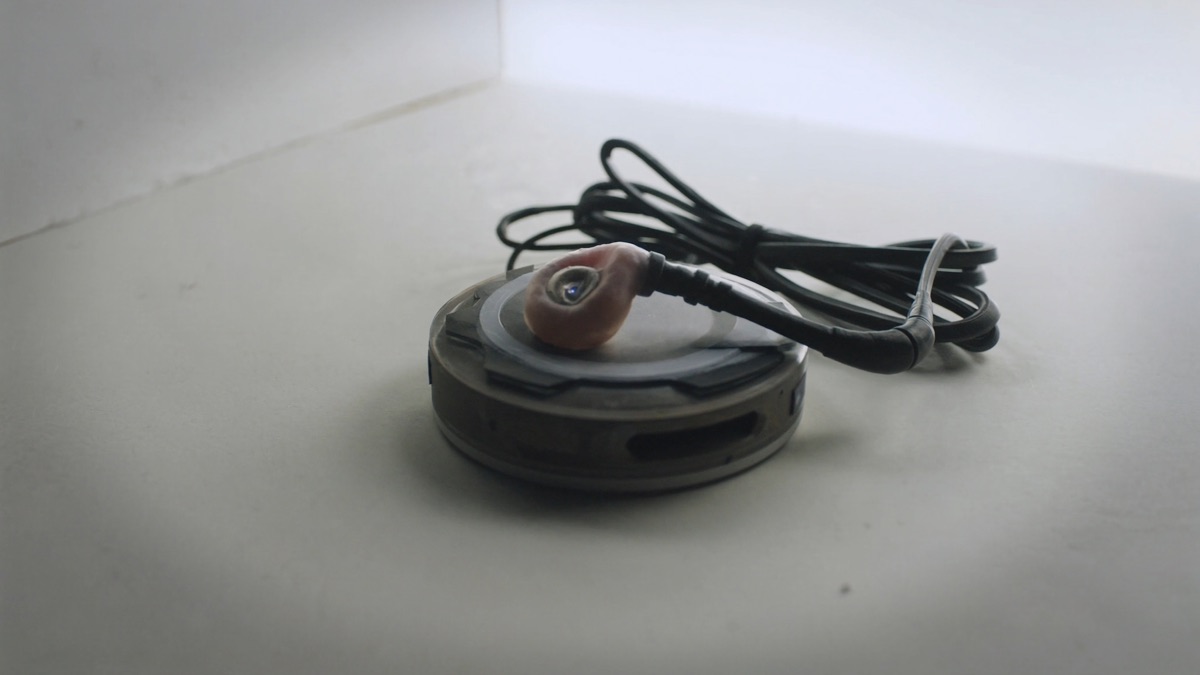
A cochlear implant does not make sounds louder the way a hearing aid does; it bypasses the damaged part of the inner ear entirely and sends electrical signals directly to the auditory nerve, which is why it can restore a meaningful sense of hearing to people whose hair cells, the tiny sound-sensing structures inside the cochlea, are too damaged for amplified sound to ever reach a functioning nerve. This distinction matters because a hearing aid is fundamentally useless once those hair cells are destroyed, no matter how loud the amplified sound becomes, since the underlying biological sound-to-signal conversion mechanism itself is what has failed.
Why a Cochlear Implant Bypasses the Ear Entirely Rather Than Amplifying Sound
The healthy human cochlea converts mechanical sound vibrations into electrical nerve signals using thousands of tiny hair cells arranged along its coiled length, each tuned to respond most strongly to a specific narrow range of sound frequencies, a natural frequency-sorting mechanism the implant has to recreate electronically instead.
Because a cochlear implant recreates this signal electronically rather than mechanically, the sound it produces is fundamentally different from natural hearing, which is why cochlear implant users typically describe an adjustment period during which the brain gradually learns to interpret the device's distinctly electronic signal as meaningful sound.
How a Cochlear Implant's External and Internal Components Work Together
A cochlear implant system consists of an external sound processor worn behind the ear that captures sound through a microphone and converts it into a digital signal, and a surgically implanted internal component containing a receiver and an electrode array threaded directly into the cochlea itself.
The external processor transmits both power and the encoded sound signal wirelessly across the scalp to the internal receiver using magnetic induction, meaning there is no physical wire or opening through the skin connecting the two halves of the system, only a magnet holding the external coil in alignment with the implanted receiver underneath.
Why the Electrode Array Is Threaded in a Specific Spiral Path
The implanted electrode array is surgically threaded into the cochlea's natural spiral shape, and its precise placement matters because the cochlea itself is naturally organized so that different physical locations along its spiral respond most strongly to different sound frequencies, a property called tonotopic organization.
By positioning individual electrodes at specific points along that spiral, the implant can stimulate the auditory nerve fibers associated with different frequency ranges at roughly the correct anatomical locations, mimicking at a coarse electronic resolution the same frequency-mapping the healthy cochlea would have performed naturally.
How Sound Processing Software Decides Which Electrodes to Stimulate
The external sound processor runs a signal processing algorithm that splits incoming sound into multiple separate frequency bands, similar to how a graphic equalizer divides audio into different frequency ranges, then assigns each band's momentary loudness to control the stimulation intensity of one specific electrode positioned at the matching tonotopic location.
This entire analysis-and-mapping process happens continuously in real time with only a small processing delay, converting an incoming stream of complex, overlapping sound frequencies into a coordinated, rapidly updating pattern of electrical pulses distributed across the full length of the implanted electrode array.
Why Cochlear Implants Cannot Perfectly Recreate Natural Hearing Resolution
A healthy human cochlea contains roughly 3,500 inner hair cells providing extremely fine-grained frequency discrimination, while even the most advanced cochlear implant typically has only somewhere between 12 and 24 physical electrodes, meaning the implant has to compress an enormous amount of natural frequency detail into a comparatively small number of stimulation channels.
This significant resolution gap is the primary reason cochlear implant hearing, while genuinely functional and capable of supporting spoken language understanding, is widely described by implant users as sounding somewhat mechanical, robotic, or less richly detailed than the natural hearing they may have previously experienced or that hearing peers experience.
How Current Spread Between Electrodes Limits Effective Channel Separation
Electrical current injected at one electrode does not stay perfectly confined to its intended target location within the cochlea; it spreads to some degree through the surrounding fluid and tissue, meaning nearby electrodes can partially stimulate overlapping populations of nerve fibers rather than each addressing a perfectly separate, isolated group.
This current spread effectively reduces how many truly independent frequency channels a given number of physical electrodes can actually deliver, which is part of why simply adding more physical electrodes to a device does not produce a proportional improvement in real-world hearing clarity beyond a certain point.
Why Learning to Interpret Implant Sound Requires Significant Brain Adaptation
The auditory cortex, the brain region responsible for interpreting sound, has to learn to associate the implant's distinctly electronic stimulation pattern with meaningful categories like specific phonemes, words, and environmental sounds, essentially learning an entirely new, artificially generated sound language rather than simply hearing amplified natural sound.
This adaptation process, often called auditory rehabilitation, typically takes months of dedicated practice and structured listening therapy to reach a comfortable level of speech understanding, and the brain's underlying neuroplasticity, its capacity to physically reorganize neural connections in response to new input, is the biological mechanism that makes this learning possible at all.
How Age at Implantation Significantly Affects Long-Term Outcomes
Children implanted at a very young age, particularly before roughly two to three years old, generally achieve substantially better spoken language outcomes than children implanted later, because the auditory cortex retains greater neuroplasticity during this critical early developmental window and is better able to build the neural pathways needed to interpret the implant's artificial sound signal as functional language.
This age sensitivity is exactly why universal newborn hearing screening programs and early cochlear implant candidacy evaluation are considered such medically important interventions, since delaying implantation past this critical developmental window can permanently limit how effectively a child's brain ever learns to process the implant's sound signal for spoken language.
Why Adults Who Lost Hearing Later in Life Often Adapt Faster
Adults who became deaf after already having developed spoken language, sometimes called post-lingually deafened adults, generally adapt to cochlear implant sound more quickly than prelingually deaf individuals implanted as adults, because their brain already possesses a fully developed framework for language processing and simply has to remap that existing framework onto the implant's different electronic sound signal.
This contrast between prelingual and post-lingual deafness illustrates a broader principle in cochlear implant outcomes: the brain's existing familiarity with the general structure and rules of spoken language matters just as much for successful adaptation as the raw technical quality of the electronic hearing signal itself.
How Bilateral Implants Restore a Degree of Directional Hearing
A person with a cochlear implant in only one ear loses much of the natural ability to localize where a sound is coming from, since sound localization depends heavily on comparing tiny differences in timing and loudness between both ears, comparisons a single implanted ear obviously cannot make on its own.
Bilateral cochlear implants, one device in each ear, restore a meaningful degree of this directional hearing capability and also measurably improve a person's ability to understand speech in noisy environments, since the brain can use input from both ears together to help separate a target voice from competing background noise.
Why Hybrid Implants Combine Electrical Stimulation With Residual Hearing
Some candidates for cochlear implantation retain some residual natural hearing at lower sound frequencies while having severe hearing loss specifically at higher frequencies, and hybrid or electro-acoustic implant systems are specifically designed to preserve and continue using that remaining natural low-frequency hearing while adding electrical stimulation only for the higher frequencies the person can no longer hear naturally.
This hybrid approach requires a specialized, shorter electrode array and particularly delicate surgical technique to avoid damaging the person's remaining natural hearing structures during implantation, since destroying that residual hearing to make room for a full-length standard electrode array would eliminate a genuinely valuable natural hearing resource the hybrid design is specifically trying to preserve.
How Cochlear Implant Surgery Actually Places the Internal Device
Cochlear implant surgery is typically performed under general anesthesia and involves making a small incision behind the ear, drilling a precise channel through the mastoid bone to reach the middle ear space, then carefully threading the flexible electrode array into the cochlea through a small opening called the round window or a nearby surgically created opening.
The internal receiver and processor unit is placed in a small recess drilled into the skull bone itself, secured in a stable position specifically so it stays properly aligned with the external processor's magnetic coil for the entire lifetime of the device, which surgeons expect to function for decades without needing replacement.
Why Cochlear Implants Carry Specific, Well-Documented Surgical Risks
Because the implanted electrode array sits extremely close to delicate inner ear structures, cochlear implant surgery carries a small but well-documented risk of permanently damaging any remaining natural hearing in that ear, along with standard general surgical risks like infection, and a small chance of temporary or permanent facial nerve weakness given the nerve's close anatomical proximity to the surgical pathway.
Surgeons mitigate these risks using intraoperative facial nerve monitoring equipment and carefully refined minimally invasive surgical techniques developed specifically over decades of accumulated cochlear implant surgery experience, which have measurably reduced complication rates compared to the procedure's earliest years.
How Cochlear Implants Can Be Deactivated for Certain Medical Procedures
Because cochlear implants contain an internal magnet and sensitive electronic components, most standard MRI scanners historically posed a meaningful risk of dislodging the internal magnet or damaging the device's electronics, requiring either temporary surgical magnet removal or specific low-field MRI protocols before scanning an implant recipient.
Newer cochlear implant models increasingly include MRI-conditional certification for use with standard hospital MRI scanners under specific defined conditions, reflecting an ongoing engineering effort to make the devices more compatible with routine medical imaging needs recipients may require for entirely unrelated health conditions over their lifetime.
Why Music Perception Remains a Persistent Challenge for Implant Users
Music places far greater demands on fine pitch discrimination than typical spoken language does, since accurately distinguishing musical notes and appreciating harmony requires substantially finer frequency resolution than the limited number of physical electrodes in a standard cochlear implant can realistically deliver.
Many cochlear implant users report that while speech understanding, particularly in quiet environments, can become quite strong after adequate adaptation, music frequently continues to sound noticeably flat, distorted, or less emotionally engaging than it did with natural hearing, an ongoing area of active engineering research and specialized rehabilitation focus.
How Auditory Brainstem Implants Serve Patients Cochlear Implants Cannot Help
Some patients, most commonly those with an absent or severely malformed auditory nerve or those who have had that nerve surgically removed along with certain tumors, cannot benefit from a standard cochlear implant at all because the device fundamentally depends on stimulating a functioning auditory nerve that simply is not present or usable in these specific cases.
For these patients, an auditory brainstem implant instead places its stimulating electrode array directly onto the cochlear nucleus in the brainstem itself, bypassing the auditory nerve pathway entirely, though this approach generally produces meaningfully less precise and less useful hearing outcomes than a standard cochlear implant achieves in patients with an intact auditory nerve.
Why Cochlear Implant Candidacy Criteria Have Expanded Significantly Over Time
Cochlear implants were originally approved and used only for adults with complete, profound hearing loss in both ears who received essentially no benefit whatsoever from powerful hearing aids, but candidacy criteria have expanded considerably over subsequent decades as outcomes data accumulated and the underlying implant technology itself steadily improved.
Current candidacy now commonly includes younger children, individuals with only partial or single-sided severe hearing loss, and people with some meaningful but clearly insufficient benefit from hearing aids, reflecting a broader medical recognition that the earlier, much more restrictive eligibility criteria were unnecessarily excluding people who could genuinely benefit from the technology.
How Genetic Causes of Deafness Influence Cochlear Implant Outcomes
Certain specific genetic causes of deafness affect primarily the hair cells while leaving the auditory nerve itself entirely healthy and intact, and these particular cases generally produce excellent cochlear implant outcomes precisely because the implant only needs to bypass the damaged hair cells and stimulate a nerve that was never actually compromised in the first place.
Other rarer genetic conditions can affect the auditory nerve itself directly, sometimes producing a specific pattern called auditory neuropathy, and these more complex cases require considerably more careful, individualized pre-surgical evaluation to determine realistically how much functional benefit a cochlear implant is actually likely to provide for that particular patient.
Why the Deaf Community Has Held Complex, Evolving Views on Implants
Some members of Deaf culture have historically expressed significant concern that cochlear implants, particularly when placed in young deaf children by hearing parents, could be used to suppress sign language development and devalue Deaf cultural identity in favor of an assumed default preference for spoken, hearing-oriented communication.
This ongoing conversation has meaningfully shaped clinical best practice recommendations, which today commonly encourage supporting both spoken language development through the implant and sign language exposure simultaneously, an approach called bilingual-bicultural education that aims to genuinely maximize a deaf child's overall communication options and long-term wellbeing rather than favoring one communication mode exclusively over the other.
Sources
- National Institute on Deafness and Other Communication Disorders — Cochlear Implants
- American Speech-Language-Hearing Association — Cochlear Implants
- Encyclopaedia Britannica — Cochlear Implant
FAQ
How is a cochlear implant fundamentally different from a hearing aid?
A hearing aid amplifies sound, while a cochlear implant bypasses damaged hair cells entirely and sends electrical signals directly to the auditory nerve, working even when hair cells are destroyed.
How do the external and internal parts of a cochlear implant communicate?
The external processor transmits power and encoded sound wirelessly across the scalp using magnetic induction, with no physical wire connecting it to the surgically implanted receiver underneath.
Why is the electrode array threaded into a spiral shape?
The cochlea is naturally organized so different spiral locations respond to different frequencies, and positioning electrodes along that spiral lets the implant roughly mimic that natural frequency mapping.
Why does cochlear implant hearing sound mechanical or robotic to many users?
A healthy cochlea has about 3,500 hair cells for fine discrimination, while implants typically have only 12 to 24 electrodes, forcing a huge compression of natural frequency detail.
What does current spread between electrodes limit?
Electrical current spreads beyond its intended electrode through surrounding fluid, so nearby electrodes stimulate overlapping nerve fibers, limiting how many truly independent channels are achievable.
Why does the brain need months to adapt to implant sound?
The auditory cortex must learn to associate the electronic stimulation pattern with meaningful sound categories, essentially learning a new artificial sound language through neuroplasticity.
Why is age at implantation so important for children?
The auditory cortex retains greater neuroplasticity before roughly age two to three, making it far better able to build the neural pathways needed to interpret the implant signal as language.
Why do post-lingually deafened adults often adapt to implants faster?
Their brain already has a fully developed language processing framework and only needs to remap it onto the implant's different electronic signal, unlike someone with no prior spoken language experience.
What do bilateral cochlear implants restore that a single implant cannot?
They restore a meaningful degree of directional sound localization and improve speech understanding in noise, since the brain can compare timing and loudness differences between both ears.
What is a hybrid or electro-acoustic cochlear implant?
It preserves a person's remaining natural low-frequency hearing while adding electrical stimulation only for higher frequencies they can no longer hear, using a shorter specialized electrode array.
What are the main surgical risks of cochlear implantation?
A small but documented risk of losing any remaining natural hearing in that ear, standard infection risk, and a small chance of temporary or permanent facial nerve weakness.
Can someone with a cochlear implant get an MRI scan?
Historically it posed real risk of dislodging the internal magnet, but newer implant models increasingly carry MRI-conditional certification for use under specific defined scanning conditions.
Why does music often sound worse than speech to implant users?
Music requires much finer pitch discrimination than typical speech, demanding frequency resolution beyond what a limited number of physical electrodes can realistically deliver.
Who needs an auditory brainstem implant instead of a cochlear implant?
Patients with an absent or severely malformed auditory nerve, since a cochlear implant depends on stimulating a functioning nerve that simply is not usable in these specific cases.
How has cochlear implant candidacy changed over the decades?
It expanded from only adults with complete profound bilateral deafness to now commonly include young children, partial or single-sided hearing loss, and people with some but insufficient hearing aid benefit.
Why do genetic causes of deafness affect implant outcomes differently?
Conditions affecting only hair cells while leaving the auditory nerve intact generally produce excellent outcomes, while conditions affecting the nerve itself require more careful individualized evaluation.
What concerns has the Deaf community raised about cochlear implants?
Concern that implants in young deaf children could suppress sign language development, leading many clinics to now encourage combined spoken and sign language exposure simultaneously.
About the Author
We reference Wikipedia and other authoritative sources to explain the background and current understanding of this topic.
Loved This Article?
Share it on WhatsApp → Share it on WhatsApp
Get more guides in your inbox — Subscribe to our newsletter for weekly surprising stories from Egypt, Saudi Arabia, Dubai, and beyond.