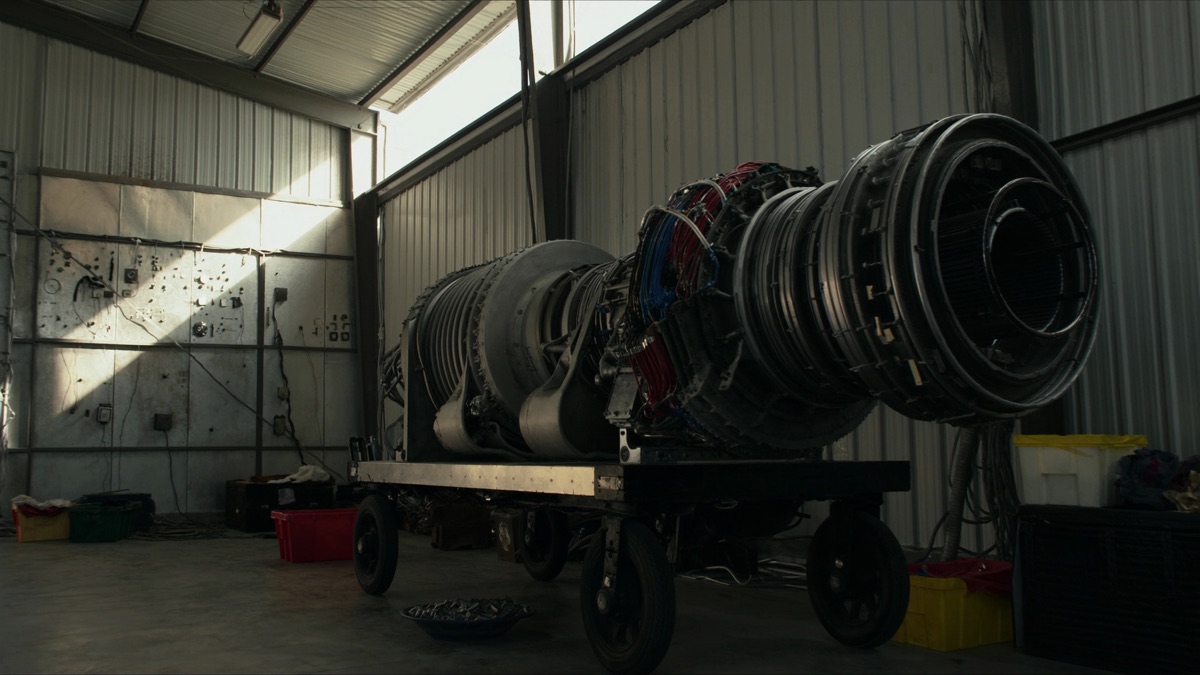
A jet engine produces forward thrust by accelerating a mass of air rearward at high speed, and by Newton's third law, that backward push generates an equal and opposite forward force on the aircraft. Every step inside the engine — sucking in air, squeezing it, igniting fuel, and expelling hot exhaust — exists purely to accelerate that air as violently and efficiently as possible.
The Four Basic Stages Every Jet Engine Repeats
Nearly every jet engine, regardless of size or design, cycles continuously through the same four stages: intake, compression, combustion, and exhaust. Air enters the front, gets squeezed into a smaller space, has fuel burned inside it to expand rapidly, and then blasts out the back at far higher speed than it entered.
This continuous cycle, unlike the intermittent strokes of a piston car engine, runs simultaneously and constantly at every point along the engine's length, which is part of why jet engines can sustain enormous, steady thrust for hours of continuous flight without the vibration and complexity of thousands of reciprocating parts.
How the Compressor Actually Squeezes Incoming Air
Just behind the intake, rows of angled spinning blades called the compressor progressively squeeze incoming air into an increasingly smaller space, raising both its pressure and temperature dramatically before it ever reaches the combustion chamber. Modern engines often use ten or more compressor stages stacked in sequence to achieve this.
Compressing the air first matters enormously because burning fuel in already-compressed, dense air releases far more usable energy per second than burning it in the thin air the engine originally took in, which is the same basic principle that makes turbocharged car engines more powerful than naturally aspirated ones.
What Actually Happens Inside the Combustion Chamber
Inside the combustion chamber, fuel is continuously sprayed into the highly compressed air and ignited, creating a sustained, controlled flame rather than a series of separate explosions. The burning mixture expands violently as its temperature spikes past a thousand degrees Celsius, dramatically increasing the volume and velocity of the gas passing through.
Engineers must carefully manage this process so the flame stays stable and centered rather than blowing out or damaging engine components, using precisely shaped fuel nozzles and cooling air channels that keep the surrounding metal from melting even though the gas passing through can be hotter than the metal's melting point.
How the Turbine Extracts Energy to Power the Compressor
After combustion, the racing hot gas passes through a turbine, another set of angled blades, but this time the gas spins the blades rather than the blades compressing the gas. That spinning turbine sits on the same shaft as the compressor at the front, so the turbine's rotation directly powers the compressor, keeping the whole cycle running continuously.
This is one of the most elegant aspects of jet engine design: the engine essentially powers its own intake stage using a fraction of the energy generated by its own combustion, an efficient closed loop that only needs external fuel input rather than a separate mechanism to drive the compressor.
Why the Exhaust Nozzle Shape Matters So Much
After passing through the turbine, the remaining hot gas — still carrying enormous energy — is funneled through a carefully shaped exhaust nozzle that accelerates it to its final, highest velocity before it leaves the engine. The nozzle's narrowing or widening shape directly controls how much that final exhaust speed increases.
Because thrust depends on how fast the exhaust exits relative to how fast air entered, engineers spend enormous effort optimizing nozzle geometry, and some military aircraft use nozzles that can physically change shape in flight to optimize thrust differently for subsonic cruising versus supersonic acceleration.
How a Turbofan Engine Differs From a Pure Turbojet
Almost every commercial airliner today uses a turbofan engine, which adds a large front fan that pushes most of its air around the hot engine core rather than through it, creating a cooler, slower-moving bypass airstream alongside the traditional jet exhaust. This design contrasts with older pure turbojets, which push all their air through the core.
The bypass air contributes the majority of a modern turbofan's total thrust while burning far less fuel per unit of thrust than the hot core exhaust alone would, which is why turbofans dramatically improved fuel efficiency and reduced noise compared to the pure turbojets that powered early commercial jets.
Why Jet Fuel Is Specifically Formulated the Way It Is
Jet fuel is a carefully refined kerosene blend chosen because it packs a high amount of energy per unit of weight, remains stable and does not freeze at the extremely cold temperatures found at cruising altitude, and resists forming vapor bubbles at low atmospheric pressure that could disrupt fuel flow to the engine.
Additives control the fuel's freezing point, prevent microbial growth in fuel tanks, dissipate static electricity that could otherwise spark during refueling, and stop ice crystals from clogging fuel filters, since a fuel system failure at cruising altitude is far more consequential than a similar failure in a car on the ground.
How Engine Blades Survive Temperatures Hotter Than Their Melting Point
Turbine blades directly downstream of combustion routinely face gas temperatures that exceed the melting point of the metal alloys they are made from, a seemingly impossible engineering challenge solved through a combination of exotic heat-resistant superalloys, ceramic thermal coatings, and internal cooling channels that pump relatively cooler compressor air through the blade itself.
Tiny laser-drilled holes across a blade's surface let this cooling air form a thin protective film over the blade's exterior, shielding it from the direct blast of combustion gas, a technique called film cooling that lets modern jet engines run combustion temperatures far hotter than the blade metal could survive unprotected.
Why Bird Strikes Are So Dangerous to Jet Engines
A bird sucked into a jet engine's intake can cause catastrophic damage because the fan blades are spinning at extremely high speed when the impact occurs, meaning the effective collision force is far greater than the bird's own weight and speed would suggest, sometimes bending or shattering multiple blades instantly.
Engine manufacturers are required to prove their designs can survive certain bird-strike scenarios during certification testing, literally firing dead birds from a cannon into a running engine, and modern engines are engineered so that even a damaged fan can be safely shut down without the debris breaching the engine casing and endangering the aircraft.
How Afterburners Give Military Jets a Sudden Thrust Boost
Some military jet engines include an afterburner, a section behind the turbine where additional fuel is injected and ignited in the still-oxygen-rich exhaust gas, creating a second combustion event that dramatically boosts thrust for short bursts, such as takeoff or high-speed maneuvers, at the cost of drastically higher fuel consumption.
Because afterburners burn through fuel so quickly, they are used sparingly and typically only for brief periods rather than sustained flight, and the visible long flame often seen behind fighter jets during takeoff or in dramatic footage is the afterburner in action, distinct from the normal, largely invisible engine exhaust.
How Engineers Test a Jet Engine Before It Ever Flies
Before certification, a new jet engine design undergoes thousands of hours of ground testing in massive test cells, running continuously at full power for extended periods while sensors monitor every component's temperature, vibration, and stress, deliberately pushing the engine toward failure points to establish safe operating margins.
Engines are also tested for extreme scenarios rarely encountered in normal operation, including ingesting water to simulate flying through heavy rain, ingesting ice, and continuing to run safely after a single fan blade is deliberately released mid-test, ensuring the surrounding casing can contain the resulting debris.
Why Jet Engines Get Quieter With Each New Generation
Engine noise comes mainly from the turbulent mixing of fast-moving hot exhaust with the surrounding slower air, so each generation of turbofan engines has grown larger in diameter with a bigger front fan and a higher bypass ratio, deliberately slowing the average exhaust speed for a given amount of thrust to reduce noise.
Serrated, scalloped nozzle edges called chevrons, visible on many modern engine exhausts, further smooth the mixing between fast core exhaust and slower bypass air, reducing the turbulent noise generation without sacrificing thrust, a refinement driven largely by increasingly strict airport noise regulations near residential areas.
How a Jet Engine Restarts in Midair After Flameout
A jet engine can occasionally flame out, meaning combustion stops, due to severe turbulence, heavy rain or hail ingestion, or fuel supply disruption, but pilots are trained to restart it using the aircraft's forward airspeed to keep the compressor and turbine spinning, a process called windmilling, while igniters relight the fuel-air mixture.
Modern airliners carry backup ignition systems and detailed relight procedures specific to different altitudes and speeds, and twin-engine aircraft are certified to fly safely on a single engine for extended periods specifically so a flameout in one engine, however alarming, does not immediately endanger the flight.
Why Rocket Engines Work Differently From Jet Engines
A jet engine draws in atmospheric oxygen to burn its fuel, which means it cannot function above the atmosphere or at all in the vacuum of space, while a rocket engine carries its own oxidizer onboard alongside its fuel, letting it burn and generate thrust regardless of surrounding air.
This fundamental difference is why airliners use efficient jet engines that only need to carry fuel, while spacecraft must carry the much heavier combination of fuel plus oxidizer, one of the core reasons rockets require such enormous total mass just to reach orbit compared to the relatively modest fuel load of a jet aircraft.
How Much Thrust a Modern Jet Engine Actually Produces
The largest commercial turbofan engines flying today can produce over five hundred thousand newtons of thrust from a single engine, enough force to accelerate a loaded jumbo jet down the runway, while a typical automobile engine produces only a few thousand newtons of comparable propulsive force at most.
This scale difference reflects not just engine size but the sheer mass of air a large modern turbofan can process every second, often several hundred kilograms, since thrust ultimately comes from how much air mass the engine accelerates and by how much it increases that air's velocity.
How Maintenance Crews Inspect Jet Engines Between Flights
Airline maintenance crews use a specialized flexible camera called a borescope to inspect the inside of a running or shut-down engine through small access ports, checking turbine and compressor blades for cracks, erosion, or foreign object damage without ever having to disassemble the engine itself.
Engines also undergo scheduled deep overhauls at set flight-hour intervals, during which they are fully removed from the aircraft, disassembled down to individual components, inspected with techniques including ultrasonic and magnetic particle testing, and rebuilt with replacement parts as needed before being certified airworthy again.
Why Jet Engines Are Started Using Compressed Air or a Small Turbine
A jet engine cannot start itself from a complete stop the way it runs once airborne, because the compressor needs to already be spinning fast enough to build meaningful pressure before combustion can sustain itself. Ground crews and onboard systems solve this using a starter, often a small pneumatic motor driven by compressed air or an auxiliary power unit.
This starter motor spins the main compressor shaft up to an initial speed, at which point fuel is introduced and ignited, and once combustion becomes self-sustaining the starter disengages entirely, leaving the engine's own turbine to keep the compressor spinning for the remainder of the flight without any further external assistance.
How Engine Placement on the Wing Affects Aircraft Design
Most commercial airliners mount their engines in pods suspended below and slightly forward of the wing, a position chosen because it keeps the heavy engine mass close to the wing's structural strength, dampens wing flutter, and places the engine intake away from ground debris and away from the fuselage in case of an uncontained failure.
Some aircraft instead mount engines at the rear of the fuselage, which reduces cabin noise and allows a cleaner, more aerodynamically efficient wing, but at the cost of a more complex rear structure and a center of gravity that shifts more dramatically as fuel burns off during a long flight.
Why Fuel Efficiency Improvements Matter So Much to Airlines
Fuel typically represents one of the largest single operating costs for an airline, often rivaling labor costs, so even a small percentage improvement in engine fuel efficiency translates into enormous savings across a fleet flying millions of hours per year, which is why airlines and manufacturers invest heavily in incremental engine redesigns.
Improvements come from many small sources combined: higher bypass ratios, lighter composite fan blades, more efficient compressor aerodynamics, and advanced engine control software that continuously adjusts fuel flow and blade angles for the most efficient setting at any given altitude, speed, and outside temperature.
How Jet Engine Design Has Changed Since the First Jet Aircraft
The earliest operational jet engines, developed independently in Germany and Britain in the late 1930s and early 1940s, were simple turbojets producing modest thrust with poor fuel efficiency and short operational lifespans, requiring frequent overhauls after only a few dozen hours of running time.
Today's engines run for tens of thousands of hours between major overhauls, produce many times more thrust per unit of weight, and burn dramatically less fuel per unit of thrust, improvements built from decades of incremental advances in materials science, computational aerodynamics, and manufacturing precision rather than any single breakthrough.
Sources
- Wikipedia — jet engine design and operating principles
- NASA Glenn Research Center — aerodynamics and propulsion education resources
- Wikipedia — turbofan design and bypass ratio
FAQ
What physical law explains how a jet engine produces thrust?
Newton's third law: the engine accelerates air backward at high speed, and that action produces an equal, opposite forward force on the aircraft.
What are the four main stages inside a jet engine?
Intake, compression, combustion, and exhaust, which run continuously and simultaneously rather than in separate strokes like a piston engine.
Why is air compressed before fuel is burned in it?
Burning fuel in already-compressed, dense air releases far more usable energy per second than burning it in the thin air the engine originally drew in.
How does the turbine power the compressor without a separate motor?
The turbine and compressor sit on the same rotating shaft, so hot exhaust gas spinning the turbine directly drives the compressor at the front.
What is the main difference between a turbofan and a turbojet?
A turbofan pushes most of its air around the hot core through a bypass fan, while a turbojet pushes all of its air through the core, making turbofans quieter and more fuel-efficient.
Why is jet fuel formulated differently from regular gasoline?
It must remain stable at extremely cold cruising-altitude temperatures, resist vapor bubble formation at low pressure, and pack high energy per unit of weight.
How do turbine blades survive gas hotter than their own melting point?
Heat-resistant superalloys, ceramic coatings, and internal cooling channels pump cooler air through the blade, forming a protective film over its surface.
Why are bird strikes so dangerous to jet engines?
Fan blades spin at extremely high speed, so the effective collision force from a bird impact is far greater than the bird's own weight and speed suggest.
What does an afterburner actually do?
It injects and ignites additional fuel in the still-oxygen-rich exhaust behind the turbine, boosting thrust dramatically for short bursts at much higher fuel cost.
Why have jet engines gotten quieter over time?
Larger fans with higher bypass ratios slow the average exhaust speed for a given thrust, and serrated chevron nozzles smooth the turbulent mixing that causes noise.
Can a jet engine restart in midair after it stops?
Yes; pilots use the aircraft's forward airspeed to keep the compressor and turbine spinning, a process called windmilling, while igniters relight the fuel-air mixture.
Why can't a jet engine work in space?
It relies on atmospheric oxygen to burn its fuel, while a rocket engine carries its own oxidizer onboard, letting it function in the vacuum of space.
How much thrust can a large modern jet engine produce?
The largest commercial turbofans can exceed five hundred thousand newtons of thrust from a single engine, far more than a typical car engine's propulsive force.
How do mechanics inspect inside a jet engine without taking it apart?
They use a flexible camera called a borescope, inserted through small access ports, to check turbine and compressor blades for damage.
How is a jet engine actually started from a complete stop?
A pneumatic starter motor, driven by compressed air or an auxiliary power unit, spins the compressor up to speed before fuel is introduced and ignited, then disengages.
Why do most airliners mount engines under the wing rather than the fuselage?
Underwing mounting keeps the heavy engine close to the wing's structural strength, dampens flutter, and positions the intake away from the fuselage in case of failure.
Why does fuel efficiency matter so much to airlines specifically?
Fuel is often one of an airline's single largest operating costs, rivaling labor, so even small efficiency gains save enormous amounts across a fleet flying millions of hours yearly.
About the Author
We reference Wikipedia and other authoritative sources to explain the background and current understanding of this topic.
Loved This Article?
Share it on WhatsApp → Share it on WhatsApp
Get more guides in your inbox — Subscribe to our newsletter for weekly surprising stories from Egypt, Saudi Arabia, Dubai, and beyond.