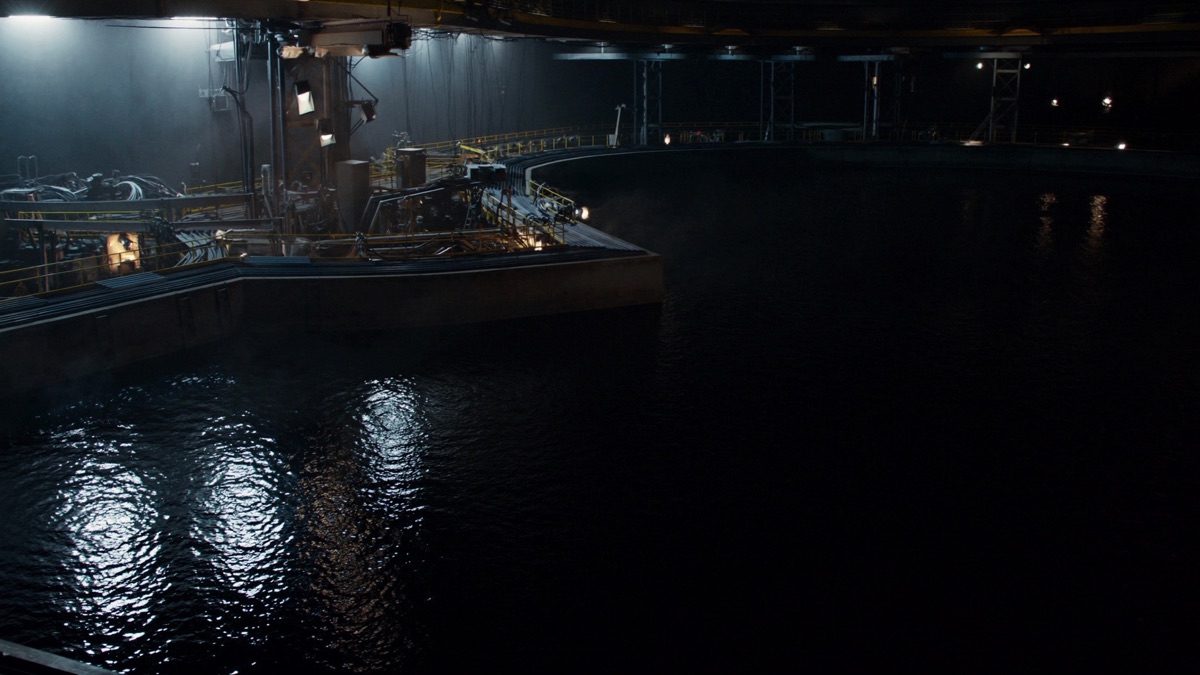
A nuclear reactor generates electricity the same fundamental way a coal plant does: by boiling water into high-pressure steam that spins a turbine connected to a generator. The only real difference is the heat source — instead of burning fuel, a reactor splits the nuclei of uranium atoms in a controlled chain reaction, releasing an enormous amount of heat from a tiny amount of fuel, and every safety system in the plant exists to keep that chain reaction from running away.
What Nuclear Fission Actually Is
Nuclear fission is the splitting of a heavy atomic nucleus, typically uranium-235, into two lighter nuclei after it absorbs a stray neutron. This split releases a burst of energy along with two or three new neutrons, plus a small amount of the original mass converted directly into energy according to Einstein's famous equation relating mass and energy.
The energy released per fission event is minuscule on a human scale, but a single gram of uranium-235 undergoing complete fission releases roughly as much energy as burning three tons of coal, which is why nuclear fuel can power a city for years from a volume of material that would fit in a small room.
How a Chain Reaction Actually Sustains Itself
Each fission event releases two or three neutrons, and if at least one of those neutrons goes on to split another uranium nucleus, the reaction becomes self-sustaining — this is called a chain reaction. In a reactor operating normally, engineers tune conditions so exactly one neutron from each fission triggers exactly one more fission, keeping the reaction rate perfectly steady rather than accelerating.
This delicate balance is called criticality. A reactor held at exactly this balance is described as critical, and it is the normal, safe, steady-state operating condition — not a warning sign, despite the word's alarming connotation in everyday English. Deliberately falling below that balance shuts the reaction down; exceeding it would make the reaction grow, which is precisely what control systems are designed to prevent.
Why Control Rods Are the Reactor's Main Throttle
Control rods are made of neutron-absorbing materials like boron or cadmium, and they slide into and out of the reactor core to directly regulate the chain reaction. Inserting them deeper absorbs more neutrons before they can trigger further fissions, slowing the reaction; withdrawing them lets more neutrons through, speeding it up.
In an emergency, reactors are designed to automatically and rapidly insert all control rods fully into the core within seconds, a maneuver called a scram, which absorbs enough neutrons to halt the chain reaction almost immediately. This system is deliberately built to work even if all electrical power to the plant fails, often relying on gravity alone to drop the rods into place.
How a Moderator Actually Slows Neutrons Down
Neutrons released by fission travel extremely fast, but fast neutrons are actually poor at triggering further fission in uranium-235 — slow neutrons are far more effective. A moderator, usually ordinary water or, in some designs, graphite or heavy water, surrounds the fuel and repeatedly collides with neutrons, sapping their speed without absorbing them outright.
This is why most commercial reactors use water as both moderator and coolant simultaneously: it slows neutrons to the speed most likely to sustain the chain reaction while also carrying heat away from the fuel. If the water were to boil away or drain out entirely, the chain reaction in this design would actually slow or stop, since fast neutrons without a moderator are far less effective at continuing fission.
How the Heat Actually Becomes Steam and Then Electricity
Water circulating through the reactor core absorbs the intense heat released by fission and carries it out to a steam generator or, in some designs, boils directly into steam within the reactor vessel itself. That high-pressure steam is piped to a conventional turbine, where it expands and pushes against angled blades, spinning a shaft at high speed.
That spinning shaft is connected directly to an electrical generator, which uses the same electromagnetic induction principle as a bicycle dynamo, just at an industrial scale: rotating magnets inside coils of wire induce an electric current. After passing through the turbine, the now-cooler, lower-pressure steam is condensed back into liquid water and pumped back to absorb more heat, completing a closed loop.
Why Reactor Fuel Is Enriched Before Use
Natural uranium ore contains mostly uranium-238, which does not sustain a chain reaction easily, mixed with less than one percent of the fissile isotope uranium-235. Most commercial power reactors require the concentration of uranium-235 to be raised to somewhere between three and five percent, a process called enrichment, to sustain a stable chain reaction with ordinary water as a moderator.
Enrichment typically works by converting uranium into a gas and spinning it in high-speed centrifuges, which slightly separate the marginally lighter uranium-235 atoms from the heavier uranium-238 atoms based on their tiny mass difference. This is a slow, energy-intensive, and tightly regulated process, since uranium enriched to much higher levels can be used for weapons rather than power generation.
How Fuel Rods and Assemblies Are Actually Arranged
Reactor fuel is formed into small ceramic pellets of enriched uranium dioxide, each roughly the size of a fingertip, stacked inside long metal tubes called fuel rods, typically made of a zirconium alloy chosen for its ability to withstand heat and radiation while barely absorbing neutrons. Dozens of these rods are bundled together into a fuel assembly.
A typical commercial reactor core contains hundreds of these assemblies arranged in a precise geometric pattern, with control rods and moderator water filling the spaces between them. Engineers carefully calculate this arrangement so the neutron flux stays even throughout the core, avoiding hot spots where fuel would degrade faster or heat could concentrate dangerously.
Why the Reactor Sits Inside Multiple Containment Barriers
Modern reactors are built with a defense-in-depth philosophy: several independent physical barriers stand between the radioactive fuel and the outside world, so that no single failure can release radiation. The first barrier is the fuel pellet's own ceramic structure, which traps most fission products inside its crystal lattice even if the fuel is damaged.
The second barrier is the sealed metal fuel rod cladding, the third is the thick steel reactor pressure vessel itself, and the fourth is the massive reinforced-concrete containment building, typically over a meter thick, designed to withstand extreme internal pressure, earthquakes, and even a direct aircraft impact without releasing radioactive material to the environment.
What Actually Happens During a Reactor Meltdown
A meltdown occurs not from the chain reaction itself, which can be stopped in seconds by inserting control rods, but from decay heat — the residual heat produced by radioactive fission products even after the chain reaction has fully halted. If cooling water stops circulating for too long after shutdown, this decay heat alone can still be enough to melt the fuel rods.
This is precisely why every reactor design includes backup cooling systems, often with multiple redundant power sources including batteries and diesel generators, specifically to keep water circulating through the core during the hours and days after a shutdown when decay heat is still significant. Famous accidents have generally traced back to a failure of this post-shutdown cooling, not a runaway chain reaction.
How Spent Fuel Is Actually Handled After Use
After roughly three to six years in a reactor, fuel assemblies no longer contain enough fissile material to sustain efficient power generation and are removed as spent fuel, even though they remain highly radioactive and continue generating significant decay heat. Spent fuel is first moved into deep, water-filled cooling pools on-site, where the water shields workers from radiation and absorbs the ongoing heat.
After several years of cooling in these pools, once decay heat has dropped substantially, many plants transfer the fuel into massive sealed steel-and-concrete dry casks for long-term storage, either on-site or at a dedicated facility. No country has yet opened a permanent deep geological repository for commercial spent fuel, so most of it remains in this interim storage indefinitely.
Why Reactors Use Redundant, Independent Safety Systems
Reactor safety engineering follows a principle called redundancy, meaning every critical safety function has multiple independent backup systems capable of performing the same job, so that one failure, or even several simultaneous failures, cannot disable the entire safety function. Emergency cooling, for instance, typically has multiple separate pump trains, each with its own independent power supply.
A related principle, diversity, ensures backup systems use different technologies or physical mechanisms rather than identical copies of the same design, so a flaw or failure mode that disables one system is unlikely to disable its backup as well. Regulators require plants to demonstrate they can safely shut down and maintain cooling even after the worst single failure the plant's design is meant to withstand, plus a margin beyond that.
What a Pressurized Water Reactor Actually Does Differently
The most common commercial reactor design, the pressurized water reactor, keeps its primary cooling water under extremely high pressure, over 150 times normal atmospheric pressure, specifically to prevent it from boiling even at temperatures well above water's normal boiling point. This superheated, still-liquid water then passes through a separate heat exchanger called a steam generator.
Inside the steam generator, the primary loop's heat boils a completely separate, secondary loop of water into steam, which then drives the turbine. Because these two water loops never physically mix, any radioactive material carried by the primary coolant stays isolated from the turbine hall, which is why the turbine building in this design can be accessed with only minimal radiation precautions.
How Reactor Operators Actually Monitor the Core
Reactor operators never directly observe the fuel itself; instead, they rely on an extensive array of instruments including neutron flux detectors, temperature sensors, pressure gauges, and radiation monitors distributed throughout the core and cooling systems, all feeding continuous data to a control room. Neutron detectors specifically measure the reaction rate in real time, letting operators infer power output almost instantly.
Modern control rooms use computerized systems that automatically cross-check thousands of readings against expected safe ranges, flagging any deviation and, for the most serious parameters, automatically triggering protective actions like a scram without waiting for a human decision. Operators undergo years of training and regular simulator exercises specifically rehearsing rare emergency scenarios they may never encounter in an actual career.
Why Nuclear Plants Take Years to License and Build
Building a nuclear plant requires clearing an exceptionally rigorous regulatory process that examines the reactor design, the specific construction site's geology and seismic history, emergency planning for surrounding communities, and detailed engineering analysis of how the plant would respond to an enormous range of postulated accident scenarios, often taking many years before construction can even begin.
Construction itself typically takes another five to ten years, partly due to the sheer scale of reinforced concrete and specialized components involved, and partly because every weld, material batch, and safety-critical component must be independently inspected and documented to a far higher standard than conventional industrial construction, since a hidden defect could compromise a safety barrier decades later.
How Small Modular Reactors Actually Differ From Traditional Plants
Small modular reactors, generally producing a fraction of a traditional plant's output, are designed to be manufactured largely in a factory and shipped to a site as prefabricated modules, rather than built almost entirely from scratch on location, aiming to cut construction time and cost through standardized mass production instead of bespoke, one-off engineering.
Many small modular designs also rely on passive safety features that use natural physical forces like gravity, natural water circulation, and convection to maintain cooling during an emergency without needing active pumps or even electrical power at all, in principle making certain accident scenarios physically impossible rather than merely well-guarded against by redundant active systems.
Why Nuclear Waste Volume Is So Much Smaller Than Fossil Fuel Waste
A single large nuclear reactor generates on the order of only a few dozen tons of spent fuel per year, all of it solid and containable, while a comparably sized coal plant burns millions of tons of fuel annually, releasing carbon dioxide and other pollutants directly into the atmosphere as an unavoidable byproduct of the combustion process itself.
This vast difference in physical waste volume comes directly from nuclear fission's energy density: a fission reaction releases roughly a million times more energy per unit of fuel mass than a chemical combustion reaction, meaning nuclear power produces its entire output from a proportionally tiny fraction of the raw material a fossil fuel plant would need for equivalent electricity.
How Radiation Exposure at a Nuclear Plant Is Actually Measured and Limited
Every worker at a nuclear plant wears a personal dosimeter that continuously records their individual radiation exposure, and regulators set strict annual dose limits far below levels associated with any measurable health effect, with plants typically keeping actual worker doses a small fraction of even those conservative legal limits through careful shielding and work planning.
The general public living near a nuclear plant receives, in normal operation, an additional radiation dose that is a tiny fraction of what they already receive from natural background sources like cosmic rays, radon gas, and the food they eat — for comparison, a single long-haul airline flight typically delivers more radiation exposure than a full year of living next to an operating nuclear plant.
What Actually Happens to a Reactor at the End of Its Operating Life
When a nuclear plant permanently shuts down, decommissioning begins: all nuclear fuel is removed and the reactor is defueled, then the plant typically enters a lengthy cooling and planning period, sometimes decades, allowing short-lived radioactivity in the structure itself to decay before workers dismantle it, which significantly reduces the radiation exposure involved in demolition.
Engineers eventually dismantle the reactor vessel and contaminated structures using a combination of remote-controlled cutting tools and, for less radioactive sections, conventional demolition, sorting all resulting material by radioactivity level for appropriate disposal, with the ultimate goal of releasing the site for unrestricted future use, verified through extensive radiological surveys.
How Reactors Are Designed to Withstand Earthquakes
Nuclear plant sites undergo extensive geological surveys before construction to identify the maximum credible earthquake the location could plausibly experience, drawing on historical seismic records, fault mapping, and soil analysis, and the entire plant is then engineered with a substantial safety margin above that calculated worst-case ground motion.
Critical structures sit on reinforced foundations, sometimes atop seismic isolation systems that allow the building to move somewhat independently of violent ground shaking, and safety-critical piping and equipment are anchored and braced specifically to remain functional during and immediately after a major seismic event, since the ability to shut down and cool the reactor safely matters more than avoiding all damage.
Why Nuclear Power Plants Often Sit Near Large Bodies of Water
Like any thermal power plant that generates electricity by boiling water into steam, a nuclear plant must eventually reject leftover heat that the steam cycle cannot convert into electricity, and the most efficient, lowest-cost way to do this at scale is drawing cooling water from an ocean, lake, or river to condense spent steam back into liquid water.
Plants without convenient access to a large natural water body instead use large cooling towers, the iconic hyperbolic concrete structures often mistakenly assumed to be reactor buildings themselves, which evaporate a smaller volume of water into the air to reject the same waste heat, at the cost of somewhat lower overall efficiency and continuous water consumption through evaporation.
Sources
- International Atomic Energy Agency — IAEA overview of nuclear reactor technology and safety.
- U.S. Nuclear Regulatory Commission — NRC information on power reactor design and oversight.
- World Nuclear Association — Industry reference on reactor types and operation worldwide.
FAQ
Does a nuclear reactor explode like a nuclear bomb?
No; reactor fuel is enriched to only 3-5% uranium-235, far below the roughly 90% needed for a weapon, and reactor geometry cannot achieve the near-instantaneous supercritical chain reaction a bomb requires.
How long does it take to start up or shut down a reactor?
A controlled shutdown via control rod insertion can halt the chain reaction in seconds, though full cooldown to a cold, safe state takes many hours; startup from cold to full power typically takes many hours to allow gradual, controlled temperature changes.
Why do cooling towers emit white plumes?
That plume is ordinary water vapor condensing in cooler outside air, exactly like visible breath on a cold day — it carries no radioactivity, since cooling tower water in most designs never contacts the reactor's radioactive systems.
What is the difference between fission and fusion power?
Fission splits heavy atoms like uranium apart to release energy, the process every commercial reactor uses today; fusion joins light atoms like hydrogen together, the process that powers the sun, and remains experimental for commercial electricity generation.
Can a reactor run out of fuel unexpectedly?
No; fuel depletion is gradual and precisely tracked over years, with refueling outages scheduled well in advance to replace roughly a third of the fuel assemblies at a time, long before the remaining fuel becomes unable to sustain the chain reaction.
Why are some reactors cooled by gas instead of water?
Gas-cooled designs use pressurized carbon dioxide or helium instead of water, which can operate at higher temperatures for better thermal efficiency and avoids the possibility of water flashing to steam and losing cooling capacity suddenly, at the cost of more complex engineering.
How is nuclear fuel transported to a power plant?
Fresh, unirradiated fuel is only mildly radioactive and is shipped in robust, regulator-certified containers by truck or rail under strict security protocols; it becomes highly radioactive only after being irradiated inside an operating reactor.
Do nuclear plants need constant human supervision?
Yes; licensed operators staff the control room around the clock in shifts, continuously monitoring instrumentation, even though most routine functions are automated, because regulations require trained humans available to respond immediately to any abnormal condition.
Why can't a reactor simply be turned off instantly and stay cool?
Stopping the chain reaction is instant via control rods, but the fission products already created continue emitting decay heat for days afterward, gradually declining — this residual heat, not the chain reaction, is what ongoing cooling after shutdown must manage.
How much electricity does a typical reactor produce?
A typical large commercial reactor produces around 1,000 to 1,600 megawatts of electricity, enough to continuously power roughly 700,000 to a million average homes, running at high output around the clock rather than intermittently.
What keeps operators from simply overriding safety systems?
The most safety-critical protective actions, like an automatic scram triggered by dangerous readings, are hardwired to activate without requiring or even allowing operator confirmation, specifically so human error or hesitation in a genuine emergency cannot delay a necessary safety response.
Why do some countries rely on nuclear power more than others?
The mix reflects decades of differing energy policy, available fuel and financing, public and political attitudes toward nuclear risk following historical accidents, and access to alternative resources like abundant hydropower, natural gas, or coal that shaped each country's electricity strategy differently.
Can nuclear fuel be reused or recycled?
Yes, in principle; reprocessing can extract remaining usable uranium and plutonium from spent fuel for new fuel, and some countries do this routinely, though it is expensive, raises proliferation concerns, and many countries instead treat spent fuel as waste for direct disposal.
How do engineers know a reactor design is safe before it's built?
Designs undergo extensive computer modeling of thousands of postulated accident scenarios, physical testing of components and materials, and independent regulatory review, plus many designs are validated against decades of accumulated operating data from similar reactors already running safely worldwide.
Why is uranium the most common reactor fuel rather than another element?
Uranium-235 is the only naturally occurring isotope that readily undergoes fission with slow neutrons in sufficient abundance to be mined economically, making it the practical historical choice, though other fissile materials like plutonium-239, produced inside reactors, are also used in some fuel cycles.
About the Author
We reference Wikipedia and other authoritative sources to explain the background and current understanding of this topic.
Loved This Article?
Share it on WhatsApp → Share it on WhatsApp
Get more guides in your inbox — Subscribe to our newsletter for weekly surprising stories from Egypt, Saudi Arabia, Dubai, and beyond.