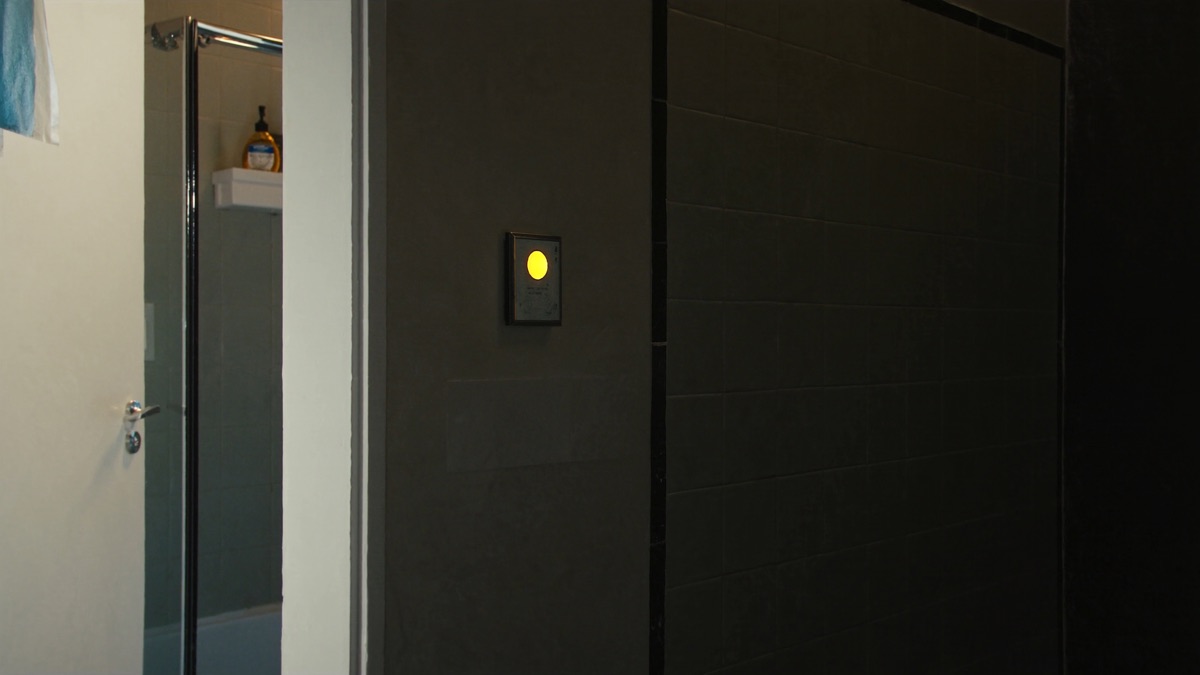
A thermostat does not switch heating or cooling on and off at one exact temperature; it waits for the room to drift a degree or so past the target in either direction before acting, a deliberate gap called hysteresis or the deadband that exists specifically to stop the equipment from rapidly cycling on and off. Without that gap, a furnace or compressor sitting exactly at the setpoint would flicker on and off every few seconds as the temperature wobbled by a fraction of a degree, which would wear out the equipment far faster than normal use.
Why a Thermostat Needs a Deliberate Gap Before It Reacts
The deadband is usually only half a degree to two degrees wide, small enough that occupants rarely notice the temperature swing, but large enough to give the equipment several minutes of continuous runtime each cycle instead of rapid, damaging bursts.
Engineers size this gap as a direct tradeoff between comfort and equipment longevity: a narrower deadband holds temperature more precisely but cycles the compressor more often, while a wider one protects the hardware at the cost of a slightly larger swing between the coldest and warmest moments a room actually experiences.
How an Old-Fashioned Bimetallic Strip Actually Sensed Temperature
Classic mechanical thermostats used a bimetallic strip, two different metals bonded together in a single strip, that bends as temperature changes because the two metals expand and contract at different rates when heated or cooled.
That bending motion was usually coiled into a spiral so a small temperature change produced a larger, more usable rotation, and the moving end of the coil was mechanically linked to an electrical switch or a small vial of mercury that tipped to complete or break the heating circuit.
Why Mercury Switches Were Used Inside Older Thermostats
Older round thermostats used a small glass vial partly filled with liquid mercury, mounted on the end of the bimetallic coil so that as the coil rotated with temperature changes, the vial tilted until the mercury pooled onto or away from two embedded electrical contacts.
Mercury was chosen because it conducts electricity reliably and forms a clean, bounce-free connection as it flows, avoiding the arcing and contact chatter that a solid metal switch can produce, though its toxicity is exactly why modern thermostats have moved away from it entirely.
How a Modern Digital Thermostat Actually Measures Temperature
Modern digital thermostats typically use a thermistor, a small electronic component whose electrical resistance changes in a precise, predictable way as its temperature changes, letting a built-in microcontroller convert that resistance reading directly into a temperature value many times per second.
This electronic approach is both more precise and more flexible than a bending metal strip, since the same sensor reading can also be logged over time, compared against a schedule, or transmitted wirelessly to a phone app, none of which a purely mechanical bimetallic switch could ever do.
Why Short-Cycling Protection Exists Beyond Just the Deadband
Beyond the temperature deadband itself, most modern thermostats also enforce a minimum off-time and minimum on-time after any compressor cycle, typically around five minutes, regardless of what the temperature sensor is currently reading.
This extra protection matters because refrigerant pressures inside an air conditioning compressor need time to equalize after shutdown; restarting the compressor too soon forces the motor to fight against unequalized pressure, which draws far more startup current and accelerates mechanical wear.
How Programmable Thermostats Actually Follow a Schedule
Programmable thermostats store multiple target temperatures tied to specific times of day and days of the week, then automatically switch between those setpoints without any manual input, commonly used to let a home coast to a wider, energy-saving temperature range while occupants are asleep or away.
The energy savings from this scheduling come specifically from reducing the total number of degree-hours the heating or cooling system has to fight against, since a house that is allowed to drift closer to outdoor temperature during unoccupied hours loses or gains heat more slowly than one held at a constant indoor setpoint.
Why Smart Thermostats Add Learning Algorithms on Top of Scheduling
Smart thermostats go a step further than fixed programmable schedules by tracking how occupants manually adjust the temperature over days or weeks and using that pattern to build and refine their own schedule automatically, rather than requiring the household to program every setpoint by hand.
Some models also factor in occupancy sensors, geofencing based on a phone's location, and outdoor weather forecasts, adjusting preemptively, for example starting to cool a house slightly earlier on a day forecast to be unusually hot, rather than only reacting after the indoor temperature has already drifted.
How Thermostats Coordinate With Zoned HVAC Systems
In a zoned heating and cooling system, multiple thermostats placed in different areas of a building each control motorized dampers inside the ductwork, opening airflow to zones that need conditioning while closing it to zones that are already at their target temperature.
A central control panel has to reconcile potentially conflicting demands from several zone thermostats at once, deciding when to actually run the shared furnace or compressor and for how long, since running it briefly to satisfy just one small zone is often less efficient than waiting to serve multiple zones together.
Why Thermostat Placement Inside a Room Actually Matters
A thermostat only ever measures the air temperature at its own physical location, so mounting it near a sunny window, a drafty door, or directly above a heating vent will cause it to read a temperature that does not represent the rest of the room, leading it to shut equipment off too early or run it longer than necessary.
HVAC installers generally recommend placing thermostats on interior walls away from direct sunlight and airflow, roughly at chest height, specifically to capture a temperature reading that is as representative as possible of the average conditions a person actually experiences while occupying the space.
How a Thermostat Actually Controls a Furnace or Air Conditioner
A residential thermostat rarely switches high-voltage heating or cooling equipment directly; instead, it closes a low-voltage control circuit, typically 24 volts, that energizes a relay or contactor inside the furnace or outdoor compressor unit, and that relay is what actually switches the higher-power circuit on.
This low-voltage design exists primarily for safety and simplicity, letting a thermostat use thin, inexpensive control wiring and simple electronics rather than needing to handle the much higher currents and voltages that the heating or cooling equipment itself actually draws.
Why PID Control Improves on Simple On-Off Switching
Some higher-end and industrial thermostats use proportional-integral-derivative, or PID, control instead of simple on-off switching, continuously calculating how far the current temperature is from the target, how long it has been off target, and how quickly it is changing, then adjusting equipment output proportionally rather than as a blunt on-or-off decision.
This kind of proportional control is especially valuable for equipment that can modulate its output, like a variable-speed furnace or a modulating boiler, since it lets the system run at a lower, steadier output near the setpoint instead of repeatedly overshooting and undershooting the target the way basic on-off switching does.
How Humidity Sensing Got Added to Many Modern Thermostats
Many current smart thermostats include a humidity sensor alongside the temperature sensor, since perceived comfort depends heavily on both factors together; a room at a given temperature can feel noticeably too warm or too cool depending on how humid or dry the air actually is.
Some systems use this humidity reading to control a separate dehumidifier or humidifier attached to the ductwork, or to adjust the effective cooling setpoint slightly based on humidity, aiming to hold consistent comfort rather than a single fixed number on a thermometer.
Why Recovery Time Calculations Matter for Scheduled Setbacks
Many programmable and smart thermostats calculate an adaptive recovery time before a scheduled setpoint change, starting the heating or cooling system earlier than the exact scheduled time specifically so the room actually reaches the target temperature exactly when the schedule intended, rather than only beginning to move toward it then.
This calculation typically factors in how long the previous cycle took to change the temperature by a similar amount, along with current outdoor conditions, since a much colder morning outside will require starting the furnace earlier than a milder one to hit the same wake-up temperature on schedule.
How Thermostats Prevent Simultaneous Heating and Cooling
A dual-fuel or heat pump system with backup heating capability needs its thermostat to enforce strict interlocks preventing the heating and cooling functions from ever activating at the same time, since running both simultaneously wastes enormous amounts of energy fighting against each other.
This interlock logic typically includes a required delay when switching between heating and cooling modes, giving refrigerant pressures and airflow direction time to fully settle from the previous mode before the opposite mode is allowed to engage.
Why Some Thermostats Need a Common Wire and Others Do Not
Older mechanical thermostats often worked without what is called a common wire, drawing their small operating power directly from the control circuit itself only while actively calling for heat or cooling, which was sufficient for a simple mechanical switch that needed no continuous power.
Modern digital and smart thermostats, however, run a display, a microcontroller, and often a wireless radio continuously, all of which need constant power, so most installations require a dedicated common wire providing an uninterrupted return path for that continuous electrical draw.
How Thermostats Get Tested and Calibrated at the Factory
Manufacturers calibrate each thermostat's temperature sensor against a certified reference thermometer in a controlled temperature chamber before shipping, recording a correction offset for that individual unit's sensor to compensate for small manufacturing variations between otherwise identical sensor components.
Field accuracy for a properly calibrated modern digital thermostat is typically within about half a degree Celsius of the true room temperature, though placement errors discussed earlier can introduce far larger effective errors than the sensor's own factory-calibrated precision ever would.
Why Thermostats Are a Common Entry Point for Smart Home Systems
Smart thermostats were among the earliest widely adopted smart home devices specifically because heating and cooling represent such a large share of typical household energy costs, making even modest efficiency improvements from smarter scheduling translate into meaningful, easily marketed savings.
Their central position controlling ductwork and their frequent need for wireless connectivity also made them a natural hub-adjacent device, and many now integrate with broader smart home ecosystems, letting other devices like door sensors or occupancy detectors feed additional context into the thermostat's decisions.
How Building Codes and Standards Shape Thermostat Design
Building energy codes in many regions now require or strongly incentivize programmable or smart thermostats in new construction specifically because of their measurable impact on a building's overall energy consumption, treating thermostat capability as part of a building's broader energy compliance package.
Some jurisdictions also mandate specific minimum deadband widths or minimum cycle-time protections in commercial HVAC controls, treating equipment longevity and grid demand stability, avoiding many buildings cycling compressors on and off simultaneously, as a public infrastructure concern rather than a purely private comfort preference.
Why Grid Operators Sometimes Communicate Directly With Thermostats
Some utility demand-response programs let a grid operator send a signal directly to enrolled smart thermostats during periods of extremely high electricity demand, temporarily and slightly adjusting the setpoint across thousands of participating homes at once to reduce peak load on the electrical grid.
Participating households are typically compensated with a bill credit or rebate for enrolling, and the setpoint adjustments involved are usually small enough, often only a degree or two for a limited window, that most occupants report barely noticing the temporary change.
How Thermostats Fail and What That Failure Typically Looks Like
A thermostat with a drifting or failing temperature sensor typically causes a house to feel consistently too warm or too cool despite the display showing the correct setpoint, since the underlying reading it is actually reacting to no longer matches true room conditions.
A failed relay or stuck contact inside the low-voltage control circuit, by contrast, tends to cause equipment to either never turn on at all or to run continuously without ever satisfying the setpoint, a distinct failure pattern that HVAC technicians use to diagnose whether the fault lies in the thermostat, the wiring, or the equipment itself.
Sources
- U.S. Department of Energy — Programmable Thermostats
- Encyclopaedia Britannica — Thermostat
- U.S. Environmental Protection Agency — Programmable Thermostats
FAQ
Why doesn't a thermostat switch equipment on and off at one exact temperature?
A deliberate gap called the deadband, usually half a degree to two degrees, exists specifically to stop the equipment from rapidly cycling on and off, which would wear it out far faster than normal use.
How did old bimetallic thermostats actually sense temperature?
Two different metals bonded into one strip bend as temperature changes because they expand and contract at different rates, and that bending was linked mechanically to a switch or a tilting mercury vial.
Why were mercury switches used inside older round thermostats?
Mercury conducts electricity reliably and forms a clean, bounce-free connection as it flows, avoiding the arcing a solid metal switch can produce, though its toxicity is why modern thermostats abandoned it.
How does a modern digital thermostat measure temperature?
It uses a thermistor, an electronic component whose resistance changes predictably with temperature, letting a microcontroller convert that reading into a precise temperature value many times per second.
Why do thermostats enforce a minimum off-time beyond the deadband?
Refrigerant pressures inside a compressor need time to equalize after shutdown; restarting too soon forces the motor to fight unequalized pressure, drawing more startup current and accelerating wear.
How do programmable thermostats actually save energy?
They let a house drift toward a wider, energy-saving temperature range during unoccupied hours, reducing the total degree-hours the heating or cooling system has to fight against.
What do smart thermostats add on top of simple programmable schedules?
They track manual adjustments over time to build their own schedule automatically, and some factor in occupancy sensors, phone-based geofencing, and weather forecasts to adjust preemptively.
Why does thermostat placement inside a room actually matter?
A thermostat only measures air temperature at its own location, so placing it near a sunny window or a heating vent causes it to read an unrepresentative temperature and mistime the equipment.
How does a thermostat actually control a furnace or air conditioner?
It closes a low-voltage control circuit, typically 24 volts, that energizes a relay inside the equipment, and that relay is what actually switches the higher-power heating or cooling circuit.
Why do some higher-end thermostats use PID control instead of simple on-off switching?
PID control continuously adjusts equipment output proportionally to how far off target the temperature is, letting modulating equipment run steadier near the setpoint instead of overshooting repeatedly.
Why did humidity sensing get added to many modern thermostats?
Perceived comfort depends on both temperature and humidity together, so some systems use a humidity reading to control a dehumidifier or adjust the effective cooling setpoint for consistent comfort.
What is adaptive recovery time on a programmable thermostat?
It starts heating or cooling earlier than the exact scheduled time, calculated from how long previous cycles took and current outdoor conditions, so the room reaches target exactly on schedule.
Why do dual-fuel and heat pump systems need strict heating-cooling interlocks?
Running heating and cooling simultaneously wastes enormous energy fighting against each other, so the thermostat enforces a delay when switching modes to let pressures and airflow fully settle.
Why do modern smart thermostats usually require a common wire?
They run a display, microcontroller, and often a wireless radio continuously, all needing constant power, unlike older mechanical thermostats that only drew power while actively calling for heat.
How accurate is a properly calibrated modern digital thermostat?
Typically within about half a degree Celsius of true room temperature, though poor placement can introduce far larger effective errors than the sensor's own factory calibration ever would.
Why were smart thermostats among the earliest popular smart home devices?
Heating and cooling represent a large share of household energy costs, so even modest scheduling improvements translate into meaningful, easily marketed savings for adopters.
How do utility demand-response programs interact with smart thermostats?
A grid operator can send a signal adjusting enrolled thermostats' setpoints slightly during peak demand periods to reduce grid load, typically compensating participating households with a bill credit.
About the Author
We reference Wikipedia and other authoritative sources to explain the background and current understanding of this topic.
Loved This Article?
Share it on WhatsApp → Share it on WhatsApp
Get more guides in your inbox — Subscribe to our newsletter for weekly surprising stories from Egypt, Saudi Arabia, Dubai, and beyond.