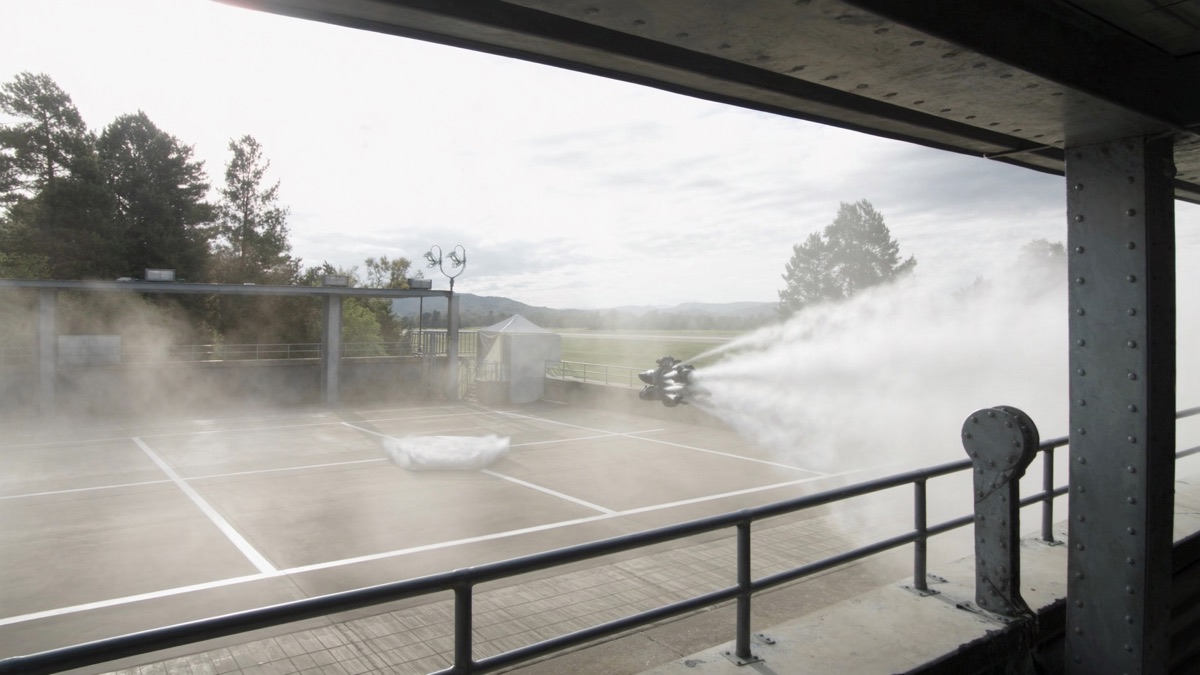
Airplane "black boxes" are neither black nor a single box; they are two separate bright-orange devices, the flight data recorder and the cockpit voice recorder, engineered specifically to survive exactly the kind of violent impact, fire, and water pressure that destroys everything else on an aircraft. Their survival is not luck; it comes from a specific set of internationally standardized engineering tests every recorder must pass before it can be certified for use.
Understanding those tests explains why investigators can often recover usable data even from an aircraft that has been destroyed almost beyond recognition, and why the recorder itself, rather than the surrounding aircraft structure, is treated as the single most valuable piece of physical evidence in a crash investigation.
Investigators emphasize that recorder survivability testing is deliberately calibrated well beyond typical accident severity, not because every crash approaches those extremes, but because the small number of accidents that do involve genuinely catastrophic force and fire are precisely the ones where investigators most urgently need reliable data, since a merely adequate recorder that failed in exactly the worst-case scenarios would be useless in the cases that matter most for understanding what actually went wrong and preventing similar future accidents.
Why the Color Is Actually Orange
Flight recorders are painted a highly visible bright orange specifically to make them easier for investigators to locate among wreckage, often scattered across a wide debris field, which makes the popular "black box" nickname something of a historical misnomer rather than an accurate description.
The origin of the "black box" name itself is debated among aviation historians, with theories ranging from early recorder casings that were genuinely dark-colored to a general engineering slang term for a sealed device whose internal workings are not visible from outside.
The Core Protection: A Titanium or Steel Crash-Survivable Shell
The recording memory itself sits inside a small, heavily armored core made of titanium or high-grade stainless steel, wrapped in layers of thermal and impact-absorbing insulation, rather than the recorder's outer casing needing to survive intact as a whole.
This design philosophy deliberately sacrifices the outer housing while protecting only the compact memory core at the center, since that core is the only component actually needed to recover the recorded data after a crash.
The Impact Test: Surviving Forces Far Beyond a Crash
International certification standards require flight recorders to survive an impact force of 3,400 times the force of gravity, tested by firing the unit from an air cannon into a target, a force dramatically higher than what most aircraft structures themselves are built to withstand.
This deliberate over-engineering exists because investigators need the recorder to survive impact scenarios more extreme than a typical crash, precisely because the most valuable data often comes from the most catastrophic and highest-force accidents.
The Fire Test: Surviving Sustained Jet-Fuel Temperatures
Recorders must withstand sustained exposure to temperatures of 1,100 degrees Celsius, roughly the temperature of a jet-fuel fire, for a full thirty minutes without losing recorded data, a test standard specifically calibrated to outlast a realistic post-crash fire.
This fire-resistance requirement is layered on top of, not instead of, the impact protection, since post-crash fires are extremely common and a recorder that survived the initial impact but then failed in the resulting fire would be functionally useless to investigators.
The Pressure Test: Surviving the Deep Ocean
Because commercial flights routinely cross open ocean, recorders must also survive being submerged at depths equivalent to 20,000 feet of seawater pressure for extended periods, a requirement directly informed by past investigations where recorders had to be recovered from deep ocean floors.
An underwater locator beacon attached to the recorder automatically activates on contact with water and emits an acoustic pulse detectable by specialized underwater search equipment for at least thirty days, giving search teams a genuine window to locate a recorder even in extremely deep or remote ocean locations.
What the Flight Data Recorder Actually Captures
The flight data recorder continuously logs dozens to hundreds of separate parameters depending on the aircraft, including altitude, airspeed, heading, control surface positions, engine performance, and autopilot status, typically retaining at least the most recent 25 hours of flight.
This parameter-rich data lets investigators reconstruct a remarkably detailed timeline of exactly what the aircraft itself was physically doing in the moments before an incident, independent of anything the crew reported or remembered afterward.
What the Cockpit Voice Recorder Actually Captures
The cockpit voice recorder captures audio from microphones positioned throughout the flight deck, recording pilot conversations, radio communications with air traffic control, and ambient cockpit sounds like alarms or unusual mechanical noise, typically retaining the most recent two hours of audio on modern units.
That relatively short retention window exists deliberately, largely for crew privacy reasons, since only the final portion of a flight is generally relevant to investigating an incident, and continuously recording and overwriting older audio balances investigative need against reasonable privacy expectations.
How Investigators Actually Extract the Data
Recovered recorders are sent to specialized government or manufacturer laboratories where technicians carefully extract the protected memory chip, sometimes from a unit that is externally charred, dented, or partially crushed, and read its contents using specialized equipment built to interface directly with the recorder's specific data format.
Even when a recorder's outer casing is severely damaged, the inner memory core is frequently intact enough for investigators to recover a complete or near-complete dataset, which is precisely the outcome the layered protective design is engineered to guarantee.
Why There Are Always Two Separate Units
Aircraft carry the flight data recorder and cockpit voice recorder as two physically separate units, deliberately mounted in different locations, usually toward the rear of the aircraft, which is statistically the section of a fuselage most likely to remain relatively intact in many crash scenarios.
Keeping them physically separate also means a single localized failure or fire is less likely to destroy both units simultaneously, giving investigators a meaningfully better chance of recovering at least one complete, usable data source even in a severe accident.
Real Investigations That Depended on Recorder Data
Numerous major aviation safety improvements, including specific engine redesigns, revised pilot training procedures, and updated cockpit warning systems, trace directly back to specific findings extracted from flight recorder data recovered after past accidents.
This direct link between recorder data and concrete safety improvements is the core justification aviation regulators give for the recorders' extremely strict, expensive certification requirements: the data genuinely and repeatedly changes how future aircraft and training are designed.
Newer Technology Moving Beyond the Physical Box
Some newer aircraft and industry proposals now include real-time data streaming that transmits key flight parameters to ground stations continuously during flight, specifically intended as a backup in scenarios where a physical recorder might never be recovered at all, such as a crash into extremely deep or remote ocean water.
This streaming approach supplements rather than replaces the physical recorder for now, since bandwidth and cost constraints still make it impractical to stream the full, richly detailed dataset a physical recorder captures locally.
The History Behind Why These Standards Exist Today
Early flight recorders in the 1950s and 1960s were considerably less robust than modern units, and several high-profile accident investigations from that era were hampered specifically because recorders failed to survive the very crashes investigators most needed data from, a recurring pattern that directly drove the progressively stricter international survivability standards adopted over subsequent decades.
Each major standard revision since then has generally traced back to a specific documented case where an earlier-generation recorder failed under conditions the new, stricter standard was then designed to withstand, meaning today's extreme impact, fire, and pressure requirements were not set arbitrarily but calibrated directly against real historical failure cases investigators wanted to prevent from recurring.
This case-by-case standard evolution is a useful example of how aviation safety regulation broadly tends to develop, incrementally tightening specific requirements in direct response to documented real-world failures rather than attempting to anticipate every possible future failure mode purely through theoretical engineering analysis alone.
Why Some High-Profile Investigations Still Faced Recorder Challenges
Even with modern crash-survivable design, a small number of high-profile accident investigations in remote ocean locations have still faced significant delays locating a recorder, not because the recorder itself failed to survive, but because locating a small object across an extremely deep and vast ocean search area remains a genuinely difficult logistical and technical challenge independent of the recorder's own crash-survival engineering.
These search challenges have specifically driven continued investment in longer-duration underwater locator beacons and, more recently, in real-time data-streaming technology intended to reduce reliance on physically recovering the recorder at all in the most extreme, hardest-to-search accident scenarios.
This distinction between recorder survivability and recorder findability is an important one investigators emphasize, since a recorder can be functioning perfectly and fully intact while still remaining effectively lost for years if a search team cannot narrow down its precise physical location within an ocean search area spanning thousands of square kilometers.
How Recorder Data Gets Used Beyond the Immediate Investigation
Beyond determining the specific cause of an individual accident, aggregated recorder data across many flights and even many different accidents feeds into broader statistical safety research, helping researchers identify patterns across seemingly unrelated incidents that might indicate a systemic issue with a specific aircraft model, procedure, or piece of equipment rather than an isolated one-off failure.
This aggregated analysis is precisely how some safety issues affecting an entire aircraft fleet, rather than a single specific accident, have been identified and addressed through mandatory manufacturer design changes or revised operating procedures issued across an entire airline industry rather than affecting just the specific aircraft involved in one accident.
Airlines themselves also increasingly use routine, non-accident-related flight data recorder readouts for proactive safety monitoring, analyzing routine flights for early warning signs of developing mechanical issues or risky operational patterns well before any actual incident occurs, a preventive use of the same underlying recording technology originally designed purely for post-accident investigation.
Who Actually Has Access to Recorder Data After an Accident
International and national rules specifically govern who has access to recovered recorder data after an accident, typically granting the national aviation accident investigation authority for the country responsible for the investigation primary initial control over the raw data, while the aircraft manufacturer and operating airline usually participate in reviewing findings within a structured cooperative framework rather than having open, unrestricted access as an independent party.
These rules also generally specifically protect cockpit voice recorder content from full public release even after an investigation concludes, an additional crew privacy protection extending beyond the restrictions placed on purely technical flight data recorder information, reflecting the particular sensitivity of recording direct human conversation compared with purely digital sensor data.
This balance between the public transparency needed for aviation-safety trust and individual crew privacy generates ongoing debate in some high-profile cases, particularly when victims' family members request access to voice recordings that are not normally released to the general public under current rules.
The Future of Recording Technology Beyond Today's Black Box Generation
Aviation regulators and leading manufacturers are currently examining requirements for a future generation of flight recorders that may include voice recording duration longer than today's two hours, along with substantially greater data processing capacity to accommodate increasingly complex aircraft systems that generate ever-larger volumes of sensor data on every single flight.
This forward-looking discussion also includes how to more deeply integrate real-time data streaming with the traditional physical recorder without sacrificing the physical recorder's own proven reliability, since streaming-only solutions still face genuine bandwidth and cost constraints across an entire global fleet.
Regardless of the precise technical direction this evolution ultimately takes, aviation safety experts generally agree the core underlying principle will remain constant: sufficient data must survive any potential accident, however it is actually stored or transmitted, to ensure investigators retain the ability to understand and prevent the causes of future accidents from recurring.
Why Black Box Technology Now Extends Beyond Aviation
The core crash-survivable recording principle pioneered in aviation has increasingly been adapted for other transportation modes, including maritime shipping and rail transport, where similarly ruggedized data recorders now capture operational information specifically to support post-accident investigation in industries facing comparable challenges around surviving a severe impact, fire, or submersion event.
This cross-industry adoption reflects genuine recognition that the underlying engineering problem, protecting a small amount of critical data against extreme physical destruction, is not fundamentally aviation-specific, even though the aviation industry was the first to develop and rigorously standardize the crash-survivable recorder concept at meaningful scale.
Autonomous vehicle developers have likewise begun incorporating similarly ruggedized data-logging hardware into self-driving test vehicles, recognizing that any new transportation technology involving automated decision-making will eventually need the same kind of trustworthy, tamper-resistant record of exactly what a system was doing in the moments before an incident.
Sources
- National Transportation Safety Board — flight recorder certification standards and accident investigation procedures
- Wikipedia — overview of flight data recorder and cockpit voice recorder engineering
- International Civil Aviation Organization — international standards for flight recorder crash survivability
FAQ
Why are black boxes actually orange instead of black?
They are painted bright orange specifically to make them easier for investigators to spot among wreckage; the "black box" name is a historical nickname rather than a literal description.
How much impact force can a flight recorder actually survive?
International standards require recorders to survive an impact force of 3,400 times the force of gravity, far beyond forces most aircraft structures themselves are built to withstand.
Can black boxes survive being submerged in the ocean?
Yes; they must survive pressure equivalent to 20,000 feet of seawater depth, and an attached locator beacon emits a detectable acoustic signal for at least thirty days after water contact.
What is the difference between the two black boxes on a plane?
The flight data recorder logs technical flight parameters like altitude and engine performance, while the cockpit voice recorder captures cockpit audio and crew communications.
How long does a cockpit voice recorder actually retain audio?
Modern units typically retain only the most recent two hours of audio, continuously overwriting older recordings, largely for crew privacy reasons.
Why are there always two separate recorder units instead of one?
Keeping them physically separate reduces the chance a single localized failure or fire destroys both, and they are typically mounted in the aircraft's rear section, which statistically survives many crashes relatively intact.
About the Author
We reference Wikipedia and other authoritative sources to explain the background and current understanding of this topic.
Loved This Article?
Share it on WhatsApp → Share it on WhatsApp
Get more guides in your inbox — Subscribe to our newsletter for weekly surprising stories from Egypt, Saudi Arabia, Dubai, and beyond.