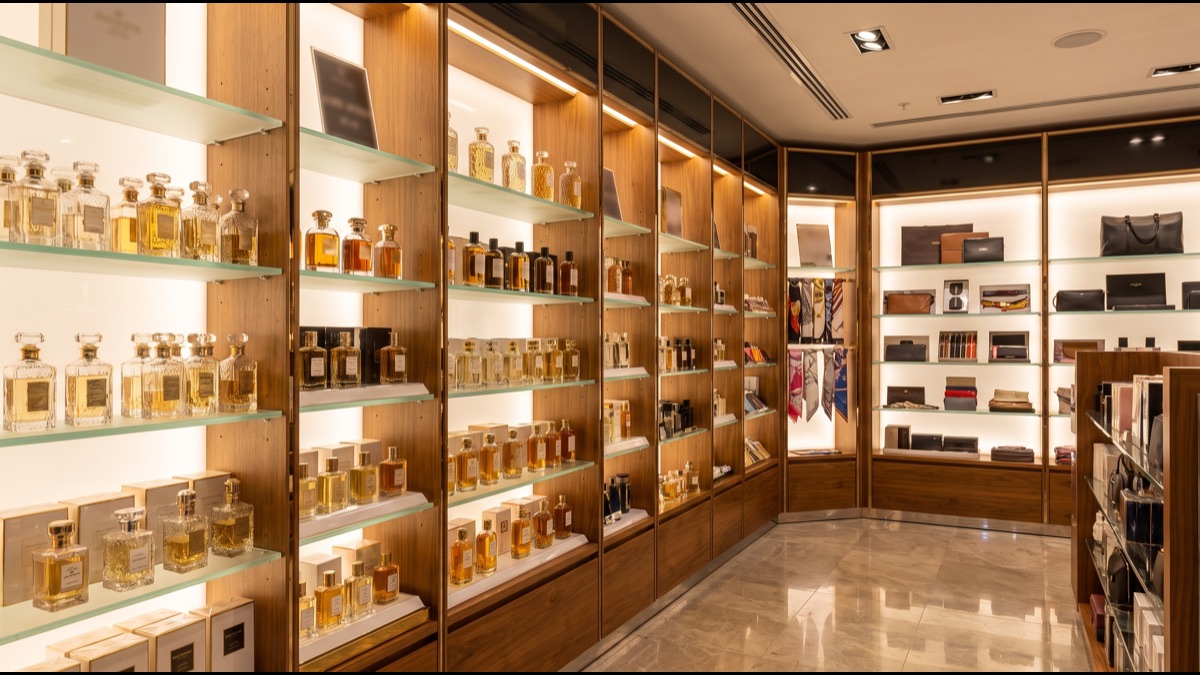
A bottle of perfume or a carton of cigarettes sitting behind an airport departure gate is not simply cheaper because taxes have been waived. It sits inside one of the most carefully engineered retail businesses in the world, one built around a genuinely captive audience, extraordinarily high rents paid to airport operators, and a psychology of travel that gets people spending more freely than they typically would at home.
Duty-free retail generates billions of dollars annually worldwide, and a meaningful share of major airports' total revenue comes not from landing fees or parking but from the rent and revenue-sharing arrangements built into these retail concessions, which is why airport terminals are laid out the way they are and why that walk to your gate rarely feels accidental.
Understanding the actual economics behind the shelves explains both why some duty-free deals are genuinely excellent and why others are little better than what a traveler could find at a regular shop back home, tax included.
A Captive Audience With Nowhere Else to Go
Once a traveler has cleared security and immigration, they are physically confined to a specific, controlled zone of the airport for however long remains before their flight, unable to simply leave and shop elsewhere, a captive-audience dynamic almost no other retail environment enjoys quite so completely.
Retailers operating in this environment do not need to compete on convenience or location the way a high-street shop does, since the competition is effectively limited to the small handful of other outlets within the same secure zone, a structural advantage that shapes nearly every pricing and merchandising decision duty-free operators make.
What "Duty-Free" Actually Means
The term refers specifically to the waiving of import duties and, in many jurisdictions, local sales tax on goods purchased by travelers who will carry them across an international border, a legal exemption that exists because the goods are technically considered to be leaving the country's domestic retail market rather than being consumed within it.
This exemption genuinely lowers the base cost the retailer pays relative to a domestic shop selling the identical product, but how much of that saving actually gets passed on to the traveler as a lower shelf price is entirely a business decision made by the retailer and the brand, not something duty-free status guarantees automatically.
Why Prices Are Not Always as Good as They Look
Because duty-free retailers know most travelers cannot easily comparison-shop mid-journey and often feel a psychological pull to buy something now that they are standing in front of the display, some products are priced to capture most or all of the tax saving as extra profit margin rather than passing it through to the customer as a genuine discount.
Savvy travelers who check prices for the same product at a regular retailer before flying sometimes find the duty-free price only marginally better, or in occasional cases no better at all once local sales promotions and loyalty discounts back home are factored in, which is why price-conscious shoppers are generally advised to compare rather than assume duty-free automatically means cheapest.
The Concession Model That Funds the Airport Itself
Duty-free retailers do not simply rent airport floor space the way a shop rents a unit in a shopping mall; they typically operate under a concession agreement that includes a substantial upfront fee plus a percentage of sales revenue paid directly to the airport operator, a structure that ties the retailer's success directly to the airport's own commercial performance.
This concession revenue has become a genuinely major income stream for many major airports, in some cases rivaling or exceeding aeronautical revenue from landing fees and gate charges, which is a significant part of why airport operators care intensely about foot traffic through retail zones and design terminal layouts specifically to maximize dwell time near shops.
Why Airports Route You Through the Shop Floor
The winding paths many international terminals force passengers to walk between security screening and their departure gate are rarely accidental; airport design consultants specifically study and optimize passenger flow to maximize exposure to retail storefronts, a practice sometimes called experience design that treats the walk to the gate as valuable retail real estate rather than mere circulation space.
This is also why duty-free shops at many major hubs occupy some of the largest and most prominent square footage in the entire terminal, positioned so that passengers heading toward almost any gate have to pass directly through or immediately alongside the main shopping floor rather than being able to bypass it entirely.
How Boredom and Layovers Turn Into Sales
Travel psychology research consistently finds that people waiting for a flight, particularly during longer layovers, experience a distinct mix of boredom, mild anxiety, and a sense of being on vacation or in transition, a combination that tends to loosen typical spending discipline compared to an ordinary shopping trip closer to home.
Retailers lean into this directly, using sampling stations, staff who actively engage passing travelers, and prominent seasonal displays timed to major holidays and gift-giving occasions, all designed to convert what might otherwise be idle waiting time directly into a purchase decision made largely on impulse rather than planned in advance.
The Categories That Actually Drive Profit
Perfume and cosmetics, spirits, tobacco, and confectionery consistently rank among the highest-revenue categories in airport duty-free retail worldwide, chosen specifically because they combine high per-unit value, strong brand recognition that reduces the need for lengthy in-store explanation, and genuine tax savings large enough to feel meaningful even to a price-conscious traveler.
Electronics and luxury fashion items appear prominently as well at major hubs, but tend to carry thinner relative margins for the retailer compared to the beauty, spirits, and tobacco categories, which is part of why perfume counters and liquor displays typically occupy the most prominent, best-lit positions immediately as travelers enter the shopping zone.
Why Liquor and Tobacco Margins Are So Different
Because alcohol and tobacco products carry particularly steep domestic excise taxes in most countries, the duty-free exemption on these specific categories represents a genuinely large absolute saving compared to buying the same bottle or carton at a regular retailer, which is why these sections often anchor the most aggressive and visible promotional pricing in the entire store.
Regulatory limits on how much alcohol and tobacco a traveler can legally carry across a given border without incurring duty on arrival directly shape how these sections are merchandised, with prominent signage reminding travelers of their home country's specific allowance limits, since exceeding them can turn an apparent bargain into an unexpected customs bill.
How Currency and Allowance Limits Shape What Sells
Duty-free retailers at major international hubs routinely price items in multiple currencies and accept a wide range of payment methods specifically because their customer base is genuinely global, unlike almost any domestic retail environment, requiring pricing and payment infrastructure built for constant cross-border transactions rather than a single home market.
Retailers also actively tailor product selection and language signage to the specific mix of nationalities passing through a given terminal or gate area at different times of day, stocking particular brands, sizes, and gift packaging known to appeal strongly to travelers from specific regions whose flights happen to depart from that part of the terminal.
Why Dubai Duty Free Became a Global Benchmark
Dubai International Airport's duty-free operation has grown into one of the largest single-airport retail operations in the world, benefiting from the airport's position as a major long-haul transit hub where enormous numbers of connecting passengers pass through with genuine dwell time between flights rather than simply arriving at their final destination.
Beyond conventional retail, Dubai Duty Free's high-profile promotional raffles offering cars and cash prizes have become a distinctive marketing feature that draws attention well beyond the airport itself, illustrating how aggressively a leading duty-free operator can differentiate itself once transit passenger volume reaches a scale most airports never approach.
The Loyalty Programs Hiding Behind the Till
Major duty-free operators increasingly run their own loyalty and rewards programs independent of any airline frequent-flyer scheme, collecting purchase history and travel pattern data on frequent shoppers that lets them target promotions and personalized offers to travelers likely to pass through the same airport repeatedly.
This data also feeds directly back into inventory and pricing decisions, letting operators identify which specific products perform best with particular traveler segments and adjust shelf space, staffing, and promotional pricing accordingly, a level of retail analytics sophistication that rivals or exceeds what many domestic shopping mall retailers use.
What Happens to Unsold Inventory
Because duty-free retail operates on relatively predictable, forecastable passenger volume data supplied by the airport and airlines well in advance, operators generally manage inventory tightly around expected footfall rather than carrying large speculative stock, reducing the risk of significant unsold inventory compared to ordinary retail businesses more exposed to unpredictable demand swings.
When products do need to be cleared, whether due to changing brand agreements, packaging updates, or simply slower-than-expected sales, duty-free operators typically run the same kind of markdown and clearance promotions ordinary retailers use, though the underlying tax-free cost base means even a discounted duty-free clearance price can still preserve a healthier margin than an equivalent domestic retail markdown.
Why Online Pre-Order Changed the Business Model
Many duty-free operators now let travelers browse and pre-order products online before their trip, for collection at the departure gate or on arrival, a shift that reduces the reliance on impulse in-terminal browsing alone and lets operators plan inventory and staffing with substantially better advance visibility into actual demand.
Pre-order also lets duty-free retailers extend their effective selling window well beyond the physical time a traveler spends walking through the terminal, since a customer can browse and decide from home days before travel, a meaningful behavioral shift from the purely impulse-driven model that defined airport retail for decades.
How Airport Real Estate Value Shapes Store Placement
Because floor space immediately after security screening and directly along the busiest routes to major gates commands the highest passenger footfall in the entire terminal, airport operators generally price concession rent for those specific locations at a substantial premium over less-trafficked corners of the same terminal, effectively auctioning off the most valuable retail real estate to whichever brand can generate the strongest sales performance there.
This pricing dynamic is precisely why the most recognizable global perfume, cosmetics, and liquor brands tend to occupy the largest and most central storefronts at major hubs, since only operators confident in generating very high sales volume can justify paying the premium rent those prime locations command, while smaller or more specialized retailers are pushed toward secondary corridors and gate-adjacent kiosks instead.
Why Some Countries Restrict What Can Be Sold Duty-Free
National governments retain the authority to restrict which product categories can be sold duty-free within their airports, and some countries limit or exclude certain goods entirely, whether for public health reasons around tobacco and alcohol, cultural and religious sensitivities in some markets, or straightforward revenue protection where a government prefers to keep collecting tax on specific high-value categories even from departing travelers.
These restrictions can differ meaningfully even between neighboring countries with otherwise similar travel retail markets, which is part of why the exact product mix, and the specific promotional emphasis given to different categories, can look noticeably different walking through a duty-free store in one country compared to a broadly similar-looking store in a different country nearby.
How Staff Commission Structures Shape the Sales Pitch
Sales staff working duty-free counters, particularly in the perfume and cosmetics sections where personal recommendation and product demonstration carry real influence over a purchase decision, are frequently compensated partly through commission tied to sales volume, an incentive structure that directly shapes which products staff actively recommend and how assertively they approach passing travelers.
This commission dynamic is a genuinely ordinary retail practice, not unique to duty-free, but it becomes more noticeable in an environment where the customer has unusually limited time, a flight to catch, and less opportunity to walk away and reconsider a purchase decision later compared to an ordinary shopping trip closer to home.
Why Airport Retail Rarely Advertises Its Own Prices Outside the Terminal
Unlike ordinary high-street retailers, duty-free operators generally do not run comparative price advertising outside the airport itself, publicly claiming to beat a specific competitor's price on a named product, since doing so would invite exactly the kind of direct price comparison the entire captive-audience retail model is structurally built to avoid in the first place.
Instead, marketing tends to emphasize the tax-saving concept broadly, exclusivity of certain travel-retail-only product editions, and loyalty program benefits, framing that keeps the conversation centered on the general appeal of duty-free shopping rather than inviting a traveler to check a specific price against a specific competitor before they have even reached the airport and entered the controlled retail environment.
The Trade-Off Every Traveler Is Actually Making
Every duty-free purchase ultimately involves the same implicit trade-off: a genuine tax saving on certain categories, weighed against a captive retail environment specifically engineered, through layout, psychology, and promotional pricing, to encourage spending decisions a traveler might not make with the same enthusiasm in an ordinary shop back home.
Understanding that trade-off does not mean duty-free shopping is a bad deal, since on the right products it genuinely is not, but it does mean the smartest approach is the same one that works in any retail environment: know the regular price of what you actually want before you find yourself standing in front of the display with time to kill, and remember that a large "Save up to" sign tells you nothing in particular about what you would actually have paid for the very same item back home before you ever set foot in the terminal.
Sources
- Wikipedia — overview of duty-free retail and the economics of airport concessions
- International Air Transport Association — industry data on airport non-aeronautical revenue and retail concessions
- Dubai Duty Free — background on one of the world’s largest single-airport retail operations
- The Moodie Davitt Report — trade press covering global travel retail and duty-free industry trends
FAQ
Does duty-free always mean the lowest possible price?
No — while the tax exemption genuinely lowers the retailer’s cost, how much of that saving is passed on as a lower shelf price is a business decision, and some items are priced only marginally below what a regular retailer would charge.
Why do airports design terminals to route passengers through shops?
Retail concession fees, often including a share of sales revenue, form a major income stream for airport operators, so terminal layouts are frequently designed by consultants specifically to maximize passenger exposure to retail storefronts.
Which product categories are most profitable for duty-free retailers?
Perfume, cosmetics, spirits, and tobacco consistently rank among the highest-margin categories, chosen for their high per-unit value, strong brand recognition, and genuinely large tax savings compared to buying the same items domestically.
Why did Dubai Duty Free become so prominent globally?
Dubai’s airport serves as a major long-haul transit hub with enormous connecting passenger volumes and genuine dwell time, and the operation’s high-profile raffle promotions have added a distinctive marketing dimension beyond conventional retail.
Can travelers exceed their duty-free allowance without knowing it?
Yes — regulatory limits on how much alcohol, tobacco, or other goods can be carried across a specific border vary by destination, and exceeding them can turn an apparent bargain into an unexpected customs charge on arrival.
About the Author
We reference Wikipedia and other authoritative sources to explain the background and current understanding of this topic.
Loved This Article?
Share it on WhatsApp → Share it on WhatsApp
Get more guides in your inbox — Subscribe to our newsletter for weekly surprising stories from Egypt, Saudi Arabia, Dubai, and beyond.