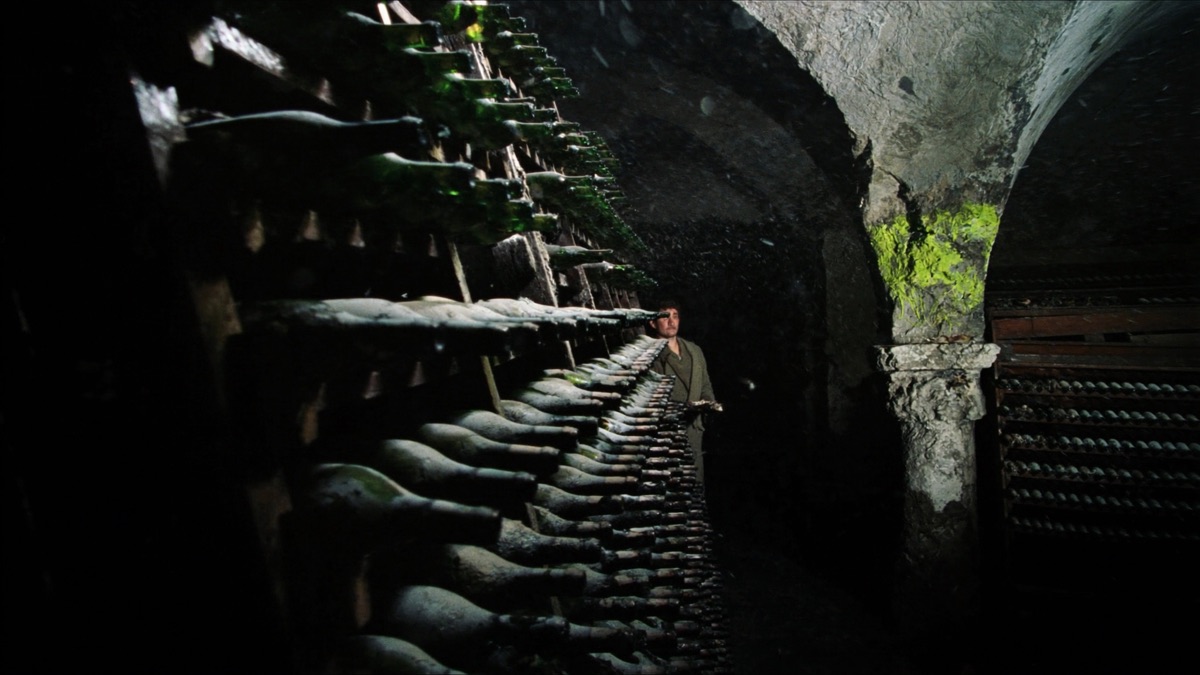
Champagne bubbles are not injected carbon dioxide, the way a soda fountain works. They are the byproduct of a second fermentation that happens entirely inside a sealed bottle, deliberately trapping carbon dioxide gas under pressure until the moment a cork is finally pulled and that pressure is released all at once.
A Second Fermentation Inside the Bottle
After a still base wine is blended from several grape varieties and vintages, winemakers add a mixture of yeast and sugar called liqueur de tirage, then seal the bottle with a crown cap similar to a beer bottle cap, trapping everything inside.
The added yeast consumes the added sugar and produces both alcohol and carbon dioxide gas as byproducts, but because the bottle is completely sealed, that gas has nowhere to escape and instead dissolves into the wine under mounting internal pressure, typically reaching around six atmospheres, roughly triple the pressure inside a car tire.
Why the Bottle Has to Be So Thick and Heavy
A standard Champagne bottle is deliberately made from thicker, heavier glass than an ordinary wine bottle specifically to withstand that internal pressure without shattering, since a fault in the glass at six atmospheres of pressure can cause a genuinely dangerous rupture.
The distinctive punt, the deep indentation pushed into the bottom of the bottle, also helps distribute that internal pressure more evenly across the glass and gives the bottle a more stable base to rest on during the months it spends aging on its side.
Riddling: Turning the Bottle to Collect Dead Yeast
Once fermentation finishes, the spent yeast cells settle inside the bottle as sediment, and producers use a process called riddling, gradually tilting and rotating each bottle over weeks, to slowly walk that sediment down into the neck of the bottle where it can eventually be removed.
Traditionally this was done by hand on wooden racks called pupitres, a labor-intensive skill, though most large producers today use automated machines called gyropalettes that mechanically perform the same gradual rotation on hundreds of bottles simultaneously.
Disgorgement: Removing the Sediment Without Losing the Fizz
To remove the collected sediment, the neck of the inverted bottle is frozen in a cold brine solution, forming a small ice plug containing the trapped yeast sediment, and when the cap is removed that plug shoots out under pressure, taking essentially all the sediment with it.
This entire disgorgement process happens fast enough, and the remaining wine is cold enough, that only a small amount of pressure and dissolved carbon dioxide is lost, which is why properly disgorged Champagne still leaves the bottle with enough gas to fizz vigorously once poured.
Why Bubble Size and Texture Vary by Producer
The texture of Champagne bubbles, whether fine and persistent or large and short-lived, depends heavily on how long the wine spent aging on its lees, the spent yeast sediment, before disgorgement, since longer aging generally produces smaller, more numerous bubbles.
Glass quality matters too: microscopic imperfections and fiber residue on the inside surface of a Champagne flute act as nucleation points where dissolved gas can escape as visible bubbles, which is part of why a perfectly clean, smooth glass sometimes produces surprisingly little visible fizz.
The Physics of a Rising Bubble Chain
Each visible bubble chain in a glass of Champagne originates from a specific microscopic nucleation point on the glass surface, typically a tiny fiber or scratch, and once carbon dioxide gas begins escaping from that exact point it continues doing so repeatedly, producing the steady vertical stream of bubbles a drinker sees rather than random bubbling across the entire surface.
A single bottle of Champagne contains roughly five times its own volume in dissolved carbon dioxide gas, and researchers studying bubble physics have calculated that a typical glass releases somewhere around a million bubbles over the course of being slowly sipped.
Why Temperature Changes the Experience So Much
Colder Champagne holds dissolved carbon dioxide gas more readily than warmer Champagne, which is why a glass served too warm loses its fizz noticeably faster and can also taste more aggressively bitter, since some of the aromatic compounds that balance that bitterness are more volatile at lower serving temperatures.
Producers generally recommend serving Champagne cold but not ice-cold, since extremely low temperatures can mute the aromatic complexity the wine developed during its long aging process, meaning ideal serving temperature is a genuine balancing act between preserving fizz and preserving flavor.
Dosage: The Final Sweetness Adjustment
After disgorgement removes a small amount of wine along with the sediment, producers top up that lost volume with a mixture called dosage, a blend of wine and sugar whose exact sweetness level determines whether the final bottle is labeled brut, extra dry, or demi-sec.
This dosage step is also the producer’s final opportunity to fine-tune the finished wine’s character before corking, and the exact dosage recipe used for a given cuvée is often treated as a closely guarded house secret passed down within a producer.
Why Only Wine From One Region Can Legally Be Called Champagne
Under French and European Union law, the name Champagne can legally only be used for sparkling wine produced within the specific Champagne region of northeastern France, using this exact traditional method and a defined set of permitted grape varieties, primarily Chardonnay, Pinot Noir, and Pinot Meunier.
Sparkling wines made the same way elsewhere in the world, such as Cava from Spain or sparkling wine labeled méthode traditionnelle from other regions, use essentially the same bottle-fermentation process described here but are legally barred from using the Champagne name itself, a protection defended vigorously by the industry body that oversees the appellation.
Vintage Versus Non-Vintage: What the Label Actually Tells You
Most Champagne sold worldwide is non-vintage, meaning the producer deliberately blends base wine from several different harvest years to maintain a consistent house style year after year, so a bottle of a given brand tastes recognizably similar whether purchased this year or five years ago.
A vintage Champagne, by contrast, is made entirely from grapes harvested in a single exceptional year and can only be declared in years the producer judges good enough, meaning many producers skip vintage releases entirely in weaker years, and a declared vintage typically carries a legally mandated minimum aging period of at least three years on the lees before release, far longer than the standard minimum for non-vintage wine.
This distinction matters for the bubbles themselves too, since vintage Champagne's longer mandatory aging on spent yeast generally produces a finer, more integrated bead of bubbles, a textural difference professional tasters are trained to identify blind.
The Grape Varieties Behind the Blend
Although Champagne is famously a white or rosé wine, two of its three primary permitted grapes, Pinot Noir and Pinot Meunier, are actually black-skinned red grapes, and the wine stays pale because the juice is pressed away from the skins quickly before significant color can transfer.
Chardonnay, the sole white grape among the three, tends to contribute finesse, citrus-driven acidity, and long aging potential to a blend, while Pinot Noir contributes structure and body and Pinot Meunier contributes fruitiness and earlier approachability, which is why most non-vintage blends combine all three in carefully guarded proportions specific to each producer's house style.
Grower Champagne Versus the Big Houses
The famous international Champagne brands most consumers recognize are technically négociant-manipulant houses, meaning they buy grapes from independent growers across the region and blend them into a consistent house style at scale, drawing on hundreds of contracted vineyard plots to smooth out any single vineyard's yearly variation.
A smaller but fast-growing category called grower Champagne, labeled récoltant-manipulant, instead comes from producers who grow their own grapes and make wine only from their own land, typically in much smaller volumes, and these bottles have become increasingly sought after by wine enthusiasts specifically because they express a single vineyard's character rather than a blended house style.
Sabrage: Opening a Bottle With a Sword
Sabrage is the traditional technique of opening a Champagne bottle by sliding a sword or heavy blade along the seam of the bottle to snap off the neck and cork together in one motion, a method popularly credited to Napoleon's cavalry officers celebrating victories with bottles gifted by Champagne producer Madame Clicquot.
The technique works because the bottle's glass seam is a genuine structural weak point and the internal pressure does most of the work once that weak point is struck correctly, meaning a sharp edge is often less important to a clean sabrage than accurate aim and confident, steady technique.
Why Bubbles Make an Audible Sound, and Why Scientists Studied It
Physicists and acoustic researchers have specifically studied the sound of Champagne fizzing in a glass because each bursting bubble at the liquid's surface releases a tiny acoustic pop as it collapses, and the combined sound of thousands of these micro-pops per minute produces the characteristic crackle drinkers associate with a freshly poured glass.
Researchers have found that the pitch and intensity of that crackle shifts measurably as a glass warms and loses dissolved gas, and some sommeliers claim to be able to judge a Champagne's freshness and serving temperature by ear alone, purely from the changing character of that sound over the minutes after pouring.
Glass Shape Matters More Than Most Drinkers Realize
The tall, narrow flute became the standard Champagne glass largely because its shape preserves bubbles and aroma far longer than the wide, shallow coupe glass that preceded it, a coupe whose design is popularly, though almost certainly incorrectly, rumored to have been molded from a French queen's or courtesan's breast.
Modern sommeliers increasingly favor a slightly wider tulip-shaped glass over a narrow flute for higher-end Champagne, since a bit more surface area lets more aromatic compounds escape and reach the drinker's nose, trading a small amount of bubble persistence for a noticeably more complex tasting experience.
How Climate Change Is Already Reshaping the Region
Champagne is grown near the northern climatic limit of where wine grapes can reliably ripen, which historically made it one of the more marginal, unpredictable wine regions in France, but rising average temperatures over recent decades have measurably increased sugar levels and advanced harvest dates across the region.
Producers have responded by adjusting vineyard practices, experimenting with new rootstocks, and in some cases quietly revising dosage recipes to compensate for riper, less acidic base wine, and researchers monitoring the region see continued warming as one of the defining long-term challenges facing the appellation's traditional house styles.
How Champagne Is Actually Priced and Why Prestige Cuvées Cost So Much
A standard non-vintage bottle's price reflects the cost of aging inventory for years before release, the labor-intensive riddling and disgorgement process, heavier bottles and specialized packaging, and brand marketing built up over decades, all layered on top of the base cost of grapes from a region where vineyard land is among the most expensive farmland in the world.
Prestige cuvées, a producer's top-tier bottling made only from the best grapes in the best years and aged far longer than legally required, command a significant premium not just for the wine inside but for scarcity, since these releases are typically produced in far smaller quantities than a house's standard non-vintage blend and often become collector items traded well above their original release price.
Storing and Aging Champagne at Home
Most Champagne, unlike still red wine, is intended to be enjoyed relatively soon after purchase rather than cellared for decades, since the producer has already aged it on the lees for years before release specifically to deliver a finished, ready-to-drink style.
That said, a bottle stored on its side in a cool, dark, vibration-free place away from temperature swings can continue developing gently for a few additional years, and prestige cuvées or well-made vintage bottles from a strong year are specifically built with enough structure to reward several more years of careful cellaring.
Why Larger Bottle Formats Age Differently
Many enthusiasts believe Champagne bottled in magnum, a format holding twice the volume of a standard bottle, ages more slowly and harmoniously, since the smaller ratio of trapped air beneath the cork to the larger volume of wine slows the chemical reactions involved in aging.
That's part of why a magnum is often priced at more than simply double the cost of two standard bottles, and why collectors sometimes specifically seek out prestige cuvées in magnum format for long-term cellaring at home.
Sources
- Wikipedia — overview of Champagne production, méthode champenoise, and regional appellation rules
- Wikipedia — traditional-method sparkling wine production including riddling and disgorgement
- International Organisation of Vine and Wine (OIV) — international standards on sparkling wine production
FAQ
Are Champagne bubbles created by injecting gas into the bottle?
No; the carbon dioxide comes entirely from a natural second fermentation that happens inside the sealed bottle after yeast and sugar are added to the still base wine.
Why is a Champagne bottle so much heavier than a regular wine bottle?
It needs thicker glass to safely withstand the roughly six atmospheres of internal pressure the trapped carbon dioxide creates, which is about triple the pressure inside a car tire.
What is riddling and why is it done?
Riddling gradually tilts and rotates each bottle to walk spent yeast sediment down into the neck, making it possible to remove that sediment cleanly during disgorgement.
How is the yeast sediment removed without losing all the fizz?
The bottle neck is frozen to form an ice plug containing the sediment, which shoots out under pressure when the cap is removed, and the process is fast enough that most of the dissolved gas stays in the wine.
Why do some glasses of Champagne fizz more than others?
Bubble chains form at microscopic nucleation points, tiny fibers or imperfections on the glass surface, so a perfectly clean, smooth glass can actually produce noticeably less visible fizz.
Can sparkling wine made the same way elsewhere be called Champagne?
No; only sparkling wine produced in the Champagne region of France using this traditional method can legally use the name, even if other producers use essentially the same process.
What's the difference between vintage and non-vintage Champagne?
Non-vintage Champagne blends base wine from multiple harvest years to maintain a consistent house style, while vintage Champagne comes entirely from a single exceptional year's harvest and requires significantly longer mandatory aging before release.
Are Champagne grapes actually white grapes?
Not entirely; two of the three permitted grapes, Pinot Noir and Pinot Meunier, are black-skinned red grapes, but the juice is pressed away from the skins quickly enough that little color transfers into the wine.
What is grower Champagne?
It's Champagne made by producers who grow their own grapes and vinify only their own harvest, rather than buying grapes from many growers the way large négociant houses typically do, resulting in wines that express a single vineyard's character.
What is sabrage?
Sabrage is the technique of opening a Champagne bottle by striking a sword or blade along the bottle's seam to snap off the neck and cork together, a method historically associated with celebrating military victories.
About the Author
We reference Wikipedia and other authoritative sources to explain the background and current understanding of this topic.
Loved This Article?
Share it on WhatsApp → Share it on WhatsApp
Get more guides in your inbox — Subscribe to our newsletter for weekly surprising stories from Egypt, Saudi Arabia, Dubai, and beyond.