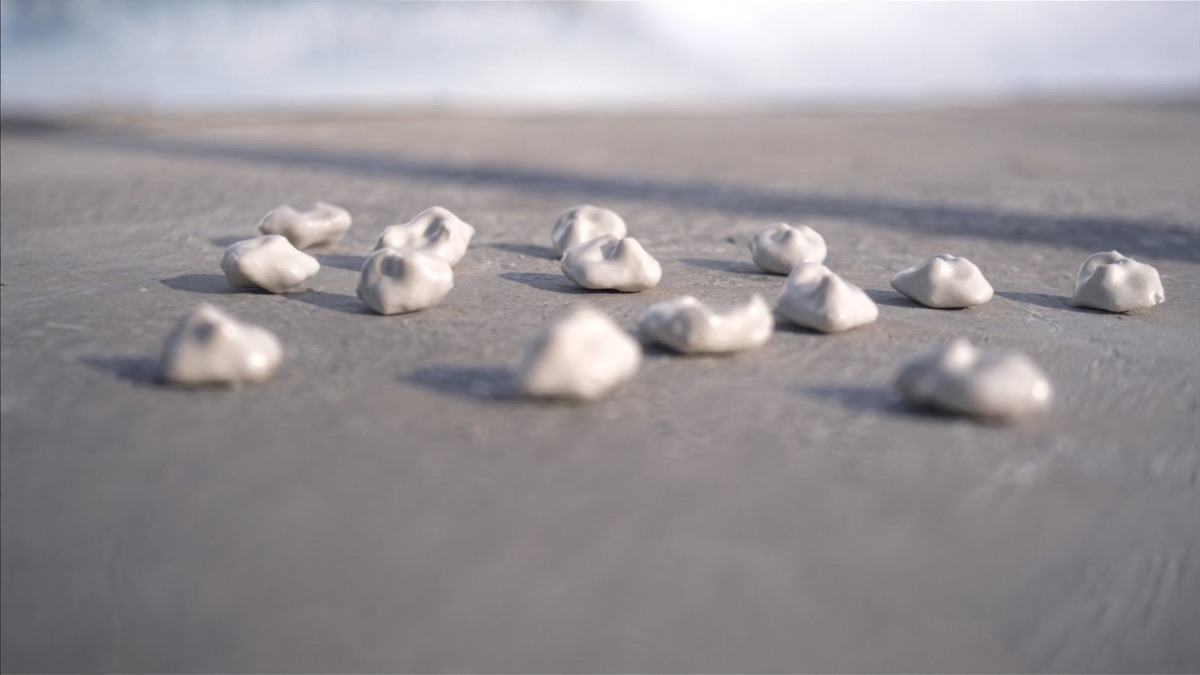
Gum Base Is an Insoluble Polymer, Not a Food Ingredient
The core of any chewing gum, called gum base, is made from synthetic or natural polymers — long chains of repeating molecules bonded together so tightly that water molecules simply cannot pry them apart or dissolve them, unlike sugar or salt whose crystal structures water breaks apart easily.
Most modern gum base uses synthetic elastomers like polyisobutylene or styrene-butadiene rubber, combined with resins and waxes, and none of these components are digestible or nutritionally meaningful — they exist purely to give gum its chewy, elastic, water-resistant texture.
Sugar and Flavoring Sit on Top of the Base, Not Inside It
Sweeteners, flavor oils, and softeners are blended into the gum base during manufacturing but remain chemically separate from the polymer network itself, essentially suspended within it rather than bonded to it, which is exactly why they can dissolve and wash away while the base stays intact.
This is why fresh gum tastes intensely sweet and flavorful for the first few minutes but goes bland afterward — saliva is actively extracting and dissolving the soluble sugar and flavor compounds, leaving the flavorless, insoluble polymer base behind in your mouth.
Saliva Physically Cannot Break Polymer Chain Bonds
Saliva is mostly water along with digestive enzymes like amylase, which are specifically shaped to break down starches and certain proteins by targeting particular chemical bonds — but gum base polymers don't contain those bonds at all, so saliva enzymes have essentially nothing to latch onto or cleave.
Water alone can dissolve substances by surrounding individual molecules and pulling them apart from a crystal or solid structure, but polymer chains in gum base are cross-linked and entangled at a scale water molecules cannot physically penetrate or separate, so the base simply persists.
Digestion Cannot Break Gum Base Down Either
The popular myth that swallowed gum stays in your stomach for seven years is false, but the underlying premise is correct: the human digestive system also cannot break down gum base polymers, since stomach acid and digestive enzymes target biological molecules like starches, fats, and proteins, not synthetic elastomers.
In reality, swallowed gum simply passes through the digestive tract largely unchanged and is eliminated normally within a day or two, the same way other indigestible material like corn kernel hulls or certain seeds pass through without being broken down.
Historically, Gum Base Came From Tree Sap, Not Synthetic Polymers
Before synthetic elastomers existed, gum base was made primarily from chicle, a natural latex tapped from the sapodilla tree native to Central America, which the Maya and Aztec civilizations chewed for centuries before it was commercialized into modern chewing gum starting in the 1800s.
Chicle has the same essential property that makes any gum base work — it's an insoluble natural polymer — but supply constraints and manufacturing inconsistency eventually pushed most commercial gum toward cheaper, more uniform synthetic alternatives by the mid-20th century.
Softeners Keep the Polymer Network From Becoming Brittle
Pure gum base polymer alone would be too stiff and brittle to comfortably chew, so manufacturers blend in softening agents like vegetable oil derivatives or glycerin, which work their way between polymer chains and let them slide past each other more easily without breaking apart the underlying network.
This is a careful balancing act: too little softener and gum cracks or feels tough; too much and it becomes sticky, gooey, and loses its elastic snap, so gum formulations undergo extensive texture testing before reaching commercial production.
Chewing Warms and Kneads the Gum, Extending Its Working Texture
Body heat inside the mouth, typically around 37°C, keeps gum base pliable, since most gum polymers are formulated to have their ideal texture near body temperature — this is why gum left in a cold car becomes hard and brittle, and gum left in a hot car turns into a sticky, shapeless mess.
The physical act of chewing also continuously kneads the polymer network, similar to working bread dough, which helps redistribute remaining softeners and keeps the texture consistent even after most of the flavor has already dissolved away.
Flavor Loss Is a Diffusion Process, Not the Gum 'Running Out'
Flavor and sweetness disappear from gum through simple diffusion: soluble flavor molecules move from a region of high concentration, inside the gum, toward a region of low concentration, the saliva surrounding it, and this process naturally slows down as the concentration gradient shrinks over time.
That's why flavor fades gradually rather than stopping abruptly — early chewing pulls out flavor compounds quickly because the concentration difference is largest, while later chewing extracts them much more slowly since most of what's easily accessible has already diffused out.
Sugar-Free Gum Uses Sugar Alcohols That Resist Bacterial Fermentation
Sugar-free gums typically use sugar alcohols like xylitol or sorbitol instead of sucrose, which taste sweet to human taste receptors but which the bacteria responsible for tooth decay largely cannot ferment into the acids that erode enamel, making sugar-free gum genuinely less harmful to teeth than sugared gum.
Xylitol in particular has been studied specifically for actively interfering with the metabolism of Streptococcus mutans, the primary cavity-causing bacteria species, which is why some dental associations specifically endorse xylitol gum as part of an oral hygiene routine rather than just calling it 'not as bad.'
Chewing Stimulates Saliva Flow, Which Has Its Own Dental Benefit
Beyond whatever sweetener it contains, the physical act of chewing gum stimulates significantly increased saliva production, and saliva itself helps neutralize acids produced by oral bacteria and washes away food particles, which is part of why chewing sugar-free gum after meals is often recommended by dentists.
This mechanical benefit exists independent of gum's flavor or sweetener chemistry entirely — even flavorless gum base alone would still stimulate some additional saliva flow purely through the physical act of chewing.
Gum Base Composition Is Often a Closely Guarded Trade Secret
Unlike food ingredients, which most countries require to be individually listed, many jurisdictions allow gum base to be labeled simply as 'gum base' as a single umbrella ingredient, letting manufacturers protect their exact proprietary blend of elastomers, resins, waxes, and softeners from competitors.
This is different from most other packaged foods, where regulations typically require breaking down a product's full ingredient list in descending order by weight, reflecting gum base's classification in many places as closer to a food-contact material than a conventional food ingredient itself.
Bubble Gum Needs a Specific Elasticity Range to Stretch Without Tearing
Bubble gum requires a gum base formulated for higher elasticity and better film-forming ability than regular chewing gum, since blowing a bubble means stretching a thin membrane of the chewed material without it tearing prematurely — a property standard chewing gum bases aren't necessarily optimized to provide.
Achieving that balance took decades of trial and error; the first stable bubble gum formula, Double Bubble, wasn't successfully commercialized until 1928, decades after ordinary chewing gum had already become a mainstream product.
Gum's Insolubility Is Also Why It's Notoriously Hard to Remove
The same molecular property that lets gum survive an hour of chewing in a wet mouth environment — its insolubility in water — is exactly why gum stuck to fabric, hair, or pavement resists simple washing, since water alone cannot dissolve or loosen the polymer network the way it dissolves salt or sugar stains.
Effective gum removal methods instead rely on temperature extremes, freezing gum brittle so it can be cracked off, or heat to soften it into a smearable state, or on solvents like specific oils that can penetrate and loosen the polymer structure rather than simply washing it away with water.
Gum Manufacturing Involves Precise Temperature-Controlled Mixing
Commercial gum production melts the gum base at controlled temperatures, then mixes in sweeteners, softeners, and flavor compounds in carefully sequenced stages, since some flavor oils are volatile and would evaporate or degrade if added too early or exposed to excess heat during the mixing process.
The mixed gum is then rolled, cooled, cut, and sometimes coated in a hard sugar or polyol shell for stick or pellet-style products, with the entire process engineered to lock in flavor intensity and texture consistency right up until the moment a consumer opens the package.
Regulatory Agencies Classify Gum Base Ingredients Separately From Food
In the United States, the FDA maintains a list of substances specifically approved for use in chewing gum base, distinct from the broader list of substances generally recognized as safe for food, reflecting the unusual reality that gum base is designed to be chewed and mostly not swallowed or digested.
This separate regulatory category exists precisely because gum base behaves so differently from conventional food — it isn't meant to be broken down, absorbed, or metabolized the way virtually every other ingredient in the food supply is.
Modern Synthetic Gum Base Was Partly Driven by Chicle Supply Shortages
Natural chicle supply became increasingly unreliable through the 20th century due to overharvesting of sapodilla trees and disruption of Central American supply chains, pushing chemists to develop synthetic elastomer alternatives that could match chicle's chewability while being manufactured consistently and at far larger industrial scale.
By the mid-20th century, most major commercial gum brands had shifted primarily to synthetic gum base, though a small niche market for chicle-based 'natural' gum persists today, marketed partly on biodegradability claims since synthetic gum bases don't break down easily in the environment either.
Long-Lasting Flavor Gum Uses Encapsulation to Slow Diffusion
Some premium gum products use microencapsulated flavor -- tiny flavor droplets coated in a protective shell that only ruptures gradually under the mechanical pressure of chewing, rather than dissolving instantly into saliva the moment gum enters the mouth.
This engineering trick extends how long flavor lasts by controlling the release rate directly, rather than relying purely on the natural concentration-gradient diffusion that governs how quickly ordinary uncoated flavor compounds wash out of standard gum formulations.
Gum's Shelf Stability Depends on Preventing Moisture Loss
Packaged gum is wrapped to limit moisture exchange with the surrounding air, since gum base and its softeners are formulated around a specific moisture balance -- too much drying out over time makes gum stiff and crumbly well before any of its flavor compounds would naturally diffuse away.
This is why old, improperly sealed gum often turns hard and unpleasant long before its printed expiration date, even though the insoluble polymer base itself doesn't meaningfully degrade -- it's moisture and volatile softener loss, not spoilage in the food-safety sense, that ruins old gum's texture.
Gum's Insolubility Isn't the Same as Being Chemically Inert
Insoluble in water doesn't mean gum base can't react at all -- it simply means water alone can't break its polymer bonds, while certain organic solvents, extreme heat, or strong non-aqueous chemicals can still degrade or dissolve the material under different conditions entirely.
This distinction matters industrially: cleanup products designed to remove gum from carpet or clothing work by exploiting exactly this gap, using solvents formulated to interact with the polymer chains in ways plain tap water structurally cannot.
Sources
- Wikipedia: Chewing gum — History and composition of chewing gum base and flavoring.
- Wikipedia: Polymer — How long-chain polymer molecules resist breakdown by water.
- Britannica: Chewing gum — Encyclopedia overview of chewing gum composition and history.
FAQ
Does chewing gum ever actually dissolve completely in your mouth?
No; the gum base itself is made of insoluble polymers that resist water, so while sugar and flavor compounds dissolve away, a rubbery base residue remains in your mouth for as long as you keep chewing it.
Is it true that swallowed gum stays in your stomach for seven years?
No, that's a myth; swallowed gum passes through the digestive tract largely unchanged, similar to other indigestible material, and is eliminated normally within a day or two, not years.
What was chewing gum made from before synthetic materials existed?
Chicle, a natural latex tapped from the sapodilla tree native to Central America, was the primary gum base ingredient historically, chewed by Maya and Aztec civilizations long before modern commercial gum existed.
Why does gum lose its flavor so quickly compared to how long you can chew it?
Flavor loss happens through diffusion — soluble flavor molecules move from the gum into surrounding saliva fastest when concentration is highest, then slow down naturally as less flavor remains accessible near the surface.
Is sugar-free gum actually better for your teeth, or just marketed that way?
Genuinely better; sugar-free gums use sugar alcohols like xylitol that cavity-causing bacteria largely cannot ferment into tooth-eroding acid, unlike regular sucrose, and some dentists specifically recommend xylitol gum for this reason.
Why does chewing gum become hard in a cold car and gooey in a hot one?
Gum base polymers are formulated to have their ideal chewy texture near body temperature, around 37°C, so temperatures well below or above that range push the polymer network toward brittle or overly soft extremes.
What makes bubble gum different from regular chewing gum?
Bubble gum uses a specially formulated base with higher elasticity and better film-forming ability, allowing it to stretch into a thin membrane without tearing — a property standard chewing gum base isn't optimized for.
Why can saliva dissolve sugar in gum but not the gum base itself?
Sugar has a crystal structure that water molecules can easily surround and pull apart, while gum base is made of long, tangled polymer chains that water cannot physically penetrate or separate at that molecular scale.
Does chewing gum actually help produce more saliva?
Yes; the physical act of chewing mechanically stimulates increased saliva flow regardless of flavor or sweetener, and that extra saliva helps neutralize mouth acids and wash away food particles.
Are gum base ingredients required to be listed individually on packaging?
Often not; many jurisdictions allow manufacturers to label gum base as a single umbrella ingredient rather than breaking down its exact proprietary blend, unlike most conventional packaged foods.
When was the first stable bubble-blowing gum formula actually created?
1928, with the Double Bubble formula, achieved after considerable trial and error to find a gum base elastic and film-forming enough to stretch into a bubble without tearing prematurely.
Why is chewing gum stuck to fabric or hair so hard to wash out with water?
The same insolubility that lets gum survive an hour of chewing in a wet mouth also means plain water cannot dissolve or loosen its polymer network, unlike sugar or salt stains that water dissolves easily.
What actually softens gum enough to remove it, if water doesn't work?
Extreme temperatures work well — freezing gum makes it brittle enough to crack off, while heat softens it into a smearable state — along with certain oils and solvents that can penetrate the polymer structure.
Why did manufacturers largely switch from natural chicle to synthetic gum base?
Natural chicle supply became unreliable through the 20th century due to overharvesting and Central American supply chain disruptions, pushing the industry toward synthetic elastomers that could be produced consistently at larger scale.
Is gum base regulated the same way as ordinary food ingredients?
Not exactly; regulators like the US FDA maintain a separate approval list specifically for gum base substances, reflecting that it's designed to be chewed rather than digested, unlike virtually all other food ingredients.
About the Author
We reference Wikipedia and other authoritative sources to explain the background and current understanding of this topic.
Loved This Article?
Share it on WhatsApp → Share it on WhatsApp
Get more guides in your inbox — Subscribe to our newsletter for weekly surprising stories from Egypt, Saudi Arabia, Dubai, and beyond.