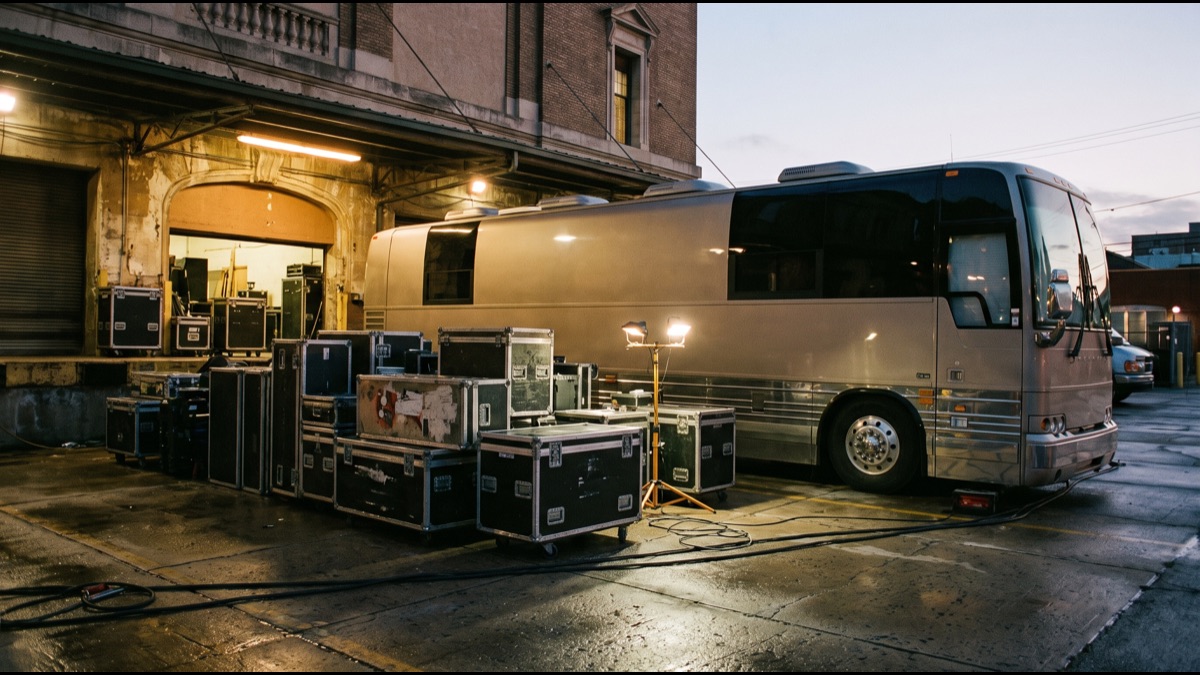
A major concert tour that jumps from one coast to the other and back again within the same two weeks is not a scheduling mistake, even though it looks like one to anyone glancing at the tour poster. Behind almost every announced tour route sits a genuinely brutal logistics puzzle involving venue availability, trucking distance, market demand, and contractual obligations, all of which have to align simultaneously across a schedule that is usually locked in many months before a single ticket goes on sale.
Understanding how that route actually gets built reveals an entire hidden industry of tour logistics that operates almost invisibly to concertgoers, who generally only notice the routing decision when it inconveniences them by skipping their city entirely or scheduling a beloved artist an inconvenient distance away.
Why Tour Routing Is a Genuinely Difficult Optimization Problem
Planning a multi-city tour is structurally similar to a classic logistics optimization problem, requiring a sequence of stops that minimizes wasted travel distance and cost while still visiting every market a tour needs to reach for revenue and audience-building purposes.
Unlike a simple delivery route, however, tour routing must satisfy dozens of additional hard constraints simultaneously, including specific venue availability on specific dates, artist rest requirements between shows, and the physical limits of how far trucks and crew can reasonably travel overnight between one show and the next.
This combination of constraints means there is rarely a single obviously correct route, and professional tour routers often work through many competing draft schedules before settling on one that adequately balances all the conflicting priorities at play.
Who Actually Builds a Tour's Route
Tour routing is typically handled by a dedicated tour manager or booking agent working closely with the artist's management, rather than by the artist personally, since the process requires deep, current knowledge of venue availability and market conditions across dozens of cities simultaneously.
Booking agents maintain ongoing relationships with venues and promoters in specific regional markets, giving them practical insight into which dates and cities are realistically available long before a public tour announcement, information that is not generally accessible to anyone outside the industry.
For major arena and stadium tours, this role frequently expands to include specialized routing consultants who work almost exclusively on the logistics puzzle itself, separate from the creative and business negotiations an artist's core team otherwise handles.
Why Venue Availability Drives Almost Everything Else
Major arenas and stadiums book their calendars years in advance across sports, other touring artists, and local events, meaning a specific desired city on a specific desired date is frequently simply unavailable no matter how much an artist or promoter might prefer it.
This scarcity means tour routing very often works backward from a small set of confirmed, available venue dates rather than forward from an ideal geographic sequence, forcing routers to build a workable path connecting whatever dates they can actually secure.
A tour route that looks geographically inefficient from the outside is frequently the direct result of this constraint, since the seemingly logical nearby city and date simply was not available, forcing a booking into a less convenient sequence elsewhere on the calendar.
How Geography and Trucking Distance Shape the Sequence
Once available dates are identified, routers still try to minimize total travel distance between consecutive shows, since touring productions move enormous amounts of staging, lighting, and sound equipment by truck convoy, and every extra mile of driving directly increases fuel cost and crew fatigue.
A general industry rule of thumb treats an overnight drive of roughly four to six hundred miles as a comfortable maximum between consecutive show dates, beyond which crews need an additional rest day that adds real cost and complexity to the schedule.
This constraint is why tours are frequently organized into regional legs, clustering several shows within a compact geographic area before a longer jump to the next region, rather than crisscrossing a country in a single continuous, geographically chaotic sequence.
Why Market Size and History Determine Which Cities Get Visited at All
Not every market that wants a tour actually gets one, since promoters and artists weigh a city's historical ticket sales, venue capacity, and overall market size against the cost of adding a stop, meaning smaller markets are sometimes skipped entirely regardless of local fan demand.
Data from prior tours by the same artist, or by comparable artists in a similar genre, heavily informs this decision, giving promoters a reasonably reliable predictor of expected ticket sales in a given city before committing venue deposits and marketing spend.
This is why some cities reliably appear on nearly every major tour while comparably sized cities in a different region are visited far less consistently, a pattern driven by accumulated market data rather than any deliberate favoritism toward one region over another.
How Load-In and Load-Out Time Constrains the Schedule
Setting up a full arena production, including staging, lighting rigs, and sound systems, takes many hours of dedicated crew time before doors open, and tearing it all back down afterward for the overnight drive to the next city takes many more hours on top of that.
This load-in and load-out window effectively limits how quickly a touring production can realistically move between two venues, which is a major reason back-to-back shows on consecutive nights are usually scheduled in cities close enough together that the overnight turnaround is physically achievable.
Larger productions with more elaborate staging generally require longer setup windows, which is one reason some of the largest stadium tours schedule multiple rest days between shows even when the venues themselves are geographically close together.
Why Some Tours Route Around Competing Events
Tour routers actively check for major competing events in a target city, including other large concerts, significant sporting events, and major conventions, since these can meaningfully split available consumer spending and attention in that specific market on a given weekend.
Scheduling around a city's existing major events also avoids competition for limited hotel rooms and ground transportation, which can become genuinely scarce and expensive during a city's peak event season, complicating logistics for an unrelated touring production trying to operate at the same time.
This awareness sometimes pushes a tour date earlier or later than would otherwise be geographically ideal, accepting a slightly less efficient route in exchange for avoiding direct competition with an unrelated but significant local event.
How International Legs Add an Entirely Different Layer of Complexity
Touring across international borders introduces constraints that domestic routing does not face at all, including visa and work permit processing time for the entire touring crew, customs clearance for shipped equipment, and significantly longer advance planning windows for each individual market.
Currency fluctuations and local promoter partnerships also shape international routing decisions, since an artist typically works with a different regional promoter in each country or continent, each bringing their own venue relationships and market knowledge to the planning process.
This is part of why international tour legs are frequently announced separately and considerably later than a tour's domestic dates, since the additional planning complexity genuinely takes longer to resolve into a confirmed, bookable schedule.
Why Ticket On-Sale Timing Interacts With the Route Itself
The order in which tickets go on sale across different cities is itself a deliberate decision, often staggered strategically to manage overall demand and website traffic rather than releasing every city's tickets simultaneously, which could overwhelm ticketing infrastructure and cause widespread technical failures.
Strong early sales in one market can sometimes influence whether a promoter adds a second show in that city, which in turn can require reshuffling subsequent dates on the existing route to accommodate the newly added date without breaking the overall geographic logic of the tour.
This feedback loop between real-time ticket sales and the finalized route means a tour schedule, even once publicly announced, is sometimes still genuinely adjusted in its later stages based on how demand is actually materializing in already-announced markets.
How Weather and Seasonality Influence Routing Decisions
Certain regions and routes are deliberately avoided during specific seasons due to predictable severe weather risk, including hurricane season along parts of the southern coastline or heavy winter snowfall through mountain routes that trucking convoys would otherwise need to cross.
Outdoor stadium and amphitheater shows carry additional seasonal constraints beyond simple travel safety, since a rained-out or extreme-heat outdoor show creates genuine safety and financial risk, pushing routers toward indoor arena dates in regions facing unfavorable seasonal weather during the planned touring window.
This is why touring schedules often follow a broadly predictable seasonal pattern across an industry, clustering outdoor stadium shows in temperate months and shifting toward indoor arena dates during winter in colder regions.
Why Artist Rest and Vocal Health Genuinely Limit the Schedule
Touring artists, particularly vocalists, require built-in rest days to avoid vocal strain and general physical exhaustion, a genuine medical and performance consideration rather than a mere scheduling preference, since a damaged voice can force the cancellation of an entire remaining tour leg.
Contracts for major tours frequently specify minimum rest requirements between consecutive performance dates, directly constraining how tightly a route can realistically be packed regardless of how efficient the pure geography and venue availability might otherwise allow.
This human physical limit is one of the least visible but most consistently binding constraints in the entire routing process, since no amount of logistics optimization can substitute for an artist's genuine physical capacity to perform night after night.
How Sponsorship and Local Partnership Deals Affect City Selection
Some tour dates are influenced by sponsorship arrangements tied to specific markets, including deals with regional retail chains, local media partners, or venue-naming sponsors who may specifically want or require a tour stop in their home market as part of a broader partnership agreement.
Local promoters in a specific region often bring their own market knowledge, venue relationships, and sometimes direct financial guarantees to the table, which can meaningfully influence whether and when a tour visits their particular city over another comparable market.
These commercial partnership considerations exist alongside the pure logistics and demand calculations already at play, adding another genuinely real factor that shapes final routing decisions beyond what a purely geographic or financial optimization model alone would produce.
What Happens When a Show Genuinely Has to Be Rescheduled
When illness, extreme weather, or an unforeseen logistics failure forces a single date to be postponed, the rescheduling process must account for the same web of constraints as the original routing, including venue re-availability, crew rest requirements, and the knock-on effect on every other already-confirmed date.
This is why a postponed show frequently cannot simply be rescheduled for the next available weekend, and fans sometimes wait months for a new date, since finding a slot that satisfies every original constraint again is functionally as difficult as the original routing exercise itself.
Major tours build a degree of schedule buffer specifically to absorb this risk, though a sufficiently disruptive event, such as a serious illness requiring extended recovery, can still cascade into rescheduling a significant portion of an entire remaining tour leg.
Why Some Artists Deliberately Choose Inefficient Routes Anyway
Not every routing decision is purely economically optimal, and some artists deliberately choose to visit smaller or less profitable markets specifically to reach loyal fan bases in regions larger tours often skip, accepting a less efficient overall route in exchange for goodwill and long-term fan relationship building.
Charity tour stops, hometown shows, and symbolically significant venue choices similarly sometimes override the pure logistics calculation, reflecting a deliberate artistic or personal decision rather than a routing failure or oversight on the part of the touring team.
These deliberate exceptions are usually a small minority of dates within a much larger, more conventionally optimized tour, meaning the overall route still reflects the standard logistics and market considerations even when a handful of dates clearly do not.
What Fans Can Actually Learn From Understanding Tour Routing
Recognizing that routing reflects a genuinely constrained optimization problem, rather than an arbitrary or careless decision, helps explain why a favorite artist skips a specific city one tour cycle and then returns the next, often due to changed venue availability rather than any change in how the artist feels about that market.
Fans hoping to influence future routing decisions have more leverage than they might assume, since strong historical ticket sales data in a given city is one of the most concrete factors promoters and booking agents actually weigh when deciding whether to include that market on a future tour.
Ultimately, a tour poster represents the visible surface of an extensive behind-the-scenes negotiation between geography, economics, physical logistics, and artist wellbeing, a genuinely complex operation that most audiences never see evidence of beyond the final, seemingly simple list of city names and dates.
Why Cities Sometimes Compete to Land a Tour Date
Some cities actively compete for tour stops by offering financial incentives, discounted venue rental rates, or dedicated tourism marketing support, treating a major touring artist's visit as a meaningful boost to local hotel occupancy, restaurant spending, and broader economic activity during the show weekend.
This competition is most visible for a tour's opening night or a uniquely prestigious venue booking, where cities recognize genuine reputational and economic value in being publicly associated with launching or hosting a headline stop on a major artist's route.
Tourism boards in some markets track touring artist visits specifically as an economic development metric, further evidence that routing decisions carry real financial consequences for host cities well beyond the ticket revenue captured by the venue and promoter alone.
How Data and Software Now Assist the Routing Process
Modern touring operations increasingly use specialized routing and logistics software that models trucking distance, venue availability, and cost constraints simultaneously, helping human routers generate and compare multiple candidate schedules far faster than manual planning alone would allow.
This software does not replace the human judgment involved in weighing market relationships, sponsorship considerations, or an artist's personal preferences, but it substantially speeds up the mechanical part of the process, testing thousands of possible sequences against hard logistics constraints in a fraction of the time manual calculation would require.
The growing availability of historical ticket sales and market demand data has also made routing decisions considerably more evidence-based than in earlier decades, when experienced promoters relied far more heavily on personal relationships and general market instinct alone.
Why a Single Delayed Truck Can Ripple Across the Whole Route
Because touring schedules are built with only modest buffer time between shows, a single truck breakdown, border delay, or severe traffic incident on one leg of the route can genuinely threaten the load-in schedule for the very next date, even if every other part of the tour is running exactly as planned.
Experienced tour managers build contingency plans for exactly this scenario, including backup trucking arrangements and pre-identified alternate routes, precisely because the tight timing inherent in efficient routing leaves little natural slack to absorb an unexpected disruption.
This fragility is part of why routing decisions rarely push convoy travel times to their absolute physical limit even when doing so would shave a small amount of distance, since a route with zero margin for error is a route where one bad day on the highway can cascade into a cancelled show.
Why the Route Stays Secret Until the Announcement Itself
Touring teams deliberately keep full routing details confidential until the official announcement, not only to preserve marketing surprise, but because prematurely revealing still-unconfirmed cities can disrupt ongoing negotiations with venues and promoters no final agreement has yet been reached with.
This operational secrecy means most early leaks about a future tour route come from unofficial sources like venue booking leaks or industry rumor rather than genuine confirmation, and details frequently change between an early leak and the official announcement because negotiation continues right up until the last possible moment.
What looks from a poster like an artist simply choosing which cities to visit is, underneath, the output of a genuinely complex optimization exercise balancing venue availability, geography, market economics, physical logistics, and contractual obligation, all locked in many months before a single fan buys a ticket.
A tour that skips a fan's city is very rarely a snub; it is far more often the simple mathematical consequence of a venue calendar, a trucking distance, or a competing market that made a different routing sequence the only one that actually worked when every constraint was considered together.
Sources
- Wikipedia — overview of concert touring and tour logistics
- Pollstar — touring industry data on venue bookings and ticket sales
- International Air Transport Association — logistics standards relevant to international touring transport
- U.S. Bureau of Labor Statistics — data on entertainment industry logistics and touring employment
FAQ
Why does a tour skip my city entirely?
Usually because no suitable venue was available on a workable date, or historical market data suggested the city wouldn't support the show economically compared to alternatives.
Why do some tours zigzag instead of following a straight geographic path?
Because venue availability, not geography, is usually the primary constraint, forcing routers to connect whatever confirmed dates they could actually secure.
How far in advance is a tour route typically finalized?
Major arena and stadium tours are often routed and substantially locked in six months to a year before public announcement, due to venue booking lead times.
Do artists personally choose which cities to visit?
Artists and management typically set overall priorities and preferred regions, but a dedicated booking agent or tour manager handles the detailed logistics of actual routing.
Can strong ticket demand add a city to a tour after it's announced?
Sometimes, particularly for an added second show in an already-included city, though adding an entirely new city after announcement is harder due to venue and crew scheduling constraints.
About the Author
We reference Wikipedia, Pollstar, the International Air Transport Association, and the U.S. Bureau of Labor Statistics to explain the background and current understanding of this topic.
Loved This Article?
Share it on WhatsApp → Share it on WhatsApp
Get more guides in your inbox — Subscribe to our newsletter for weekly surprising stories from Egypt, Saudi Arabia, Dubai, and beyond.