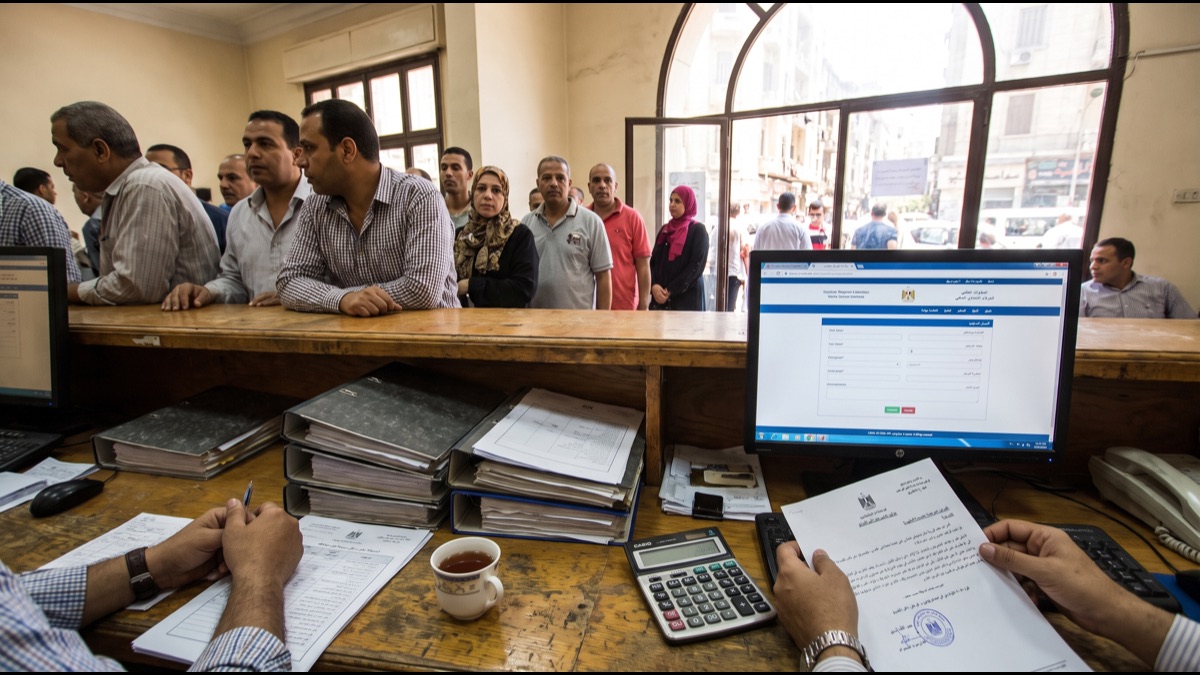
A shop owner in Alexandria expanding into a second location, a freelance designer in Cairo who just landed a corporate client, and a small import business in Giza all eventually run into the same bureaucratic milestone: the point at which Egypt's tax authority expects them to register for value added tax. For many first-time business owners, VAT registration feels like an opaque process wrapped in unfamiliar terminology, yet the underlying logic is fairly straightforward once the pieces are laid out in order — who must register, what triggers the obligation, what paperwork is involved, and what changes once a business is officially in the VAT system.
The Moment Every Growing Business Hits
Most businesses in Egypt do not start out thinking about VAT. A small trading operation, a home-based workshop, or a single-person consultancy typically begins informally, invoicing clients directly and worrying about VAT only once revenue climbs or a client specifically asks for a tax invoice. That moment of realization — when a business first needs to understand its VAT obligations — tends to arrive suddenly, often triggered by a large contract or a customs shipment rather than by careful forward planning.
Understanding the registration process in advance, before that moment arrives under pressure, is what separates a smooth transition into formal tax compliance from a scramble to catch up after the fact.
What VAT Actually Is in Egypt
Value added tax is a consumption tax applied at each stage of the supply chain, from manufacturer to wholesaler to retailer to final consumer, with each registered business in the chain charging VAT on its sales and, in turn, reclaiming the VAT it paid on its own business purchases. The tax ultimately falls on the end consumer, while registered businesses along the way act largely as collection agents on behalf of the state.
Egypt replaced its older general sales tax system with a modern VAT law in 2016, bringing the country's indirect tax structure closer to the value-added model used across much of the world, including most of the Gulf and the European Union, and broadening the base of goods and services subject to tax.
Who Is Legally Required to Register
In broad terms, any person or business supplying taxable goods or services in Egypt whose annual revenue crosses the mandatory registration threshold set by the Egyptian Tax Authority is legally required to register for VAT. This applies to companies, sole proprietors, professional service providers, and in some cases importers, regardless of the specific legal structure under which the business operates.
Registration is not optional once the threshold is crossed — it is a legal obligation, and the Egyptian Tax Authority actively monitors revenue disclosures, customs data, and other indicators to identify businesses that should already be registered but have not yet done so.
The Registration Threshold Explained
Egypt's VAT law sets an annual taxable revenue threshold above which registration becomes mandatory; businesses whose turnover from taxable supplies exceeds that threshold within a twelve-month period must register within the timeframe specified by the tax authority. Because the exact threshold figure can be adjusted through subsequent regulations, businesses approaching what looks like a significant revenue milestone should confirm the current figure directly with the Egyptian Tax Authority or a licensed tax advisor rather than relying on an older number.
What matters more than memorizing a specific figure is understanding the mechanism: the threshold is based on cumulative taxable revenue over a rolling period, not simply revenue in a single calendar month, so a business with seasonal spikes needs to track its trailing turnover carefully rather than reacting only to one strong month.
Voluntary Registration Below the Threshold
Businesses that have not yet reached the mandatory threshold can generally apply for voluntary VAT registration, and many choose to do so for practical commercial reasons rather than legal necessity. A supplier working mainly with large, already VAT-registered corporate clients, for instance, may register voluntarily so those clients can more easily process input VAT on invoices, and so the supplier itself can reclaim VAT paid on business inputs like equipment, raw materials, or professional services.
Voluntary registration does come with the same ongoing compliance obligations as mandatory registration — regular filing, e-invoicing, and record-keeping — so smaller businesses should weigh the administrative burden against the commercial benefit before applying early.
Which Sectors Face Special Rules
Certain categories of goods and services in Egypt are treated differently under VAT law: some are zero-rated, some are exempt outright, and others fall under a separate schedule tax applied at different rates on top of or instead of standard VAT, particularly for specific goods like tobacco, certain beverages, and particular luxury or specialty items. Basic food staples, some medical services, and select educational services are among the categories that typically receive exemptions or reduced treatment.
Exporters generally benefit from zero-rating on qualifying exported goods and services, meaning VAT is not charged on the export sale itself while the exporter can still reclaim VAT paid on related business inputs, a structure designed to keep Egyptian exports price-competitive internationally.
The Egyptian Tax Authority's Role
The Egyptian Tax Authority, operating under the Ministry of Finance, administers VAT registration, collection, e-invoicing compliance, and enforcement nationwide. Over the past several years the authority has invested heavily in digitizing tax administration, moving registration, filing, and invoicing processes onto electronic platforms rather than relying primarily on paper-based procedures at physical tax offices.
This digital shift has made the registration process considerably more standardized than it was previously, though it has also introduced a learning curve for smaller business owners less familiar with navigating government electronic portals and digital identity verification requirements.
Documents You'll Need to Prepare
Applicants preparing to register for VAT in Egypt typically need to gather commercial registration documents proving the business is legally established, a valid tax card or tax identification number if one already exists, proof of the business's physical address, identification documents for the owner or authorized company signatories, and bank account details for the business.
Companies also generally need to provide details of company formation documents, such as articles of incorporation for corporate entities, along with information identifying the individuals authorized to act on the company's behalf in tax matters, since the tax authority needs a clear, verifiable point of accountability for the registered taxpayer.
Applying Through the Electronic Portal
Registration is submitted through the Egyptian Tax Authority's electronic tax services portal, where applicants create an account, upload the required supporting documents, and complete the registration form detailing the nature of the business, expected turnover, and relevant sector classification. The electronic system has largely replaced in-person registration at tax offices for most standard cases, though complex or disputed applications may still require follow-up communication with a local tax office.
Because the portal relies on accurate digital records, applicants should ensure their commercial registration and tax card details are current and consistent across all government systems before beginning the VAT application, since mismatched information is one of the most common causes of processing delays.
Getting Your Tax Registration Number
Once an application is approved, the business receives a VAT registration number, which must then appear on all tax invoices the business issues going forward. This number allows both tax authorities and business counterparts to verify that a supplier is properly registered and authorized to charge VAT on its invoices.
Businesses should display their VAT registration certificate as required and ensure staff responsible for invoicing understand that omitting the registration number, or issuing invoices incorrectly, can create compliance problems for both the issuing business and the client trying to reclaim input VAT on that same invoice.
Understanding Egypt's E-Invoicing Requirement
Alongside VAT registration, Egypt has progressively rolled out a mandatory electronic invoicing system requiring registered businesses to issue invoices through the Egyptian Tax Authority's e-invoicing platform rather than through informal paper or offline digital invoices alone. Each invoice is submitted electronically and receives a unique identifier, giving the tax authority near real-time visibility into taxable transactions across the economy.
This system has been phased in across different business sizes and sectors over several years, and newly VAT-registered businesses should confirm current e-invoicing obligations at the time of registration, since integration typically requires either compatible accounting software or a connection to an approved invoicing intermediary.
Filing Periods and Return Deadlines
VAT-registered businesses in Egypt are required to file periodic VAT returns, generally on a monthly basis, declaring output VAT charged on sales and input VAT paid on qualifying purchases, with the difference either payable to the tax authority or, in some cases, available to carry forward or reclaim as a refund. Missing a filing deadline, even when no tax is ultimately owed for that period, can still trigger administrative penalties.
Maintaining a consistent monthly bookkeeping routine — rather than reconstructing records under deadline pressure — is one of the most practical habits a newly registered business can build early to avoid falling behind on filings.
Input VAT and Reclaiming Tax on Purchases
One of the central benefits of formal VAT registration is the ability to reclaim input VAT — the VAT paid on legitimate business purchases such as equipment, inventory, raw materials, and certain services — against the output VAT collected from customers. This mechanism is what prevents VAT from compounding at every stage of the supply chain and keeps the tax burden ultimately concentrated on the final consumer.
To reclaim input VAT properly, a business needs valid, correctly issued tax invoices from its own suppliers showing their VAT registration details, which is one of the reasons registered businesses increasingly prefer working with other VAT-registered suppliers rather than informal, unregistered ones.
Common Mistakes First-Time Registrants Make
New registrants frequently underestimate how quickly cumulative revenue can cross the mandatory threshold, especially seasonal businesses that experience a sudden spike and only realize afterward that they should have registered earlier. Others delay gathering documentation until a client urgently requests a VAT invoice, creating unnecessary time pressure during the application process.
A second common mistake involves inconsistent business information across government systems — a mismatched address or an outdated commercial registration detail can stall an otherwise straightforward application, so verifying consistency across existing registrations before applying saves considerable back-and-forth later.
Penalties for Late or Missed Registration
Businesses that fail to register once they have crossed the mandatory threshold can face financial penalties, potential back-assessment of VAT that should have been charged and collected during the unregistered period, and added scrutiny in future dealings with the tax authority. Because enforcement has become more data-driven as e-invoicing and digital registration systems mature, the practical risk of remaining unregistered while over the threshold has increased significantly compared to the earlier years of the VAT system.
Businesses uncertain about whether they have already crossed the threshold are generally better served by proactively confirming their status with a tax advisor or directly with the tax authority than by waiting to be identified through an audit or data match.
How VAT Registration Affects Pricing and Contracts
Once registered, a business must decide how VAT interacts with its existing pricing — whether prices quoted to customers are VAT-inclusive or whether VAT will be added on top at the point of invoicing — and update contracts, quotations, and price lists accordingly to avoid disputes with clients over what was actually agreed.
This transition can be commercially sensitive, particularly for businesses serving price-conscious retail customers who may perceive a VAT-inclusive price increase negatively even though the underlying cost to the business has not necessarily changed, making clear communication with customers about the change an important part of a smooth registration transition.
Deregistering When a Business Closes or Shrinks
VAT registration is not necessarily permanent; a business that closes, restructures, or whose taxable revenue falls persistently below the relevant threshold can generally apply to deregister from VAT, ending its ongoing filing obligations. Deregistration involves its own formal process through the tax authority and typically requires settling any outstanding VAT liabilities and filing final returns before the registration is officially closed.
Business owners considering deregistration should be cautious about revenue fluctuating back above the threshold shortly afterward, since re-registering after a gap can itself trigger additional administrative scrutiny.
Why Getting This Right Matters Long Term
VAT registration in Egypt is ultimately less about a single form-filling exercise and more about a business's transition into a more formal, more closely monitored stage of its life, one where invoicing discipline, digital recordkeeping, and periodic compliance become part of routine operations rather than afterthoughts. Businesses that treat registration as an opportunity to build clean financial habits from the start — accurate invoicing, consistent bookkeeping, and timely filing — tend to find the ongoing VAT relationship with the tax authority far less stressful than those who register reactively under pressure and spend years catching up on process gaps.
Ultimately, the mechanics of VAT registration in Egypt reflect a broader shift the country's tax system has undergone: from a largely manual, paper-driven relationship between business and state toward a digitally verified, continuously monitored one, where the businesses that adapt earliest tend to face the fewest surprises later.
Sources
- Egyptian Tax Authority — Official body administering VAT registration, e-invoicing, and tax compliance in Egypt.
- Egyptian Ministry of Finance — Publishes tax legislation and policy updates governing VAT law in Egypt.
- PwC Worldwide Tax Summaries — International tax advisory reference covering VAT frameworks across jurisdictions including Egypt.
- International Monetary Fund — Publishes analysis on Egypt's fiscal reforms including the transition to VAT.
FAQ
Who must register for VAT in Egypt?
Any business or individual whose taxable annual revenue exceeds Egypt's registration threshold must register for VAT with the Egyptian Tax Authority, and certain categories of suppliers must register regardless of revenue level.
Can a business register for VAT voluntarily below the threshold?
Yes, businesses below the mandatory threshold can generally apply for voluntary VAT registration, which is common among suppliers who want to reclaim input VAT or who deal primarily with already-registered corporate clients.
What documents are typically needed for Egypt VAT registration?
Applicants generally need commercial registration documents, tax card details, proof of business address, identification for owners or authorized signatories, and bank account information, submitted through the Egyptian Tax Authority's electronic portal.
What is Egypt's e-invoicing system and how does it relate to VAT?
Egypt's e-invoicing system requires VAT-registered businesses to issue invoices electronically through the Egyptian Tax Authority's platform, allowing near real-time tracking of taxable transactions and improving compliance monitoring.
What happens if a business fails to register for VAT on time?
Late or missed VAT registration can result in penalties, back-assessment of unpaid tax, and complications proving compliance history, which is why the Egyptian Tax Authority encourages businesses to monitor their revenue against the threshold proactively.
About the Author
We reference the Egyptian Tax Authority, the Egyptian Ministry of Finance, PwC's Worldwide Tax Summaries, and the International Monetary Fund to explain the background and current understanding of this topic.
Loved This Article?
Share it on WhatsApp → Share it on WhatsApp
Get more guides in your inbox — Subscribe to our newsletter for weekly surprising stories from Egypt, Saudi Arabia, Dubai, and beyond.