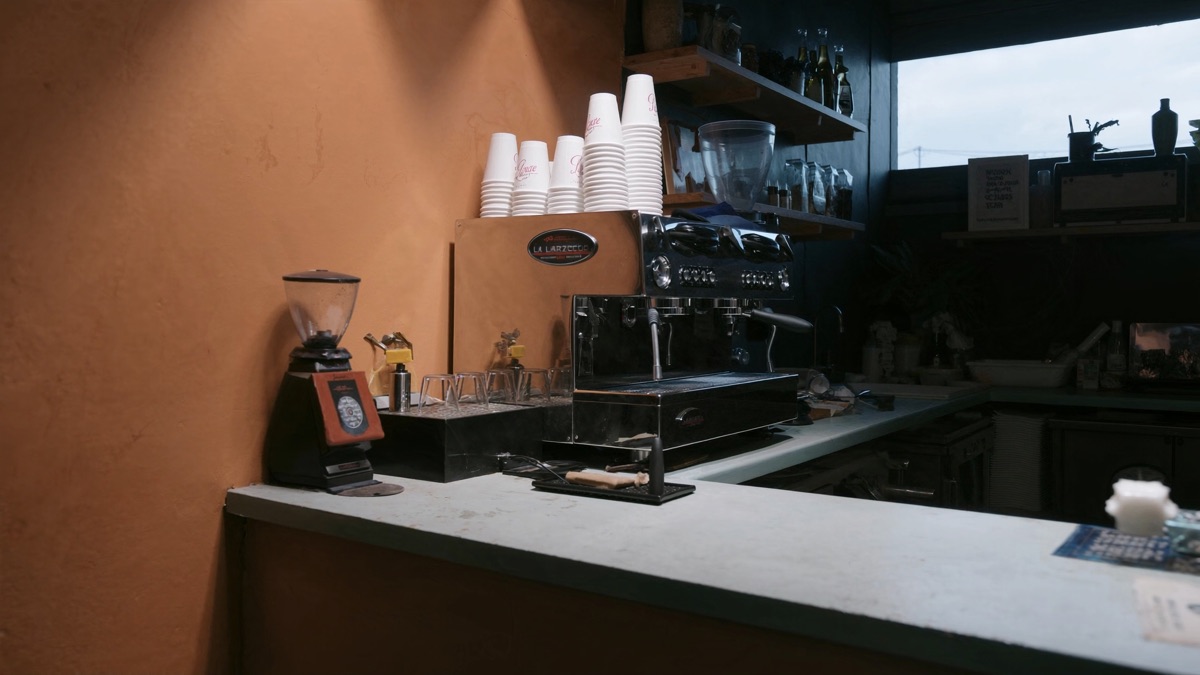
Espresso extraction works by forcing hot water through a compact puck of finely ground coffee at roughly nine times atmospheric pressure, pulling out oils, sugars, and acids in a concentrated 25-to-35-second shot that drip coffee's gravity-fed brewing can never replicate. The combination of fine grind, tight compaction, and forced pressure creates enough resistance that water takes about half a minute to pass through instead of the several minutes drip coffee needs, and that speed under pressure emulsifies coffee oils directly into the liquid rather than letting them float free, producing espresso's characteristic thick body and reddish-brown crema layer on top.
Why Grind Size Is the Single Most Important Variable
Espresso requires a grind far finer than any other brewing method — closer to powdered sugar than the coarse, sand-like grind drip coffee uses — because that fine particle size is what creates enough resistance for water to build the necessary pressure as it's forced through. Too coarse a grind lets water rush through in seconds, under-extracting the grounds and producing a thin, sour, weak shot.
Too fine a grind, conversely, packs the puck so tightly that water can barely pass at all, over-extracting whatever liquid does squeeze through and producing a bitter, burnt-tasting shot that takes far longer than the ideal 25 to 35 seconds. Professional baristas adjust grind size in tiny increments, sometimes multiple times per shift, to compensate for humidity and bean freshness changing how the grounds pack.
How 9 Bars of Pressure Compares to Everyday Reference Points
Standard espresso machines are calibrated to deliver roughly nine times atmospheric pressure at the puck, a figure chosen through decades of trial and refinement rather than any single theoretical ideal — it's roughly comparable to the pressure found about 80 meters underwater, or several times the pressure in a car tire.
This pressure isn't just about forcing water through faster; it physically emulsifies fat-soluble coffee compounds into micro-droplets suspended in the water rather than letting them separate out, which is the chemical basis for espresso's syrupy mouthfeel and its ability to carry flavor compounds that drip brewing, at atmospheric pressure alone, simply cannot dissolve or suspend in the same way.
What Crema Actually Is and Why It Fades
Crema, the reddish-brown foam layer on top of a properly pulled shot, is formed from carbon dioxide gas released by the coffee — trapped inside beans since roasting — that gets whipped into tiny bubbles stabilized by the same emulsified oils the pressure extraction pulled out. Freshly roasted beans, still full of trapped CO2, produce thicker, longer-lasting crema than beans roasted weeks earlier.
Crema naturally dissipates within a minute or two as the bubbles pop and the gas escapes, which is why baristas judge shot quality partly on how the crema looks immediately after pulling rather than treating its disappearance as a flaw — a thin or absent crema at the moment of pulling more reliably signals stale beans or extraction problems than crema that fades a few minutes later on its own.
Why Water Temperature Has to Sit in a Narrow Window
Espresso machines heat water to between 90 and 96 degrees Celsius, a narrower and generally higher range than drip coffee's typical brewing temperature, because that heat is needed to dissolve the right balance of flavor compounds quickly during the brief 25-to-30-second extraction window. Water below this range under-extracts, pulling mostly sour, sharp acids and leaving sweeter, deeper compounds behind in the grounds.
Water above this range risks scorching the grounds and pulling out excessive bitter compounds, particularly if it stays in contact with the puck slightly too long. Commercial machines maintain this temperature with remarkable precision, often within a single degree, using a separate boiler or heat exchanger specifically because temperature swings of even a few degrees measurably change a shot's flavor profile.
How Tamping Pressure Actually Shapes the Puck
Tamping — compressing ground coffee into the portafilter basket with a flat metal tool — creates a level, evenly dense puck so water encounters uniform resistance across its entire surface rather than finding an easy path of least resistance through one uneven, looser patch. An uneven tamp lets water channel through the weakest point, a defect called channeling that under-extracts most of the puck while over-extracting a narrow blown-out path.
Contrary to popular belief among home baristas, the exact force applied while tamping matters less than achieving a level, consistent surface — professional competitions have shown shots pulled with tamping force ranging from roughly 10 to 30 kilograms produce statistically similar extractions, as long as the puck itself is even and free of cracks or gaps around the basket's edge.
The Dose-to-Yield Ratio That Defines a Recipe
A modern espresso recipe is defined by three numbers: dose (grams of dry coffee grounds in), yield (grams of liquid espresso out), and time (seconds the shot takes to pull) — a typical specialty coffee recipe might be 18 grams in, 36 grams out, over 28 seconds, a roughly 1:2 ratio that balances sweetness, body, and acidity for a particular bean.
Adjusting any one of these three numbers changes the final cup even if the other two stay fixed, which is why baristas dialing in a new batch of beans systematically test different ratios and times, tasting each variation, until they find the combination that best expresses that specific roast's flavor characteristics rather than applying one fixed recipe to every bag of coffee.
Why Bean Freshness Changes the Extraction Curve Entirely
Freshly roasted beans continue releasing carbon dioxide for days to weeks after roasting, a process called degassing, and that trapped gas physically interferes with water's ability to saturate the grounds evenly during extraction, often causing the puck to visibly bloom or bubble as gas escapes. Beans used too soon after roasting, typically within 24 to 48 hours, tend to produce uneven, fast-channeling shots regardless of otherwise perfect technique.
Beans that are too old, conversely, have lost much of their aromatic complexity and CO2 along with it, producing flatter, thinner crema and duller flavor even with technically flawless extraction parameters. Most specialty roasters consider the sweet spot for espresso to fall between roughly one and four weeks post-roast, which is why cafe menus and bag labels increasingly display roast dates rather than vague best-by dates.
How Puck Preparation Beyond Tamping Prevents Channeling
Beyond tamping, baristas use distribution tools or a technique called WDT — Weiss Distribution Technique, stirring loose grounds with thin needles before tamping — to break up clumps formed by static electricity and ensure grounds settle into the basket with genuinely even density throughout, not just a level top surface that might hide uneven density underneath.
This step became widespread in specialty coffee only in the 2010s after competitive baristas demonstrated it measurably reduced channeling and improved extraction consistency shot to shot, and it illustrates how much of modern espresso technique is aimed not at any single dramatic change but at eliminating small, hidden sources of unevenness that a rushed or careless preparation routine easily introduces.
Why Under-Extraction and Over-Extraction Taste So Different
Under-extraction happens when water passes through the puck too quickly to dissolve enough of the desirable compounds, leaving a shot that tastes sour, salty, and thin because the fast-dissolving acids came out disproportionately relative to the sugars and deeper flavor compounds that take slightly longer to extract. Over-extraction is the opposite failure — water in contact with the grounds too long or moving too slowly pulls out excessive bitter, astringent compounds from deeper inside the coffee particles.
Between these two failure modes lies a relatively narrow target extraction yield, typically 18 to 22 percent of the dry coffee's mass dissolving into the water, that specialty coffee professionals measure directly using a refractometer — a device that reads dissolved solids in the liquid — to quantify what was once judged by taste and appearance alone.
How Machine Design Standardized What Was Once Inconsistent
Early 20th-century steam-powered espresso machines produced inconsistent, weaker pressure than modern equipment, and it wasn't until the 1940s introduction of a spring-piston lever mechanism, followed later by electric pumps in the 1960s, that machines could reliably and repeatedly hit the roughly nine-bar target that defines espresso today.
Modern commercial machines add further refinements like pre-infusion, a brief low-pressure soak of the puck before full pressure kicks in, which lets the grounds swell and settle evenly, reducing the risk of channeling before the main extraction begins — a feature borrowed directly from lever machines' natural, gradual pressure buildup and reintroduced electronically in high-end equipment.
Why Water Chemistry Quietly Changes Every Shot
The mineral content of the water itself — particularly magnesium and calcium levels — significantly affects extraction, because these minerals bind with and help pull certain flavor compounds out of the coffee; water that's too soft, with very low mineral content, extracts poorly and produces flat, muted shots regardless of otherwise perfect technique.
Water that's too hard, conversely, can over-extract certain compounds while also depositing scale inside the machine's boiler and pipes, degrading performance and eventually damaging expensive equipment. Specialty cafes increasingly filter and remineralize their water to a specific target hardness, treating water chemistry as seriously as bean selection rather than as an afterthought.
Why Milk-Based Drinks Depend on the Same Extraction Fundamentals
A cappuccino or latte still starts with the exact same pressure-extraction process as a standalone shot, and a poorly pulled espresso doesn't improve by being masked with milk — an under-extracted, sour shot still tastes sour under foam, just diluted, which is why professional training emphasizes getting the shot right before ever touching the milk steaming wand.
The ratio of espresso to steamed milk and microfoam defines these drinks far more than any milk-specific technique: a traditional cappuccino uses roughly equal parts espresso, steamed milk, and foam, while a latte uses proportionally more steamed milk and less foam, but both rely entirely on the same well-extracted shot as their flavor foundation.
How Baristas Diagnose a Bad Shot by Sight Alone
A trained barista watches the shot as it pulls, reading visual cues that reveal extraction problems in real time: a shot that starts gushing pale and thin within a few seconds signals channeling or too coarse a grind, while one that barely drips at all, or comes out in irregular spurts rather than a steady stream, signals too fine a grind or an uneven, over-tamped puck.
The color gradient of the stream itself carries information too — a well-extracted shot typically starts dark and thick, gradually lightening in color and thinning in consistency as extraction progresses toward its ideal stopping point, and baristas trained to recognize this gradient can often stop a shot at the right moment purely by sight, without needing to check a timer or scale.
Why the Portafilter Basket's Shape and Holes Matter
The metal basket holding the coffee grounds inside the portafilter has dozens of precisely sized holes at its base, engineered to hold back solid grounds while letting extracted liquid pass freely — a hole even slightly too large lets fine particles called fines leak into the cup, producing a muddy, sediment-heavy shot rather than a clean one.
Basket shape also affects how evenly water distributes across the puck: newer precision baskets use straight, uniform sidewalls and evenly spaced holes calibrated to a specific dose range, replacing older tapered basket designs that tended to concentrate flow toward the center and contribute to channeling around the edges.
How Roast Level Changes What the Extraction Pulls Out
Darker roasts are more brittle and porous than lighter roasts because longer roasting drives out more moisture and breaks down more of the bean's cell structure, which means darker roasts generally extract faster and require a slightly coarser grind to hit the same 25-to-30-second target compared to a denser light roast.
This structural difference is also why the same recipe rarely transfers directly between a light and dark roast of even the same bean — baristas dialing in a new roast almost always start by adjusting grind size first, since roast-driven density differences change how quickly water can move through the puck before any other variable comes into play.
Why Consistency Matters More to Cafes Than Any Single Perfect Shot
A busy cafe pulling hundreds of shots a day cares less about occasionally hitting a theoretically perfect extraction and more about minimizing shot-to-shot variation, since customers expect the same drink to taste the same every visit — this is why commercial equipment, calibrated grinders with dosing consistency, and standardized recipes matter as much as any individual barista's skill.
Volumetric or gravimetric dosing scales built into modern grinders and machines automate the dose and yield measurements that used to depend entirely on a barista's judgment, reducing human variability and letting a cafe reproduce its house recipe reliably across different staff members and different shifts throughout a long day.
Sources
- Specialty Coffee Association — Extraction standards and barista training research
- National Coffee Association — Coffee chemistry and brewing science
- Extraction chemistry research — Reference chemistry background on pressure extraction
FAQ
What makes espresso different from strong drip coffee?
Espresso uses forced pressure (roughly 9 bars) through fine, compacted grounds in under 30 seconds, emulsifying oils directly into the liquid — a chemically different extraction than gravity-fed drip brewing at any strength.
Why does grind size matter so much for espresso specifically?
Fine grind creates the resistance needed to build pressure during the brief extraction window; too coarse under-extracts (sour, thin), too fine over-extracts (bitter) or blocks flow almost entirely.
What is crema actually made of?
Crema is carbon dioxide gas (trapped in beans since roasting) whipped into tiny bubbles stabilized by emulsified coffee oils — fresher beans with more trapped CO2 produce thicker crema.
Why does water temperature need to stay so precise?
Temperature outside the roughly 90-96°C range either under-extracts (too cool, pulling mostly sour acids) or scorches the grounds and over-extracts bitter compounds (too hot) within the brief brewing window.
Does tamping force actually change the shot's flavor?
Less than assumed — a level, evenly dense puck matters far more than the exact kilograms of force applied; competitions show a wide force range produces statistically similar extractions if the surface is even.
What is channeling and why does it ruin a shot?
Channeling is water finding an easy, uneven path through the puck instead of flowing uniformly, under-extracting most of the coffee while over-extracting a narrow blown-out path — usually caused by an uneven tamp or clumped grounds.
How fresh should beans be for the best espresso?
Most specialty roasters consider roughly one to four weeks post-roast ideal — too fresh causes uneven degassing and channeling, too old loses aromatic complexity and produces flat crema.
What does a typical espresso dose-to-yield ratio look like?
A common specialty recipe is roughly 18 grams of dry coffee in, 36 grams of liquid out, over about 28 seconds — a 1:2 ratio, though this varies by bean and desired flavor profile.
Why does water mineral content affect espresso quality?
Minerals like magnesium and calcium bind with and help pull flavor compounds from the coffee; water too soft extracts poorly and tastes flat, while water too hard can over-extract and damage machines with scale buildup.
Does milk in a latte or cappuccino fix a badly pulled shot?
No; an under-extracted, sour shot still tastes sour under milk, just diluted — professional technique emphasizes getting extraction right before ever steaming milk.
How can a barista tell a shot is going wrong just by watching it?
A pale, thin, gushing stream within seconds signals channeling or too coarse a grind; a barely-dripping or spurting stream signals too fine a grind or an uneven, over-tamped puck.
What is pre-infusion and why do premium machines use it?
Pre-infusion soaks the puck at low pressure briefly before full pressure kicks in, letting grounds swell and settle evenly, reducing channeling risk before the main extraction begins.
What extraction yield percentage do professionals target?
Typically 18 to 22 percent of the dry coffee's mass dissolving into the water, measured directly with a refractometer that reads dissolved solids in the finished liquid.
When did espresso machines start reliably hitting 9 bars of pressure?
Spring-piston lever machines in the 1940s first made consistent high pressure achievable, followed by electric pumps in the 1960s that made the roughly nine-bar standard repeatable across shots.
What is WDT and why do specialty baristas use it?
Weiss Distribution Technique stirs loose grounds with thin needles before tamping to break up static-caused clumps, ensuring genuinely even density throughout the puck rather than just a level top surface.
Why do portafilter basket holes need such precise sizing?
Holes even slightly too large let fine coffee particles leak into the cup, producing a muddy, sediment-heavy shot instead of a clean one — precision baskets calibrate hole size and spacing to a specific dose range.
Does roast level change how you should grind for espresso?
Yes; darker roasts are more brittle and porous, extracting faster, so they typically need a slightly coarser grind than a denser light roast to hit the same 25-to-30-second target.
About the Author
We reference Wikipedia and other authoritative sources to explain the background and current understanding of this topic.
Loved This Article?
Share it on WhatsApp → Share it on WhatsApp
Get more guides in your inbox — Subscribe to our newsletter for weekly surprising stories from Egypt, Saudi Arabia, Dubai, and beyond.