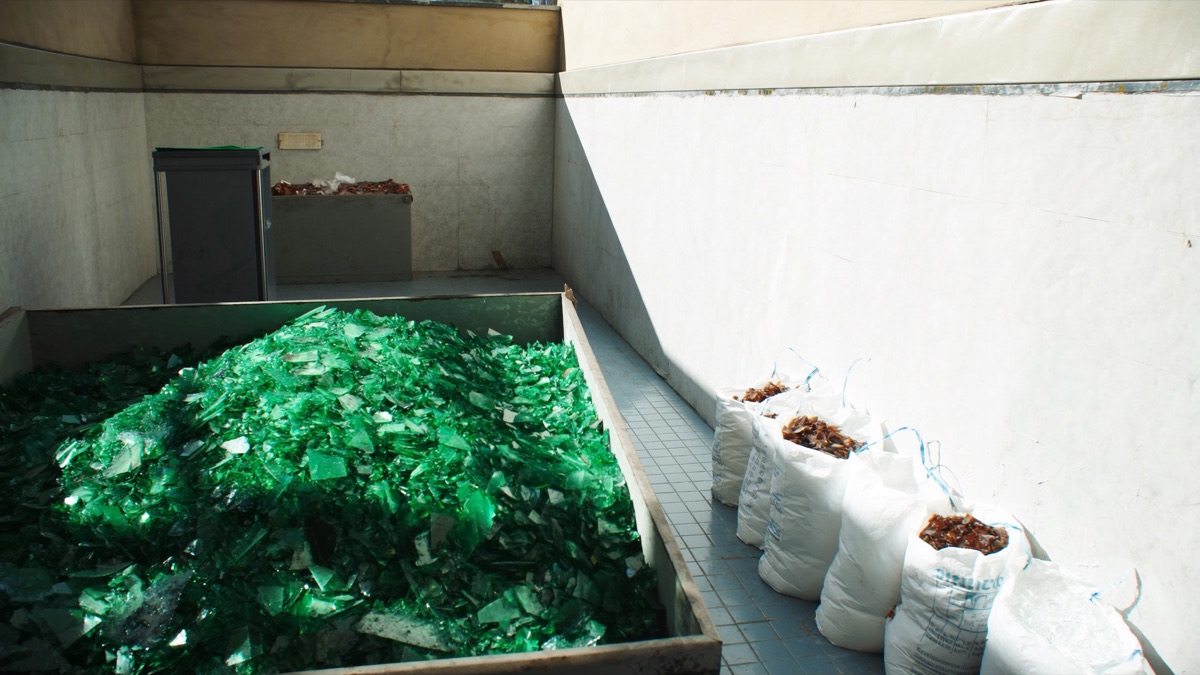
Glass has a genuine claim most recyclable materials can't make: it can be melted down and reformed into new glass indefinitely, with no theoretical limit and no measurable loss in quality or purity, unlike plastic, which typically degrades slightly with each recycling cycle. Yet actual glass recycling rates vary enormously between regions, and the process is far more sensitive to contamination than most people assume, capable of being derailed by something as small as a single ceramic coffee mug mixed into the wrong collection bin. Understanding the full mechanical and chemical process explains both why glass recycling works so well in some places and struggles so badly in others.
Cullet: the recycled glass industry's core raw material
Crushed, cleaned recycled glass is called cullet in the industry, and it functions as a genuinely valuable raw material input to new glass manufacturing rather than merely an environmentally responsible waste-diversion output, because cullet melts at a noticeably lower temperature than the raw virgin materials, silica sand, soda ash, and limestone, used to make glass from scratch, which directly reduces the energy required to run a glass furnace.
Glass manufacturers can typically substitute cullet for anywhere from 25 to as much as 95 percent of the raw material feeding a furnace depending on quality and consistent supply, and every 10 percent increase in cullet content in a furnace's raw material mix reduces furnace energy consumption by a measurable percentage, which is exactly why glass manufacturers actively compete for reliable, clean cullet supply rather than treating recycled glass collection as a purely charitable environmental service.
Why color separation matters more for glass than almost any other material
Unlike aluminum or many plastics, glass color cannot be removed once it's melted into the glass structure during original manufacturing, since color additives, iron oxide compounds for green and brown tints, chromium oxide for green, are chemically fused into the glass itself rather than sitting as a removable coating, meaning a batch of mixed-color cullet can only reliably be remade into darker, mixed-color glass, typically brown or green amber-toned glass, never back into clear glass.
This is why well-run glass recycling programs sort collected glass by color, clear, green, and brown, either at the collection point through separate bins or later at a specialized materials recovery facility using optical color-sorting equipment, because clear glass cullet holds significantly more manufacturing value than mixed-color cullet, and a recycling stream that lets colors mix indiscriminately effectively downgrades a large share of collected clear glass into lower-value colored cullet before it ever reaches a furnace.
The single-stream contamination problem: ceramics, Pyrex, and window glass
Ordinary container glass, bottles and jars, is manufactured with a specific soda-lime chemical formula and melts at a specific, well-characterized temperature, while ceramic dishware, drinking glasses, window glass, mirrors, and heat-resistant borosilicate glass like Pyrex are each manufactured with meaningfully different chemical compositions and melting temperatures, meaning even small amounts mixed into a cullet batch don't melt uniformly alongside container glass in a furnace calibrated for standard soda-lime chemistry.
A contaminant like a ceramic coffee mug shard is particularly damaging because ceramic doesn't melt at glass-furnace temperatures at all; it remains a solid particle embedded within the molten glass, and when that batch is formed into new bottles, the embedded ceramic fragment creates a structural weak point that can cause the finished bottle to spontaneously crack or shatter, sometimes not immediately but months later on a store shelf or in a consumer's hand, which is exactly why glass manufacturers maintain extremely low contamination tolerances and can reject an entire delivered cullet batch over a relatively small ceramic content.
How mechanical sorting facilities catch and remove contaminants
At a materials recovery facility handling mixed recyclables, glass typically arrives already broken from the collection and transport process, and the first sorting step usually uses a rotating screen or trommel to separate glass fragments by size from larger plastic, paper, and metal items, since glass naturally breaks into smaller pieces than most other recyclable materials during collection and handling.
After initial size separation, specialized equipment removes remaining contaminants: magnets pull out any ferrous metal fragments, eddy current separators use induced magnetic fields to eject non-ferrous metal like aluminum caps, and increasingly, optical sorting systems use near-infrared or laser sensors combined with high-speed air jets to detect and physically blow out ceramic, stone, or off-specification glass fragments from the moving cullet stream based on subtle differences in how each material reflects light, a level of automated precision that has substantially improved cullet purity compared to older, purely manual sorting methods.
Melting and forming: how cullet actually becomes a new bottle
Sorted, cleaned cullet is combined with whatever proportion of virgin raw materials, silica sand, soda ash, and limestone, the specific furnace recipe calls for, then fed into a furnace that reaches temperatures of roughly 1,500 degrees Celsius, hot enough to fully liquefy the entire mixture into a homogeneous molten glass with no remaining trace of its cullet or raw-material origin.
That molten glass then flows to a forming machine, most commonly using either a blow-and-blow process for narrow-necked containers like bottles, where compressed air shapes a preliminary parison of glass before a final blow molds it into the finished container shape, or a press-and-blow process more commonly used for wide-mouthed jars, where a metal plunger presses the initial shape before a final blow-molding step, both processes happening within seconds per container on high-speed automated production lines capable of producing hundreds of bottles per minute.
Annealing: the slow cooling step that prevents bottles from shattering
A freshly formed glass bottle, immediately after being shaped by the forming machine, is under significant internal stress caused by uneven cooling, since the outer surface of the hot glass cools and contracts faster than the interior, and glass cooled too quickly under this kind of uneven internal stress becomes extremely brittle and prone to spontaneous shattering, sometimes with no external trigger at all, a phenomenon well documented in glass manufacturing known as thermal shock failure.
To prevent this, every newly formed bottle passes through an annealing lehr, a long, temperature-controlled tunnel oven that gradually reheats the glass to a specific temperature, then cools it down extremely slowly and evenly over a carefully controlled time period, allowing internal stresses to relax and distribute evenly throughout the glass structure rather than remaining locked in as dangerous stress points, a step considered non-negotiable in commercial glass manufacturing regardless of whether the batch used cullet, virgin material, or a mix of both.
Why glass bottle-to-bottle recycling rates vary so much by country
Countries and regions with deposit-return schemes, where consumers pay a small refundable deposit on beverage containers collected back at dedicated return points rather than mixed into general household recycling, consistently achieve dramatically higher glass recycling rates and, critically, much cleaner, less contaminated cullet, since deposit-return collection naturally sorts and separates glass at the point of return rather than mixing it with other recyclables in a single household bin.
By contrast, regions relying primarily on single-stream household recycling, where all recyclable materials go into one shared collection bin, tend to see meaningfully lower glass recovery quality, since glass frequently breaks during collection and transport and becomes contaminated with paper fiber, plastic film, and food residue from other materials in the same bin, contamination that can be sorted out at a materials recovery facility but at real added processing cost and with some unavoidable material loss along the way.
What happens to glass that never becomes a new bottle
Cullet contaminated beyond the tolerance a glass-container furnace requires, or cullet from mixed colors with no viable clear-glass market, doesn't necessarily end up in a landfill; it frequently finds a second useful life in construction and industrial applications with far more forgiving quality tolerances than food and beverage container manufacturing requires.
Crushed glass, sometimes called glass cullet aggregate in this context, gets used as a substitute for natural sand or gravel in road-base construction material, as a component in fiberglass insulation manufacturing, as decorative or functional aggregate in certain concrete and paving mixes, and in a specific reflective road-marking application called glass beads, tiny glass spheres embedded in road paint that reflect vehicle headlights back toward the driver, a genuinely useful downstream application for glass that fails the stricter purity bar container manufacturing demands.
The specific chemistry that makes glass infinitely recyclable
Standard container and window glass is what chemists call soda-lime glass, made primarily from silica sand fused with soda ash, which lowers silica's extremely high natural melting point to something commercially practical, and limestone, which adds chemical stability and durability to the finished product, a formula that remains chemically stable and doesn't degrade or break down into shorter, weaker molecular chains the way many plastics do through repeated heating and reprocessing cycles.
This chemical stability is the fundamental reason glass can genuinely be recycled an unlimited number of times without measurable quality loss, unlike paper fiber, which physically shortens with each recycling pass and eventually becomes too weak to reprocess further, or most plastic polymers, which lose molecular chain length and mechanical strength with repeated melting, meaning glass recycled ten or even a hundred times remains chemically indistinguishable from glass made entirely from virgin raw material.
Why recycling glass saves so much energy compared to making it from scratch
Producing glass entirely from virgin raw materials requires substantially more furnace energy than producing the same glass using a high proportion of cullet, because raw silica sand has a considerably higher melting point than pre-melted cullet, meaning the furnace has to supply significantly more thermal energy to fully liquefy a virgin-material batch compared to a cullet-heavy batch reaching the same molten state.
Industry energy studies consistently find that every 10 percent of cullet substituted into a furnace's raw material mix reduces overall furnace energy consumption by roughly 2 to 3 percent, a relationship that compounds meaningfully at scale, since glass furnaces run continuously for years at a time and even a modest percentage energy reduction across that entire continuous operating period represents a substantial cumulative energy and associated carbon-emission savings for a manufacturing facility.
Glass compared to plastic and aluminum in the broader recycling conversation
Glass carries a genuine, measurable weight disadvantage compared to aluminum or plastic containers, meaning transportation energy and emissions per container are typically higher for glass, both when shipping filled products to consumers and when transporting empty collected containers back to a processing facility, a tradeoff that has to be weighed against glass's chemical recyclability advantage and its complete resistance to leaching chemicals into food or beverages the way certain plastics can under some conditions.
Aluminum, by contrast, is generally considered the most efficiently recyclable common packaging material by weight and energy metrics, since recycling aluminum uses roughly 95 percent less energy than producing new aluminum from raw bauxite ore, an even larger relative energy savings than glass achieves through cullet substitution, though aluminum's own supply chain carries different environmental tradeoffs around bauxite mining that don't apply to either glass or plastic production at all.
What individual households can actually do to improve glass recycling outcomes
Beyond simply placing glass containers in the correct collection bin, the practical actions that measurably improve downstream recycling quality include removing metal lids and caps before disposal, since ferrous and non-ferrous contaminants complicate sorting even though modern facilities can generally remove them, rinsing out food and liquid residue to reduce organic contamination of the collected batch, and critically, never placing ceramic dishware, drinking glasses, window glass, mirrors, or light bulbs into a glass-recycling collection stream regardless of how similar they might look to an ordinary bottle or jar.
This last point matters disproportionately precisely because of how differently these materials behave in a glass furnace: a single consumer genuinely doesn't know, and often has no easy way to find out, that a drinking glass or ceramic mug is chemically incompatible with the container-glass recycling stream, which is exactly why public recycling education campaigns in regions with mature glass-recycling infrastructure specifically and repeatedly call out this distinction rather than treating all glass-like materials as interchangeable.
Sources
- Glass Packaging Institute — Industry data on cullet usage, energy savings, and glass recycling processes
- U.S. Environmental Protection Agency — Federal recycling process and contamination guidance
- European Container Glass Federation (FEVE) — European industry data on glass recycling rates and deposit-return schemes
FAQ
Can glass really be recycled an unlimited number of times?
Yes, and this is chemically unique among common packaging materials. Standard soda-lime glass remains chemically stable through repeated melting, unlike paper fiber or plastic polymers, which physically degrade with each recycling cycle.
Why does glass color matter so much for recycling?
Color additives are chemically fused into glass during manufacturing and can't be removed by melting. Mixed-color cullet can only be remade into darker mixed-color glass, never back into clear glass, which is why recycling programs sort by color.
Why can a single ceramic mug ruin a batch of recycled glass?
Ceramic doesn't melt at glass-furnace temperatures. It remains a solid embedded particle in the molten glass, creating a structural weak point in finished bottles that can cause spontaneous cracking or shattering, sometimes months after manufacture.
What is cullet?
Cullet is crushed, cleaned recycled glass used as raw material in new glass manufacturing. It melts at a lower temperature than virgin raw materials, reducing furnace energy consumption, and can typically make up 25 to 95 percent of a furnace's material mix.
Why do window glass and Pyrex cause problems in glass recycling?
They're manufactured with different chemical compositions and melting temperatures than standard container glass. Mixed into a cullet batch, they don't melt uniformly in a furnace calibrated for soda-lime container glass chemistry.
What is annealing and why does every glass bottle need it?
Annealing is a slow, controlled cooling process in a temperature-controlled tunnel oven that relaxes internal stress in freshly formed glass. Without it, uneven cooling makes glass brittle and prone to spontaneous shattering.
Why do deposit-return schemes produce better recycled glass than curbside bins?
Deposit-return collection naturally sorts glass at the point of return, keeping it separate and clean. Single-stream household bins mix glass with paper, plastic, and food residue, increasing contamination and processing cost.
What happens to glass that is too contaminated to become a new bottle?
It often gets a second life in construction and industrial applications with more forgiving quality standards, such as road-base aggregate, fiberglass insulation, decorative concrete additive, or reflective glass beads used in road paint.
How much energy does recycling glass actually save?
Every 10 percent of cullet substituted into a furnace's raw material mix reduces furnace energy consumption by roughly 2 to 3 percent, because cullet melts at a lower temperature than virgin silica sand.
How does glass recycling compare to aluminum recycling?
Aluminum recycling saves roughly 95 percent of the energy needed to make new aluminum from raw ore, a larger relative savings than glass achieves through cullet substitution, though glass offers unlimited recyclability without any quality degradation.
What should I do with metal caps before recycling a glass bottle?
Remove them. Ferrous and non-ferrous metal caps complicate sorting, even though modern materials recovery facilities can generally remove them using magnets and eddy current separators.
How do sorting facilities actually detect contaminants in a stream of broken glass?
Modern facilities use optical sorting systems with near-infrared or laser sensors combined with high-speed air jets that detect subtle differences in how ceramic, stone, or off-specification glass reflects light, then physically blow the contaminant out of the moving stream.
About the Author
We reference Wikipedia and other authoritative sources to explain the background and current understanding of this topic.
Loved This Article?
Share it on WhatsApp → Share it on WhatsApp
Get more guides in your inbox — Subscribe to our newsletter for weekly surprising stories from Egypt, Saudi Arabia, Dubai, and beyond.