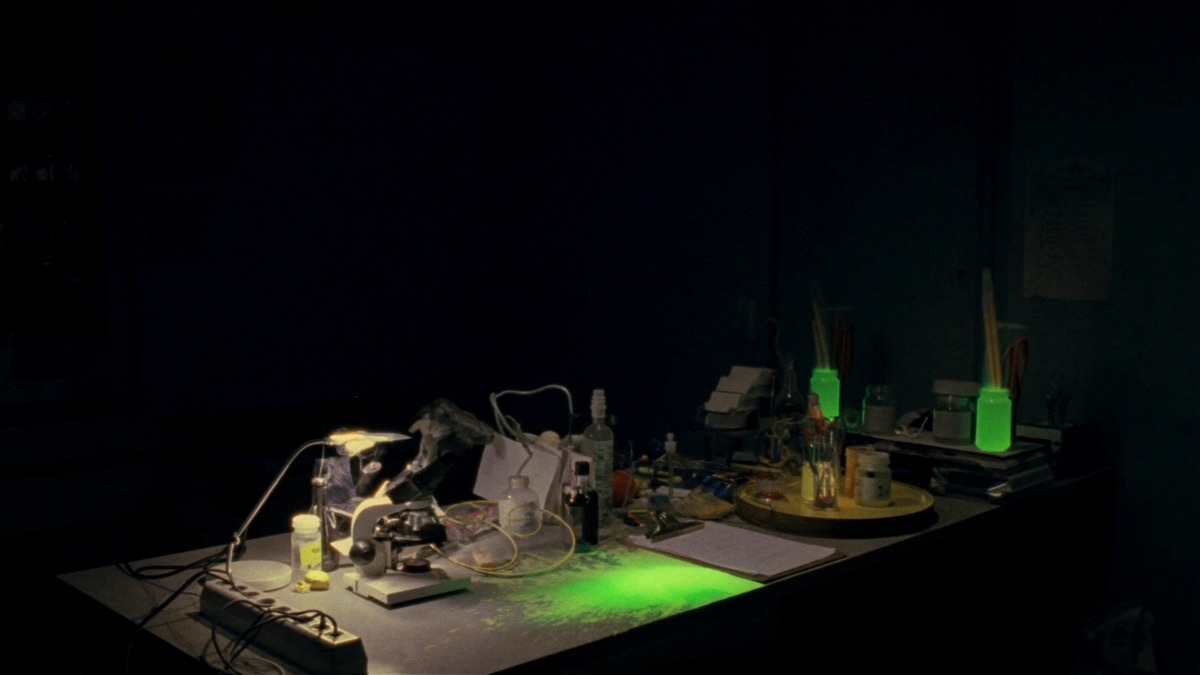
That eerie green or blue glow coming off a watch dial, a star sticker on a child's ceiling, or an emergency exit sign is not magic and, in almost every modern case, not radioactive either. It is phosphorescence: a specific kind of light storage where a mineral absorbs energy from an external light source, traps a portion of that energy inside its own atomic structure for an extended period, and then leaks it back out slowly as visible light long after the original light source has been switched off. Understanding how this actually works means looking closely at electrons, energy states, and a genuinely clever piece of 1990s materials chemistry that made the whole category dramatically brighter and longer-lasting almost overnight.
Phosphorescence versus fluorescence: the key difference
Both phosphorescence and fluorescence involve a material absorbing light and re-emitting it at a different (usually longer) wavelength, but the crucial difference is timing. Fluorescent materials, like the ink in a highlighter pen, re-emit their absorbed light almost instantly — within nanoseconds — which is why a highlighter only appears to glow under a blacklight while that blacklight is actively shining on it, and goes completely dark the moment the light is switched off. Phosphorescent materials, by contrast, trap the absorbed energy in a metastable electron state that is quantum-mechanically 'forbidden' from immediately releasing its energy, forcing electrons to wait — sometimes for hours — before they can drop back down and emit a photon of visible light.
This distinction comes down to something called spin state. In fluorescence, an excited electron drops back to its original energy level quickly because the transition is spin-allowed, meaning it does not require the electron to flip its intrinsic quantum spin. In phosphorescence, the electron gets trapped in what is called a triplet state, which does require a spin flip to return to the stable ground state — a transition physics makes statistically rare on short timescales, which is exactly why the glow fades in slowly over minutes and hours instead of vanishing in an instant.
The old zinc sulfide era, and why it faded fast
For most of the twentieth century, the standard glow-in-the-dark pigment was copper-activated zinc sulfide, a material that does genuinely phosphoresce but with two major practical limitations: it only holds a usable glow for perhaps 20 to 30 minutes before fading below what the human eye can detect, and it degrades noticeably with repeated exposure to light and moisture, losing brightness permanently over years of use. This is the pigment responsible for most of the pale, quickly-fading glow-in-the-dark toys, stickers, and plastic stars that older readers may remember from childhood — genuinely glowing, but only for a short window after the lights went out.
Because zinc sulfide's glow faded so quickly, some products from earlier decades actually did use small amounts of radioactive material, most famously radium, to provide a genuinely continuous, undying glow by using radioactive decay to constantly re-energize a phosphorescent coating rather than relying on stored light at all. This practice, most notoriously associated with radium watch dials in the early twentieth century and the tragic health consequences suffered by the factory workers who painted them (the so-called Radium Girls), was phased out over subsequent decades in favor of safer, non-radioactive alternatives as the health risks became understood and regulated.
Strontium aluminate: the 1993 breakthrough
In 1993, Japanese researchers Takashi Katsumata and colleagues published a discovery that transformed the entire glow-in-the-dark industry: europium-doped strontium aluminate, a phosphorescent compound that could store and release light for ten times longer and shine far brighter than the zinc sulfide it replaced. Where zinc sulfide's glow faded below visibility in half an hour, strontium aluminate products can remain visibly glowing for eight to twelve hours after a good initial exposure to bright light, which is why nearly every modern glow-in-the-dark product — from silicone wristbands to emergency exit path markings in aircraft and buildings — switched to this newer chemistry within a few years of its discovery.
The improvement comes from the specific electron trap depth created by the europium and dysprosium dopant atoms embedded within the strontium aluminate crystal lattice. These dopants create an energy trap that is deep enough to hold excited electrons for a genuinely long time, but not so deep that the electrons can never escape — striking a chemical sweet spot that earlier materials simply hadn't found, allowing a slow, steady trickle of light release measured in hours rather than the minutes zinc sulfide could manage.
Charging the glow: why sunlight works best
Glow-in-the-dark materials need to absorb light energy before they can release it, a process commonly called 'charging,' and the brightness and duration of the subsequent glow depends heavily on both the intensity and the wavelength of the charging light source. Direct sunlight, rich in ultraviolet and high-intensity visible light, charges strontium aluminate pigments far more effectively than typical indoor incandescent or LED room lighting, which is why a glow-in-the-dark item left near a bright window will noticeably outglow the same item charged only under dim household lamps.
The charging process is not instantaneous either — while a brief flash of bright light produces some glow, several minutes of continuous exposure to strong light allows significantly more electrons to become trapped in the excited triplet state, producing both a brighter peak glow and a longer total glow duration. This is why glow-in-the-dark safety signage in buildings is required by many fire codes to be positioned under adequate, unobstructed lighting during normal operating hours — a sign that has been sitting in a dim, poorly lit corridor for weeks may not glow brightly enough to be useful in an actual emergency power outage.
Why the glow always fades, never stops
Unlike a genuinely radioactive glow source, which can theoretically continue producing light for years as radioactive atoms decay, a phosphorescent glow always follows a predictable decay curve: brightest immediately after charging, then fading logarithmically — dropping fast at first, then more and more slowly — as the population of trapped, excited electrons gradually depletes and none are being newly excited without fresh light exposure. This means a glow-in-the-dark item never truly 'runs out' of glow capacity the way a battery depletes permanently; it simply needs re-exposure to light to refill its population of trapped electrons, which it can do indefinitely across essentially unlimited charge-and-glow cycles without meaningful degradation, unlike the older zinc sulfide pigments that did chemically degrade with heavy use.
Temperature also measurably affects both the charging and the glow-release process: phosphorescent pigments generally glow slightly brighter and longer in cooler conditions, because higher temperatures give trapped electrons more thermal energy, making it statistically easier for them to escape the electron trap and emit their photon sooner rather than being held for the maximum possible duration — a small but measurable effect that materials scientists account for when specifying glow-in-the-dark products intended for very hot or very cold operating environments, such as outdoor safety equipment.
Where you actually encounter this chemistry today
Strontium aluminate phosphorescence now appears across a surprisingly wide range of everyday and industrial applications well beyond children's toys: photoluminescent emergency exit signage and stairwell path-marking strips required by modern building fire codes in many countries, glow-in-the-dark paint used on road markings and bicycle infrastructure in some cities to improve nighttime visibility without electricity, watch and instrument dials for divers and outdoor athletes who need readable displays in complete darkness, and even specialized glow-in-the-dark concrete and paving materials used in some pedestrian walkways and driveways as a low-energy alternative to street lighting.
Researchers continue actively working to extend both the brightness and, especially, the duration of phosphorescent glow even further, exploring new dopant combinations and crystal structures beyond strontium aluminate, since a material that could reliably glow visibly for 24 hours or more on a single charge would open up additional safety and low-power lighting applications that current materials, impressive as the 1993 breakthrough was, still cannot fully support.
Testing brightness: how manufacturers actually measure glow
Glow-in-the-dark product quality is not left to guesswork — international standards bodies such as DIN (the German standardization organization) publish formal testing protocols, most notably DIN 67510, that specify exactly how a phosphorescent material must be charged (a standardized light source at a fixed intensity for a fixed duration) and then measured for luminance at set time intervals afterward, typically at 10 minutes, 60 minutes, and several hours post-charge. This lets manufacturers assign a genuinely comparable brightness class to competing products, since two glow-in-the-dark items that look similar on a store shelf under bright light can differ enormously in how long they remain usefully visible once the lights actually go out.
Emergency signage in particular is held to strict minimum luminance thresholds measured in millicandelas per square meter at specific time points after charging, because regulators recognize that a photoluminescent exit sign is only useful if it remains bright enough to be read from a realistic viewing distance throughout the likely duration of a power outage, not just in the first few minutes. Products that fail to meet these thresholds, often because of insufficient pigment loading or a cheaper, lower-grade strontium aluminate formulation, cannot legally be sold as code-compliant safety signage in jurisdictions that have adopted these standards.
The role of particle size and pigment loading
Beyond the underlying chemistry, two very practical manufacturing variables determine how bright and long-lasting a finished glow-in-the-dark product actually is: the particle size of the phosphorescent powder, and how much of it, by weight, is actually mixed into the final paint, plastic, or coating. Finer, more uniformly sized particles generally produce a smoother, more even glow, while coarser particles can sometimes trap slightly more light energy per particle but produce a visibly grainier glow pattern under close inspection — a tradeoff product designers weigh depending on whether the application prioritizes maximum total brightness or a polished, uniform appearance.
Pigment loading, meanwhile, is often the single biggest cost-versus-performance decision a manufacturer makes, since strontium aluminate phosphor powder is considerably more expensive than the base plastic, resin, or paint it gets mixed into. A cheap glow-in-the-dark toy might use only 5 to 10 percent phosphor by weight, sufficient for a fun but modest glow, while premium safety-grade photoluminescent products can use loadings above 30 percent, producing dramatically brighter and longer-lasting results at correspondingly higher material cost — one of the main reasons certified emergency exit signage costs meaningfully more than a superficially similar-looking novelty glow sign.
Beyond strontium aluminate: what researchers are exploring next
While strontium aluminate has dominated the glow-in-the-dark industry for three decades, materials scientists continue actively researching alternative phosphor chemistries that might extend glow duration even further or introduce entirely new emission colors that strontium aluminate's chemistry cannot easily produce, since its natural output sits mostly in the green portion of the visible spectrum. Recent research has explored rare-earth-doped calcium sulfide and various silicate-based phosphors as candidates for deep red and other harder-to-achieve glow colors, applications where strontium aluminate's chemistry runs into fundamental limits regardless of how the dopant concentration is tuned.
Some newer research directions move beyond simple visible-light phosphorescence entirely, investigating persistent luminescent nanoparticles for applications like long-duration biomedical imaging, where a phosphor injected into or applied near biological tissue can be charged externally and then tracked as it slowly releases light from deep within the body without requiring a continuously active, potentially tissue-damaging external light or radiation source — a very different application from a glow-in-the-dark toy, but one that relies on the exact same underlying triplet-state electron trapping physics first mastered commercially by the 1993 strontium aluminate breakthrough.
Sources
- ACS Chemistry of Materials — peer-reviewed background on strontium aluminate phosphor chemistry
- OSHA — historical background on radium dial painting and the Radium Girls
- National Fire Protection Association — building code requirements for photoluminescent emergency signage
FAQ
Are glow-in-the-dark stars and stickers radioactive?
No, virtually all glow-in-the-dark products manufactured since the mid-1990s use non-radioactive phosphorescent pigments like strontium aluminate. Radioactive glow materials such as radium were phased out decades ago due to serious, well-documented health risks and are essentially never used in modern consumer products.
Why does my glow-in-the-dark item glow brighter some nights than others?
The brightness of the glow depends directly on how much light energy the material absorbed during its most recent charging period. An item exposed to strong sunlight for several minutes will glow noticeably brighter and longer than one only briefly exposed to dim indoor lighting.
Does a glow-in-the-dark material ever wear out permanently?
Strontium aluminate-based pigments can be charged and discharged essentially indefinitely without significant degradation, unlike the older zinc sulfide pigments, which did lose brightness gradually with heavy use and light exposure over years.
Why do some glow products appear green while others glow blue?
The exact emission color depends on which dopant elements are combined with the base phosphorescent compound; different dopants create slightly different electron trap energies, which determines the specific wavelength, and therefore color, of light released.
Can glow-in-the-dark paint be charged by moonlight?
Moonlight is reflected sunlight and does contain the right wavelengths, but its intensity is far too low to charge a phosphorescent pigment to any noticeable degree — meaningfully charging glow-in-the-dark material requires a much brighter light source than moonlight provides.
How long does a typical strontium aluminate glow actually last?
After a good charge under bright light, most strontium aluminate products remain visible to the human eye in a dark room for eight to twelve hours, though the glow is brightest in the first hour and fades gradually and continuously after that.
Is glow-in-the-dark chemistry used in any safety-critical settings?
Yes — many building and aircraft fire codes require photoluminescent (glow-in-the-dark) exit signage and path-marking strips as a backup that continues functioning even during a total power failure, since the pigment needs no electricity once charged.
Why does glow-in-the-dark material fade faster in warm rooms?
Higher temperatures give the electrons trapped inside the phosphorescent crystal more thermal energy, making it statistically easier for them to escape their energy trap and release their light sooner, which shortens the overall glow duration compared to cooler conditions.
Can glow-in-the-dark pigment be added to any paint or plastic?
In principle yes, though manufacturers must account for the phosphor's relatively coarse particle size and its sensitivity to processing heat, since some manufacturing methods involve temperatures that can degrade the crystal structure of strontium aluminate and reduce its glow performance if not carefully controlled.
Does washing a glow-in-the-dark fabric item damage the pigment?
Standard machine washing generally does not chemically damage strontium aluminate pigment itself, but repeated abrasion, harsh detergents, or high heat from a dryer can gradually wear away the printed or coated layer containing the pigment, which is why most glow-in-the-dark textile products recommend gentler wash and dry settings to preserve brightness over time.
About the Author
We reference Wikipedia and other authoritative sources to explain the background and current understanding of this topic.
Loved This Article?
Share it on WhatsApp → Share it on WhatsApp
Get more guides in your inbox — Subscribe to our newsletter for weekly surprising stories from Egypt, Saudi Arabia, Dubai, and beyond.