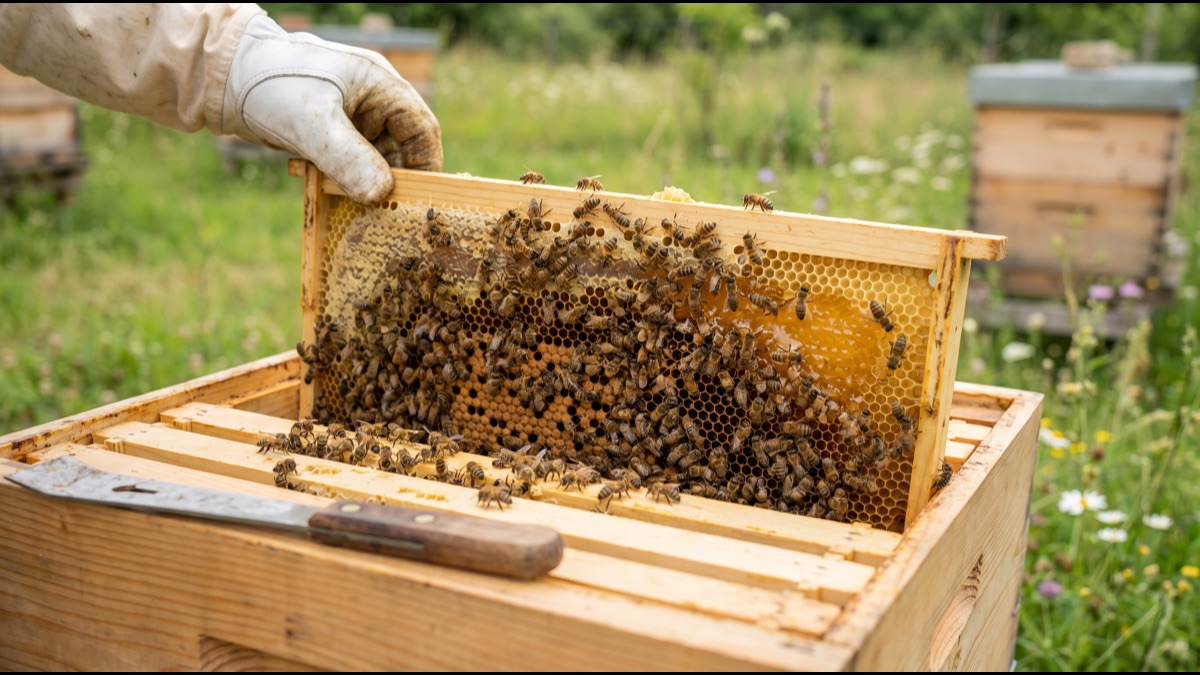
A single jar of honey represents the combined effort of thousands of individual bees, each contributing a small amount of nectar that gets chemically transformed and physically dehydrated inside the hive through a process considerably more involved than simply storing sweet flower liquid in a wax container. Honey's remarkable shelf stability, its capacity to remain edible for years or even millennia under the right storage conditions, is a direct engineering consequence of that transformation process rather than an accident of nature.
Understanding how a colony actually converts raw flower nectar into finished honey, from the specific enzymes a forager bee adds during collection to the careful evaporation and sealing process that happens back at the hive, reveals genuinely sophisticated collective insect behavior operating at a scale and precision that still impresses researchers studying it today.
It also explains why honey varies so dramatically in color, flavor, and texture depending on which flowers a particular colony has been visiting, and why archaeologists have occasionally found genuinely ancient honey that remains perfectly edible after thousands of years sealed away.
Why Honey Is Not Simply Stored Flower Juice
Flower nectar itself is a dilute, watery sugar solution that would spoil quickly if stored unmodified, since its high water content provides an ideal environment for yeast and bacteria to grow, meaning nectar in its raw collected form could never function as the long-term food reserve a colony needs to survive winter months or periods when flowers are scarce.
Converting this perishable raw material into a stable, long-lasting food source requires two distinct transformations, a chemical change to the sugar composition and a physical reduction in water content, both of which the colony performs collectively through a coordinated, multi-stage process rather than any single bee completing the entire conversion alone.
This two-part transformation is precisely why honey production cannot be rushed or approximated; skipping either the enzymatic step or the dehydration step would leave a product that spoils in weeks rather than one that can genuinely last for years in a properly sealed comb cell.
How a Forager Bee Actually Collects Nectar
Forager bees leave the hive specifically to locate flowers currently producing nectar, using a specialized elongated mouthpart called a proboscis to draw the liquid up into an internal storage organ called the honey stomach, a separate compartment from the bee's actual digestive stomach used specifically for transport rather than personal nutrition.
A single forager can visit dozens or even hundreds of individual flowers during one collection trip, gradually filling this storage organ before returning to the hive, with the total volume any one bee can carry representing only a tiny fraction of what a colony needs collectively to produce a meaningful honey surplus.
This division of labor, thousands of individual foragers each contributing a small amount, is what allows a colony to gather enough raw nectar to eventually produce many kilograms of finished honey across a single productive season, a scale no individual bee could approach working alone.
What Happens to Nectar Inside a Bee's Body
While nectar sits in the honey stomach during transport back to the hive, enzymes the bee's body adds to the liquid begin breaking down complex sugars, primarily sucrose, into simpler sugars, mainly glucose and fructose, a chemical transformation that begins the process of turning nectar's sugar chemistry into something closer to finished honey's composition.
This enzymatic action is not a passive byproduct of storage; it is an active biochemical process the bee's body performs specifically during transport, meaning meaningful chemical transformation of the nectar has already begun before the forager even arrives back at the hive to hand off her collected load.
The specific enzyme most responsible for this transformation, invertase, continues acting on the sugars even after the nectar is deposited in the hive, meaning the full chemical conversion from nectar to honey extends across both the collection flight and the subsequent processing that happens inside the colony.
The Waggle Dance That Coordinates an Entire Colony
Successful foragers returning with a rich nectar source communicate its location to other bees through a remarkable movement pattern called the waggle dance, a figure-eight motion performed on the vertical comb surface that encodes both the direction and distance to the flower patch relative to the sun's current position.
Other bees watching this dance can decode the encoded information and fly directly to the same nectar source without needing to search randomly themselves, a genuinely sophisticated form of symbolic communication that lets an entire colony rapidly concentrate its foraging effort on the most productive flower patches available at any given time.
This coordination mechanism is part of why a strong colony can exploit a particularly rich, short-lived nectar flow so efficiently, rapidly redirecting large numbers of foragers toward newly discovered high-value flower sources rather than each bee searching independently and inefficiently across a wide area.
How Nectar Gets Handed Off Inside the Hive
Upon returning to the hive, a forager typically transfers her collected nectar to one or more younger house bees through a process called trophallaxis, essentially a direct mouth-to-mouth exchange, rather than depositing the nectar directly into a comb cell herself.
This handoff serves multiple functions beyond simple labor division, since each exchange gives the receiving bee an opportunity to add further enzymatic processing to the nectar and begin the initial stages of moisture reduction by holding and manipulating the droplet before eventually placing it into an open comb cell for further processing.
The specific bees receiving nectar this way are typically younger workers whose glandular development is optimized for this processing stage, illustrating how the colony's age-based division of labor extends specifically to honey production rather than being organized purely around foraging versus non-foraging roles.
Why Water Content Is the Real Engineering Problem
Fresh nectar typically contains a water content far too high for long-term stable storage, and reducing that water content to the roughly seventeen to eighteen percent level characteristic of finished honey is arguably the single most critical engineering challenge the colony has to solve, since honey's resistance to microbial spoilage depends almost entirely on that specific low moisture level.
Achieving this specific water content is not approximate or accidental; bees can sense moisture levels in stored nectar and will continue processing and repositioning it within the comb until the target concentration is reached, only then sealing the cell with a wax cap to lock in the finished product.
This precise moisture management is why honey harvested prematurely, before bees have completed adequate dehydration, can ferment or spoil in storage, a quality issue beekeepers specifically monitor for by testing moisture content before extracting and bottling honey for sale.
How Bees Actually Evaporate Water From Nectar
To reduce nectar's water content, worker bees spread thin films of the liquid across open comb cells and generate airflow through the hive using coordinated wing-fanning, essentially functioning as a colony-wide ventilation and dehumidification system that accelerates natural evaporation far beyond what would occur passively.
This fanning behavior is coordinated across many bees simultaneously, with worker bees positioning themselves at strategic points to maximize airflow through the hive's internal structure, a genuinely collective physical effort dedicated purely to moisture reduction rather than any single bee's individual task.
The thin-film spreading technique itself maximizes the surface area exposed to this generated airflow, since a thin layer of liquid evaporates considerably faster than the same volume held in a deep pool, an efficient physical strategy that speeds up the water-reduction process across the colony's entire honey stores simultaneously.
What the Wax Cap Actually Seals In
Once nectar has been sufficiently dehydrated and enzymatically converted into what is now genuinely finished honey, worker bees cap the comb cell with a thin layer of beeswax, creating an airtight seal that locks in the low-moisture, chemically stable product and protects it from reabsorbing ambient humidity from the surrounding hive environment.
This wax capping step is what actually completes the honey-making process from the colony's perspective, transforming an open cell of nearly finished honey into a genuinely stable, long-term stored food reserve the colony can rely on during periods when fresh nectar is unavailable.
Beekeepers specifically look for this capped, sealed comb as the signal that honey inside is fully finished and ready for harvest, since uncapped cells may still contain honey with moisture content too high for stable long-term storage outside the hive's controlled internal environment.
Why Honey Almost Never Spoils
Honey's combination of very low water content, naturally acidic pH, and the presence of hydrogen peroxide generated by an enzyme bees add during processing together create an environment genuinely hostile to the bacteria and fungi that would otherwise cause spoilage, explaining why properly stored honey can remain safe to eat for remarkably long periods.
This natural preservation quality is precisely why archaeologists have documented cases of ancient honey, found sealed in tombs and other undisturbed storage contexts thousands of years old, that remained chemically stable and reportedly still edible, a testament to just how effective the colony's dehydration and chemical processing actually is at preventing spoilage.
Honey can still crystallize or absorb moisture if stored improperly, changes in texture that do not necessarily indicate spoilage but do reflect the delicate moisture balance the bees worked so precisely to achieve during the original honey-making process inside the hive.
How a Single Colony Produces So Much Honey
A healthy, well-established honeybee colony can include tens of thousands of individual worker bees during peak season, and the cumulative effect of this enormous workforce, each contributing small amounts of nectar collection and processing effort, is what allows a single colony to produce many kilograms of surplus honey beyond what it actually needs to survive.
This surplus production is itself a survival strategy rather than mere abundance, since colonies evolved to overproduce honey specifically as insurance against unpredictable future conditions, poor weather, disease, or reduced flower availability, that could otherwise threaten the colony's survival if reserves were calculated too precisely against average expected need.
Beekeepers rely directly on this evolved overproduction tendency, since a colony's natural surplus is what allows a portion of stored honey to be harvested for human use without threatening the colony's own survival, provided beekeepers leave an adequate reserve for the bees themselves.
Why Different Flowers Produce Different Honey Flavors
The specific flower species a colony forages from directly shapes the resulting honey's flavor, color, and aroma, since different plant nectars carry distinct sugar ratios, trace compounds, and pollen characteristics that survive the processing steps and remain detectable in the finished product.
This is why single-flower-source honeys, produced when a colony forages predominantly from one specific blooming plant during a concentrated period, carry distinctly recognizable flavor profiles, while wildflower or multi-source honey produced across a more varied foraging season tends toward a more blended, less singularly distinctive taste.
Regional and seasonal variation in available flowering plants is precisely why honey from different areas and different times of year can taste, look, and smell meaningfully different even when produced by the same general species of honeybee under otherwise similar hive management practices.
How Beekeepers Actually Harvest Without Destroying the Colony
Modern beekeeping practice involves carefully removing only capped honeycomb frames containing genuine surplus beyond what the colony needs, uncapping the wax seal, extracting the honey through centrifugal spinning that pulls it out of the comb structure without destroying the comb itself, and then returning the intact comb frames to the hive for bees to reuse and refill.
This comb-preserving extraction technique significantly reduces the energy and resources a colony must expend rebuilding wax comb structure from scratch after each harvest, since comb construction itself requires considerable energy investment from the colony that direct comb-destroying harvest methods would otherwise waste unnecessarily.
Responsible beekeepers also monitor seasonal timing and colony strength carefully before harvesting, ensuring enough honey remains in the hive to sustain the colony through lean periods, treating honey harvest as a carefully managed surplus extraction rather than simply taking everything a colony has produced.
Why Bees Make Far More Honey Than They Need
A colony's honey production capacity, when conditions are favorable, routinely exceeds what would be strictly necessary for the colony's own survival through an average winter or lean period, an evolutionary overshoot that reflects the genuine unpredictability of future conditions a colony cannot know in advance when actively producing and storing honey during a productive season.
This built-in production surplus is precisely what makes commercial and hobbyist beekeeping economically and practically viable at all, since without a colony's natural tendency to overproduce relative to strict need, there would be no genuine surplus available for humans to harvest without directly threatening colony survival.
Beekeepers who understand this dynamic manage their hives specifically to support and encourage this natural overproduction tendency, providing adequate hive space, monitoring for disease, and ensuring strong nearby forage availability, rather than simply extracting honey passively from colonies left otherwise unmanaged.
How Climate and Region Shape Regional Honey Varieties
Different climates and regional flowering seasons produce distinctly different honey varieties worldwide, from lighter, milder honeys typical of temperate flowering seasons to darker, more robust honeys associated with specific regional plants, including varieties produced in parts of the Middle East from desert and mountain flora adapted to arid growing conditions.
This regional variation reflects the same underlying biological process, nectar collection, enzymatic conversion, and dehydration, applied to whatever specific flowering plants happen to be locally available, meaning honey genuinely functions as an edible reflection of a specific region's flora and growing season rather than a standardized, uniform product regardless of origin.
Specialty and premium honey markets have increasingly emphasized this regional distinctiveness, marketing honey from specific flower sources or geographic regions the same way specialty coffee or wine markets emphasize origin and varietal characteristics as meaningful quality and flavor differentiators.
What Modern Science Has Confirmed About Ancient Honey Finds
Laboratory analysis of genuinely ancient honey samples recovered from sealed archaeological contexts has confirmed that the chemical properties responsible for honey's remarkable shelf stability, low moisture, acidic pH, and antimicrobial compounds, remain intact and functional even after thousands of years, provided the original seal preventing moisture reabsorption remained genuinely undisturbed.
This scientific confirmation validates what beekeepers and honey consumers have informally understood for centuries: honey's stability is not folklore or exaggeration but a direct, measurable consequence of the precise chemical and physical transformation process bee colonies perform every single time they convert raw nectar into finished, capped honey.
That transformation, invisible to anyone simply enjoying a spoonful of honey at breakfast, represents one of the more genuinely impressive examples of collective insect engineering found anywhere in the natural world, a process refined by evolution over millions of years into something humans have only recently begun to fully understand at the chemical level.
Sources
- Wikipedia — overview of honey composition, production process, and preservation properties
- Food and Agriculture Organization — background on global beekeeping practices and honey production
- USDA Agricultural Research Service — research on honeybee biology, foraging behavior, and hive processes
- Smithsonian Institution — background on honeybee communication and colony behavior research
FAQ
Why does raw nectar need to be transformed before it becomes honey?
Fresh nectar has a high water content that would let bacteria and yeast grow quickly, so bees add enzymes to change its sugar chemistry and evaporate most of the water, producing a stable, long-lasting food source instead.
What is the waggle dance and why does it matter?
It is a figure-eight movement pattern successful foragers use to encode the direction and distance to a rich nectar source, letting other bees fly directly there instead of searching randomly, which lets a colony rapidly concentrate effort on the best flowers available.
Why doesn’t honey spoil like other natural sweet liquids?
Its very low water content, acidic pH, and hydrogen peroxide generated by an enzyme bees add during processing together create conditions genuinely hostile to the bacteria and fungi that would otherwise cause spoilage.
Can beekeepers harvest honey without harming the colony?
Yes — responsible beekeeping removes only surplus capped honeycomb, extracts honey without destroying the comb structure, and leaves enough reserves for the colony to survive lean periods, relying on bees’ natural tendency to overproduce relative to their own needs.
Why do different types of honey taste so different from each other?
The specific flowers a colony forages from directly shape the resulting honey’s sugar ratios, trace compounds, and aroma, so single-flower-source honeys taste distinctly different from multi-source wildflower honey collected across a varied season.
About the Author
We reference Wikipedia and other authoritative sources to explain the background and current understanding of this topic.
Loved This Article?
Share it on WhatsApp → Share it on WhatsApp
Get more guides in your inbox — Subscribe to our newsletter for weekly surprising stories from Egypt, Saudi Arabia, Dubai, and beyond.