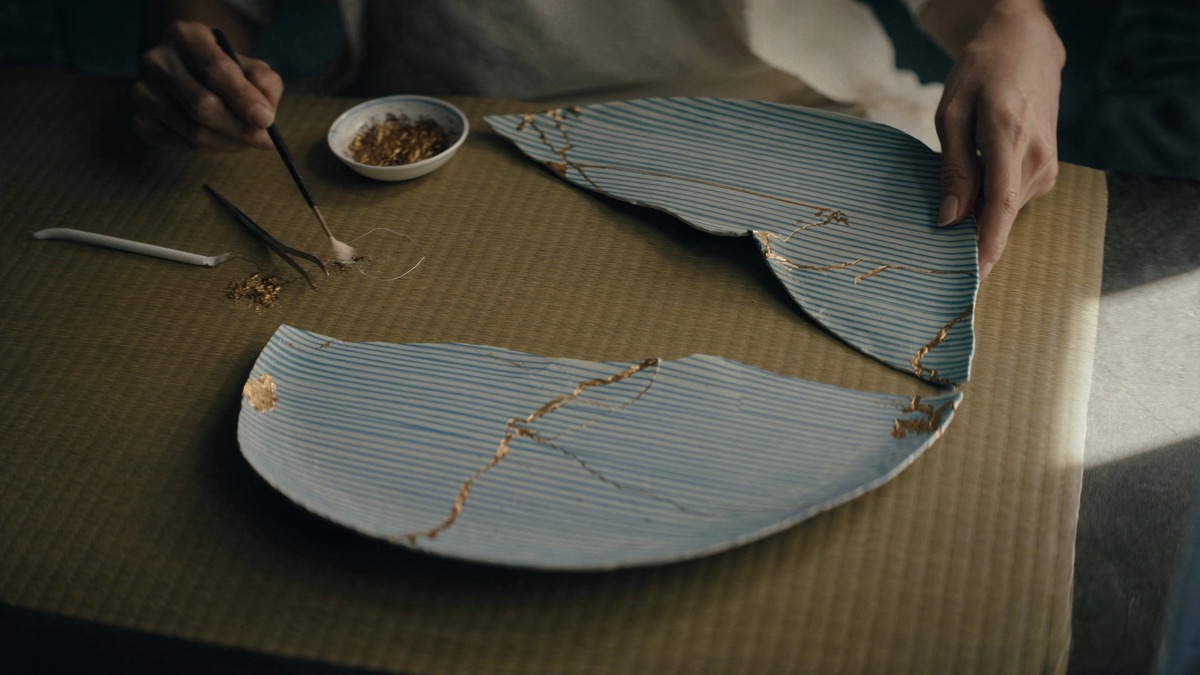
Kintsugi does not try to disguise a broken ceramic piece so it looks unbroken again. It deliberately highlights every crack with a fine gold-dusted seam, treating the breakage itself as part of the object’s history rather than a flaw to be hidden, an approach rooted in a specific Japanese lacquer craft tradition rather than a purely decorative technique.
The Lacquer That Actually Does the Repairing
Traditional kintsugi does not use modern epoxy or glue as its primary bonding agent; it uses urushi, a natural lacquer derived from the sap of the Asian lacquer tree, which has been used in Japanese craft for well over a thousand years for its durability and resistance to water, heat, and mild acids.
Urushi cures through a chemical reaction with moisture in the air rather than by drying out, a slow process that can take anywhere from several days to several weeks per layer depending on humidity and temperature, which is a large part of why a proper kintsugi repair is measured in weeks or months rather than hours.
Mugi-Urushi: Mixing Lacquer Into an Actual Adhesive
To rejoin two broken pieces, a restorer typically mixes raw urushi with wheat flour and water to create a stronger adhesive paste called mugi-urushi, which is applied thinly to both broken edges before the pieces are pressed back together and held in precise alignment while the lacquer begins to cure.
Getting this alignment exactly right matters enormously, since even a small gap or misalignment at this stage becomes permanently visible in the finished repair and can also weaken the structural bond holding the piece together for everyday use.
Filling Gaps and Missing Fragments
When a piece is chipped or a fragment is genuinely missing rather than simply cracked, restorers use a thicker lacquer putty, often mixed with a fine powder such as clay dust or ground stone, to rebuild the missing volume before the surface finishing stages begin.
This filling step requires the restorer to sculpt the missing material by hand to match the original object’s curvature and thickness, since the final metal-dusted seam will only look convincing if the underlying shape beneath it is genuinely accurate.
Why Gold Is Only the Final, Thinnest Layer
Despite kintsugi being popularly associated with gold, the actual precious metal used is typically a very fine powder, dusted onto a final layer of still-tacky lacquer rather than mixed directly into the structural repair itself, since pure gold offers essentially no structural strength on its own.
This final metal-dusting step is purely decorative and protective, sealing and highlighting the lacquer seam underneath, which means the real structural work of the repair is entirely done by the urushi lacquer layers applied earlier, not by the gold that gets all the visual attention.
Silver, Platinum, and Other Metal Options
While gold is the metal most associated with kintsugi in popular understanding, traditional practice also uses silver and, less commonly, platinum powder, and modern practitioners sometimes use bronze, copper, or even colored pigments for a different visual effect than the classic golden seam.
The choice of metal is partly aesthetic and partly practical, since gold is more chemically stable and resists tarnishing far better than silver, which can darken over years of handling and exposure to air, meaning the metal choice also affects how the repair will age over decades of use.
The Philosophy Behind Deliberately Visible Repair
Kintsugi is closely associated with the Japanese aesthetic concept of wabi-sabi, which finds genuine beauty in imperfection, impermanence, and the visible marks of age and use, rather than treating damage as something that must be erased to restore an object’s worth.
Under this philosophy, a kintsugi-repaired piece is not considered merely restored to its previous condition; it is considered a new object with its own distinct history and character, one that a flawlessly repaired or entirely undamaged piece could never actually possess.
The Historical Origins of the Technique
Kintsugi is widely believed to have emerged in Japan around the late fifteenth century, with one popular account describing a shogun who sent a damaged Chinese tea bowl back to China for repair and was reportedly dissatisfied with the crude metal staples used to mend it, prompting Japanese craftsmen to develop a more refined lacquer-and-metal repair method instead.
Regardless of the precise historical accuracy of that specific anecdote, the technique developed and spread within the context of Japanese tea ceremony culture, where imperfect, hand-made, and repaired vessels were already prized over flawless mass-produced ones for the sense of history and human presence they carried.
How Long a Proper Repair Actually Takes
A genuinely traditional kintsugi repair using authentic urushi lacquer can take anywhere from one to several months from start to finish, since each lacquer layer must fully cure before the next can be safely applied, and rushing this curing process produces a weaker, less durable repair.
This extended timeline is a significant part of why traditional kintsugi restoration commands high prices from professional practitioners, and it is also why a large market of faster, epoxy-based kintsugi-style kits has emerged for hobbyists who want the visual aesthetic without the months-long commitment of authentic lacquer work.
The Rise of Epoxy Kintsugi Kits for Beginners
Modern hobbyist kintsugi kits typically replace urushi lacquer with a two-part epoxy resin mixed with metallic powder or paint, a combination that cures in hours rather than weeks and requires no specialized handling precautions, unlike raw urushi, which can cause a genuinely severe skin reaction similar to poison ivy in people not accustomed to working with it.
While these epoxy kits allow far more people to practice the visual technique at home, purists distinguish sharply between this modern craft hobby and traditional urushi kintsugi, since the epoxy version lacks both the specific material properties and the centuries-old craft lineage of the authentic lacquer method.
Why Some Repaired Pieces Become More Valuable Than the Original
In certain cases, particularly with historically or culturally significant ceramics, a well-executed kintsugi repair performed by a recognized master craftsman can actually increase a piece’s value and desirability among collectors compared to its pre-broken state, precisely because the repair itself becomes an additional layer of craftsmanship and history.
This dynamic is essentially the opposite of how Western art restoration philosophy traditionally approached damage, where the primary goal was usually to make a repair as invisible as possible, underscoring how differently the two traditions have historically defined what it means for a damaged object to be successfully restored.
Why the Technique Is Not Simply Gluing and Painting
A common misconception treats kintsugi as ordinary ceramic gluing followed by gold paint applied over the cracks, but the traditional method uses no synthetic adhesive at all, relying instead on natural lacquer that chemically cures and hardens through a slow oxidation process rather than the fast solvent-evaporation drying used by modern glues.
This distinction matters structurally as well as aesthetically, because urushi lacquer forms a genuinely durable bond capable of holding functional tableware together for decades of normal use, whereas a piece repaired with ordinary craft glue and gold paint is typically decorative only and would fail under the stress of actual dishwashing or hot liquids.
The Specific Tree Sap That Makes the Whole Process Possible
Urushi lacquer comes from the sap of the urushi tree, a relative of poison ivy and poison oak, harvested through controlled scoring of the bark in a process closely related to how rubber or maple syrup is collected, and the raw sap must be carefully filtered and refined before it becomes usable as a repair material.
Because the sap contains urushiol, the same compound responsible for poison ivy's skin-irritating effects, artisans working with raw or partially cured lacquer must take precautions against skin contact, and it is only once the lacquer has fully cured through oxidation that a repaired piece becomes completely safe to handle and use normally.
Why Humidity, Not Heat, Cures the Lacquer
Unlike most adhesives and finishes that cure through evaporation or heat exposure, urushi lacquer hardens through an enzyme-driven oxidation reaction that specifically requires high humidity to proceed correctly, which is why traditional kintsugi workshops cure repaired pieces inside a humid enclosed cabinet called a muro rather than simply leaving them to dry in open air.
A curing environment that is too dry can leave the lacquer perpetually tacky or improperly hardened, while one that is properly humid allows the enzyme laccase within the sap to drive a controlled hardening process that can take anywhere from several days to multiple weeks depending on layer thickness and ambient conditions.
How Artisans Handle Completely Missing Fragments
When a broken piece is missing a fragment entirely rather than simply cracked, restorers build up the missing section using a paste made from lacquer mixed with materials like clay powder or rice flour, sculpting it by hand in thin layers to match the original vessel's curvature before the final gold-dusted lacquer layer is applied over the reconstruction.
This rebuilding process demands considerable sculptural skill in addition to lacquer expertise, since the restorer must accurately infer and recreate the missing shape using only the surrounding intact fragments as a reference, without the benefit of a mold or a surviving matching piece to copy directly.
Why Professional Training Takes So Long
Becoming a proficient kintsugi and urushi lacquer artisan traditionally requires years of apprenticeship, since the material behaves differently depending on temperature, humidity, layer thickness, and the specific type of ceramic or porcelain being repaired, and mastering this variability takes sustained hands-on practice that cannot be shortened through classroom instruction alone.
Many professional restorers in Japan continue refining their technique for a decade or longer even after completing formal training, and the most respected practitioners are often sought out specifically for museum-quality restorations of historically significant ceramics where an amateur repair could permanently diminish the piece's value.
The Difference Between Kintsugi and Related Japanese Repair Terms
Kintsugi specifically refers to gold-joined repair, but it exists within a broader family of related Japanese terms describing variations on the same lacquer-repair tradition, including gintsugi for silver-finished repairs and yobitsugi, a technique where a mismatched fragment from an entirely different piece of pottery is deliberately incorporated into the repair for aesthetic contrast.
Collectors and specialists distinguish carefully between these terms because each implies a different repair philosophy and finished appearance, and conflating them, as often happens in casual Western usage where "kintsugi" is used as a catch-all term, can obscure meaningful distinctions in traditional Japanese ceramic restoration practice.
Why Some Restorers Consider Cheap Kits Controversial
The rise of inexpensive beginner kits using epoxy resin and gold-colored powder rather than genuine urushi lacquer has made the aesthetic accessible to hobbyists worldwide, but many traditional practitioners view these kits critically, arguing that epoxy-based repairs lack both the long-term durability and the cultural authenticity of genuine lacquer work.
Epoxy repairs typically cannot withstand hot liquids or dishwasher use the way properly cured urushi lacquer can, and because epoxy does not bond and age the same way natural lacquer does, kits marketed as "kintsugi" are, strictly speaking, closer to a visually inspired craft technique than a continuation of the traditional restoration method.
How Kintsugi Connects to Wabi-Sabi Aesthetics
Kintsugi is frequently discussed alongside the broader Japanese aesthetic philosophy of wabi-sabi, which values imperfection, impermanence, and the beauty found in age and wear rather than pursuing an idealized, flawless appearance, and the visible gold seams of a repaired piece are often cited as a physical embodiment of that philosophy.
This connection has made kintsugi a popular reference point well beyond ceramics, frequently invoked in psychology, design, and self-help contexts as a metaphor for resilience and finding value in past damage, even though the technique's actual historical origin was primarily practical and aesthetic rather than explicitly philosophical.
The Economics of Professional Kintsugi Restoration
Commissioning a professional kintsugi repair from a trained artisan is considerably more expensive than replacing a broken everyday dish, often costing anywhere from roughly one hundred to several hundred dollars for a modest repair depending on complexity, which reflects both the material cost of genuine lacquer and gold, and the substantial time investment required for proper curing between layers.
This cost structure means the technique today is used almost exclusively on pieces with genuine sentimental, artistic, or historical value rather than ordinary tableware, reversing its original context in historical Japan, where the technique was sometimes applied even to relatively modest everyday ceramics as a practical alternative to discarding a broken but still structurally repairable piece.
Modern Artists Using Kintsugi Beyond Traditional Ceramics
Contemporary artists have extended the visible-repair philosophy of kintsugi well beyond its original ceramic context, applying gold-seam techniques to glass, wood, concrete, and even large-scale public sculpture and architecture, treating visible repair as a deliberate artistic statement rather than something to disguise or hide.
Some designers have also incorporated kintsugi-inspired patterns into products that were never actually broken, using the aesthetic of gold seams purely decoratively, which traditional practitioners sometimes view as a departure from the technique's original functional purpose of genuinely restoring a damaged object to usability.
Sources
- Wikipedia — overview of kintsugi technique, materials, and its connection to wabi-sabi aesthetics
- Wikipedia — background on urushi lacquer chemistry and handling considerations
- Victoria and Albert Museum — curatorial background on Japanese kintsugi ceramic repair
FAQ
Is kintsugi repair actually made of solid gold?
No; the repair’s structural strength comes from urushi lacquer, and gold is typically a very fine powder dusted onto the final lacquer layer for decoration rather than mixed into the structural bond itself.
Why does a traditional kintsugi repair take so long?
Authentic urushi lacquer cures through a slow chemical reaction with moisture in the air, and each layer must fully cure before the next is applied, often stretching the total repair across weeks or months.
Can metals other than gold be used in kintsugi?
Yes; silver and platinum powder are also traditional options, and modern practitioners sometimes use bronze, copper, or colored pigments for different visual effects.
What Japanese aesthetic idea is kintsugi associated with?
Wabi-sabi, a concept that finds genuine beauty in imperfection, impermanence, and the visible marks of age or damage rather than treating them as flaws to erase.
Are modern epoxy kintsugi kits the same as traditional kintsugi?
Not exactly; epoxy kits cure much faster and are easier and safer to handle than raw urushi lacquer, but purists consider them a different, modern craft hobby rather than authentic traditional kintsugi.
Can a kintsugi repair increase an object’s value?
Yes, in some cases; a masterfully executed repair on a historically significant piece can be seen as adding a valuable new layer of craftsmanship and history rather than simply restoring a flaw.
About the Author
We reference Wikipedia and other authoritative sources to explain the background and current understanding of this topic.
Loved This Article?
Share it on WhatsApp → Share it on WhatsApp
Get more guides in your inbox — Subscribe to our newsletter for weekly surprising stories from Egypt, Saudi Arabia, Dubai, and beyond.