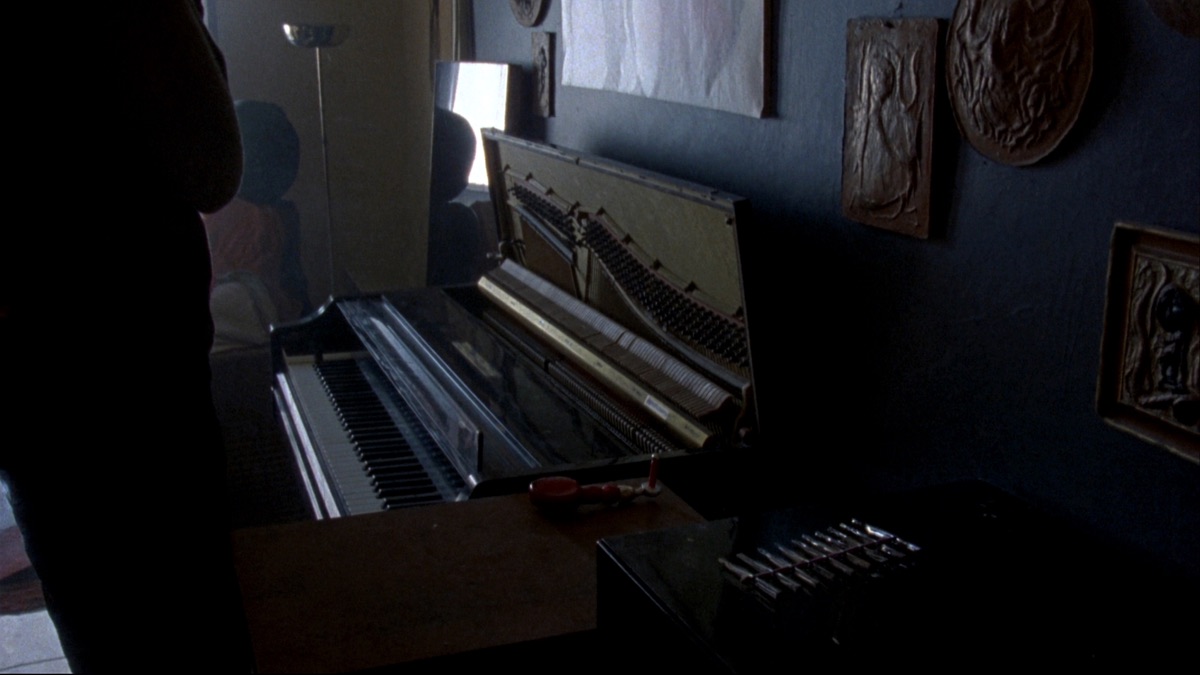
A professional piano tuner doesn't tune each of a piano's roughly 230 strings to some fixed, mathematically pure frequency and stop there; the actual process is built around deliberately leaving most intervals slightly, precisely out of tune, using a physical phenomenon called beating to measure exactly how far off each note should be from mathematical perfection. Understanding why requires digging into the specific physics of vibrating strings, the mathematical compromise built into every modern piano's tuning system, and the surprisingly athletic mechanical skill required to adjust roughly 20 tons of string tension by hand.
Beats: the physical phenomenon a tuner's whole craft depends on
When two sound waves at very slightly different frequencies play simultaneously, they periodically fall in and out of phase with each other, alternately reinforcing and canceling, producing an audible pulsing or throbbing sound called a beat, with the beat rate, measured in beats per second, equal to the mathematical difference between the two frequencies; two tones at 440 hertz and 442 hertz, for instance, produce exactly 2 beats per second when played together.
This beating phenomenon is the foundational tool of aural piano tuning, since a trained tuner doesn't primarily judge pitch accuracy by ear alone in the way a singer might, but instead plays two notes together, usually a specific musical interval like an octave or a fifth, and listens for the precise beat rate produced, adjusting string tension until that beat rate matches a specific target number calculated in advance for that exact interval, a far more precise and repeatable method than judging absolute pitch by ear alone.
Why a piano cannot actually be tuned to mathematically pure intervals
In pure, mathematically ideal tuning, every musical interval, the octave, the fifth, the third, would be based on simple whole-number frequency ratios, an octave at exactly double the frequency, a perfect fifth at exactly a 3-to-2 ratio, and so on, and tuning an instrument this way does produce genuinely pure-sounding individual intervals with no audible beating at all within that specific interval.
The unavoidable problem is that these pure ratios don't mathematically reconcile with each other across a full 12-note chromatic octave: stacking twelve pure perfect fifths in sequence should theoretically arrive back at the same note seven octaves higher, but doing the actual math reveals it overshoots by a small but very audible amount, a mismatch mathematicians and musicians call the Pythagorean comma, meaning a piano tuned with every fifth mathematically pure would sound acceptable in some keys and distractingly, unusably out of tune in others.
Equal temperament: the tuning compromise every modern piano uses
The solution universally adopted for modern pianos, and most other fixed-pitch Western instruments, is called equal temperament, a system that deliberately spreads the small mathematical error identified above evenly across all twelve semitones in an octave rather than concentrating it entirely in one or two badly out-of-tune keys, meaning every single semitone interval is tuned to exactly the same frequency ratio, the twelfth root of two, roughly 1.0595.
The direct consequence of equal temperament is that no interval on a piano except the octave itself is ever mathematically pure; every fifth, fourth, and third is deliberately tuned slightly away from its pure mathematical ratio by a small, precisely calculated amount, meaning every one of those intervals produces an audible, measurable beat rate when played, and it's exactly that calculated, expected beat rate, not silence, that tells a professional tuner an interval is correctly, properly in tune under the equal-temperament system virtually all modern music is composed and performed within.
Setting the temperament: building the reference octave that everything else copies
Because equal temperament requires every semitone interval across the entire 88-key range to maintain a mathematically consistent relationship to its neighbors, a tuner begins the process by carefully tuning a single reference octave, typically the octave surrounding middle C, note by note, using a precisely calculated sequence of fifths, fourths, thirds, and octaves, checking the specific beat rate of each interval against a reference table or trained memory to confirm it matches the exact target rate equal temperament requires.
This initial reference octave, commonly called setting the temperament, is widely considered the single most difficult and skill-demanding part of the entire tuning process, since any small error introduced here doesn't stay contained to that one octave, it propagates and compounds across the entire rest of the piano as the tuner extends outward, meaning a flawed temperament setting at the start of a session can quietly undermine the accuracy of every single note tuned afterward, even if each subsequent step is executed technically correctly relative to the flawed reference.
Octave stretching and why a piano is deliberately tuned imperfectly
Beyond the equal-temperament compromise within a single octave, piano tuners deliberately introduce a second, separate adjustment called octave stretching, tuning the highest notes on the piano slightly sharper than mathematically pure equal temperament would specify, and the lowest notes slightly flatter, rather than tuning every octave across the full keyboard at a perfectly consistent doubled frequency.
This deliberate stretching compensates for a real physical property of piano strings called inharmonicity: unlike an idealized, perfectly flexible vibrating string, a real piano string has measurable stiffness, which causes its natural overtones, the higher-frequency harmonics that give a note its characteristic timbre, to vibrate at frequencies slightly sharper than pure mathematical multiples of the fundamental pitch, an effect that becomes progressively more pronounced in shorter, thicker strings, exactly the strings found at both the very high and very low ends of a piano's range.
Inharmonicity: the physical reason stiff strings misbehave
An idealized vibrating string with zero stiffness produces overtones at perfectly clean whole-number multiples of its fundamental frequency, but a real piano string, particularly the shorter, thicker, more heavily wound bass strings and the very short treble strings, has genuine physical stiffness that resists bending sharply at the points where a vibrating string would otherwise need to, and that resistance shifts each successive overtone progressively sharper than pure mathematics predicts, with the effect compounding more severely for higher overtones.
If a piano tuner ignored inharmonicity entirely and tuned every octave to a mathematically pure doubled frequency based purely on fundamental pitch, the piano's naturally sharp overtones in each string would clash audibly against the mathematically pure fundamental of the note an octave above, producing an unpleasant, subtly dissonant sound across the instrument's full range, which is exactly why octave stretching, tuning slightly against pure mathematics to align with the piano's actual physical overtone behavior instead, produces a piano that sounds correctly in tune to the human ear even though it deviates measurably from pure equal-temperament math.
The tuning pin, tuning hammer, and why brute force fails
Each piano string anchors at one end to a tuning pin, a metal peg embedded tightly in a wooden pinblock specifically engineered with enough friction to hold the pin firmly in place against the enormous ongoing tension of the string, roughly 150 to 200 pounds of tension per string individually, and a tuner adjusts pitch by turning that pin with a specialized tool called a tuning hammer or tuning lever, a precisely fitted socket wrench rather than an actual hammer despite the name.
Turning a tuning pin even a fraction of a degree produces a surprisingly large pitch change, meaning genuine tuning skill lies almost entirely in extremely fine, controlled motor control rather than raw physical strength, and an inexperienced or overly forceful attempt at adjustment tends to either overshoot the target pitch significantly or, worse, cause the string to briefly stretch beyond the pin's current setting before settling back to a slightly different final tension than intended, a phenomenon called false beats or pin slippage that experienced tuners specifically learn to anticipate and compensate for through a particular pin-setting technique.
Unisons: why most piano notes actually use two or three strings
Most notes across the middle and upper range of a piano keyboard are produced not by a single string but by two or three strings tuned to the exact same pitch, struck simultaneously by a single hammer, a design choice that produces a fuller, louder, richer tone than a single string alone could achieve at a comparable string tension, while the piano's lowest bass notes typically use a single, much thicker, individually wound string per note instead.
Tuning these multi-string unisons correctly requires an additional layer of precision beyond simply matching each string to the correct overall pitch: the two or three strings for a single note must also be tuned to exactly match each other with zero perceptible beating between them, since even a very slight mismatch between unison strings produces a subtle but audible wavering or chorus-like effect on that single note, meaning a tuner typically mutes two of the three strings with a felt strip, tunes the remaining single string precisely, then unmutes and matches each additional string to that first one individually before moving to the next note.
Why humidity and temperature cause a piano to go out of tune between visits
A piano's soundboard, the large wooden panel beneath the strings that amplifies and projects their vibration into the room, along with the wooden structural frame supporting the entire string tension system, expands and contracts measurably with changes in ambient humidity, since wood is a naturally hygroscopic material that absorbs and releases moisture from surrounding air, and that dimensional change directly alters the tension each string experiences even though no one has physically touched a single tuning pin.
This is exactly why piano manufacturers and professional tuners recommend tuning a piano roughly twice a year rather than as a one-time permanent fix, ideally timed around seasonal humidity transitions, and why a piano's pitch tends to drop somewhat during humid summer months, as the wooden soundboard swells and subtly relaxes string tension, and rise somewhat during dry winter months, as the same wood contracts and tightens tension slightly, a cyclical drift that happens gradually enough to go unnoticed day to day but becomes clearly audible over several months without a tuning adjustment.
How electronic tuning devices changed, but did not replace, aural skill
Modern electronic tuning devices use a microphone and digital signal processing to measure a struck string's precise frequency and display exactly how many cents, a unit equal to one-hundredth of a semitone, it deviates from a calculated target frequency that already accounts for standard equal-temperament math and, in more sophisticated professional-grade models, a piano-specific inharmonicity curve calculated from actual test measurements taken on that individual instrument.
Despite this technological precision, most professional concert-level tuners still rely heavily on aural beat-counting technique, particularly for setting the initial temperament octave and for final fine-tuning by ear, both because trained aural judgment can sometimes detect and compensate for subtle acoustic quirks specific to an individual piano's construction that a generalized electronic algorithm doesn't account for, and because a tuner's ear remains the final, authoritative judge of whether the finished result genuinely sounds correctly in tune in the actual room the piano will be played in, rather than simply measuring correctly on a screen.
Concert pitch and why A4 specifically means 440 hertz
Modern tuning worldwide is anchored to a specific reference pitch called concert pitch, standardized internationally in 1955 as exactly 440 hertz for the A note above middle C, commonly labeled A4, a specific frequency every other note on a properly tuned piano is calculated relative to using the equal-temperament ratio described earlier, though this standard wasn't universal historically and different orchestras, countries, and eras have at various points used reference pitches ranging from roughly 415 to 445 hertz.
Some orchestras and period-instrument ensembles today deliberately tune to a different, sometimes lower, reference pitch specifically to match the tuning conventions of the historical era a particular piece of music was originally composed in, meaning a professional piano tuner working with certain ensembles occasionally has to tune an entire instrument to a genuinely different reference frequency than standard 440 hertz concert pitch, a specialized request most home and casual tuning work never actually requires.
What a full professional tuning session actually involves start to finish
A complete professional tuning session typically begins with a pitch-raise assessment, checking how far the entire instrument has drifted from its correct target pitch since the last tuning, since a piano that has drifted significantly flat, common after a long period without tuning, often requires an initial rough pass across the whole instrument, deliberately overshooting each note's target pitch slightly, before a final precise pass, because bringing every string up to correct tension in a single pass tends to cause already-tuned strings to drift slightly flat again as the overall structural tension across the whole instrument shifts.
After any necessary pitch-raise pass, the tuner sets the reference temperament octave with full precision, then works systematically outward across the remaining seven-plus octaves of the keyboard, tuning each note's unison strings to match each other and then tuning that note's fundamental pitch relative to the already-completed notes below it using the beat-rate method, a full process that for an experienced professional tuner typically takes between one and two hours for a piano in reasonably stable, previously well-maintained tuning condition.
Sources
- Piano Technicians Guild — Professional association standards for piano tuning technique and certification
- U.S. National Institute of Standards and Technology (NIST) — Reference frequency standards underlying concert pitch calibration
- Acoustical Society of America — Peer-reviewed acoustics research on string inharmonicity and equal temperament
FAQ
What is a beat in piano tuning?
A beat is the audible pulsing sound produced when two slightly different frequencies play together, alternately reinforcing and canceling each other. Tuners listen for a specific, precisely calculated beat rate on each interval rather than aiming for silence.
Why can a piano not be tuned to mathematically perfect intervals?
Stacking pure mathematical intervals like perfect fifths around a full 12-note octave doesn't reconcile mathematically, a mismatch called the Pythagorean comma. A piano tuned with every interval mathematically pure would sound badly out of tune in some musical keys.
What is equal temperament?
It's the modern tuning system that spreads the unavoidable mathematical tuning error evenly across all twelve semitones, so every semitone uses the same frequency ratio. This means every interval except the octave is deliberately, precisely slightly out of pure tune.
What is octave stretching and why do tuners do it?
It's deliberately tuning the highest notes slightly sharper and lowest notes slightly flatter than pure equal temperament specifies, to compensate for inharmonicity, a real physical property that makes stiff piano strings' overtones vibrate sharper than pure math predicts.
What is inharmonicity?
It's the tendency of a real, physically stiff piano string's overtones to vibrate at frequencies slightly sharper than pure mathematical multiples of its fundamental pitch, an effect most pronounced in short, thick strings at both extreme ends of the keyboard.
Why do most piano notes use two or three strings instead of one?
Multiple strings tuned to the same pitch, called a unison, produce a fuller, richer, louder tone than a single string could at comparable tension. Only the lowest bass notes typically use one thick, individually wound string.
How much tension does a single piano string hold?
Roughly 150 to 200 pounds per string individually, with the full set of roughly 230 strings on a piano collectively holding around 18 to 20 tons of total tension against the instrument's frame.
Why does a piano go out of tune even if nobody plays it?
The wooden soundboard and frame naturally absorb and release moisture with seasonal humidity changes, expanding or contracting and directly altering string tension, causing pitch to drift gradually over months even without any playing.
What does setting the temperament mean?
It's the first and most difficult step of tuning, carefully establishing a single reference octave, usually around middle C, using a precise sequence of fifths, fourths, and thirds. Errors here propagate through the entire rest of the tuning.
Have electronic tuning devices replaced tuning by ear?
Not entirely. Most professional concert tuners still rely heavily on aural beat-counting, especially for setting the initial temperament and final fine adjustments, since a trained ear can catch subtle acoustic quirks a generalized algorithm might miss.
What is concert pitch and why is A4 exactly 440 hertz?
Concert pitch is the internationally standardized reference frequency, set in 1955 at 440 hertz for the A above middle C. Every other note on a properly tuned piano is calculated relative to this reference using the equal-temperament ratio.
How long does a full professional piano tuning take?
Typically one to two hours for a piano in reasonably stable, previously well-maintained condition. A piano that has drifted significantly out of tune often needs an initial rough pitch-raise pass before the final precise tuning pass.
About the Author
We reference Wikipedia and other authoritative sources to explain the background and current understanding of this topic.
Loved This Article?
Share it on WhatsApp → Share it on WhatsApp
Get more guides in your inbox — Subscribe to our newsletter for weekly surprising stories from Egypt, Saudi Arabia, Dubai, and beyond.