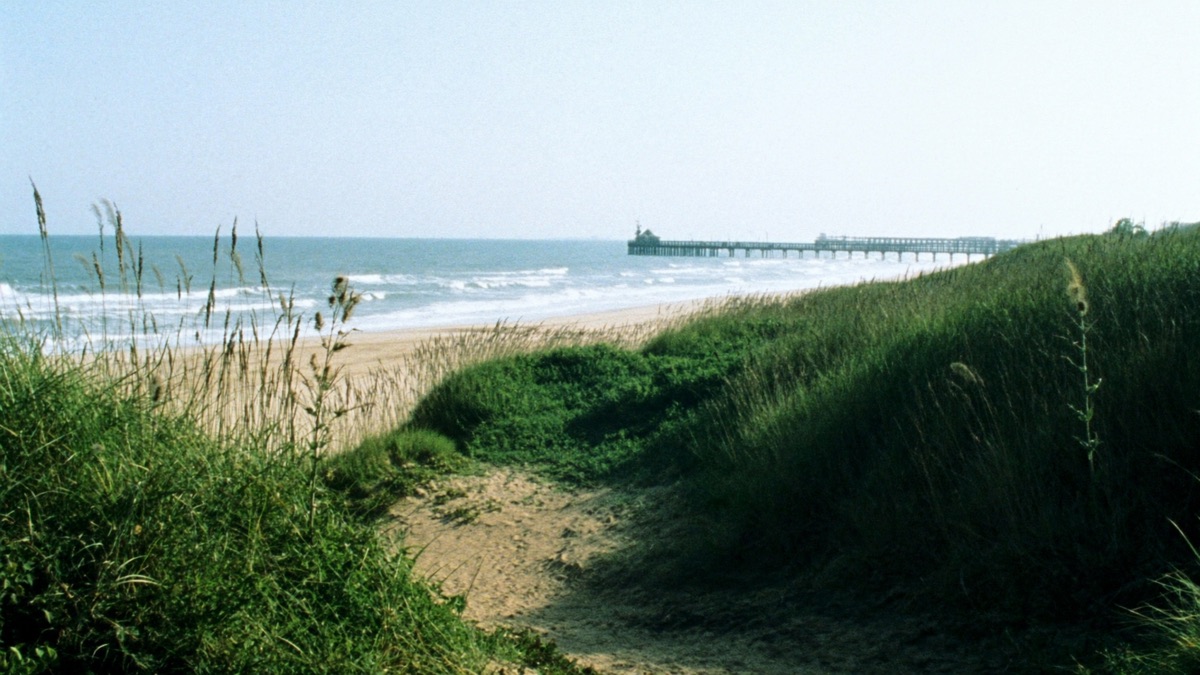
Waves Pile Up Water on the Shore Faster Than It Can Drain Evenly
Every incoming wave pushes a small volume of water up onto the beach, and when waves arrive continuously and close together, water accumulates faster near the shoreline than it can smoothly flow back out to sea across the entire width of the beach at once.
This buildup creates a subtle but real difference in water level along the shore, and water — always following the path of least resistance — begins seeking out any weak point in the underwater terrain where it can escape back to the ocean more easily than fighting through incoming waves everywhere else.
Sandbars Are the Hidden Architecture Behind Every Rip Current
Just offshore from most beaches, wave action builds submerged sandbars running roughly parallel to the coastline, and these bars act like a low underwater wall, actually helping trap the water that waves push toward shore rather than letting it drain back out immediately.
Where a gap, channel, or low point breaks through this sandbar — often near a pier, rock jetty, or natural dip in the seafloor — the trapped water finds its escape route, and this exact gap is where a rip current forms and remains anchored.
The Current Is a River, Not a Whirlpool
A common and dangerous misconception is that a rip current pulls swimmers downward like a drain or whirlpool, but the physics involved is entirely horizontal: water rushes seaward through the sandbar gap at speeds that can exceed two meters per second, comparable to an Olympic swimmer's sprint pace.
This horizontal outward flow is exactly why swimmers caught in a rip current don't get pulled underwater by the current itself — panic-driven exhaustion from swimming directly against the flow, not submersion by the current, is what actually endangers most rip current victims.
Rip Currents Are Narrow, Which Is the Key to Escaping One
A typical rip current channel is only 10 to 30 meters wide, remarkably narrow compared to the length of most beaches, because the current is confined specifically to the gap in the sandbar rather than spreading evenly across the entire shoreline.
This narrowness is precisely why safety experts advise swimming parallel to the shore rather than directly back toward the beach when caught in one — a short lateral swim of just a few dozen meters is usually enough to exit the narrow current channel entirely and reach calmer water on either side.
The Current Weakens and Dissipates Once It Clears the Sandbar
A rip current doesn't pull swimmers indefinitely out to sea; its strength is tied directly to the pressure difference created by the sandbar gap, and once the escaping water passes beyond the sandbar into open water, that pressure difference disappears and the current rapidly loses speed and spreads out.
This is why survival experts consistently advise floating rather than fighting the current if a swimmer can't swim laterally out of it — the current will typically release its grip within 50 to 100 meters of the shoreline, after which swimming back at an angle becomes far more manageable.
Rip Currents Can Appear and Disappear Within Hours
Because sandbar shape shifts constantly due to wave action, tides, and storm activity, a rip current channel present at a beach in the morning can close up or shift location entirely by afternoon as sand redistributes across the underwater terrain.
This constant repositioning is part of why rip currents are so dangerous even to people familiar with a particular beach — a spot that was safe the previous week can develop a new, dangerous channel without any visible change to the beach itself above the waterline.
Certain Beach Shapes Are Statistically Far More Prone to Rip Currents
Beaches with pronounced sandbar systems and moderate-to-large wave energy, particularly those exposed to open ocean swell rather than sheltered bays, develop rip currents far more frequently than beaches with gentle, gradually sloping sand and minimal sandbar formation.
Structures like piers, jetties, and groins also reliably generate rip currents alongside them, because these rigid structures interrupt the natural longshore flow of water and sand, creating a permanent, predictable channel where escaping water concentrates every time waves push water onshore nearby.
Rip Currents Have Three Distinct Structural Parts
Oceanographers describe a rip current as having a feeder current running parallel to shore that funnels water toward the sandbar gap, a neck where the current accelerates rapidly as it squeezes through the narrow channel, and a head where the current fans out and dissipates in deeper water beyond the sandbar.
Understanding this three-part structure is what underlies the standard survival advice: the dangerous, fast-moving part is specifically the neck, and swimming laterally at that stage moves a swimmer out of the feeder or neck sections entirely rather than trying to outswim the current's full length.
Wave Height and Period Both Influence Rip Current Strength
Larger waves push more water onshore per unit time, increasing the pressure differential driving water back through the sandbar gap, but wave period — the time interval between successive wave crests — matters just as much, since closely spaced waves pile up water faster than the same wave height arriving at longer intervals.
This is why forecasters and lifeguards watch both metrics together rather than wave height alone, since a day with moderate waves arriving in rapid succession can generate stronger rip currents than a day with taller waves spaced further apart.
Low Tide Often Intensifies Existing Rip Currents
As tide level drops, the same sandbar gap that channels escaping water becomes proportionally more significant relative to the total water depth, effectively concentrating the same volume of returning water into a comparatively shallower, narrower escape route and increasing current velocity through it.
This is one reason lifeguards frequently issue stronger rip current warnings during outgoing or low tide periods even when wave conditions haven't changed, since tide state alone can meaningfully shift a moderate rip current into a dangerous one.
The Discolored Water Isn't Always a Reliable Warning Sign
Rip currents often stir up sand and sediment as they rush through the sandbar channel, sometimes producing a visibly murkier or differently colored streak of water extending out from shore compared to the clearer water on either side — a genuinely useful visual cue in the right conditions.
However, this discoloration isn't consistently present, particularly on beaches with naturally clear water and fine, less easily stirred sand, which is why lifeguards emphasize that the absence of visibly discolored water is not proof a rip current isn't there.
Calm-Looking Water Between Breaking Waves Can Signal Danger, Not Safety
Counterintuitively, the section of surf that looks calmest — where waves appear to break less frequently or less forcefully than the surrounding water — is often exactly where a rip current channel sits, since the outgoing current actually suppresses incoming wave breaking in that narrow zone.
Inexperienced swimmers are frequently drawn to this apparently gentler patch of water specifically because it looks safer than the churning waves nearby, which is a large part of why rip currents claim so many victims who deliberately chose that spot believing it to be the calmer option.
Fighting a Rip Current Directly Is What Actually Endangers Swimmers
Because the current's outward speed can exceed what even a strong swimmer can overcome swimming straight back toward shore, attempting to power directly against the flow leads to rapid exhaustion, and it's this exhaustion — not the current pulling someone underwater — that causes most rip-current drownings.
Lifeguard training and public safety campaigns worldwide converge on the same core message for exactly this reason: stay calm, don't fight the current head-on, and either float to conserve energy or swim parallel to shore to escape the narrow channel.
Rip Currents Kill More People Annually Than Sharks or Lightning
In the United States alone, rip currents are responsible for roughly 100 confirmed drowning deaths per year according to National Weather Service data, a toll that consistently exceeds the annual death count from shark attacks and lightning strikes combined despite receiving far less public attention.
This disparity in public awareness relative to actual risk is a major reason coastal safety agencies have invested heavily in rip current education campaigns, since the danger is both statistically significant and largely preventable with correct swimmer behavior once caught in one.
Flags and Forecasts Translate Complex Ocean Science Into Simple Warnings
Beach warning flag systems — typically green, yellow, and red — condense a complex combination of wave height, period, tide state, and known sandbar geometry into a single, immediately understandable color code that swimmers can check before entering the water.
Behind these simple flags, meteorological agencies run rip current forecast models incorporating real-time buoy data and coastal wave measurements, since the underlying conditions that generate dangerous rip currents can shift meaningfully within the same day even without any dramatic change in visible weather.
Rip Currents Occur on Lakes and Enclosed Seas, Not Just Oceans
While most commonly discussed in the context of ocean beaches, the same underlying mechanism — wave-driven water buildup escaping through a break in an underwater sandbar — occurs on large lakes like the North American Great Lakes whenever wind-driven waves are strong and persistent enough to generate the necessary pressure differential.
Great Lakes rip currents are responsible for a meaningful number of drownings each year, a fact that surprises many swimmers who correctly associate rip currents with the ocean but don't realize the same wave-and-sandbar physics applies to any large enough body of water with the right underwater terrain.
Structural Rip Currents Near Piers Are the Most Predictable Kind
Unlike sandbar-gap rip currents that can shift location as underwater sand moves, currents that form alongside a fixed structure like a pier or jetty stay anchored to that structure permanently, since the structure itself — not shifting sand — is what creates the channel.
This predictability is a double-edged safety issue: lifeguards can post permanent warning signage at these known locations, but the currents themselves are often stronger and more consistent than sandbar-gap currents precisely because the structure reliably channels water through the same narrow path on every incoming wave set.
Children and Weak Swimmers Face Disproportionate Risk for a Simple Reason
A rip current's outward pull, while too strong for most swimmers to overcome by swimming directly against it, is not actually strong enough to overwhelm someone floating passively — the real danger scales with how much a swimmer panics and exhausts themselves rather than with the current's raw physical strength.
This is why safety campaigns specifically target teaching children and less confident swimmers to float on their backs immediately upon feeling an unusual pull, since the instinct to thrash and swim hard directly against the current is exactly the response most likely to lead to drowning.
Drone and Camera Studies Have Made Rip Current Behavior Far More Precise
Recent coastal research using overhead drone footage and dye-tracking studies has mapped rip current flow patterns with far greater precision than older shore-based observation allowed, confirming that current speed and channel width can vary substantially even within a single rip current over just a few minutes.
These studies have refined survival advice further, showing that some rip currents develop a rotational component near the head where the current fans out, meaning a swimmer who floats passively may sometimes be carried in a curving path back toward shore rather than continuing straight out to sea indefinitely.
Sources
- Wikipedia: Rip current — Formation mechanics and safety guidance for ocean rip currents.
- Wikipedia: Longshore drift — Coastal water and sediment movement that shapes sandbar geometry.
- NOAA: What is a rip current? — US government ocean science agency explainer on rip current hazards.
FAQ
Does a rip current pull swimmers underwater?
No; rip currents flow entirely horizontally, pulling swimmers outward toward the sea, not downward — drowning from rip currents usually results from panic-driven exhaustion, not submersion by the current itself.
What actually creates a rip current?
Waves pile water up near shore faster than it drains evenly, and that water escapes back to sea through any gap or channel in an offshore sandbar, forming a fast, narrow outward current.
Why is swimming parallel to shore the recommended escape?
Rip current channels are typically only 10-30 meters wide, so a short lateral swim usually exits the narrow current entirely rather than requiring a swimmer to overpower the current head-on.
How far out to sea can a rip current carry someone?
Currents typically weaken and dissipate within 50 to 100 meters of shore once they clear the sandbar, since the pressure difference driving them disappears in open water beyond that point.
Can a rip current appear at a beach where there wasn't one before?
Yes; sandbar shape shifts constantly due to waves, tides, and storms, so a channel can open, close, or relocate within hours without any visible change to the beach above the waterline.
Does calm-looking water mean it's safe to swim there?
Not necessarily; a patch of surf that looks calmer because waves break less there is often exactly where a rip current channel sits, since the outgoing flow suppresses incoming wave breaking.
Why do rip currents kill more people than sharks?
Rip currents cause roughly 100 confirmed drowning deaths annually in the US alone, exceeding shark attack and lightning strike deaths combined, largely due to swimmers fighting the current and exhausting themselves.
What should you do if caught in a rip current?
Stay calm, avoid swimming directly against the current, and either float to conserve energy or swim parallel to shore to exit the narrow channel before swimming back to the beach.
Do rip currents only happen in the ocean?
No; the same wave-and-sandbar mechanism occurs on large lakes like the Great Lakes whenever wind-driven waves are strong enough, and lake rip currents cause meaningful drownings each year too.
Why does low tide make rip currents stronger?
Lower water depth concentrates the same volume of escaping water into a proportionally narrower, shallower channel relative to total depth, increasing the current's velocity through the sandbar gap.
Are rip currents near piers more dangerous than sandbar ones?
They're often stronger and more consistent because the fixed structure reliably channels water through the same path every wave cycle, unlike sandbar-gap currents that can shift with sand movement.
Why are children at higher risk from rip currents?
The current isn't strong enough to overwhelm someone floating passively, but children are more likely to panic and swim hard against the flow, which is what actually causes exhaustion-related drowning.
Does wave height alone determine rip current strength?
No; wave period, or the time between successive wave crests, matters just as much, since closely spaced waves pile up water faster than the same height arriving at longer intervals.
Can discolored water reliably warn you about a rip current?
Sometimes; stirred-up sand can create a visibly murkier streak, but this isn't consistent on all beaches, so its absence doesn't prove a rip current isn't present.
How accurate are modern rip current forecasts?
Forecast models now incorporate real-time buoy data, wave measurements, and known sandbar geometry, translating complex ocean science into the simple flag warning systems posted at most public beaches.
About the Author
We reference Wikipedia and other authoritative sources to explain the background and current understanding of this topic.
Loved This Article?
Share it on WhatsApp → Share it on WhatsApp
Get more guides in your inbox — Subscribe to our newsletter for weekly surprising stories from Egypt, Saudi Arabia, Dubai, and beyond.