Introduction
In just over a decade and a half, streaming transformed entertainment from a business built on scheduled broadcasts, physical media, and geographic distribution rights into an on-demand, global, subscription-driven industry, representing one of the most significant structural shifts in entertainment history since the introduction of television itself.
While Netflix is often credited as streaming's pioneer, the company actually began in 1997 as a DVD-by-mail rental service, only launching its streaming service in 2007, and it took several more years before streaming meaningfully displaced traditional television and physical media as the industry's dominant distribution model.
From Scheduled Broadcasts to On-Demand Viewing
Traditional television operated on a fundamentally scheduled model: networks decided what aired when, and audiences had to organize their viewing around a fixed broadcast schedule or rely on recording technology like VCRs and later DVRs to watch content at a different time.
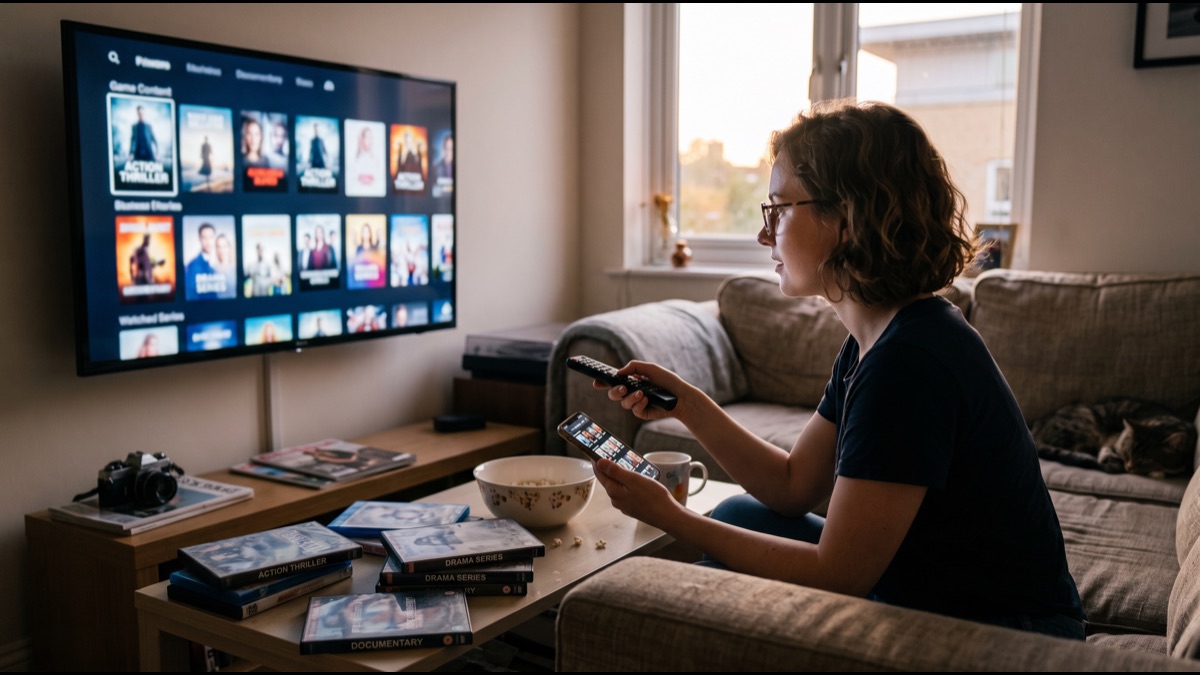
Streaming eliminated this constraint entirely, allowing viewers to watch content whenever and, on most platforms, in whatever order they preferred, a shift that fundamentally changed viewing behavior, giving rise to phenomena like 'binge-watching' entire seasons in a single sitting, a viewing pattern that traditional broadcast television's weekly release schedule simply couldn't accommodate.
How Streaming Changed Content Production
Streaming platforms fundamentally altered how content gets commissioned and produced: rather than relying primarily on advertiser-driven ratings to determine a show's viability, subscription streaming services could commission and sustain niche content aimed at smaller, dedicated audience segments, since a show's value came from subscriber retention rather than advertising reach alone.
This shift enabled a period widely referred to as 'Peak TV,' a dramatic increase in the total volume of scripted television produced annually, as streaming platforms competed aggressively for both subscribers and industry prestige, commissioning significantly more original content than the traditional broadcast and cable model had ever supported.
From Consolidation to Fragmentation
After Netflix's early streaming success demonstrated the model's viability, nearly every major media company launched its own competing streaming service, including Disney+, HBO Max, Peacock, Paramount+, and Apple TV+, fragmenting content that was once concentrated on cable bundles or a small number of dominant platforms across numerous separate subscription services.
This fragmentation has created genuine consumer frustration, with many households now subscribing to multiple streaming services simultaneously to access desired content, a dynamic some industry analysts note echoes aspects of the expensive cable bundle system streaming initially promised to disrupt and simplify.
Impact on the Industry and Entertainment Workers
Streaming's business model, which often doesn't rely on traditional syndication residuals paid when a show airs in reruns, became a central point of dispute in major entertainment industry labor negotiations, including the 2023 Writers Guild of America and SAG-AFTRA strikes, which specifically addressed how compensation structures needed to adapt to streaming-era production and distribution economics.
The shift has also affected traditional theatrical box office and physical media sales, both of which have declined substantially since streaming's rise, while simultaneously creating new production opportunities and career paths for actors, writers, and directors within the streaming-commissioned content boom, representing a genuinely mixed impact across different parts of the entertainment workforce.
Sources
- Variety — Entertainment industry trade reporting on streaming's business and production impact
- The Hollywood Reporter — Reference on streaming platform launches, market fragmentation, and labor disputes
- Nielsen — Industry data on streaming viewership trends and market share
FAQ
When did Netflix launch its streaming service?
Netflix began in 1997 as a DVD-by-mail rental service and only launched its streaming service in 2007, taking several more years before streaming meaningfully displaced traditional television as the dominant distribution model.
How did streaming change what shows get made?
Because subscription value comes from subscriber retention rather than advertising reach, streaming platforms could commission niche content aimed at smaller audiences, contributing to a dramatic increase in total scripted television production known as 'Peak TV.'
Why do people now subscribe to so many different streaming services?
After Netflix demonstrated streaming's viability, nearly every major media company launched competing services, fragmenting content once concentrated on cable bundles across numerous separate subscriptions, creating a dynamic some analysts compare to the expensive cable bundle system streaming originally disrupted.
How did streaming affect entertainment industry labor disputes?
Streaming's business model, which often doesn't pay traditional rerun residuals, became a central issue in the 2023 Writers Guild of America and SAG-AFTRA strikes, which addressed how compensation needed to adapt to streaming-era economics.
What is binge-watching and why did streaming enable it?
Binge-watching means watching multiple episodes or an entire season in one sitting, a pattern enabled by streaming's on-demand model, which traditional broadcast television's weekly release schedule couldn't accommodate.
About the Author
doyouknow.app Editorial Team — We reference entertainment trade press and industry data to explain how streaming reshaped entertainment production and distribution.
Loved This Article?
Share it on WhatsApp → Share on WhatsApp
Get more guides in your inbox — Subscribe to our newsletter for weekly surprising stories from Egypt, Saudi Arabia, Dubai, and beyond.