Nobody actually catches a cold from cold weather itself, and yet cold and flu season arrives with almost calendar-like reliability every single winter. That contradiction has puzzled parents telling children to wear a coat for generations, because if temperature alone caused illness, the explanation would be simple, and it clearly is not that simple.
The real explanation turns out to involve several separate effects working together: how respiratory viruses survive outside the body, how cold air changes the defenses inside your nose, how people cluster indoors when temperatures drop, and even how sunlight exposure shifts with the seasons.
None of these factors alone fully explains winter's seasonal surge in colds and flu, but together they form a fairly complete picture of why the same viruses that circulate quietly all year suddenly spread so much more efficiently once the weather turns cold.
Understanding each piece separately also clears up a common misconception: that a chill itself weakens the body enough to let illness in, when the actual mechanism is considerably more specific than that old assumption suggests.
Why Cold Weather Itself Does Not Cause a Cold
A cold is caused by a virus, most commonly a rhinovirus, entering the body and infecting cells lining the nose and throat, and no amount of low temperature by itself can create that virus or cause an infection without actual viral exposure occurring first.
Multiple controlled studies have specifically tested this by exposing volunteers to cold temperatures with and without prior viral exposure, and cold alone, without a virus present, has consistently failed to produce cold symptoms, confirming that temperature is not a direct cause even though it is clearly correlated with when colds happen.
This distinction between direct cause and contributing condition is exactly why doctors still tell people that a chill will not by itself make them sick, while acknowledging in the same breath that winter genuinely does bring more colds, because several indirect factors tied to cold weather make catching an already-circulating virus considerably more likely.
Why Viruses Survive Longer in Cold, Dry Air
Respiratory viruses that spread through droplets and aerosols released when someone coughs, sneezes, or simply talks, have to survive for some period outside the human body before reaching a new host, and that survival time depends heavily on both temperature and humidity in the surrounding air.
Laboratory research has repeatedly shown that many common cold and flu viruses remain infectious on surfaces and in airborne droplets for measurably longer periods in cold, dry conditions than in warm, humid ones, giving a virus released into cold winter air a longer practical window to reach and infect someone else.
Indoor heating systems make winter air even drier than the cold outdoor air itself, since heating raises air temperature without adding moisture, which means the indoor environments where people spend most of their winter time often have exactly the low-humidity conditions that let respiratory viruses persist longest.
What Cold Air Actually Does Inside Your Nose
The inside of the nose relies on tiny hair-like structures called cilia, constantly sweeping mucus and trapped particles, including inhaled viruses, toward the throat to be swallowed and neutralized by stomach acid, a continuous physical clearance system operating around the clock.
Research has shown that breathing cold air measurably slows this ciliary clearance process, and separately, some studies have found that cooling the tissue inside the nasal passages can reduce the effectiveness of the immune response specifically within that tissue, making it comparatively easier for an inhaled virus to establish an infection before being cleared or neutralized.
This nasal-specific effect is a large part of why breathing cold outdoor air, especially through the nose rather than a scarf-covered mouth, has long been anecdotally associated with catching colds, since the cold air is doing something measurable to the body's very first line of defense, not simply making someone feel uncomfortable.
Why Crowding Indoors Matters More Than the Cold Itself
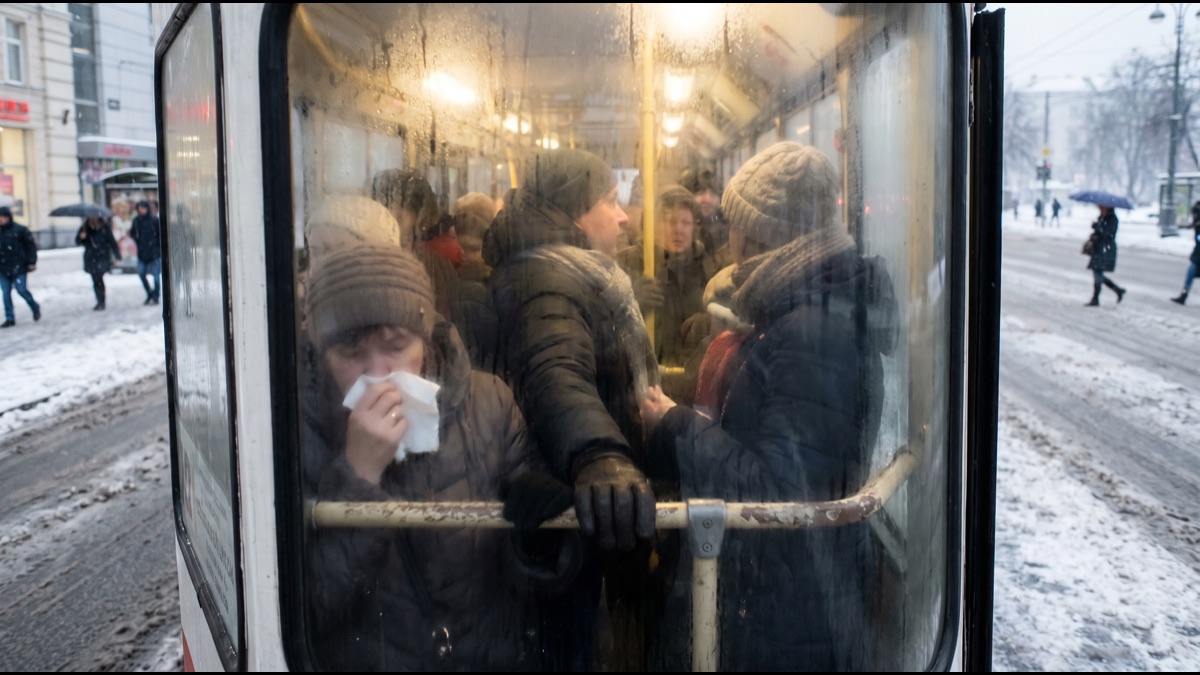
When outdoor temperatures drop, people spend dramatically more time indoors, in closer physical proximity to each other, in classrooms, offices, malls, and homes with windows kept closed to conserve heat, conditions that are close to ideal for airborne and droplet transmission of respiratory viruses between people.
Epidemiologists specifically point to this behavioral shift as one of the single strongest drivers of winter illness spikes, since a virus needs a host to encounter a new potential host to spread at all, and closed, crowded indoor spaces with poor ventilation dramatically increase how often that encounter happens compared to open outdoor air.
Schools reopening after summer breaks compound this effect further, since children in close, sustained indoor contact for hours at a time are particularly efficient at spreading respiratory viruses to each other and subsequently to family members at home, a pattern reflected in how closely school calendars track with regional cold and flu spikes.
The Surprising Role of Vitamin D and Sunlight
Shorter winter days mean less sunlight exposure for most people, and since skin produces vitamin D in response to ultraviolet sunlight, average vitamin D levels in a population measurably dip during winter months in many parts of the world, including regions with genuinely cold winters.
Vitamin D plays a documented role in supporting normal immune system function, and some research has linked lower vitamin D levels with a somewhat higher susceptibility to respiratory infections, though scientists are still actively debating exactly how large this specific effect is compared to the other seasonal factors already described.
This vitamin D connection is one reason some public health guidance recommends supplementation during winter months in higher-latitude regions with especially limited sunlight, even though it is treated as one contributing factor among several rather than the primary explanation for winter's cold and flu surge.
Why the Gulf Still Sees a Winter Cold Season Despite Warm Weather
Even in warm-climate regions like the Gulf, where outdoor winter temperatures rarely approach the genuinely cold conditions of northern countries, cold and flu cases still noticeably rise during the cooler months, a pattern that initially seems to contradict the temperature-driven explanations above.
The explanation lies largely in air conditioning and indoor crowding patterns rather than outdoor cold: heavily air-conditioned indoor spaces run at low humidity year-round, and cooler outdoor evening temperatures during Gulf winters still shift more social and family gatherings indoors compared to the intensely hot summer months when people avoid being outside at all.
International travel patterns add another regional factor specific to the Gulf, since winter is peak tourism and family-visit season in much of the region, and a higher volume of international travelers passing through airports and hotels increases the variety and frequency of viral exposure regardless of local outdoor temperature.
Why Some People Seem to Never Get Sick
Individual susceptibility varies considerably based on prior immune exposure to circulating virus strains, since someone who was recently infected with a closely related rhinovirus strain often carries at least partial short-term immunity that reduces their chance of catching a very similar strain again soon afterward.
General health factors including sleep quality, chronic stress levels, and nutritional status also measurably influence how effectively the immune system responds to a new viral exposure, with well-documented research linking poor sleep specifically to a measurably higher rate of catching a cold after controlled viral exposure in study settings.
This combination of prior immunity, general immune health, and simple exposure luck, being in the wrong crowded room at the wrong time, explains most of the person-to-person variation in who gets sick each winter far better than any single factor considered alone.
How a Cold Actually Spreads From One Person to the Next
Rhinoviruses and other cold-causing viruses spread primarily through respiratory droplets released during coughing, sneezing, and even ordinary talking, plus indirect contact when a person touches a contaminated surface and then touches their own eyes, nose, or mouth before washing their hands.
Studies tracking virus survival on common surfaces like doorknobs, light switches, and phone screens have found that some cold viruses remain infectious for many hours, sometimes over a day, on hard, non-porous surfaces, considerably longer than on softer, more absorbent materials like fabric or paper.
This dual transmission path, airborne droplets plus surface contact, is precisely why public health guidance for reducing cold spread consistently emphasizes both covering coughs and sneezes and frequent handwashing, since either pathway alone is sufficient for a virus to reach a new host.
Why a Cold Is Contagious Before Symptoms Even Appear
People infected with a common cold virus typically become contagious a day or two before they notice any symptoms themselves, since viral replication and shedding begin well before the immune response produces the sneezing, congestion, and sore throat that make an infection obvious.
This pre-symptomatic contagious window is a major reason cold viruses spread so persistently despite widespread awareness of basic hygiene measures, since a person who feels completely healthy has no practical reason to isolate or take extra precautions during exactly the period they may already be shedding infectious virus.
It also explains why cold outbreaks in households and offices often appear to jump between people with no obvious contact with an already-sick individual, when in reality the transmission happened days earlier from someone who had not yet developed any noticeable symptoms.
Why More Than 200 Different Viruses Cause the Same Symptoms
The label common cold does not refer to one single virus but rather a shared set of symptoms, runny nose, sore throat, congestion, mild cough, produced by more than two hundred distinct virus strains, with rhinoviruses accounting for the large majority of cases across most populations studied.
This enormous viral diversity is the central reason no single vaccine against the common cold has ever been developed the way vaccines exist for influenza or measles, since immunity built against one rhinovirus strain provides little to no meaningful protection against the many other unrelated strains capable of producing identical symptoms.
It also explains why the same person can catch several colds in a single winter season without any failure of their immune system: each infection is often caused by a genuinely different virus their immune system has never encountered before, rather than the same virus somehow reinfecting them repeatedly.
Why Stress and Poor Sleep Make Infection More Likely
Chronic psychological stress has been repeatedly linked in controlled research to a measurably weaker immune response, with one well-known study directly exposing volunteers to a cold virus and finding that those reporting higher sustained stress levels developed cold symptoms at meaningfully higher rates than less-stressed participants exposed to the identical virus dose.
Sleep deprivation produces a similarly measurable effect, with research showing that people getting fewer than roughly six hours of sleep per night are considerably more likely to develop a cold after controlled viral exposure than those consistently sleeping seven hours or more, a difference researchers attribute to reduced production of specific immune signaling proteins during inadequate sleep.
Because winter months often bring both increased stress, holidays, end-of-year deadlines, and disrupted sleep schedules, shorter daylight hours affecting sleep-wake cycles, for many people, these two factors compound directly on top of the purely environmental and behavioral explanations already described, adding yet another layer to winter's overall cold season effect.
What Actually Helps, and What Does Not
Practical measures with genuine scientific support for reducing cold transmission include frequent handwashing, maintaining reasonable indoor humidity levels to reduce virus survival, ensuring good ventilation in shared indoor spaces, and getting adequate sleep, all of which directly address one of the specific mechanisms described above.
Popular folk remedies like avoiding wet hair in cold weather or bundling up excessively have far weaker direct scientific support as preventive measures, since as established earlier, the temperature itself is not the direct cause of infection, though staying warm and comfortable certainly supports general wellbeing during winter months.
Vitamin C supplementation, despite widespread popular belief in its cold-prevention power, has been studied extensively without strong evidence that it prevents colds in the general population, though some research suggests a modest reduction in cold duration once someone is already sick, a considerably more modest claim than the prevention myth commonly repeated.
Why Understanding the Real Mechanism Actually Matters
Recognizing that indoor crowding, low humidity, and reduced nasal defenses drive winter's cold season, rather than temperature alone, points toward genuinely effective interventions: better indoor ventilation, humidity management, and handwashing habits, that a simple focus on staying warm would never suggest on its own.
Public health messaging has increasingly shifted toward emphasizing these specific, evidence-backed behaviors rather than the older, vaguer advice to simply avoid getting cold, reflecting a broader understanding within medicine that seasonal illness patterns usually result from several modest, interacting causes rather than any single dominant one.
This more precise understanding also explains why some interventions during recent global health events, including improved ventilation standards and increased attention to indoor air quality, produced measurable reductions in ordinary seasonal cold and flu transmission as a side effect, independent of their original intended target.
Sources
- Wikipedia — overview of common cold causes, transmission, and seasonal patterns
- U.S. Centers for Disease Control and Prevention — public health background on respiratory virus transmission and prevention
- National Institutes of Health — research on viral survival, immune response, and seasonal infection patterns
- World Health Organization — global guidance on respiratory infection prevention and seasonal illness
FAQ
Does going outside with wet hair in winter actually cause a cold?
No, a cold requires exposure to a virus; wet hair or cold air alone cannot cause infection, though cold, dry air can slow the nose’s natural defenses, which may make catching an already-circulating virus somewhat easier.
Why do colds spread more in winter if cold weather itself is not the cause?
Winter combines several indirect factors, including viruses surviving longer in cold, dry air, weakened nasal defenses from breathing cold air, and people spending more time crowded indoors, all of which make transmission easier even though temperature itself does not cause infection.
Is it possible to catch multiple colds in one winter?
Yes, because more than two hundred different viruses can cause common cold symptoms, immunity gained from one infection provides little protection against the many other unrelated virus strains, so catching several distinct colds in one season is common and not a sign of immune failure.
Does vitamin C prevent colds?
Large studies have found no strong evidence that vitamin C prevents colds in the general population, though some research suggests it may modestly shorten how long symptoms last once an infection has already started.
Why does the Gulf still see a cold season despite mild winters?
Heavily air-conditioned indoor spaces stay dry year-round, cooler winter evenings shift more socializing indoors, and peak winter tourism increases traveler exposure, all of which drive up cold transmission even without genuinely cold outdoor weather.
Can someone spread a cold before feeling sick themselves?
Yes, people typically become contagious about a day or two before symptoms appear, since the virus is already replicating and shedding before the immune response produces noticeable symptoms like sneezing or congestion.
About the Author
We reference Wikipedia and other authoritative sources to explain the background and current understanding of this topic.
Loved This Article?
Share it on WhatsApp → Share it on WhatsApp
Get more guides in your inbox — Subscribe to our newsletter for weekly surprising stories from Egypt, Saudi Arabia, Dubai, and beyond.