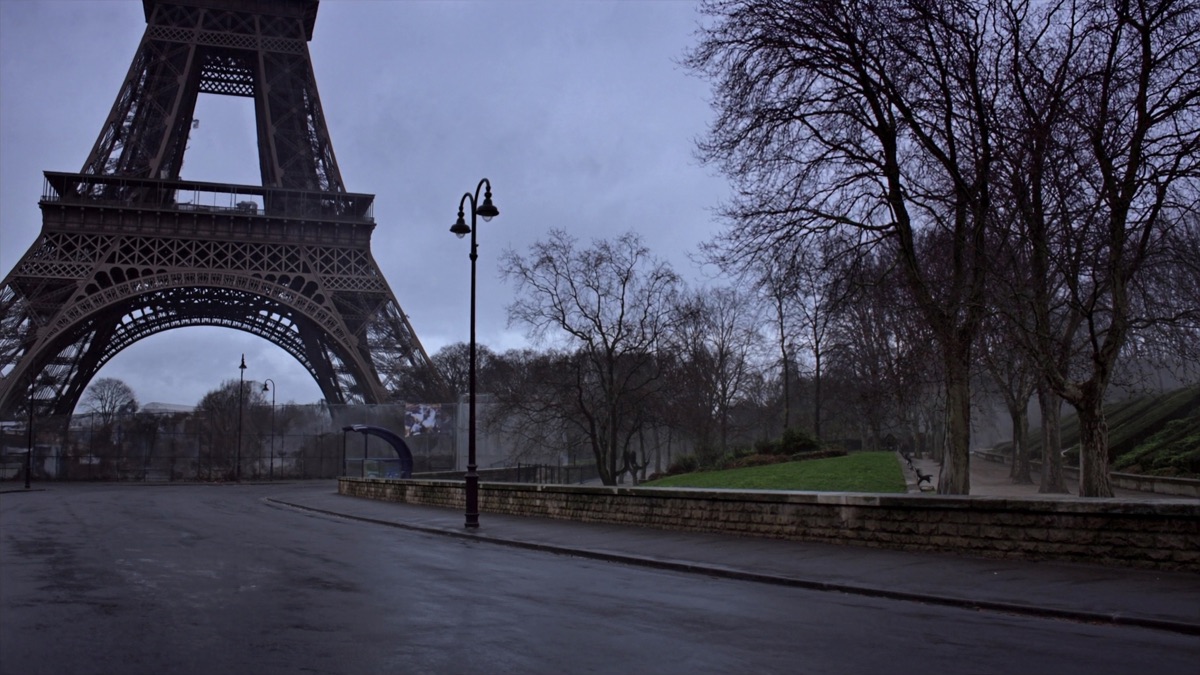
The Eiffel Tower actually grows taller in summer heat because its 7,300 tons of wrought iron expand as they warm, a real, measurable physical change rather than any optical illusion. On a hot summer day, the tower can stand up to 15 centimeters taller than on a cold winter morning, and because the sun heats one side of the structure more than the other, the tower also leans slightly away from the sun during the day — a small, predictable tilt engineers accounted for from the very beginning.
The Basic Physics of Thermal Expansion in Metal
Nearly all materials expand when heated because rising temperature makes their atoms vibrate more vigorously, pushing them slightly farther apart on average even though each atom stays bonded in roughly the same position within the material's structure. This effect is described by a material-specific number called the coefficient of thermal expansion, which tells engineers exactly how much a given length of material will grow per degree of temperature increase.
Wrought iron, the material the Eiffel Tower is built from, has a thermal expansion coefficient of roughly 12 millionths per degree Celsius, meaning a one-meter iron bar heated by 20 degrees Celsius grows by about a quarter of a millimeter — a tiny fraction on its own, but one that compounds dramatically across a structure hundreds of meters tall.
Why the Tower's Height Change Adds Up to Real Centimeters
The Eiffel Tower stands about 330 meters tall, and applying wrought iron's expansion coefficient across that entire height for a temperature swing of roughly 30 to 40 degrees Celsius between a cold winter night and a hot summer afternoon yields a height change on the order of 10 to 15 centimeters — small relative to the tower's total size, but easily measurable and well documented by tour guides and engineers alike.
This isn't a one-time event but a continuous daily and seasonal cycle: the tower is measurably taller in the afternoon than in the early morning on the same summer day, and taller in July than in January, expanding and contracting in a predictable rhythm that tracks ambient temperature almost like a giant iron thermometer.
Why the Tower Leans Away From the Sun During the Day
Because the sun strikes one face of the tower more directly than the opposite, shaded face, the sunlit side heats up and expands more than the shaded side, causing that side to grow slightly longer while the cooler side stays relatively shorter — and since the two sides are connected at both top and bottom, this asymmetric expansion bends the entire structure slightly, tilting the top away from the sun.
This solar-driven lean is small, typically a matter of several centimeters measured at the top, but it reverses direction as the sun moves across the sky throughout the day, following the sun's position from east in the morning to west in the afternoon — engineers monitoring the tower's structural health have to account for this daily oscillation separately from any long-term structural movement they're actually trying to detect.
Why Gustave Eiffel's Iron Lattice Design Tolerates This Movement
The tower's open lattice structure of riveted iron beams, rather than a solid mass, was partly a practical choice to reduce wind resistance and weight, but it also happens to tolerate thermal expansion far better than a rigid, solid structure would — individual beams can each expand slightly along their own length without the whole structure locking up or developing dangerous internal stress concentrations.
The roughly 2.5 million rivets holding the tower's iron pieces together were installed with small clearances that allow for this constant, cyclical movement, and Gustave Eiffel's engineering team, drawing on his extensive prior experience with iron railway bridges that faced the same thermal challenges, deliberately designed the joints to flex rather than resist expansion rigidly.
How Expansion Joints Elsewhere Solve the Same Problem
Most large metal and concrete structures — bridges, railway tracks, buildings — incorporate deliberate expansion joints, small gaps or specially designed flexible connectors that absorb thermal growth without transmitting damaging stress to the rest of the structure. A long steel bridge without such joints would eventually buckle or crack as it repeatedly expands and contracts through seasonal temperature swings over decades of use.
Railway tracks historically had visible gaps between rail sections specifically for this purpose, producing the classic rhythmic clacking sound of old trains; modern continuous welded rail instead uses techniques like pre-stressing the rail during installation to manage thermal stress without needing visible gaps at all, trading one engineering solution for a more sophisticated one as materials science advanced.
Why the Tower Also Contracts and Loses Height in Deep Winter
The same thermal expansion that adds height in summer works exactly in reverse during cold winter conditions, contracting the iron and pulling the tower's height back down toward its baseline cold-weather measurement, which is technically its shortest, most compact configuration — the tower's officially cited height applies to a specific reference temperature, not to any single fixed physical dimension.
Extreme cold snaps have occasionally caused visible, if minor, structural effects like temporary stiffening of moving mechanical parts such as the elevator systems, since metal contraction can tighten clearances that were designed with room to spare for the warmer end of the tower's normal operating temperature range, illustrating that thermal movement affects more than just the tower's overall silhouette.
How Engineers Distinguish Thermal Movement From Real Structural Problems
Because thermal expansion produces predictable, cyclical movement that closely tracks measured temperature, structural engineers monitoring the Eiffel Tower's health use sensors that record both displacement and temperature simultaneously, allowing them to mathematically subtract the expected thermal component from any observed movement and isolate whatever residual movement might actually signal a genuine structural concern.
This same principle applies to monitoring skyscrapers, long-span bridges, and other large structures worldwide — any sensor network tracking structural health has to account for thermal cycling as an expected, benign baseline signal, otherwise engineers would constantly mistake ordinary daily and seasonal breathing of a large metal structure for dangerous settling, cracking, or fatigue.
Why Paint Color and Maintenance Also Interact With Heat
The Eiffel Tower is repainted roughly every seven years using a specific bronze-brown color scheme partly chosen for practical reasons beyond aesthetics — darker colors absorb more solar radiation and heat up faster than lighter colors would, meaning the paint choice itself has a small but real influence on how much the tower expands on a sunny day compared to if it were painted white.
Maintenance crews repainting the tower also have to work around its thermal cycle, since sections heated unevenly by direct sun expand differently than shaded sections during the workday, and paint adhesion and curing can be affected by the metal surface temperature beneath it — a detail that factors into scheduling exactly when and in what sequence different faces get repainted.
How This Compares to Thermal Movement in Modern Skyscrapers
Modern skyscrapers experience the same fundamental thermal expansion physics but generally show less visible height change than the Eiffel Tower because they're typically clad in insulating glass and materials that buffer the structural steel frame from direct sun exposure, whereas the tower's iron lattice is almost entirely exposed to open air and direct sunlight along its full surface.
Engineers designing very tall modern buildings still calculate expected thermal expansion and incorporate expansion joints and flexible connections in facades and mechanical systems, and some supertall buildings have measurably different heights between their hottest and coldest recorded conditions, though the effect is usually smaller in absolute terms than the Eiffel Tower's dramatic, largely unshielded iron structure.
Why This Same Effect Shows Up in Everyday Objects Too
The same expansion principle explains why a metal jar lid that's stuck can often be loosened by running hot water over it — the metal lid expands faster and more than the glass jar beneath it, briefly creating just enough clearance to twist it free — and why power lines visibly sag more on hot summer days than on cold winter ones as the metal cable lengthens slightly under heat.
Bridges, railway tracks, eyeglass frames, and even the gaps deliberately left around window panes in their frames all rely on engineers having accounted for this same basic physical principle at a much smaller scale than the Eiffel Tower, which is really just a particularly large and visually dramatic demonstration of a phenomenon happening in metal objects all around us constantly.
Why Engineers Measured the Tower's Movement From the Very Start
Gustave Eiffel himself was deeply interested in how his tower behaved under real-world conditions, and he installed some of the earliest known scientific instruments on the structure specifically to study wind resistance, temperature effects, and structural movement — turning the tower itself into a working laboratory rather than treating it as a finished, static monument the moment construction ended.
This tradition of instrumented monitoring has continued for well over a century, giving engineers today one of the longest continuous datasets of any large structure's thermal and mechanical behavior anywhere in the world, which has made the tower an unusually well-documented reference case for understanding how large iron and steel structures actually behave over long timescales rather than just in short-term laboratory tests.
How Wind Load Interacts With Thermal Movement
Wind pressure and thermal expansion both cause the tower to move, but they act on different timescales and in different patterns — wind produces rapid, oscillating sway that can shift the top of the tower by several centimeters within seconds during a strong gust, while thermal expansion produces a slow, smooth movement that unfolds over hours as the sun's position and ambient temperature change through the day.
Engineers analyzing the tower's structural sensors have to separate these two overlapping signals mathematically, since a sensor reading at any given moment reflects the combined effect of both wind and temperature, and only by isolating each contribution can they confirm that observed movement stays within the safe, expected range for each type of load individually.
Why Different Metals Expand at Different Rates
Not all metals expand equally for the same temperature change — aluminum expands roughly twice as much as iron or steel for an identical temperature rise, while a metal like invar, a specially engineered nickel-iron alloy, was designed specifically to expand almost negligibly, making it valuable for precision instruments like clocks and measuring devices where thermal expansion would otherwise introduce unwanted error.
This variation matters enormously whenever two different metals are joined in the same structure, since mismatched expansion rates can create internal stress at the joint as temperature changes — engineers must either choose compatible materials or design the connection itself, often using sliding or flexible joints, to accommodate the difference rather than fighting it.
How Seasonal Cycles Differ From the Tower's Daily Cycle
The tower experiences two overlapping thermal rhythms: a fast daily cycle driven by the sun rising and setting, which mostly affects the asymmetric lean between sunlit and shaded faces, and a slower seasonal cycle driven by overall ambient air temperature across months, which drives the larger, more uniform height change between deep winter and peak summer.
Because these two cycles operate on such different timescales and largely independent physical drivers, a measurement taken on any single day captures only a snapshot of where the tower sits within both cycles simultaneously, which is why long-term structural monitoring relies on continuous data collection across full years rather than any single reading to properly characterize the tower's complete thermal behavior.
Why This Phenomenon Is Rarely Noticed by Visitors
Despite being real and measurable, the tower's thermal growth is far too gradual and too small relative to the structure's overall 330-meter scale for any visitor to perceive with the naked eye — 15 centimeters spread across such an enormous height represents a proportional change far too subtle for human visual perception to detect without precise instruments.
This is a common pattern across many large-scale physical phenomena: the underlying physics is straightforward and well understood, and the effect is entirely real and scientifically verifiable, but its practical scale simply falls below what unaided human senses can register, which is precisely why documenting phenomena like this depends on careful instrumentation rather than casual observation alone.
Sources
- Official Eiffel Tower Site — Structural facts and engineering history
- National Institute of Standards and Technology — Thermal expansion coefficients and material science
- American Society of Civil Engineers — Expansion joint design in large structures
FAQ
How much taller does the Eiffel Tower actually get in summer?
Up to about 15 centimeters taller on a hot summer day compared to a cold winter morning, due to thermal expansion of its 7,300 tons of wrought iron.
Why does the tower lean slightly during the day?
The sun heats one face more than the shaded opposite face, making that side expand more and bending the structure slightly away from the sun — a lean that reverses as the sun moves across the sky.
Does the tower's official height account for thermal expansion?
The officially cited height applies to a specific reference temperature; the tower's actual physical height fluctuates continuously above and below that figure with the weather.
Why does the tower's open lattice design handle expansion well?
Individual riveted iron beams can each expand slightly along their own length without the whole structure locking up, unlike a rigid solid structure that would build dangerous internal stress.
How do engineers tell thermal movement apart from real structural damage?
Sensors record displacement and temperature together, letting engineers mathematically subtract the expected, predictable thermal component and isolate any residual movement that might signal a genuine problem.
Does the color of the tower's paint affect how much it expands?
Yes; darker colors absorb more solar radiation and heat up faster than lighter ones, giving the tower's bronze-brown paint a small but real influence on its expansion on sunny days.
Why don't modern skyscrapers show height changes as dramatic as the Eiffel Tower's?
They're typically clad in insulating glass and materials that buffer the steel frame from direct sun, whereas the tower's iron lattice is almost entirely exposed to open air and sunlight.
What is a thermal expansion coefficient?
A material-specific number describing exactly how much a given length of that material grows per degree of temperature increase — wrought iron's is roughly 12 millionths per degree Celsius.
Why do railway tracks and bridges need expansion joints?
Without gaps or flexible connectors to absorb thermal growth, a long steel structure would eventually buckle or crack as it repeatedly expands and contracts through seasonal temperature swings.
Does extreme cold affect the Eiffel Tower's moving parts?
Yes; metal contraction in deep cold can tighten mechanical clearances, occasionally causing temporary stiffening in systems like the elevators that were designed with room for the warmer end of the temperature range.
Why does a stuck metal jar lid loosen under hot water?
The metal lid expands faster and more than the glass jar beneath it, briefly creating just enough clearance between the two materials to twist the lid free.
Why do power lines sag more on hot days?
The metal cable lengthens slightly under heat through the same thermal expansion principle, causing visibly more sag on hot summer days than on cold winter ones.
How many rivets hold the Eiffel Tower's iron pieces together?
Roughly 2.5 million rivets, installed with small clearances that allow for the tower's constant, cyclical thermal movement without locking the structure rigidly.
Did Gustave Eiffel's prior engineering experience influence the tower's design?
Yes; his extensive earlier work on iron railway bridges facing the same thermal expansion challenges directly informed how the tower's joints were deliberately designed to flex rather than resist expansion rigidly.
Is the Eiffel Tower's thermal growth unique among large structures?
No; every large metal or concrete structure experiences the same physics, but the tower's dramatic, largely unshielded iron lattice makes its expansion unusually visible and well documented compared to insulated modern buildings.
Did Gustave Eiffel monitor the tower's movement from the start?
Yes; he installed some of the earliest known scientific instruments on the structure specifically to study wind, temperature, and movement, turning it into a working laboratory from the beginning.
Why can't visitors see the tower's thermal growth happening?
A 15-centimeter change spread across 330 meters of height is far too subtle for the naked eye to detect without precise instruments, even though the effect is entirely real and measurable.
Do all metals expand at the same rate as iron?
No; aluminum expands roughly twice as much as iron for the same temperature rise, while special alloys like invar were engineered to expand almost negligibly for precision instruments.
How do wind sway and thermal expansion differ in how they move the tower?
Wind causes fast, oscillating sway shifting the top by centimeters within seconds during gusts, while thermal expansion causes a slow, smooth movement unfolding over hours as temperature changes.
Why does the tower have two different thermal cycles?
A fast daily cycle from the sun rising and setting drives the asymmetric lean, while a slower seasonal cycle from overall air temperature across months drives the larger height change.
Why do engineers need to separate wind effects from thermal effects in sensor data?
A sensor reading at any moment reflects both combined, so only by isolating each contribution mathematically can engineers confirm movement stays within the safe range expected for each load type individually.
About the Author
We reference Wikipedia and other authoritative sources to explain the background and current understanding of this topic.
Loved This Article?
Share it on WhatsApp → Share it on WhatsApp
Get more guides in your inbox — Subscribe to our newsletter for weekly surprising stories from Egypt, Saudi Arabia, Dubai, and beyond.