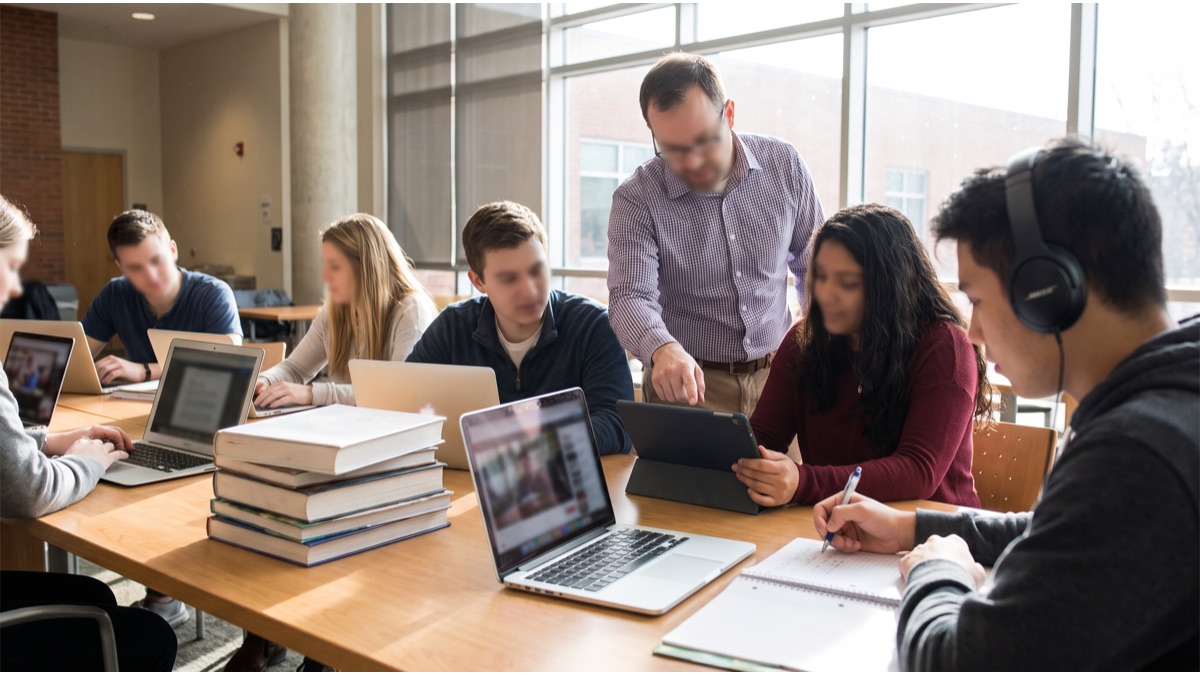
The flipped classroom is a teaching model that reverses the traditional order of instruction: students watch or read lecture material on their own time, typically at home, and then use class time for the practice, problem-solving, and discussion that homework traditionally covered. The logic is that a teacher's in-person presence is more valuable while students are actively struggling with a problem than while they're passively listening to information.
The model traces back to two Colorado high school chemistry teachers, Jonathan Bergmann and Aaron Sams, who started recording their lectures around 2007 specifically so students who missed class due to sports travel could catch up. They noticed students who watched the recordings, then came to class to work through problems with support available, often understood the material better than students who had only sat through the live lecture.
Lectures at Home, Practice in Class
Where the Model Came From and What the Evidence Shows
In a flipped classroom, the teacher's role during class time shifts from delivering content to circulating among students, answering questions, and catching misunderstandings in real time, rather than discovering those gaps only when grading homework turned in after the fact. Students who are confused about a concept get help exactly when they need it most, instead of struggling alone at home with no one to ask.
Research on the flipped classroom shows genuinely mixed but generally modestly positive results — outcomes depend heavily on whether students actually complete the at-home portion, whether the in-class activities are well designed rather than just extended homework time, and whether teachers are trained to shift from lecturing to active facilitation, which is a meaningfully different skill.
Sources
- Wikipedia — overview of the flipped classroom model and its origins
- Vanderbilt University Center for Teaching — research-based guidance on flipped classroom implementation
- Edutopia — interview and background from the model's co-creator Jonathan Bergmann
FAQ
Who invented the flipped classroom model?
High school chemistry teachers Jonathan Bergmann and Aaron Sams are widely credited with popularizing it around 2007, after recording lectures for absent students and noticing the format worked well for everyone.
Does the flipped classroom actually improve test scores?
Research findings are mixed but lean modestly positive — the benefit depends heavily on whether students complete the at-home material and whether class time is used for genuinely active problem-solving rather than just repeating the lecture.
What is the biggest challenge with flipping a classroom?
Getting every student to actually watch or read the material before class is the most commonly cited obstacle, since a flipped classroom loses much of its value if a large share of students show up unprepared.
About the Author
We reference Wikipedia, Vanderbilt University Center for Teaching, and Edutopia to explain the background and current understanding of this topic.
Loved This Article?
Share it on WhatsApp → Share it on WhatsApp
Get more guides in your inbox — Subscribe to our newsletter for weekly surprising stories from Egypt, Saudi Arabia, Dubai, and beyond.