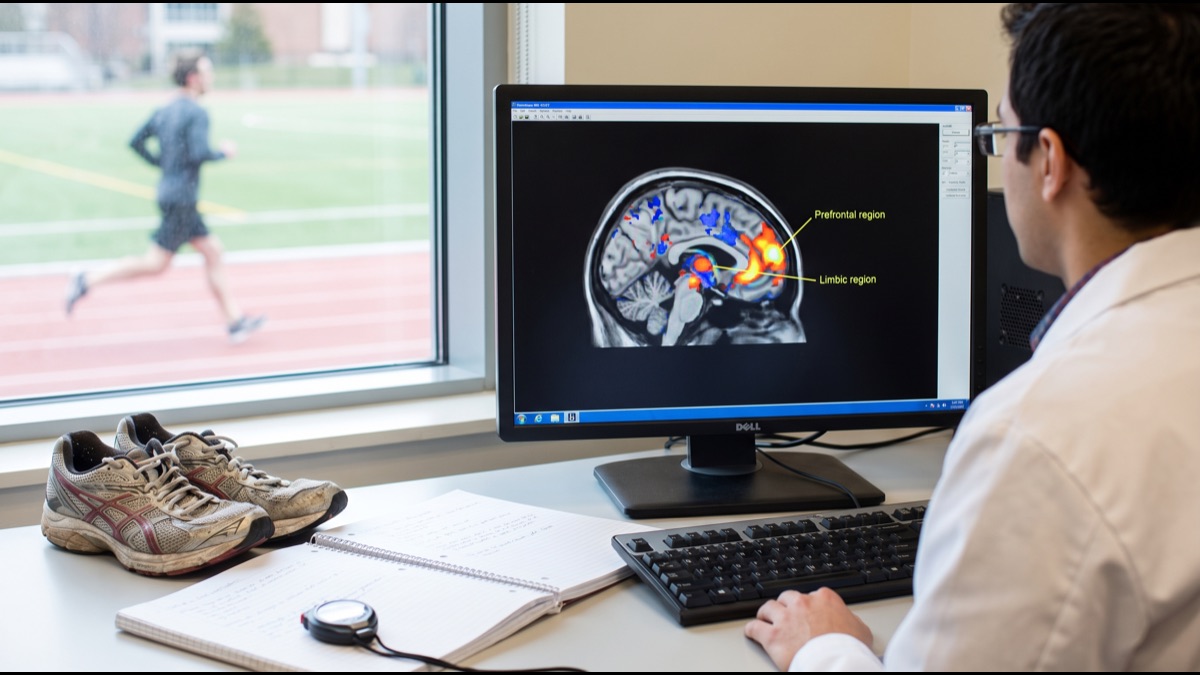
For decades, joggers, marathoners, and gym regulars described the same peculiar sensation partway through sustained aerobic effort: pain fading, anxiety lifting, and a mild, floaty euphoria settling in that had nothing to do with any external substance. This experience, universally nicknamed the runner's high, became one of exercise science's most confidently explained phenomena, and also, it turns out, one of its more persistently mis-explained ones.
For roughly forty years, the explanation everyone repeated was endorphins, the body's natural opioid-like painkillers, released during exertion. It was a tidy story that made intuitive sense and got repeated in gym class, fitness magazines, and casual conversation so often that it hardened into unquestioned fact. Only relatively recently has brain imaging research revealed that the real explanation is considerably more interesting, and involves an entirely different chemical system.
A Sensation Runners Described Long Before Science Explained It
Long-distance runners and endurance athletes have described some version of this experience for as long as organized endurance sport has existed, typically emerging somewhere between twenty and forty-five minutes into sustained, moderately intense effort, characterized by reduced perception of pain, diminished anxiety, and a mild sense of euphoria or calm alertness.
The experience is distinct from simply feeling good after finishing a workout, since it typically occurs during the activity itself rather than purely as post-exercise relief, and many who have experienced it describe a specific, recognizable shift in mental state rather than a gradual, generic improvement in mood.
Because the experience was so consistently reported yet difficult to study directly during actual physical exertion using the brain imaging equipment available decades ago, the scientific explanation for it lagged well behind the popular one, leaving endorphins to fill the explanatory gap for far longer than the actual evidence supporting that explanation ever really justified.
The gap between a widely reported subjective experience and a rigorously tested physiological explanation for it is a recurring pattern across exercise science more broadly, and the runner's high is arguably the clearest example of how a plausible-sounding story can substitute for genuine evidence for decades simply because nobody had the tools, or the specific motivation, to test the underlying assumption directly against the alternative explanation that eventually proved correct.
Why the Endorphin Explanation Never Quite Fit
Endorphins do genuinely rise in the bloodstream during sustained exercise, a finding replicated many times in blood sample studies going back decades, and this measurable rise became the natural, intuitive explanation for the euphoric sensation runners reported, since endorphins were already well known as the body's natural pain-relieving and mood-elevating chemicals from other contexts.
The explanation was intuitive, widely repeated, and, crucially, largely untested at the level that actually mattered: whether those elevated blood endorphins were actually reaching the brain regions responsible for producing subjective feelings of euphoria, as opposed to simply circulating in the body without ever crossing into brain tissue in meaningful quantities.
This distinction between a measurable blood-level change and an actual brain-level effect turned out to be the central flaw in the traditional story, and it took genuinely different imaging technology, capable of looking directly inside the brain during and after exercise, to reveal that the endorphin explanation had been resting on an untested assumption for decades.
The Blood-Brain Barrier Problem Nobody Mentioned
The blood-brain barrier is a selective, protective boundary of tightly packed cells lining the brain's blood vessels that carefully controls which substances can pass from the general bloodstream into brain tissue, blocking many molecules, including large ones, that circulate freely elsewhere in the body.
Endorphins are relatively large peptide molecules, and research on the blood-brain barrier's permeability has found that these molecules cross into the brain in the bloodstream in only very limited quantities under normal circumstances, meaning the endorphins measured rising in blood samples during exercise are largely staying in the body rather than reaching the brain regions responsible for the euphoric sensation being investigated.
This single physiological fact, largely absent from the popular decades-long retelling of the endorphin story, quietly undermines the entire traditional explanation: a chemical elevated in the blood cannot easily explain a brain-level subjective experience if that chemical mostly cannot get into the brain in the first place, which is precisely the gap that led researchers to look for an alternative explanation.
It is worth noting that this was not a case of earlier researchers being careless; the blood-brain barrier's selective permeability to different peptide sizes was itself an active, evolving area of neuroscience research throughout much of the period when the endorphin explanation for the runner's high was being popularized, meaning the tools and knowledge needed to properly question the assumption were not fully available until relatively recently.
How Endocannabinoids Entered the Picture
The endocannabinoid system is the body's own internally produced signaling system chemically related to the active compounds found in cannabis, involving molecules the body manufactures itself that bind to the same receptors cannabis compounds activate, playing a role in mood, pain perception, appetite, and memory quite apart from anything related to the plant itself.
Unlike endorphins, key endocannabinoid molecules are small and fat-soluble, properties that allow them to cross the blood-brain barrier considerably more readily, making them physiologically far better candidates for actually producing a brain-level euphoric effect from a peripheral increase during exercise than the larger, poorly-crossing endorphin molecules ever were.
Researchers investigating exercise physiology began measuring endocannabinoid levels during and after exertion and found the kind of reliable, exercise-intensity-linked increase that had previously been assumed, incorrectly, to apply cleanly to endorphins, giving the endocannabinoid system a genuinely stronger physiological case for being the actual mechanism behind the reported subjective experience.
What the Landmark Imaging Study Actually Found
A frequently cited piece of research directly imaged the brains of runners before and after a sustained run, using a technique capable of detecting activity in opioid and cannabinoid receptor systems specifically, comparing brain activity at rest against brain activity following exercise reported to produce the characteristic euphoric sensation.
The imaging found changes consistent with increased endocannabinoid system activity in brain regions associated with emotion and reward following exercise, correlating with runners' self-reported euphoria in a way that gave the endocannabinoid explanation direct brain-level support rather than relying purely on the indirect molecular-crossing argument against endorphins.
This does not mean endorphins play no role whatsoever in exercise physiology, since they clearly do participate in pain modulation and other exercise-related processes at the level of the body and possibly some brain regions to a limited degree, but the specific, distinct, elevated-mood runner's high sensation appears to be primarily an endocannabinoid phenomenon rather than an endorphin one.
Why Intensity and Duration Genuinely Matter
Research on when the runner's high actually occurs points to a fairly specific window of exercise intensity and duration rather than any level of physical activity reliably producing it, with moderate-to-vigorous intensity sustained for a meaningful period, generally cited in the range of thirty to forty-five minutes, showing the most consistent association with the effect.
Very light exercise generally does not produce enough of a physiological stress response to meaningfully elevate endocannabinoid levels, while extremely short bouts of intense exercise may not sustain the effort long enough for the relevant biochemical changes to build up and register subjectively, which is part of why the effect is reported far more commonly among distance runners and endurance cyclists than among people doing brief strength-training sessions.
This intensity-and-duration relationship also helps explain why the runner's high is not simply "exercise makes you feel good" in generic terms, since plenty of shorter or lighter exercise sessions genuinely improve mood through other, better-established mechanisms without producing the specific, more intense euphoric sensation associated with the endocannabinoid-linked effect specifically.
Why Some People Never Feel It at All
A meaningful share of regular runners and endurance athletes report never experiencing anything resembling the classic runner's high despite years of consistent, appropriately intense training, a genuine individual variation that research has only partially explained so far, pointing to differences in baseline endocannabinoid system activity, genetics, and possibly training history as contributing factors.
This variation is worth taking seriously rather than treating as evidence that someone is exercising incorrectly, since the underlying biochemistry clearly differs meaningfully between individuals, similar to how people vary in their sensitivity to caffeine, alcohol, or many medications despite receiving comparable doses under comparable conditions.
People who never experience the sensation are not missing out on the other, better-documented benefits of regular aerobic exercise, including genuine improvements in mood regulation, sleep quality, and cardiovascular health that occur through multiple overlapping mechanisms independent of whether the specific endocannabinoid-linked euphoria ever kicks in for that individual, and there is no evidence that chasing the sensation through ever-longer or ever-harder sessions reliably produces it for someone whose baseline biology simply does not generate a strong subjective response in the first place.
What the Effect Shares With Cannabis, and What It Doesn't
Because the runner's high and cannabis intoxication both operate substantially through the same underlying cannabinoid receptor system, some people describe the subjective sensation of a strong runner's high in terms reminiscent of mild cannabis effects, including a sense of calm, altered time perception, and reduced anxiety.
The comparison has real physiological grounding at the receptor level but should not be overstated, since the intensity, onset speed, and overall subjective character differ substantially between an externally introduced cannabis compound acting on receptors throughout the body all at once and a naturally occurring, exercise-triggered rise in the body's own endocannabinoid molecules building gradually during sustained physical effort.
The comparison is nonetheless scientifically useful, since it explains at a mechanistic level why exercise-induced mood elevation and cannabis-induced mood elevation can feel meaningfully similar to some people despite one substance being entirely internally generated through physical effort and the other being an externally introduced plant compound acting on a shared receptor system.
How This Reshapes Thinking About Exercise and Mood
The corrected endocannabinoid explanation has meaningfully reshaped how exercise scientists think about the broader relationship between physical activity and mental health, since it points toward a genuinely different, evolutionarily plausible mechanism connecting sustained physical exertion to mood regulation than the endorphin story ever offered.
Some researchers have proposed that the endocannabinoid response to sustained aerobic effort may have evolutionary roots in the physical demands of persistence hunting, the pattern of pursuing prey over long distances practiced by early humans, where a natural mood-elevating and pain-dampening response to prolonged running effort would have offered a genuine survival advantage during actual pursuit.
This evolutionary framing remains a plausible hypothesis rather than settled fact, but it offers a coherent explanation for why the body would have evolved a mechanism specifically rewarding sustained, moderate-to-vigorous aerobic effort with a genuine mood benefit, distinct from the pain-relief functions endorphins serve in response to acute injury or trauma.
It also reframes exercise-linked mood benefits as something closer to an intrinsic reward system shaping ancestral behavior toward a survival-relevant activity, rather than a modern curiosity discovered only once people started running for recreation rather than necessity, a distinction that matters for how seriously researchers now take sustained aerobic movement as a genuinely biologically privileged category of physical activity for mental health specifically.
What This Means for Anyone Chasing the Feeling
For people specifically hoping to experience a runner's high, the practical implication of the corrected science is that sustained, moderately vigorous aerobic exercise lasting thirty minutes or more offers the best documented chance of triggering it, considerably more reliably than short, intense interval sessions or very light activity of any duration.
Consistency likely matters as well, since trained endurance athletes may develop the physiological conditioning that supports a more reliable endocannabinoid response over time, though individual variation means some people may simply never experience the specific sensation no matter how appropriately they structure their training.
The broader, more reliable takeaway from the research is that the mental health benefits of regular exercise do not depend on ever experiencing a dramatic runner's high specifically, since consistent aerobic activity improves mood, sleep, and stress resilience through multiple well-established pathways regardless of whether any single session ever produces the particular euphoric sensation that first drew scientific attention to this fascinating corner of exercise physiology.
Anyone deliberately chasing the sensation should also be cautious about ramping up intensity or duration too quickly in pursuit of it, since the injury risk from overly aggressive training progression is real and well documented, while the endocannabinoid response itself offers no protective benefit against overuse injuries; a gradual, sustainable build in training volume remains the safer path toward both general fitness and, for those whose biochemistry supports it, an eventual experience of the effect described in this article, rather than a shortcut worth risking an overuse injury to chase.
Sources
- Wikipedia — overview of the runner's high phenomenon and proposed mechanisms
- National Institutes of Health — research on the endocannabinoid system and exercise physiology
- American College of Sports Medicine — background on exercise intensity, duration, and physiological response
- PubMed Central — peer-reviewed imaging research on endorphins and endocannabinoids during exercise
FAQ
What actually causes the runner's high?
Brain imaging research points primarily to the body's own endocannabinoid system, molecules chemically similar to cannabis compounds, rather than the endorphins long credited with the effect.
Why was the endorphin explanation wrong?
Endorphins are too large to cross the blood-brain barrier in meaningful amounts from the bloodstream, so elevated blood endorphin levels during exercise cannot fully explain a brain-level euphoric effect.
How intense does exercise need to be to trigger it?
Research suggests moderate-intensity, sustained aerobic exercise, roughly 30 to 45 minutes at a pace hard enough to be somewhat challenging, is more reliably associated with the effect than very light or very short exercise.
Does everyone experience a runner's high?
No — individual variation is substantial, and many regular exercisers never experience a distinct euphoric state despite gaining other real benefits from their training.
Is the runner's high similar to a drug high?
It shares an underlying receptor system with cannabis, which is why the subjective experience is sometimes compared to mild cannabis effects, though the intensity and mechanism of onset differ substantially.
About the Author
We reference Wikipedia, the National Institutes of Health, the American College of Sports Medicine, and PubMed Central to explain the background and current understanding of this topic.
Loved This Article?
Share it on WhatsApp → Share it on WhatsApp
Get more guides in your inbox — Subscribe to our newsletter for weekly surprising stories from Egypt, Saudi Arabia, Dubai, and beyond.