The pirate raising his mug in a toast, the dinosaur turning its head to track passing guests, the singing bear tapping its foot in rhythm: none of it is video, and none of it is remote-controlled by a hidden performer. Each of these figures is an animatronic, a robotic performer built specifically to repeat a precisely choreographed sequence of movement thousands of times a day, every day, for years, without ever missing a beat.
Understanding what actually sits beneath the fur, latex, and painted fiberglass skin reveals a genuinely sophisticated engineering discipline that blends robotics, theatrical performance, and industrial reliability engineering into a single figure that most guests walk past without ever considering how it actually moves.
Why Animatronics Exist Instead of Simple Video Displays
Theme parks could theoretically use large video screens or projected imagery to tell the same stories animatronic figures tell, and in some newer attractions they increasingly do, but physical animatronic figures still dominate many classic and flagship attractions for a specific psychological reason: a physical object occupying real three-dimensional space in front of a guest reads as far more convincingly present than even a very high-quality flat image.
This sense of physical presence matters enormously in an industry built entirely around convincing guests they have stepped into a genuinely different, immersive world, and a robotic figure that guests can walk around and view from multiple angles maintains that illusion in a way a flat screen fundamentally cannot.
Animatronics also allow physical interaction with the built environment in ways video cannot, including genuine physical presence within elaborate practical sets, water effects, and lighting that a projected image would need to be carefully composited into rather than simply existing within.
What Actually Sits Beneath the Skin
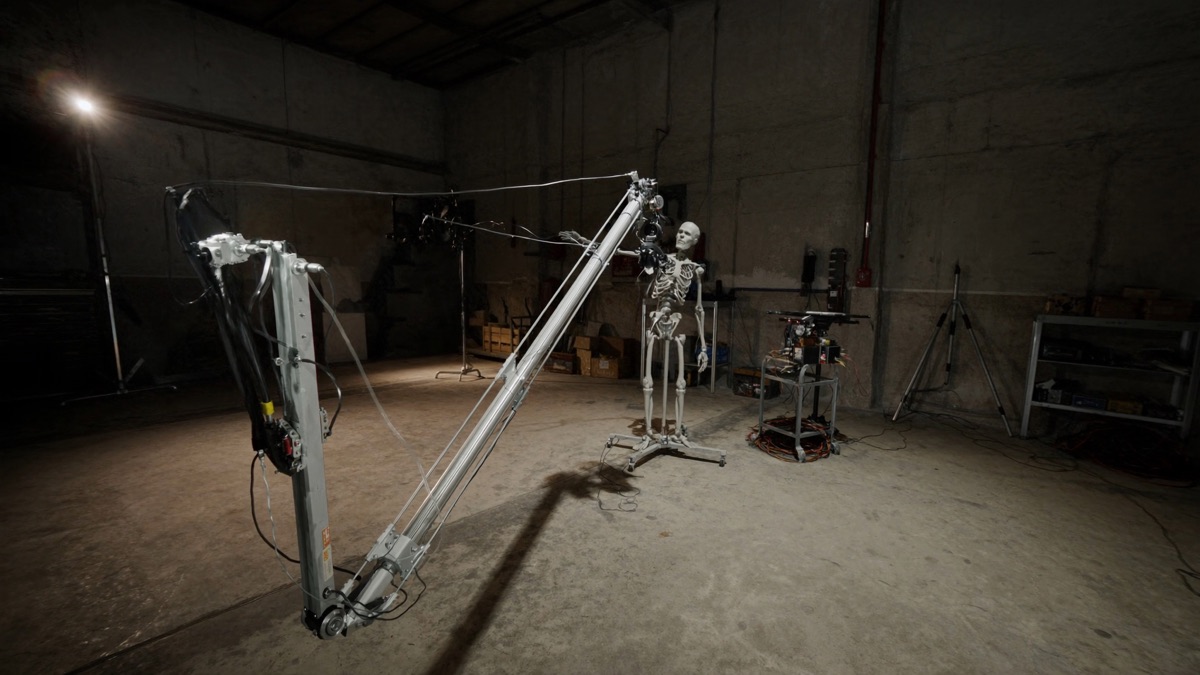
Beneath the sculpted foam, latex, or silicone skin of an animatronic figure sits a rigid internal skeleton, typically machined from aluminum or steel, engineered to support the figure's weight while providing precise mounting points for the actuators that will eventually move it.
This skeleton is built around a series of joints roughly analogous to human or animal anatomy, though the actual range of motion at each joint is deliberately engineered to support the specific performance the figure needs to deliver rather than to replicate full biological movement.
Wiring, hydraulic or pneumatic lines, and control electronics are routed through channels built directly into this internal structure, since everything must fit within a silhouette that ultimately needs to look convincingly organic once the outer skin and costume are applied.
How Hydraulic and Pneumatic Systems Actually Move a Figure
Many larger, more powerful animatronic movements, particularly those requiring significant force like a large dinosaur's head swing or a character's full upper-body lean, are driven by hydraulic actuators, which use pressurized fluid pushed through cylinders to produce strong, smooth, precisely controllable motion.
Smaller, more delicate movements, including facial expressions, finger articulation, and subtle head tilts, more often use pneumatic systems powered by compressed air, or increasingly modern electric servo motors, which offer finer positional control at a smaller physical scale than hydraulics typically allow.
The choice between these systems for any given joint reflects a genuine engineering tradeoff between raw force, precision, noise level, and physical size, meaning a single complex figure frequently combines several different actuation technologies across its different moving parts.
Why Facial Expression Is the Hardest Part to Engineer
Human and animal faces communicate an enormous amount of emotional information through extremely subtle, small-scale muscle movement, which means convincingly animatronic facial expression requires packing a large number of individually controllable small actuators into an extremely confined space behind the face's skin.
Engineers specifically study the underlying anatomy of real facial musculature when designing a figure's face, since replicating the actual biomechanical pathways that create a genuine smile or raised eyebrow produces far more convincing results than simply moving the skin surface in an approximated, generic way.
This is why facial animatronics represent some of the most expensive and technically demanding components of an entire figure, and flagship character figures at major parks can have dozens of independently controlled facial actuators packed into a space barely larger than an actual human head.
How a Performance Actually Gets Programmed
Before any movement is programmed, animators and puppeteers typically work with the physical figure directly, manually posing and adjusting it to develop the specific character performance, timing, and personality the final piece needs to convey, much as a traditional animator would sketch key poses for a drawn character.
These key poses and movements are then translated into precise digital control data, specifying exact actuator positions and timing down to fractions of a second, creating what is effectively a recorded performance that can be played back identically on command indefinitely.
Modern animatronic programming increasingly uses software borrowed from computer animation and motion capture, allowing designers to preview and refine a performance digitally before committing to the physical figure, considerably speeding up what was historically an entirely manual, trial-and-error process.
Why Timing Precision Down to the Frame Actually Matters
An animatronic performance is synchronized not just internally across its own many actuators, but externally against a recorded audio track, lighting cues, and sometimes the movement of other nearby figures, all of which must align with extremely tight timing tolerances for the illusion of a genuinely living character to hold together.
Even a small timing misalignment between a figure's mouth movement and its recorded dialogue immediately breaks the illusion for an audience, in much the same way poorly synchronized dubbing on a film feels immediately, viscerally wrong even to a viewer who cannot articulate exactly why.
Show control systems running an entire attraction typically operate on a master timeline referenced by every synchronized element simultaneously, ensuring that audio, lighting, and every animatronic figure in a scene move in precise lockstep regardless of how many independent systems are actually involved.
How Figures Survive Thousands of Repetitions a Day
A single animatronic figure in a popular attraction can execute its full performance many hundreds of times daily across a long operating season, meaning individual mechanical components experience a genuinely extreme number of duty cycles compared to almost any other consumer or industrial robotic application.
This reliability requirement drives significant engineering conservatism in component selection, deliberately choosing actuators and materials rated for far more cycles than the strict minimum needed, specifically to avoid the substantial cost and guest-experience disruption of an attraction going offline for unscheduled mechanical repair.
Maintenance teams follow scheduled inspection and part-replacement routines based on cycle counts rather than waiting for visible failure, treating wear-prone components similarly to how an airline replaces aircraft parts on a predetermined schedule rather than running them until they actually break.
Why Costume and Skin Design Genuinely Constrains the Engineering
The final costume, fur, or sculpted skin covering an animatronic figure is not simply decorative; it directly constrains what movement the underlying mechanism can physically achieve, since fabric and foam have their own stretch, drag, and weight properties that actuators must have enough power to overcome.
Costume designers and mechanical engineers work together closely throughout a figure's development, since a beautiful costume that restricts necessary movement, or a mechanism powerful enough to move an unnecessarily restrictive costume, both represent genuine design failures the collaboration exists specifically to avoid.
Materials are also selected for durability under repeated mechanical stress and, for outdoor attractions, resistance to sun, rain, and temperature extremes, since a costume that degrades faster than the mechanism beneath it becomes the practical limiting factor on how long a figure can remain in active service.
How Modern Animatronics Differ From Classic Mechanical Designs
Early animatronic figures, including some of the pioneering examples built in the 1960s, relied heavily on mechanical cam systems, physical rotating discs shaped to produce a fixed, repeating sequence of motion, a robust but relatively inflexible approach that made changing a performance later genuinely difficult.
Modern figures instead use fully programmable digital control systems, allowing an entire performance to be revised, refined, or completely replaced through software changes alone, without needing to physically rebuild or re-machine any mechanical component of the figure itself.
This shift toward digital control has also enabled increasingly sophisticated free-roaming animatronic figures capable of navigating a physical space and reacting to nearby guests in limited, pre-programmed ways, representing a genuinely new category beyond the traditional fixed-position figure bolted to a single show set.
Why Some Attractions Now Use Free-Roaming Robotic Characters
Free-roaming animatronic characters, which walk independently through a physical space rather than remaining fixed to one location, require substantially more sophisticated engineering, including onboard balance systems, obstacle sensing, and battery power, since they cannot rely on a fixed external power and control connection the way stationary figures typically do.
These mobile figures represent one of the most active areas of current theme park engineering investment, since a character that can genuinely walk among guests rather than simply performing from a fixed stage position offers a qualitatively different, more personally immediate guest experience.
The engineering challenge is considerably harder than stationary animatronics because guest safety around a moving robotic figure in an open crowd introduces failure-mode requirements far stricter than anything a bolted-down, fixed-position figure ever needs to satisfy.
How Sound Design Integrates With the Physical Performance
Recorded dialogue and character sound effects are produced separately by voice actors and sound designers, then synchronized precisely to the figure's programmed jaw and facial movement, a process closely related to the lip-sync work done for traditional animation but constrained by the figure's actual mechanical range of motion.
Speakers are frequently built directly into or immediately adjacent to a figure's head to ensure sound genuinely appears to originate from the character itself rather than from a separate, disconnected sound system elsewhere in the show environment, reinforcing the illusion of a single, coherent living character.
Environmental sound design, including ambient effects and other background audio layered around the figure's dialogue, is similarly synchronized to the master show timeline, ensuring the entire sensory experience of a scene reinforces rather than contradicts the physical performance happening at its center.
What Happens When an Animatronic Figure Actually Breaks Down
Attractions are designed with monitoring systems that detect a malfunctioning figure in real time, since a robotic character that stops moving mid-performance, or worse, moves incorrectly in a way that looks visibly broken, damages the guest experience far more than a figure that simply performs a slightly reduced but still coherent routine.
Many attractions include fallback performance modes specifically for this scenario, allowing a partially malfunctioning figure to continue operating using only its still-functional actuators rather than shutting the entire scene down completely while a full repair is scheduled.
Maintenance technicians for major flagship figures develop deep, highly specific expertise in that particular figure's unique mechanical quirks over years of service, since even mass-produced animatronic platforms develop individually distinct maintenance histories once installed and running in an actual operating attraction.
Why Building a Flagship Animatronic Figure Takes Years
A major flagship animatronic figure for a headline attraction typically takes multiple years to move from initial concept sketches through mechanical engineering, costume development, performance programming, and rigorous reliability testing before it ever performs in front of a paying guest.
Much of this extended timeline is consumed by iterative testing and refinement rather than initial construction, since engineers need extensive real-world running time to identify and correct reliability weaknesses before committing a figure to years of continuous daily public operation.
This lengthy development cycle is one of the underlying reasons flagship animatronic attractions represent such a significant capital investment for theme park operators, and why a beloved classic figure is frequently kept in service and carefully maintained for decades rather than being casually replaced.
How the Craft Borrows From Both Robotics and Puppetry
Animatronic engineering sits at a genuine intersection between industrial robotics, which prioritizes precision, repeatability, and reliability, and traditional puppetry and character animation, which prioritizes expressive, emotionally convincing performance, and successful figures require genuine expertise from both disciplines working in close collaboration.
Many veteran animatronic designers have backgrounds specifically in traditional puppetry or classical character animation rather than pure mechanical engineering, bringing a performer's instinct for timing, weight, and emotional expression to a process that could otherwise easily produce technically functional but emotionally lifeless movement.
This hybrid discipline is part of why the best animatronic figures feel genuinely alive rather than simply mechanically correct, since the underlying engineering serves an explicitly theatrical and performative goal rather than treating motion as an end in itself.
What Watching an Attraction Differently Reveals About the Craft
Once a guest becomes aware of the engineering discipline underlying a favorite animatronic character, it becomes genuinely difficult to watch that figure perform without noticing the sheer number of independently coordinated systems, hydraulic, pneumatic, electronic, and acoustic, that must align perfectly for even a few seconds of convincing character performance.
This awareness reveals how much of a beloved attraction's emotional impact rests on engineering that is specifically designed to remain invisible, succeeding precisely when a guest simply experiences a character rather than consciously registering the sophisticated robotics making that character move.
Animatronics ultimately represent a distinctly theatrical application of robotics, where technical success is measured not by raw mechanical capability but by the entirely subjective, emotional question of whether a guest genuinely believes, even briefly, that they have met a living character rather than watched a machine perform.
How Engineers Test a Figure Before It Ever Meets a Guest
Every major flagship animatronic figure undergoes extensive testing rounds inside the engineering workshop before installation in its final attraction, running through its complete performance thousands of times under controlled conditions to expose any mechanical or software failure points before any guest ever sees it perform.
This testing also includes simulating realistic operating conditions, including temperature and humidity swings for outdoor attractions, to confirm the figure performs reliably under the same environmental conditions it will actually face once the attraction opens to the public.
Why Some Classic Figures Get Fully Rebuilt Rather Than Replaced
When a beloved classic animatronic figure reaches the end of its expected mechanical lifespan, operators frequently choose to fully rebuild it rather than replace it with an entirely new design, preserving the familiar appearance and personality returning guests have come to expect over decades.
This rebuilding process typically involves replacing every internal mechanical and electronic component with modern technology while preserving the outer skin and costume as much as possible, effectively producing a completely new figure on the inside wearing a beloved old character's identity on the outside.
How Lighting Design Enhances the Illusion of Life
Lighting designers work closely with animatronic engineers to sculpt exactly how a figure's face and body catch light during specific moments of a performance, since carefully angled highlights and shadows can make a mechanical movement read as far more expressive than the raw motion alone would achieve.
Some flagship figures use programmable internal lighting embedded within the skin itself, subtly brightening around the eyes or mouth during key emotional beats of a performance, a technique borrowed directly from theatrical stage lighting design rather than pure mechanical engineering.
This close collaboration between lighting and mechanical performance is part of why watching the same animatronic figure in daylight versus a carefully controlled show environment can feel like a genuinely different, often less convincing experience.
Why Weatherproofing Is a Genuinely Separate Engineering Discipline
Outdoor animatronic figures face a fundamentally different engineering challenge than indoor ones, requiring sealed enclosures, corrosion-resistant materials, and moisture management systems specifically designed to keep sensitive electronics and hydraulics functioning reliably through years of direct sun, rain, and temperature swings.
Engineers specifically test weatherproofed figures in climate chambers that simulate years of accelerated environmental exposure before installation, since discovering a moisture-related failure after a figure is already installed in a permanent outdoor set is far more costly to fix than catching it during pre-installation testing.
What looks to a passing guest like a simple, almost toylike moving figure is, underneath its costume and skin, a genuinely sophisticated piece of performance robotics, engineered to repeat a precisely choreographed sequence of motion thousands of times a day for years without a single missed beat.
The craft succeeds precisely when nobody thinks about the machinery at all, when a mechanical bear's foot-tap or a robotic pirate's toast feels less like watching a robot and more like watching a character genuinely alive in the room, which is the entire and deliberately invisible point of the engineering underneath.
Sources
- Wikipedia — overview of animatronics and its engineering history
- Institute of Electrical and Electronics Engineers — robotics engineering research relevant to actuator and control systems
- Smithsonian Institution — historical and technical documentation of entertainment robotics
- U.S. Occupational Safety and Health Administration — safety standards relevant to mechanical entertainment attractions
FAQ
Is an animatronic figure ever remote-controlled by a hidden performer?
Some specialty or interactive figures are puppeteered live, but most theme park animatronics run a pre-programmed, precisely timed performance rather than being operated in real time.
What's the difference between hydraulic and pneumatic animatronics?
Hydraulic systems use pressurized fluid for strong, powerful movement, while pneumatic systems use compressed air and are generally used for smaller, more delicate motions like facial expressions.
Why do animatronic faces look more convincing than a video screen?
A physical figure occupies real three-dimensional space that a guest can view from multiple angles, creating a stronger sense of genuine presence than a flat projected image.
How often does an animatronic figure need maintenance?
Major figures follow scheduled, cycle-based maintenance and part replacement rather than waiting for visible failure, given how many thousands of performances they complete each season.
Are free-roaming walking animatronic characters common yet?
They remain a relatively new and technically challenging category, requiring onboard balance and safety systems well beyond what fixed-position figures need.
About the Author
We reference Wikipedia, the Institute of Electrical and Electronics Engineers, the Smithsonian Institution, and the U.S. Occupational Safety and Health Administration to explain the background and current understanding of this topic.
Loved This Article?
Share it on WhatsApp → Share it on WhatsApp
Get more guides in your inbox — Subscribe to our newsletter for weekly surprising stories from Egypt, Saudi Arabia, Dubai, and beyond.