Louvre Abu Dhabi: Art in the Desert
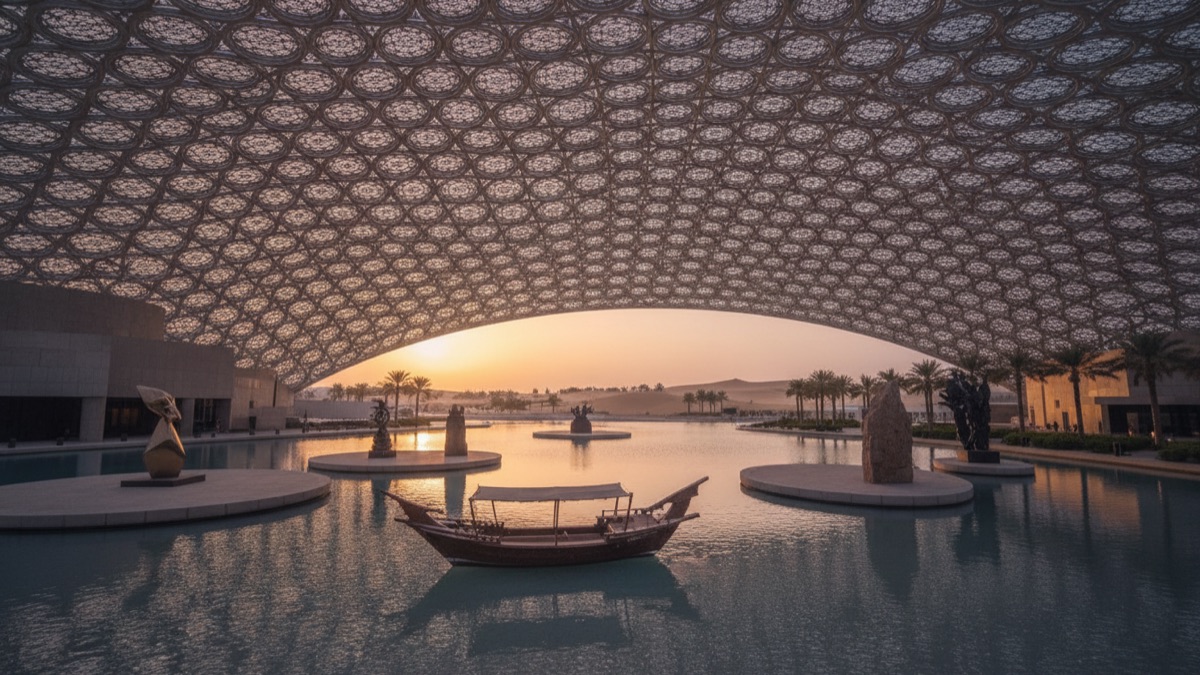
A single beam of light filters through an intricate steel lattice and fractures into thousands of dancing patterns on the museum floor. It's 10:00 AM on a Tuesday, and you're standing under what many architects call the most complex dome ever built. The Louvre Abu Dhabi isn't just a museum. It's a conversation between civilizations, a $1.3 billion statement that Abu Dhabi takes culture as seriously as it takes oil. And it works. The museum drew over 2 million visitors in its first year alone, making it one of the most successful cultural launches in the Middle East's history.
The concept is simple and radical at the same time: art without borders. Instead of organizing works by geography or chronology, the museum groups them by shared themes. A Chinese Ming dynasty vase sits next to a Venetian glass goblet. An ancient Egyptian sarcophagus faces a contemporary African mask. The message is clear—humanity has always been connected, even when we pretended otherwise. The abu dhabi louvre museum experience challenges how you think about cultural identity, and that's exactly the point.
The Dome: Engineering Meets Poetry
The museum's signature feature is the dome, designed by Pritzker Prize-winning architect Jean Nouvel. It spans 180 meters and weighs roughly 7,500 tons—about the same as the Eiffel Tower. The pattern is inspired by the interlaced palm fronds used in traditional Arab roofing, but rendered in geometric precision using 7,850 aluminum stars. The result is what Nouvel calls a "rain of light." As the sun moves across the sky, the shadows shift and dance, creating an experience that changes every minute of every day. No two visits are the same.
The dome sits over a complex of 55 white buildings arranged like a medina, the traditional Arab city. The buildings are cooled by a sophisticated system that uses the shade of the dome and natural ventilation from the sea breeze, reducing energy consumption by roughly 40% compared to a conventional museum. Louvre abu dhabi architecture isn't just beautiful—it's sustainable engineering dressed as art.
The Collection: A Global Conversation
The Louvre Abu Dhabi doesn't own all its works. The museum operates under a 30-year agreement with France, which loans approximately 300 artworks from 13 French museums, including the Louvre in Paris, the Musée d'Orsay, and the Centre Pompidou. In addition, the museum has built its own collection of roughly 600 works, with a particular focus on pieces that bridge cultures and periods.
Highlights You Shouldn't Miss
The Bactrian Princess: A tiny figure from Central Asia, carved from chlorite around 2,000 BCE. It shows the early exchange of artistic ideas between Mesopotamia and the Indus Valley.
Giovanni Bellini's Madonna and Child: A Renaissance masterpiece that demonstrates how European art absorbed influences from Byzantine and Islamic traditions through trade and diplomacy.
Ai Weiwei's Fountain of Light: A massive chandelier sculpture made of crystal and steel, referencing the utopian architectural projects of the early 20th century. It's a contemporary piece that feels perfectly at home among the ancient works.
Picasso's Portrait of a Lady: A cubist painting that sits in a gallery dedicated to the human form across cultures, forcing a direct visual dialogue between European modernism and traditional African sculpture.
The louvre abu dhabi collection is constantly rotating. The French loan agreements mean new masterpieces arrive regularly, and the museum's own acquisitions program is aggressive. Check the current exhibitions online before your visit—you might catch something rare.
The Building: Museum as Mediation
Jean Nouvel designed the museum to feel like a protected environment. The water surrounding the buildings reflects the dome and the sky, creating a sense of floating. The promenade between buildings is shaded, with benches and water features that invite you to slow down. This isn't a museum you rush through. It's a museum you wander.
The galleries are organized into 12 chapters, each exploring a universal theme: civilization, religion, trade, royalty, and so on. The sequence is designed to feel like a journey through human history, but with constant surprises and cross-connections. The final chapter opens onto the sea, literally connecting the museum's narrative to the maritime trade routes that made Abu Dhabi what it is today.
Practical Visitor Information
Location: Saadiyat Cultural District, Abu Dhabi, UAE
Opening Hours: Tuesday to Sunday, 10:00 AM to 6:30 PM (extended to 8:30 PM on Thursdays and Fridays). Closed Mondays.
Admission: AED 60 for adults, AED 30 for ages 13–22, free for under 13. UAE residents get discounted rates.
Getting There: Taxis and ride-shares are the most convenient option. There is also a public bus service from the city center. Parking is available on-site.
Time Needed: Plan for at least three hours. Art enthusiasts regularly spend the full day.
Tips for Your Visit
- Book online. The museum can sell out on weekends and holidays. Booking in advance guarantees entry and lets you skip the ticket line.
- Visit the dome at different times. The light patterns change throughout the day. Morning visits and late afternoon visits offer completely different experiences.
- Use the audio guide. It's free with admission and provides genuinely insightful commentary on the major works.
- Check the film program. The museum has a dedicated auditorium with regular screenings of art films, documentaries, and cultural programs. They're often included in the admission price.
- Don't skip the café. The museum's restaurant is genuinely excellent, with views over the water and a menu that reflects the museum's global outlook.
The Saadiyat District: Culture in the Making
The Louvre Abu Dhabi is the first completed piece of the Saadiyat Cultural District, a $27 billion development that will eventually include the Guggenheim Abu Dhabi, the Zayed National Museum, and a performing arts center. The district is being built on Saadiyat Island, a natural island just off the coast of Abu Dhabi. When complete, it will form one of the most concentrated cultural districts in the world.
The Guggenheim, designed by Frank Gehry, is currently under construction and will house modern and contemporary art. The Zayed National Museum will focus on the history and culture of the UAE. Together, these institutions will make Abu Dhabi a genuine cultural capital, not just a financial one.
Sources
- Louvre Abu Dhabi Official Website — louvreabudhabi.ae
- Abu Dhabi Tourism & Culture — visitabudhabi.ae
- Architectural Digest — "Jean Nouvel's Louvre Abu Dhabi Is a Masterpiece of Light and Shadow" architecturaldigest.com
- Emaar — Saadiyat Cultural District emaar.ae
- Artnet News — "Louvre Abu Dhabi: What to Know Before You Go" artnet.com
Frequently Asked Questions
Is the Louvre Abu Dhabi the same as the Louvre in Paris?
No. It's a separate institution with its own collection and curatorial vision, though it operates under a long-term cultural agreement with France that includes loans from French museums.
How much time should I spend there?
Plan for at least three hours. A full day is ideal if you want to see the permanent collection, temporary exhibitions, and take your time with the architecture.
Is the museum suitable for children?
Yes. The museum offers family programs, children's audio guides, and workshops designed for younger visitors. The architecture itself is engaging enough to hold a child's attention.
What should I wear?
There's no strict dress code, but modest dress is recommended. The museum is air-conditioned, so bring a light layer if you're sensitive to cooler temperatures.
Are there any restaurants inside?
Yes. The museum has multiple dining options, including a café with lighter fare and a restaurant with more formal dining. Both offer views over the water and the Saadiyat development.
Author Bio
doyouknow Editorial Team — We help residents, travelers, and professionals navigate the UAE and Saudi Arabia with practical, up-to-date guides that actually work. Every article is researched, fact-checked, and written to save you time.
Loved this guide? Share it on WhatsApp and spread the word.
Get more culture and travel guides. Join our newsletter for the latest from doyouknow.app.