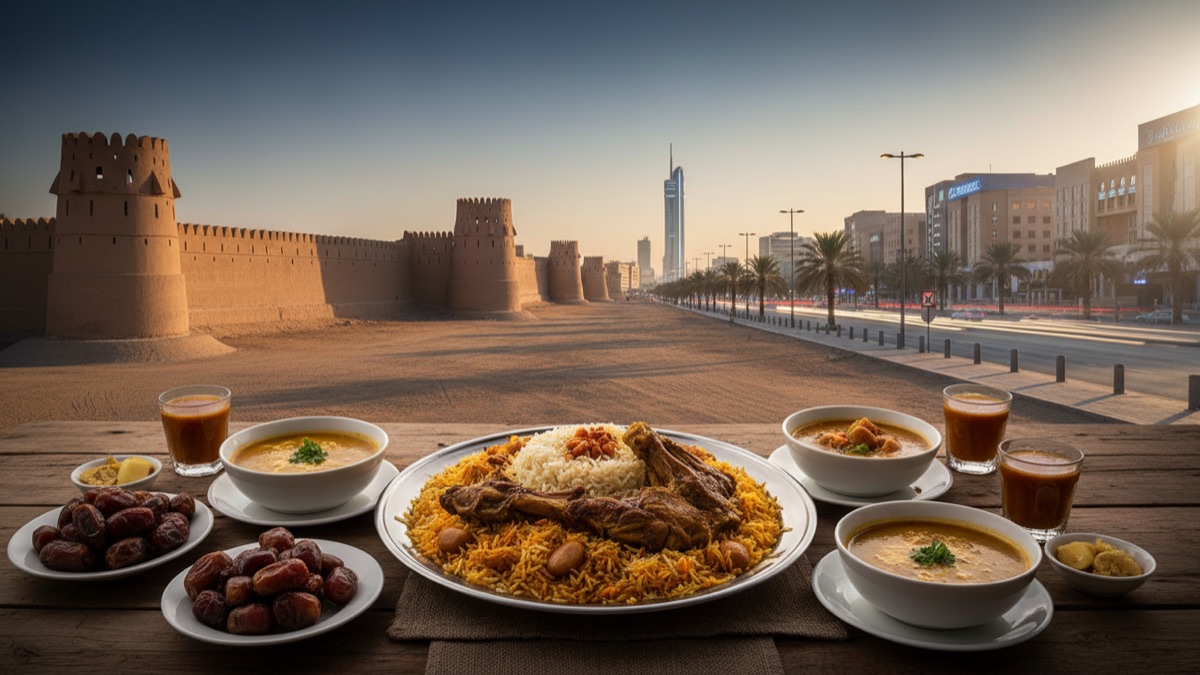
Riyadh: Where Najdi Heritage Meets a Modern Skyline
Riyadh is the political, financial, and cultural heart of Saudi Arabia. Spread across a high desert plateau in the region known as Najd, the city has grown from a walled oasis town into one of the fastest-changing capitals in the Middle East. Today, travelers come to Riyadh for striking contrasts: mud-brick forts stand in the shadow of glass towers, traditional coffee houses compete with rooftop lounges, and ancient palm groves give way to record-breaking entertainment zones.
This Riyadh complete guide covers everything you need for a first or repeat visit. You will find practical advice on Boulevard Riyadh City, the story behind Masmak Fortress, the best places to eat Najdi cuisine, hotel recommendations for every budget, and the day trips that should be on your itinerary. Whether you are traveling for business, a long weekend, or a deeper exploration of Saudi Arabia, Riyadh rewards visitors who plan ahead.
Riyadh at a Glance
Understanding Riyadh's layout helps you avoid spending half your trip in traffic. The city is large, car-oriented, and divided into districts known locally as hayy. The historic center sits around Al-Bathaa and Deera, while the modern business and diplomatic quarter stretches north through Olaya and Al-Sahafah.
| Topic | Details |
|---|---|
| Population | Over 7 million in the greater metropolitan area |
| Location | Central Najd plateau, roughly 600 meters above sea level |
| Climate | Hot, dry summers; mild winters with cool nights |
| Currency | Saudi Riyal (SAR); cards widely accepted |
| Best time to visit | November to March for outdoor sightseeing |
| Main airport | King Khalid International Airport (RUH) |
The city is generally conservative but increasingly open to international visitors. Dress codes are modest, and public behavior should respect local customs. Most restaurants and malls now accept families, solo travelers, and mixed groups without issue, though it is worth checking specific venues during Ramadan or prayer times.
Boulevard Riyadh City
Boulevard Riyadh City is the headline entertainment district of Riyadh Season, the city's annual winter festival. Built around a wide, Parisian-inspired avenue, it brings together concerts, restaurants, cinemas, fountains, and themed zones that draw millions of visitors each year. Even if you visit outside the main festival window, the area has become a year-round destination for dining and evening entertainment.
The boulevard is divided into themed sub-zones. One area resembles a European plaza, another leans into futuristic light installations, and a family zone offers carnival rides and live shows. Food kiosks range from gourmet burgers and shawarma to Asian street food and Saudi classics. The fountain shows, held several times each evening, are genuinely impressive and provide a natural meeting point.
Practical tip: Tickets are required during Riyadh Season and often sell out on weekends. Book online in advance, arrive early to beat traffic, and use the official shuttle buses or a ride-hailing app. Parking is available but can be slow to exit after the closing fireworks.
Masmak Fortress & the Historic Core
No visit to Riyadh is complete without the Masmak Fortress. This thick-walled mud-brick citadel was captured by Abdulaziz Ibn Saud in 1902, an event that marked the beginning of the modern Saudi state. Today, the fortress is a free museum with displays of weapons, maps, photographs, and traditional costumes. The central courtyard, with its towering watchtower and palm-trunk ceiling, is one of the most atmospheric spots in the city.
The surrounding historic core includes the Souq Al-Zal, one of Riyadh's oldest markets. The name means "carpet market," and you can still find rugs, textiles, traditional daggers, incense burners, and copperware here. It is a working market rather than a polished tourist attraction, which is exactly why it is worth visiting. Bargaining is expected, and the best time to go is late afternoon when the heat fades and the shopkeepers are more relaxed.
Nearby, the Justice Square and the old Deera district offer further glimpses of early Riyadh. A short drive away, the National Museum and Murabba Palace provide a more formal introduction to Saudi history. Together, these sites form a full-day heritage route.
Kingdom Centre & the Sky Bridge
The Kingdom Centre is Riyadh's most recognizable skyscraper. Its distinctive curved form and open top make it visible from across the city. The tower houses a luxury hotel, offices, and the Sky Bridge, an observation deck suspended 99 meters above the ground between the building's two peaks.
The Sky Bridge offers panoramic views over Riyadh's vast urban sprawl, best enjoyed just before sunset when the desert light turns golden. Tickets are sold on the lower ground floor, and photography is allowed. The tower also contains a large shopping mall with international brands and a food court. For a more upscale experience, the Four Seasons Hotel Riyadh occupies the upper floors and has some of the city's best hotel restaurants.
Photography tip: The tower itself is best photographed from the northern side of King Fahd Road at dusk, when the facade lights reflect off the glass.
Museums, Culture & Murabba
Beyond the National Museum, Riyadh's cultural offering has expanded rapidly. The Royal Arts Complex, King Abdullah Park, and a growing number of contemporary galleries have turned the city into a serious destination for art and design. The annual Noor Riyadh light-art festival installs large-scale works across public spaces each winter, drawing international artists and curators.
The Diriyah Biennale, held in the JAX District, focuses on contemporary art from Saudi Arabia and beyond. The nearby Murabba Historical Neighborhood is part of the King Abdulaziz Historical Center and includes restored mud-brick buildings, exhibition halls, and green spaces. It is less crowded than Masmak and offers a calm setting for an afternoon walk.
For travelers interested in Saudi heritage, these museums provide essential context. They explain the transition from tribal alliances and caravan trade to oil discovery and nation-building. Most museums are closed on Fridays until after the Jumu'ah prayer, so check opening times before heading out.
Green Spaces & City Parks
Desert cities are not usually known for greenery, but Riyadh has invested heavily in parks and open spaces over the last two decades. These areas are essential for locals during the cooler months and offer visitors a relaxed counterbalance to mall and museum hopping.
King Abdullah Park is the largest and most popular, built on the site of the old racetrack in Al-Malaz. Its centerpiece is a long rectangular lake with a musical fountain show held each evening. Walking paths, exercise stations, and wide lawns make it a favorite for families and joggers. Entry is inexpensive, and the park is busiest on Thursday and Friday evenings.
Salam Park, near the city center, is smaller but beautifully landscaped around a series of interconnected lakes. Paddle boats, cafes, and shaded seating make it a good choice for a late-afternoon break. The Diplomatic Quarter offers a more exclusive feel, with tree-lined walking trails, art installations, and lakeside cafes open to the public.
For a longer escape, Wadi Hanifah runs for more than 120 kilometers through the southern edge of the city. The restored sections near Al-Bujairi and Dirab feature paved paths for walking and cycling, picnic spots, and views of the dry riverbed flanked by palm groves. It is one of the best examples of how Riyadh has reworked natural landscapes into public amenities.
Najdi Food & Dining
Riyadh's food scene is rooted in Najdi cuisine, which favors wheat, dates, lamb, and slow-cooked stews. The flavors are earthy and warming, built around spices such as black pepper, cardamom, cinnamon, and dried lime. Unlike the seafood-heavy cooking of Jeddah, Najdi dishes were shaped by desert agriculture and Bedouin practicality.
Kabsa is the national rice dish you will see everywhere, but in Riyadh it is often prepared with camel meat or lamb and a generous dose of baharat spice mix. Jareesh, a cracked-wheat porridge cooked with meat and yogurt, is a hearty comfort food. Matazeez are thick, hand-rolled wheat dumplings simmered in a meat stew, while Qursan features thin bread soaked in rich lamb broth.
For a sweet finish, try Ma'amoul date cookies, Kleija spiced date cookies from Al-Qassim, or saleeg rice pudding. Arabic coffee in Riyadh is usually lighter and more cardamom-forward than the Turkish-style coffee found further north.
Where to eat: Najd Village serves traditional dishes in a heritage-style setting with floor seating. Maiz Diriyah offers refined Saudi cuisine inside Bujairi Terrace. For casual fare, try Shawarma Shakir Alakil or the food halls at Riyadh Park Mall. Fine-dining options include LPM Restaurant and Cipriani for international cuisine with a Riyadh clientele.
Where to Stay in Riyadh
Riyadh's hotel market ranges from international five-star brands to boutique properties and solid business hotels. Location matters more than in many cities because traffic can add significant time to short distances.
| Area | Best for | Hotel examples |
|---|---|---|
| Olaya / King Fahd Road | Business, shopping, skyline views | Four Seasons Riyadh at Kingdom Centre, Hyatt Regency Olaya |
| Al-Sahafah / Diplomatic Quarter | Diplomats, quiet stays, gardens | The Ritz-Carlton Riyadh, InterContinental Riyadh |
| Diriyah / Bujairi Terrace | Heritage, fine dining, weekend escapes | Bab Samhan Hotel, Diriyah boutique guesthouses |
| Al-Malaz / City Center | Budget, local character, stadium access | Mid-range chains and apartment hotels |
| Near King Khalid Airport | Short layovers, early flights | Aloft Riyadh Hotel, airport business hotels |
The Four Seasons at Kingdom Centre remains the most iconic luxury choice, with skyline rooms and direct access to the mall. The Ritz-Carlton Riyadh offers expansive grounds and a more resort-like feel in the Diplomatic Quarter. For a boutique experience, properties in Diriyah place you within walking distance of restored heritage sites and high-end restaurants.
Shopping & Souks
Riyadh's shopping scene spans traditional markets and massive malls. Start at Souq Al-Zal for carpets, antiques, and oud. Then visit the Thumairi Gold Souq for jewelry, where vendors sell both contemporary designs and heavy Bedouin-inspired pieces. These souks are busiest in the evening, and haggling is part of the experience.
For modern shopping, Riyadh Park Mall and the Kingdom Centre Mall offer international brands, cinemas, and family entertainment. Panorama Mall and Al Nakheel Mall are also popular, especially on weekends when families gather for dinner and strolling.
Specialty buyers should look for Saudi dates, particularly Sukkari, Ajwa, and Khalas varieties, sold at date shops and supermarkets. Camel-milk chocolate, oud-based perfumes, and handwoven Sadu textiles make distinctive souvenirs.
Day Trips from Riyadh
Riyadh is surrounded by desert and escarpment, and several destinations work well as day trips or overnight escapes.
Edge of the World: The most famous excursion is a dramatic cliff line on the Tuwaiq Escarpment, roughly 90 kilometers northwest of the city. The views over the plain below are stunning, especially at sunrise or sunset. A four-wheel-drive vehicle is strongly recommended, and you should travel with a local guide or an experienced driver.
Diriyah: Technically on the edge of Riyadh, Diriyah is the original home of the Saudi royal family and a UNESCO World Heritage Site. The mud-brick ruins of At-Turaif are being carefully restored, and the adjacent Bujairi Terrace offers outdoor dining with a heritage backdrop.
Al-Kharj: About 80 kilometers south of Riyadh, Al-Kharj is known for its date palms, irrigation channels, and the historic Sahara Tabuk Farm area. It is a relaxed alternative to the city and a good place to see traditional agriculture.
Red Sand Dunes: Popular for dune bashing, quad biking, and camping, the red dunes near Riyadh are an easy half-day adventure. Bring water, sunscreen, and a fully charged phone.
Practical Travel Tips
Best time to visit: November to March is ideal. Daytime temperatures sit between 20°C and 28°C, and evenings are cool. Summers from May to September regularly exceed 40°C, making outdoor sightseeing uncomfortable.
Dress code: Modest dress is expected. Women are no longer required to wear an abaya but should choose loose clothing that covers shoulders and knees. Men should avoid shorts in traditional areas and government buildings.
Transport: Uber and Careem are widely available. The Riyadh Metro is under construction; until it opens, most visitors rely on ride-hailing, hotel cars, or rental vehicles. Driving is on the right, and traffic can be aggressive.
Etiquette: Greetings are important. A handshake is common in business settings, though some women may prefer not to shake hands with men. Avoid public displays of affection, and be patient during prayer times when shops may close briefly.
Currency and payments: The Saudi Riyal is pegged to the US dollar. Credit cards are accepted almost everywhere, but carry cash for smaller souks and street food stalls.
Sources
- Visit Saudi Official Tourism Portal — Official destination information and event listings
- Saudi Tourism Authority — Travel updates, visa details, and heritage projects
- UNESCO World Heritage Centre — At-Turaif and historic Diriyah listings
- Lonely Planet — Riyadh — Practical city guide and neighborhood advice
- Rough Guides — Saudi Arabia — Cultural context and travel background
- Fodor's Travel — Riyadh — Hotel and restaurant recommendations
FAQ
Is Riyadh safe for tourists?
Yes, Riyadh is generally safe for visitors. Saudi Arabia has low rates of violent crime, and the city is accustomed to both business and leisure travelers. Normal precautions with valuables and traffic apply.
Do I need a visa to visit Riyadh?
Most nationalities can apply for a Saudi e-visa online. The visa is usually valid for one year with multiple entries and stays of up to 90 days per visit. GCC citizens typically do not need a visa.
What is the best time to visit Riyadh?
November through March offers the most comfortable weather for walking and outdoor activities. Summers are extremely hot, so schedule indoor attractions if visiting from June to September.
Can I visit Boulevard Riyadh City year-round?
Some areas operate outside Riyadh Season, but the full festival experience with concerts and major attractions runs during the winter months. Check the official schedule before booking.
How do I get from the airport to central Riyadh?
Uber and Careem are the easiest options and take 30-45 minutes to downtown. Airport taxis are also available at fixed rates. Hotel transfers can be arranged in advance for 150-300 SAR.
What should I wear in Riyadh?
Modest, loose-fitting clothing is recommended. Women no longer need an abaya by law, but covering shoulders and knees is respectful. Men should wear trousers in traditional districts.
Is alcohol available in Riyadh?
No. Alcohol is prohibited throughout Saudi Arabia, including in hotels and restaurants. Fresh juices, Arabic coffee, and non-alcoholic mocktails are widely available.
How many days do I need in Riyadh?
Three to four days is enough for the main highlights, including Masmak, the National Museum, Kingdom Centre, Diriyah, and a day trip. A week allows for a deeper dive into food, art, and surrounding nature.
About the Author
doyouknow.app AI-assisted Editorial Workflow — This article was prepared with AI-assisted research and editing, using the sources listed on the page. It is not based on firsthand testing, on-the-ground reporting, or a claim of personal experience or professional credentials. Please check official sources for current details.
Loved This Article?
Share it on WhatsApp → Share on WhatsApp
Get more Saudi Arabia travel tips in your inbox — Subscribe to our newsletter for weekly surprising stories from Dubai, Saudi Arabia, and beyond.