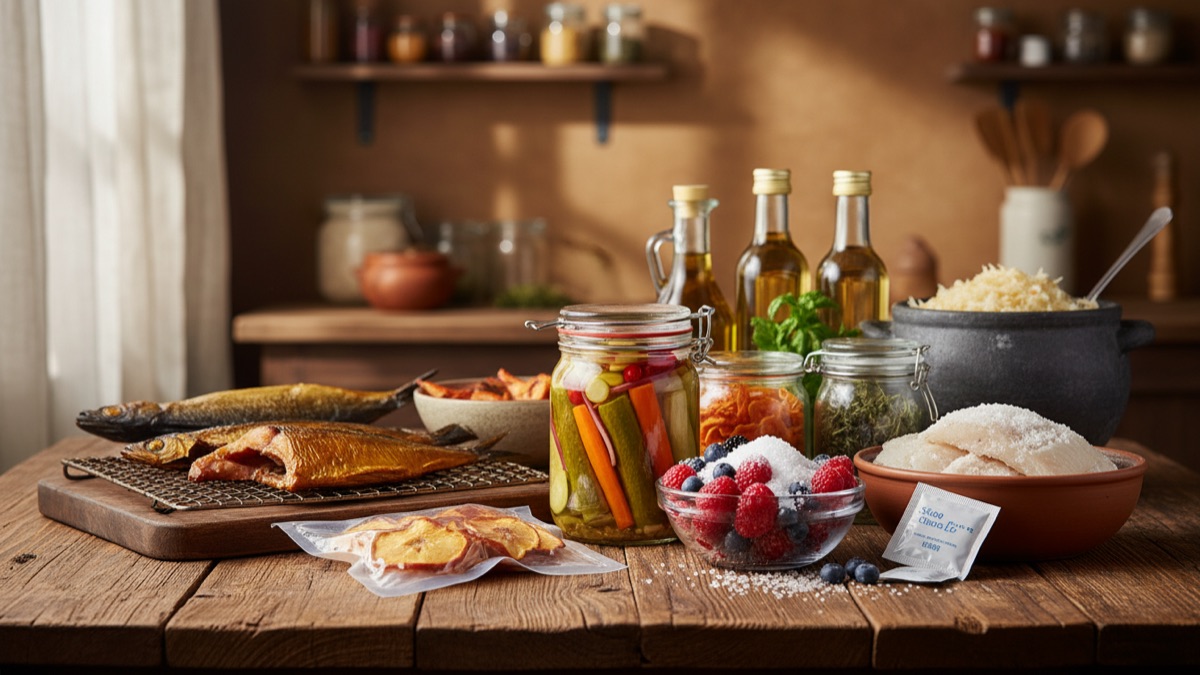
Food preservatives are substances added to food specifically to slow down or prevent spoilage caused by bacteria, mold, yeast, and oxidation, extending how long a product stays safe and edible. Without them, most packaged food would need to be eaten within days rather than weeks or months, and foodborne illness from spoiled products would be far more common.
Preservatives generally fall into two groups: antimicrobials like sodium benzoate and potassium sorbate, which stop bacteria, mold, and yeast from growing, and antioxidants like vitamin E and ascorbic acid, which slow the oxidation that turns fats rancid and produce turns brown.
What Preservatives Are Actually Stopping
Natural, Synthetic, and How They Get Approved
Some preservatives are genuinely ancient — salt, sugar, vinegar, and smoke have been used to preserve meat and produce for thousands of years, long before anyone understood the microbiology behind why they worked. Modern synthetic preservatives generally do the same basic job more precisely and in smaller quantities, and regulators like the US FDA and the EU's EFSA require extensive safety testing and set maximum allowable amounts before approving any of them for use in food.
Nitrites in cured meats like hot dogs and deli meat are the preservative that draws the most scrutiny, since they can form small amounts of compounds linked to cancer risk in some studies, which is why some manufacturers now use celery powder or other natural nitrate sources as an alternative, even though the chemistry involved ends up producing much the same compound either way.
Sources
- Wikipedia — overview of preservative types and how they function
- U.S. Food and Drug Administration — regulatory information on approved food preservatives
- European Food Safety Authority — safety assessment guidance on food additives and preservatives
FAQ
Are natural preservatives safer than synthetic ones?
Not automatically — safety depends on the specific compound and dose, not on whether it is labeled natural or synthetic, and both categories undergo the same kind of regulatory safety review before approval.
Why do nitrites in processed meat get so much attention?
Under certain cooking conditions nitrites can form small amounts of nitrosamines, compounds some studies have linked to increased cancer risk with heavy, long-term consumption, which is why health guidance generally recommends limiting processed meat rather than eliminating preservatives entirely.
Do preservatives affect the nutritional value of food?
Generally no — preservatives are used in tiny amounts specifically to prevent spoilage and are not designed to alter, and typically do not meaningfully affect, the vitamins, minerals, or macronutrients in the food.
About the Author
We reference Wikipedia, U.S. Food and Drug Administration, and European Food Safety Authority to explain the background and current understanding of this topic.
Loved This Article?
Share it on WhatsApp → Share it on WhatsApp
Get more guides in your inbox — Subscribe to our newsletter for weekly surprising stories from Egypt, Saudi Arabia, Dubai, and beyond.