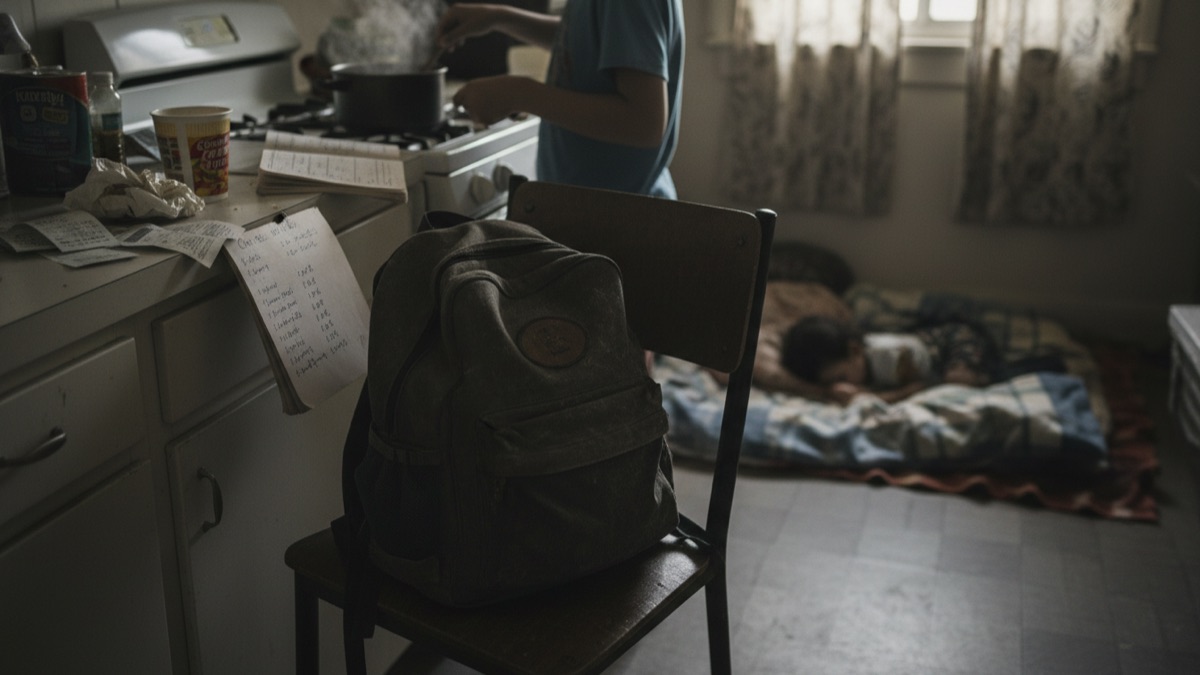
Family therapist Ivan Boszormenyi-Nagy introduced the concept of parentification in the 1970s and 80s to describe a role reversal within a family, where a child takes on responsibilities that would normally belong to a parent. It can develop gradually and often goes unnoticed inside the household itself.
Researchers generally split it into two forms. Instrumental parentification involves practical tasks, cooking, managing bills, caring for younger siblings, while emotional parentification involves a child becoming a parent's confidant, mediator, or main source of emotional support.
When a Child Becomes the Caregiver
Instrumental vs. Emotional Parentification
The pattern shows up more often in households dealing with a parent's illness, addiction, divorce, or financial strain, and in immigrant families where a child handles language-brokering for parents who don't speak the local language fluently. It isn't the same as ordinary age-appropriate chores, which build responsibility without displacing a parent's role.
Research links chronic, unacknowledged parentification to anxiety, difficulty setting boundaries, and resentment carried into adulthood. Some responsibility, when balanced and recognized by parents rather than simply expected, can build genuine resilience and competence instead of causing lasting harm.
Sources
- Psychology Today — the two forms of parentification
- American Psychological Association — family role-reversal research
- Verywell Mind — long-term effects of parentification
FAQ
Is parentification the same as giving a child chores?
No, ordinary age-appropriate chores build responsibility without displacing a parent's role, while parentification means a child regularly takes on tasks or emotional support that belong to an adult.
Does parentification always cause lasting harm?
Not necessarily, moderate and acknowledged responsibility can build real competence and resilience, but chronic, unbalanced parentification is more consistently linked to anxiety and difficulty setting boundaries later in life.
What situations make parentification more likely?
It's more common in households affected by a parent's illness, addiction, divorce, or financial strain, and in immigrant families where children translate and manage tasks for parents.
About the Author
We reference Psychology Today, American Psychological Association, Verywell Mind to explain the background and current understanding of this topic.
Loved This Article?
Share it on WhatsApp → Share it on WhatsApp
Get more guides in your inbox — Subscribe to our newsletter for weekly surprising stories from Egypt, Saudi Arabia, Dubai, and beyond.