Introduction
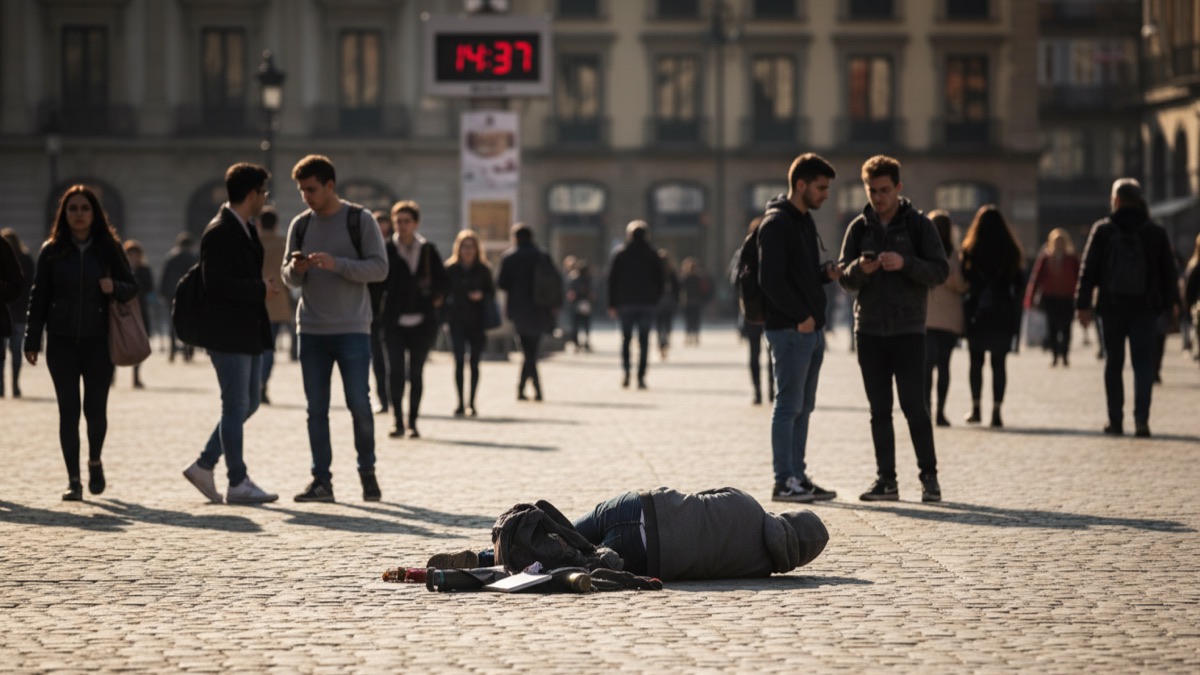
The bystander effect refers to the well-documented psychological phenomenon in which individuals are actually less likely to help a person in need or distress when other people are present, a counterintuitive finding, since most people would predict that more witnesses would mean a higher likelihood of someone intervening to help.
The phenomenon was formally identified and extensively studied by social psychologists John Darley and Bibb Latané beginning in the late 1960s, research substantially motivated by the widely publicized, though later found to be somewhat inaccurately reported, 1964 murder of Kitty Genovese in New York City, initially reported as having occurred while numerous witnesses failed to intervene or call police.
Darley and Latané's Foundational Research
Darley and Latané's influential experimental research consistently demonstrated the bystander effect across various staged emergency scenarios, finding that the presence of additional bystanders reliably reduced the likelihood that any individual would intervene to help, and also increased the delay before any help was actually provided when someone eventually did decide to act.
Their research proposed several underlying psychological mechanisms, most centrally diffusion of responsibility, the tendency for each individual bystander to feel personally less responsible for taking action specifically because other capable people are also present, unconsciously assuming someone else will handle the situation, or already has, reducing each individual's felt personal obligation to intervene themselves.
Other Psychological Mechanisms Involved
Beyond diffusion of responsibility specifically, researchers have identified additional contributing mechanisms: pluralistic ignorance, where bystanders look to others' reactions to determine whether a situation is genuinely an emergency requiring intervention, and if other bystanders appear calm or unconcerned, each individual may incorrectly conclude the situation isn't actually serious, even when it genuinely is, a form of social information misreading that can occur even when every individual bystander privately feels some genuine concern.
Evaluation apprehension, the specific fear of being judged negatively or acting incorrectly in front of others if one's intervention attempt turns out to be unnecessary, mistaken, or poorly executed, also contributes, particularly in ambiguous situations where it's genuinely unclear whether the situation actually constitutes an emergency requiring intervention, making the social risk of misjudging the situation feel more psychologically significant than it would if witnessed alone.
Factors That Increase the Likelihood of Helping
Research has identified several specific factors that reliably increase bystander intervention despite the general bystander effect pattern: unambiguous emergencies (where the need for help is genuinely and immediately clear, reducing the pluralistic ignorance and evaluation apprehension mechanisms), situations involving people bystanders know personally rather than complete strangers, and, notably, prior first aid or emergency response training, which appears to increase both individual confidence and perceived personal responsibility to act.
Research has also found that explicitly and directly singling out one specific bystander for help, rather than making a general appeal to a crowd, dramatically increases the likelihood of receiving assistance, since this directly counters diffusion of responsibility by removing the ambiguity about whose specific responsibility it is to act, a widely cited practical safety recommendation derived directly from this body of research.
Practical Implications and Safety Training
Understanding the bystander effect has practical, widely applied safety implications: many modern first aid, CPR, and emergency response training programs now explicitly incorporate education about the bystander effect itself, specifically teaching people to recognize the psychological factors that inhibit intervention and providing specific, concrete strategies, like directly designating a specific bystander by description or appearance to call emergency services, to counter these documented inhibiting psychological tendencies.
For someone who might themselves need help in an emergency, understanding this research suggests a genuinely practical strategy: rather than making a vague, general call for help to a crowd, directly addressing and making eye contact with one specific individual ("you, in the blue jacket, please call an ambulance") significantly increases the likelihood of receiving prompt, effective assistance by directly countering the diffusion of responsibility mechanism that otherwise reduces any single bystander's felt personal obligation to act.
Sources
- American Psychological Association — Reference on bystander effect research and social psychology mechanisms
- Simply Psychology — Reference on Darley and Latané's foundational bystander effect research
- American Red Cross — First aid and emergency response training incorporating bystander effect education
FAQ
What is the bystander effect?
The bystander effect is the psychological phenomenon in which individuals are actually less likely to help a person in need when other people are present, a counterintuitive finding since more witnesses might be expected to increase intervention likelihood.
Who first researched the bystander effect?
Social psychologists John Darley and Bibb Latané formally identified and extensively studied the phenomenon beginning in the late 1960s, research substantially motivated by the widely publicized 1964 Kitty Genovese murder case.
What is diffusion of responsibility?
Diffusion of responsibility is a central mechanism behind the bystander effect: each individual bystander feels personally less responsible for taking action specifically because other capable people are also present, assuming someone else will intervene.
What factors increase the likelihood that a bystander will help?
Unambiguous emergencies, situations involving people bystanders know personally, prior first aid or emergency training, and directly singling out one specific bystander rather than appealing to a general crowd all reliably increase intervention.
What is the best way to get help from a crowd in an emergency?
Research suggests directly addressing and making eye contact with one specific individual, rather than making a vague general call for help, significantly increases the likelihood of receiving prompt, effective assistance.
About the Author
doyouknow.app Editorial Team — We reference Darley and Latané's foundational research and subsequent social psychology studies to explain the bystander effect and its countermeasures.
Loved This Article?
Share it on WhatsApp → Share on WhatsApp
Get more guides in your inbox — Subscribe to our newsletter for weekly surprising stories from Egypt, Saudi Arabia, Dubai, and beyond.