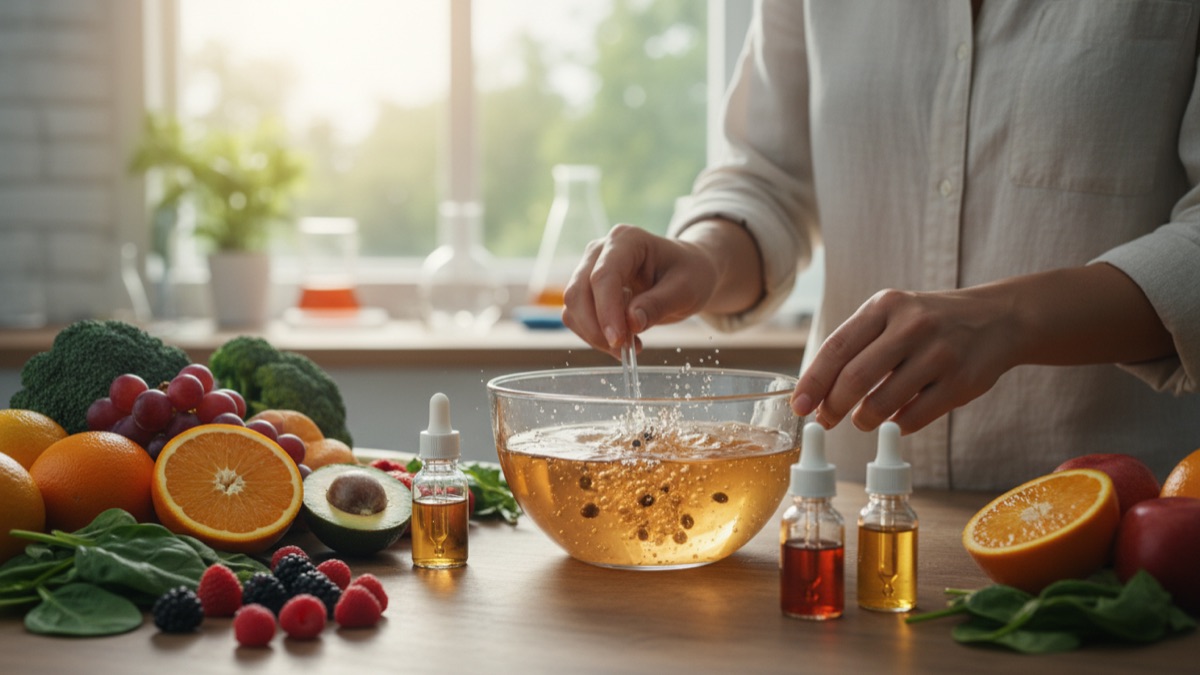
Antioxidants are compounds that neutralize free radicals — unstable molecules produced naturally through metabolism, and also from pollution, UV exposure, and smoking, which can damage cells, proteins, and DNA when they build up faster than the body can clear them.
The body produces some antioxidants itself, but many, including vitamin C, vitamin E, beta-carotene, and various polyphenols, must come from food, since the body cannot synthesize them on its own in sufficient quantity.
Neutralizing Free Radicals
Where They Come From and What the Evidence Shows
Colorful fruits and vegetables — berries, leafy greens, citrus, and nuts among them — are the richest natural sources, with the specific antioxidant compound often linked to the pigment that gives the food its color.
Despite strong marketing around antioxidant supplements, large clinical trials have generally found that isolated high-dose supplements do not reliably reduce disease risk the way antioxidant-rich whole foods do, and in a few cases high-dose supplementation has even shown unexpected harm.
Sources
- Wikipedia — overview of antioxidant chemistry and function
- U.S. National Institutes of Health, Office of Dietary Supplements — evidence review on antioxidant supplements
- Harvard T.H. Chan School of Public Health — nutrition guidance on antioxidant-rich foods
FAQ
Do antioxidant supplements work better than food?
Evidence generally points the other way — whole foods appear more effective and safer than isolated high-dose antioxidant supplements in most large studies.
Are all free radicals bad for the body?
No, the immune system actually uses some free radicals deliberately to fight off infections, so the goal is balance rather than eliminating them entirely.
Which foods have the most antioxidants?
Berries, dark leafy greens, nuts, dark chocolate, and brightly colored vegetables consistently rank among the highest natural sources.
About the Author
We reference Wikipedia, U.S. National Institutes of Health, Office of Dietary Supplements, and Harvard T.H. Chan School of Public Health to explain the background and current understanding of this topic.
Loved This Article?
Share it on WhatsApp → Share it on WhatsApp
Get more guides in your inbox — Subscribe to our newsletter for weekly surprising stories from Egypt, Saudi Arabia, Dubai, and beyond.