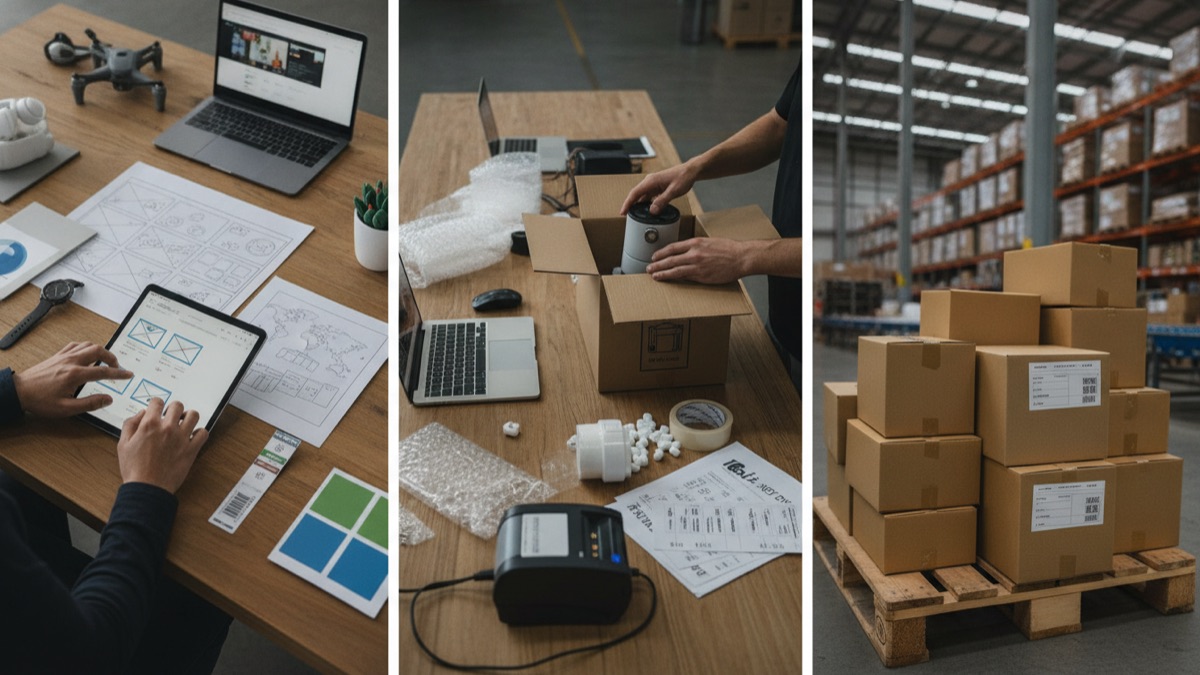
Dropshipping is an e-commerce model where a store sells a product without ever holding it in inventory. When a customer orders, the store forwards the order to a supplier or manufacturer, who ships the product directly to the customer.
The appeal is a low upfront cost: a seller does not need to buy stock in advance or manage a warehouse, since the supplier only produces or ships items after an order actually comes in.
Selling Without Holding Inventory
The Real Trade-Offs of the Model
The trade-off is thinner control: the seller depends entirely on the supplier's stock levels, shipping speed, and product quality, and slow shipping times or quality issues from an overseas supplier become the seller's problem to handle with the customer.
Platforms like Shopify made dropshipping widely accessible by letting sellers connect a storefront directly to supplier catalogs, and it has become a common entry point into e-commerce across the Gulf and Egypt, particularly for social-media-driven stores.
Sources
FAQ
Is dropshipping profitable?
It can be, but margins are often thinner than holding your own inventory because suppliers set wholesale prices and shipping costs that eat into the seller's markup.
Do I need a warehouse to dropship?
No, that is the core appeal of the model: the supplier or manufacturer handles storage and shipping, so the seller does not need physical inventory space.
What is the biggest risk in dropshipping?
Sellers have limited control over shipping times and product quality since a third-party supplier fulfills every order, and problems there directly affect the seller's reputation with customers.
About the Author
We reference Shopify, Investopedia, Reuters to explain the background and current understanding of this topic.
Loved This Article?
Share it on WhatsApp → Share it on WhatsApp
Get more guides in your inbox — Subscribe to our newsletter for weekly surprising stories from Egypt, Saudi Arabia, Dubai, and beyond.