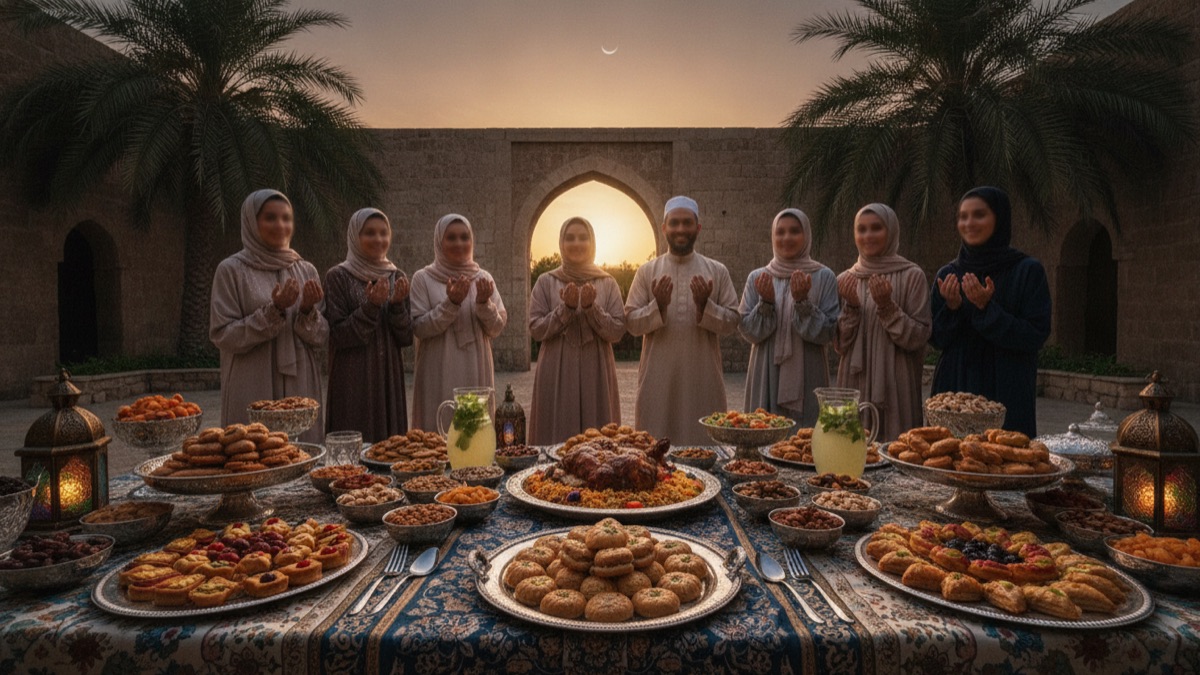
Marking the End of Ramadan
Eid al-Fitr, meaning "festival of breaking the fast," falls on the first day of Shawwal, the month following Ramadan in the Islamic lunar calendar, and marks the end of a month of daily fasting.
Because the Islamic calendar is lunar, the exact date shifts each year relative to the solar calendar, and in many communities the start of Eid is confirmed by the sighting of the new crescent moon.
Zakat al-Fitr and Communal Prayer
Before the Eid prayer, Muslims are expected to give a specific charitable payment known as zakat al-fitr, intended to ensure that people in need can also celebrate the holiday, distinct from the broader annual zakat.
The day traditionally begins with a special congregational prayer, often held outdoors or in large halls to accommodate the number of worshippers, followed by a sermon.
Family, Food, and Community
Eid al-Fitr is typically celebrated with new clothes, festive meals, gift-giving to children, and visits to family and friends, making it one of the most socially significant holidays in the Islamic calendar.
Traditions vary by region and culture, but the emphasis on gratitude, generosity, and community connection after a month of fasting is shared across Muslim-majority countries and communities worldwide.
Sources
- Encyclopaedia Britannica — an academic overview of Eid al-Fitr traditions
- Sunnah.com — hadith collections referencing Eid prayer and zakat al-fitr
- IslamQA — scholarly guidance on Eid al-Fitr observance
FAQ
What does Eid al-Fitr celebrate?
It celebrates the end of Ramadan, the Islamic month of daily fasting, and falls on the first day of the following month, Shawwal.
What is zakat al-fitr?
It is a specific charitable payment given before the Eid prayer, intended to ensure people in need can also celebrate the holiday.
Why does the date of Eid al-Fitr change every year?
The Islamic calendar is lunar, so its dates shift each year relative to the solar Gregorian calendar, and the start is often confirmed by moon sighting.
About the Author
We reference Encyclopaedia Britannica, Sunnah.com, IslamQA to explain the background and current understanding of this topic.
Loved This Article?
Share it on WhatsApp → Share it on WhatsApp
Get more guides in your inbox — Subscribe to our newsletter for weekly surprising stories from Egypt, Saudi Arabia, Dubai, and beyond.