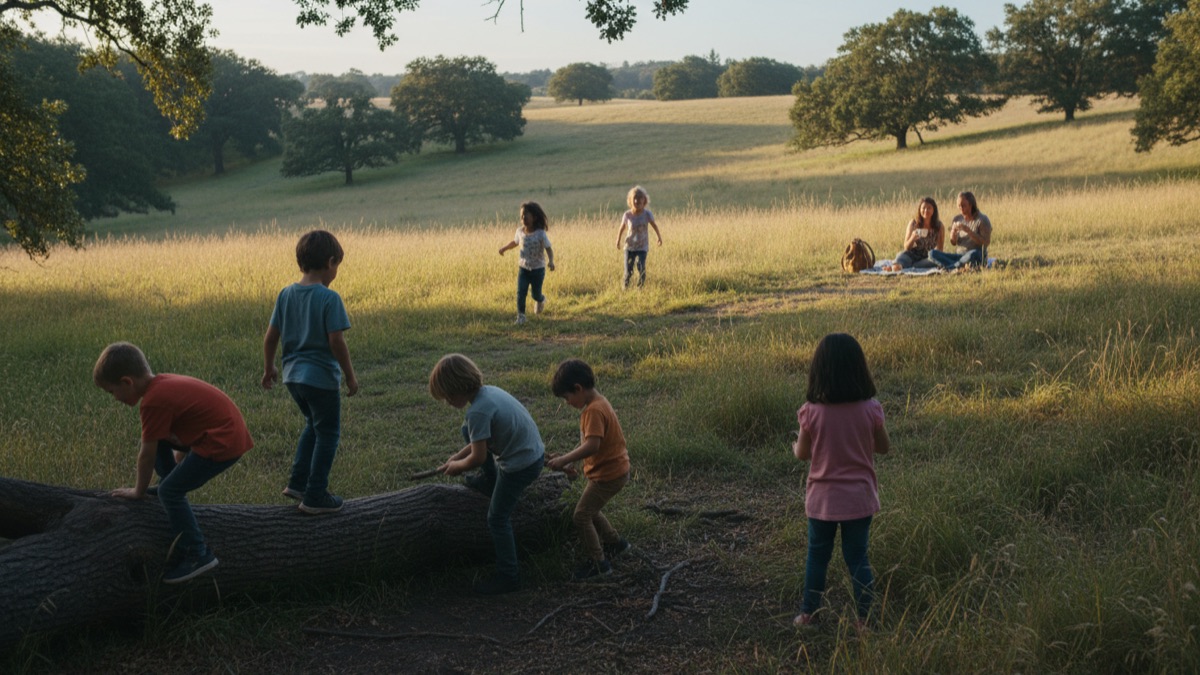
The term gained wide attention in 2008 after New York columnist Lenore Skenazy wrote about letting her 9-year-old son ride the subway alone, at his own request, and find his way home by himself. The backlash was intense enough that Skenazy jokingly called herself "America's Worst Mom" in the follow-up column, and the label stuck.
Skenazy turned the idea into a movement called Free-Range Kids, arguing that constant adult supervision denies children the chance to build independence and practical risk-assessment skills, and pointing out that stranger abduction, the fear driving most of the supervision, remains statistically extremely rare.
Letting Kids Navigate the World Alone
The Legal Pushback and New Independence Laws
The philosophy collided with existing neglect laws in several cases. In one widely covered 2015 incident in Maryland, the Meitiv family was investigated by child protective services after letting their children, ages 10 and 6, walk home from a park alone, despite no evidence of actual harm or danger.
In response, Utah passed the first "reasonable childhood independence" law in 2018, explicitly clarifying that letting children engage in unsupervised activities appropriate to their age and maturity does not by itself count as neglect. Several other US states have since passed similar laws following Utah's example.
Sources
- Let Grow — Lenore Skenazy's free-range parenting organization
- NPR — coverage of the Meitiv family case
- Utah State Legislature — record of the 2018 free-range parenting law
FAQ
Who started the free-range parenting movement?
New York columnist Lenore Skenazy sparked it in 2008 after writing about letting her 9-year-old ride the subway alone, later founding the Free-Range Kids organization.
Is free-range parenting legal everywhere in the US?
Laws vary by state; several states, starting with Utah in 2018, have passed "reasonable childhood independence" laws that explicitly protect parents who allow age-appropriate unsupervised activities.
Is stranger abduction as common as many parents fear?
No, statistics consistently show stranger abduction is extremely rare compared to public perception, which is a central argument free-range parenting advocates make.
About the Author
We reference Let Grow, NPR, Utah State Legislature to explain the background and current understanding of this topic.
Loved This Article?
Share it on WhatsApp → Share it on WhatsApp
Get more guides in your inbox — Subscribe to our newsletter for weekly surprising stories from Egypt, Saudi Arabia, Dubai, and beyond.