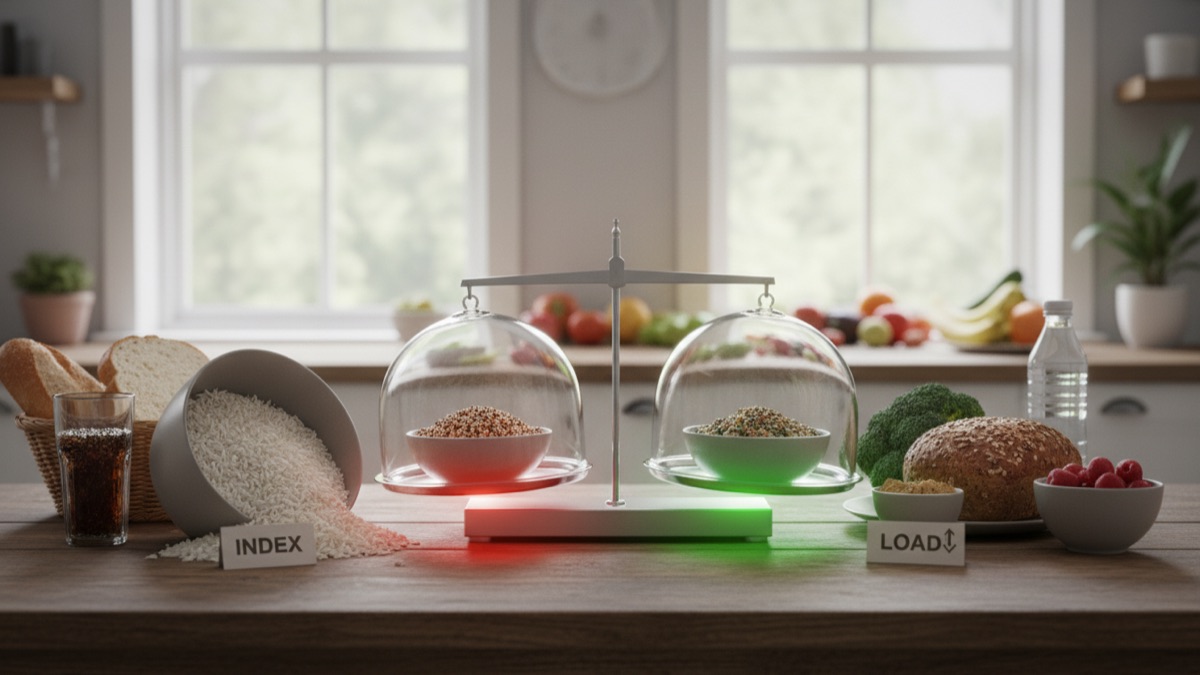
Glycemic load builds on the glycemic index by factoring in portion size, giving a more realistic picture of how a typical serving of a food actually affects blood sugar, rather than treating all carbohydrate sources as equal regardless of quantity.
The glycemic index alone ranks how quickly a fixed amount of a food's carbohydrate raises blood sugar compared to pure glucose, but it does not account for how much of that food someone would realistically eat in one sitting.
Adding Portion Size to the Picture
How the Calculation Works
Glycemic load is calculated by multiplying a food's glycemic index by the grams of carbohydrate in an actual serving, then dividing by 100, which is why a food with a high glycemic index but a small typical serving, like watermelon, can still have a modest glycemic load.
In practice, glycemic load gives a more useful day-to-day guide for managing blood sugar than glycemic index alone, since it reflects realistic portions rather than a fixed lab quantity that may not match how the food is actually eaten.
Sources
FAQ
Is glycemic load more useful than glycemic index?
For everyday meal planning, many nutrition experts consider glycemic load more useful because it reflects realistic serving sizes rather than a fixed lab-tested portion.
Can a food have a high glycemic index but a low glycemic load?
Yes, watermelon is a common example: its glycemic index is high, but a typical serving contains relatively little carbohydrate, giving it a modest glycemic load.
How is glycemic load calculated?
It is calculated by multiplying a food's glycemic index by the grams of carbohydrate in an actual serving, then dividing that number by 100.
About the Author
We reference Harvard Health Publishing, Mayo Clinic, American Diabetes Association to explain the background and current understanding of this topic.
Loved This Article?
Share it on WhatsApp → Share it on WhatsApp
Get more guides in your inbox — Subscribe to our newsletter for weekly surprising stories from Egypt, Saudi Arabia, Dubai, and beyond.