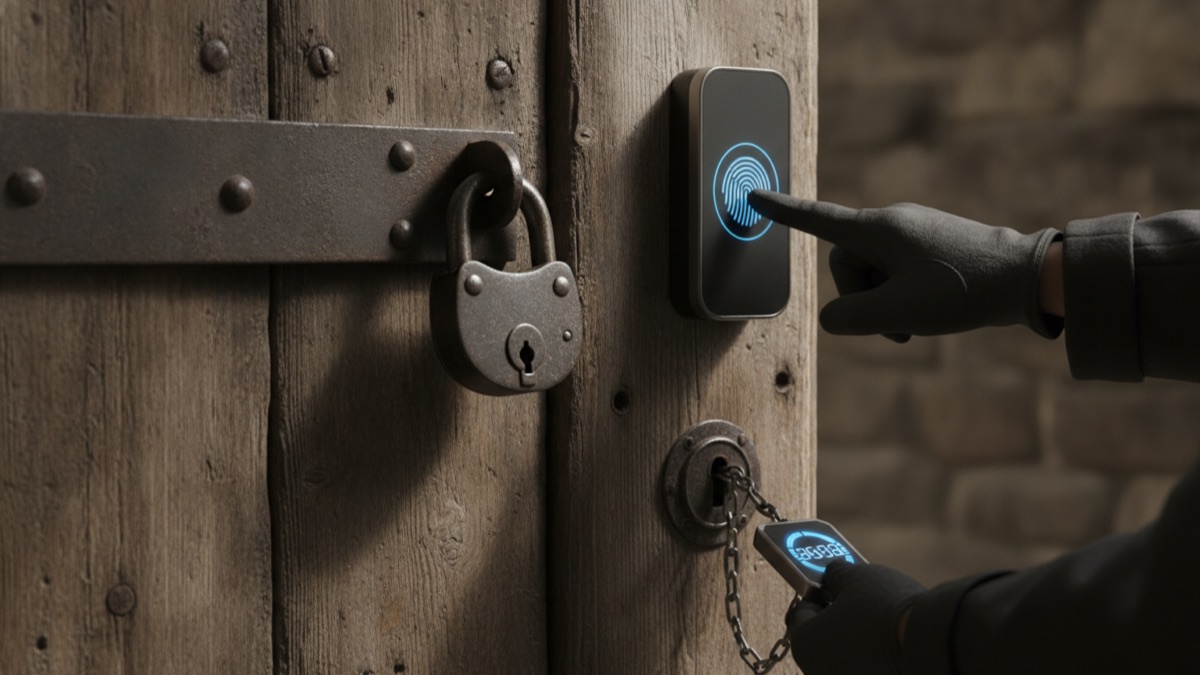
Two-factor authentication (2FA) requires two different types of proof before letting someone log in: usually something you know, like a password, plus something you have, like a phone or a physical security key, or something you are, like a fingerprint.
The point is that a stolen password alone is no longer enough to break in. Even if a password leaks in a data breach, an attacker still needs the second factor, which is much harder to steal remotely.
Two Proofs Instead of One
The Most Common Second Factors
Common second factors include one-time codes sent by SMS, codes generated inside an authenticator app, push notifications to a trusted device, and physical security keys. Authenticator apps and security keys are generally considered more secure than SMS codes, which can be intercepted through SIM-swap attacks.
Banks, government portals, and email providers across the Gulf and beyond increasingly require 2FA by default for sensitive actions, since it blocks the large majority of automated account-takeover attempts that rely on stolen or guessed passwords alone.
Sources
- National Institute of Standards and Technology
- Cybersecurity and Infrastructure Security Agency
- Google Safety Center
FAQ
Is SMS-based 2FA safe to use?
It is far better than no second factor at all, but it is considered weaker than an authenticator app or security key because SMS messages can sometimes be intercepted or redirected through SIM-swap fraud.
Do I need 2FA if I have a strong password?
Yes, a strong password only protects against guessing; it does not protect you if that same password is exposed in a breach on another site, which 2FA does.
What happens if I lose my 2FA device?
Most services provide backup codes or an account-recovery process generated when you first set up 2FA, which is why it is worth saving those backup codes somewhere safe.
About the Author
We reference National Institute of Standards and Technology, Cybersecurity and Infrastructure Security Agency, Google Safety Center to explain the background and current understanding of this topic.
Loved This Article?
Share it on WhatsApp → Share it on WhatsApp
Get more guides in your inbox — Subscribe to our newsletter for weekly surprising stories from Egypt, Saudi Arabia, Dubai, and beyond.