A Trick of the Atmosphere, Not the Star
Stars twinkle, an effect astronomers call "stellar scintillation," because their light has to travel through Earth's atmosphere before reaching our eyes, and the atmosphere is not a perfectly still, uniform layer.
As starlight passes through pockets of air at different temperatures and densities, it bends slightly and unpredictably, a phenomenon known as atmospheric refraction, which causes the star's apparent brightness and position to flicker rapidly.
Why Planets Twinkle Less
Planets generally twinkle less noticeably than stars because, despite appearing as points of light to the naked eye, they are much closer to Earth and therefore appear as tiny disks rather than true single points of light.
This slight difference in apparent size means that light from different parts of a planet's disk is distorted in different ways at the same moment, and these variations tend to average out, producing a steadier appearance than a true point-source star.
Why Stars Don't Twinkle in Space
From outside Earth's atmosphere, such as aboard the International Space Station, stars appear to shine with a steady light rather than twinkling, since there is no atmospheric turbulence to distort their light.
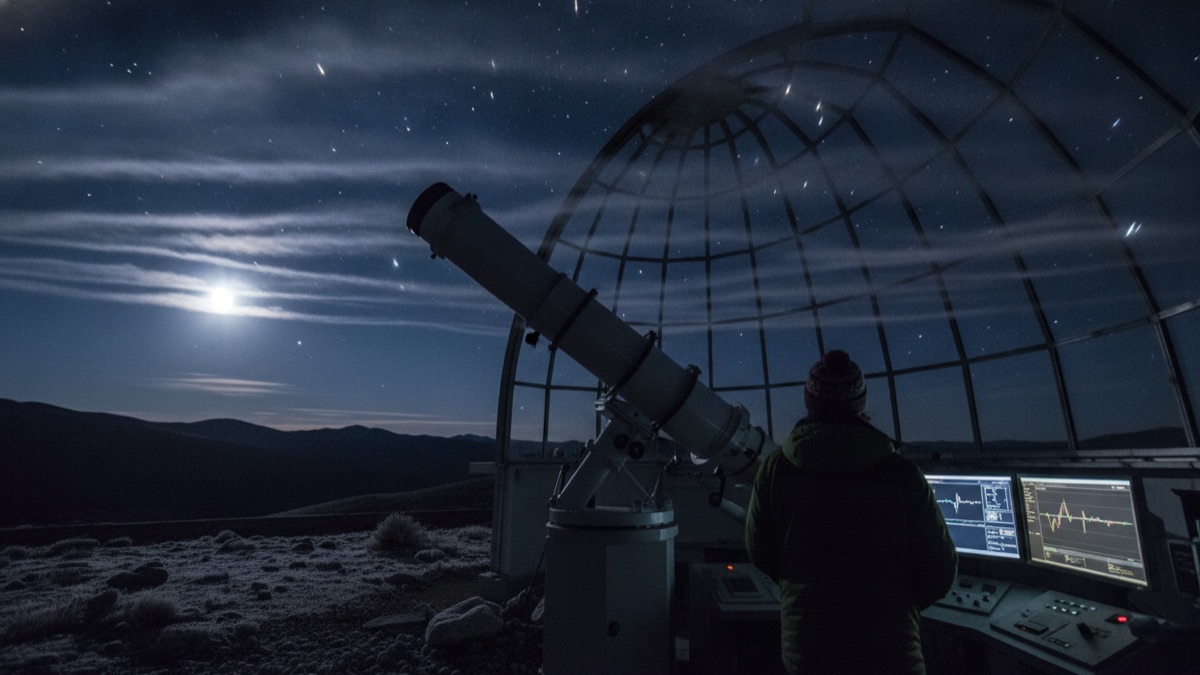
This is also why astronomers place telescopes in space or at high-altitude sites with thinner, more stable air, since minimizing atmospheric interference allows for sharper, more precise observations of distant stars.
Sources
- NASA — background on atmospheric scintillation and stargazing
- Encyclopaedia Britannica — an academic overview of stellar scintillation
- Royal Museums Greenwich — astronomy explainers on stars vs. planets
FAQ
Why do stars twinkle?
Their light bends unpredictably as it passes through pockets of air at different temperatures and densities in Earth's atmosphere.
Why do planets twinkle less than stars?
Planets appear as tiny disks rather than true points of light, so distortions from different parts of the disk tend to average out.
Do stars twinkle when viewed from space?
No, without Earth's atmosphere to distort their light, stars appear to shine with a steady light from space.
About the Author
We reference NASA, Encyclopaedia Britannica, Royal Museums Greenwich to explain the background and current understanding of this topic.
Loved This Article?
Share it on WhatsApp → Share it on WhatsApp
Get more guides in your inbox — Subscribe to our newsletter for weekly surprising stories from Egypt, Saudi Arabia, Dubai, and beyond.