Open a ride-hailing app during a sudden downpour and the fare can double or triple within minutes of the same trip you took yesterday. Search a flight twice in one afternoon and the second price can be higher than the first. Refresh a hotel booking site and the room that was available a moment ago now costs more. Each of these moments feels less like a market functioning normally and more like being caught out by a system that knows exactly how badly you need what it is selling. That feeling is not entirely wrong, and understanding why requires looking past the outrage headlines and into the actual mechanics of how modern pricing algorithms operate, what data feeds them, and why the same economic logic that airlines have used for decades suddenly feels so much more invasive when it shows up in a taxi app or a grocery store shelf label.
A Fare That Doubles While You Watch
The moment that most reliably produces public anger around dynamic pricing is watching a price move in real time, on the same screen, for the same product, without any change in what is actually being offered. A ride that cost twenty dirhams an hour ago now costs fifty, the driver is the same, the car is the same, and the road is the same, yet the number attached to the trip has shifted dramatically based on a variable the customer cannot see and did not create.
This visibility is part of what makes the modern version of dynamic pricing feel different from price changes people have long tolerated elsewhere, such as off-season discounts or holiday markups announced well in advance. When a price changes silently and instantly, without an accompanying explanation, it reads less like a market adjusting to conditions and more like being singled out at the exact moment of maximum need.
That perception, whether or not it matches the underlying mechanics, has become one of the defining consumer relations challenges for companies that rely on algorithmic pricing, and it explains why so many businesses that use dynamic pricing quietly avoid describing it that way in their own marketing.
What Dynamic Pricing Actually Means
Dynamic pricing is the practice of adjusting prices continuously, sometimes multiple times per hour, in response to signals like current demand, available supply, time of day, competitor prices, and sometimes weather or local events, rather than setting one price and holding it fixed for days, weeks, or seasons at a time.
This is distinct from a simple sale or seasonal discount, both of which are typically planned well in advance and communicated clearly to customers. Dynamic pricing instead runs on automated systems that recalculate an optimal price on a rolling basis, often without any human directly setting the number a given customer sees at a given moment.
The technique itself is not new; it has existed in some form in commodities and financial markets for over a century. What has changed is the extension of constantly shifting prices into everyday consumer purchases like a taxi ride, a hotel room, or a bag of groceries, categories where customers have historically expected and grown accustomed to price stability.
Surge Pricing and the Ride-Hailing Model
Ride-hailing platforms popularized the most visible and aggressive form of dynamic pricing, commonly called surge pricing, in which fares can rise sharply within minutes when the number of riders requesting trips in an area outpaces the number of available drivers, then fall back down once the imbalance eases.
The stated purpose of surge pricing is to solve a real coordination problem: when demand spikes suddenly, higher fares are intended to draw more drivers into the area and onto the road, expanding effective supply faster than would happen at a flat rate, while simultaneously discouraging some riders from booking a trip they could delay.
In practice, surge pricing tends to draw the most criticism during emergencies, severe weather, and public safety incidents, precisely the moments when riders have the least ability to simply wait out the price spike, and several ride-hailing companies have since introduced caps or manual interventions during declared emergencies specifically to manage this reputational exposure.
How Airlines Pioneered Algorithmic Pricing
Long before ride-hailing apps existed, the airline industry built the foundational infrastructure for modern dynamic pricing through what the industry calls revenue management, a discipline developed initially to fill as many seats as possible at the highest price each individual seat could reasonably command.
Airline pricing systems track booking pace against historical patterns for a specific route and date, adjusting fares as seats sell faster or slower than expected, and effectively sorting travelers into different price tiers based on how far in advance they book, how flexible their itinerary is, and how price-sensitive their likely trip purpose appears to be.
This model succeeded commercially for decades in part because it operated somewhat out of public view, with fare changes happening gradually across weeks rather than minutes, giving it a very different public perception than the sudden, visible spikes associated with modern surge pricing even though the underlying goal, extracting the maximum price a market will bear at a given moment, is largely the same.
The Data Behind Every Price Change
Modern dynamic pricing systems ingest a wide range of signals to calculate a price in real time, including current and forecasted demand, remaining inventory, competitor pricing scraped from public listings, local weather, time of day, and historical conversion rates at different price points for similar customers.
Machine learning models increasingly power these systems, learning from vast amounts of historical transaction data to predict, essentially, the highest price a given customer segment is statistically likely to accept for a given product at a given moment, then adjusting the displayed price accordingly across a platform's entire inventory continuously throughout the day.
The sophistication of these systems means a price displayed to any individual customer at any given second is the output of a live optimization process rather than a number set by a person, which is part of why customer service representatives often cannot explain why a specific price appeared, since the logic lives inside a model rather than a documented policy.
Does Searching Twice Really Raise the Price?
One of the most persistent consumer beliefs is that searching for the same flight or hotel room multiple times causes the price to rise, as though the system is punishing repeated interest. Airlines and travel sites have generally denied deliberately raising prices based on search frequency from an individual browser, and independent testing has produced mixed and inconclusive results on this specific claim.
What is verifiably true is that prices for time-sensitive inventory like flights and hotel rooms change constantly regardless of any individual customer's search behavior, driven by aggregate booking pace across all customers, and a traveler who searches twice within a short window is highly likely to see a genuine price movement that happened to occur between searches rather than one caused by the search itself.
This distinction matters less to a frustrated customer than it might to an economist, however, since the practical experience, a rising number on a screen with each search, feels identical whether the cause is aggregate demand shifting naturally or a system directly responding to that individual's clicks, which helps explain why the belief persists so stubbornly despite companies' denials.
Hotels, Events, and the Spread of Revenue Management
Hotels adopted dynamic pricing techniques closely modeled on the airline industry's revenue management playbook, adjusting room rates based on occupancy forecasts, local events, seasonal demand, and competitor rates gathered from public booking platforms, often multiple times per day for the same room.
Concert and sports ticketing platforms extended the same logic into live events, introducing pricing tiers that rise as an event approaches sellout or as resale demand increases, a practice that has generated some of the most visible public backlash of any dynamic pricing application, particularly when fans discover that a ticket's price climbed substantially between when they first viewed it and when they attempted to complete a purchase.
What unites these different applications is a shared underlying incentive: any business selling a perishable good, one that has no value once a specific date or moment passes, such as an empty airline seat, an unsold hotel room, or an unfilled concert seat, has a strong financial motive to extract the highest possible price from each unit before it becomes worthless, and dynamic pricing is simply the most refined tool built to pursue that goal.
Personalized Pricing and Its Legal Gray Zone
A more contentious variant of dynamic pricing is personalized pricing, in which the price shown depends not just on aggregate supply and demand but on characteristics of the individual customer, such as browsing history, device type, location, or past purchase behavior, effectively charging different people different prices for an identical product at the identical moment.
Retailers and platforms have generally been cautious about openly acknowledging the extent of personalized pricing, partly because consumer reaction to learning they paid more than another shopper for the same item tends to be sharply negative, and partly because several jurisdictions have begun examining whether certain forms of personalized pricing based on sensitive data could violate consumer protection or anti-discrimination law.
Regulators in a number of countries have opened inquiries or issued guidance specifically distinguishing between broadly acceptable dynamic pricing based on aggregate market conditions and more legally uncertain personalized pricing based on individual data, though enforcement and legal clarity in this area remain unevenly developed across jurisdictions.
The Economic Case Companies Make
Economists who study pricing generally argue that dynamic pricing, in its non-personalized form, improves overall market efficiency by matching supply and demand more precisely than a fixed price ever could, reducing the frequency of both wasted excess supply, such as empty seats, and unmet demand, such as customers unable to get a ride at all during a shortage.
Proponents also point out that dynamic pricing can lower average prices during genuinely low-demand periods compared to a flat rate designed to cover costs during peak periods, meaning some customers benefit from lower prices at off-peak times specifically because the system is allowed to charge more during peak moments.
This economic argument is generally sound on its own terms, yet it has struggled to persuade the public precisely because the benefits, modestly lower off-peak prices spread across many transactions, are far less visible and memorable than the costs, a dramatic price spike experienced personally during an inconvenient or urgent moment.
Why Fairness Perception Matters More Than Economics
Behavioral economics research on pricing fairness has consistently found that people evaluate whether a price change feels fair using heuristics quite different from the supply-and-demand logic economists apply, with price increases during moments of scarcity or emergency frequently judged as exploitative regardless of the underlying cost or demand justification.
This research helps explain a pattern that otherwise looks inconsistent: consumers who calmly accept an airline charging more for a ticket booked at the last minute often react with genuine anger to a ride-hailing app charging more during a storm, even though both cases involve a company raising prices in response to a supply and demand imbalance.
The difference appears to lie in perceived necessity and vulnerability at the moment of the price change: booking a flight weeks ahead of a discretionary trip feels like ordinary planning, while needing a ride home during severe weather feels like being trapped, and a price increase that lands during a moment of felt vulnerability is judged far more harshly than an identical increase during a moment of calm.
The Psychology of Price Volatility
Beyond fairness judgments, watching a price change in real time appears to trigger a distinct psychological reaction compared to encountering a price that is simply different from what a customer remembered from a previous, separate visit, since real-time volatility signals active manipulation in a way a remembered price difference does not.
Loss aversion, a well-documented tendency for people to weigh potential losses more heavily than equivalent gains, likely amplifies this effect: a customer who watches a price rise while deciding whether to purchase experiences the increase as an active loss being taken from them, rather than simply a different, unfamiliar price point being offered.
Uncertainty itself adds a further layer of stress, since customers facing a visibly fluctuating price cannot easily plan or budget with confidence, an anxiety that flat, stable pricing largely eliminates regardless of whether the flat price is, on average, higher or lower than what a dynamic system would have charged.
When Surge Pricing Becomes a Public Relations Crisis
Several ride-hailing companies have faced significant public criticism after surge pricing activated during major storms, terrorist incidents, or other emergencies, situations in which fares rose sharply for riders trying to reach safety or leave an area quickly, generating news coverage and public anger far beyond the scale of the pricing decision itself.
These episodes have repeatedly forced companies to respond with emergency fare caps, manual overrides of the automated pricing system, or public apologies, effectively acknowledging that the algorithm's output, however economically justified in isolation, could not be defended in the specific context of a genuine emergency.
The recurring nature of these crises has pushed most major ride-hailing platforms to build automatic emergency detection and price-capping features directly into their systems, essentially hard-coding an exception into the algorithm to override the pure demand-based pricing logic during declared disasters or emergencies.
Regulatory Pushback Around the World
Consumer protection regulators in a number of countries have examined dynamic and personalized pricing practices, generally focusing on whether customers are adequately informed that prices fluctuate, whether the criteria used to set individual prices could constitute unlawful discrimination, and whether specific practices during emergencies cross from ordinary business pricing into price gouging as defined under local law.
Several jurisdictions maintain price gouging laws that specifically restrict price increases on essential goods and services during declared states of emergency, and these laws have occasionally been applied or considered in relation to ride-hailing surge pricing during natural disasters, though enforcement has varied considerably by jurisdiction and specific circumstances.
Regulatory attention has generally trailed behind the technology, with lawmakers and consumer protection agencies still working through how existing pricing and consumer protection frameworks, largely written before real-time algorithmic pricing existed at this scale, should apply to a market where prices can now change dozens of times an hour.
Grocery Stores and Electronic Shelf Labels
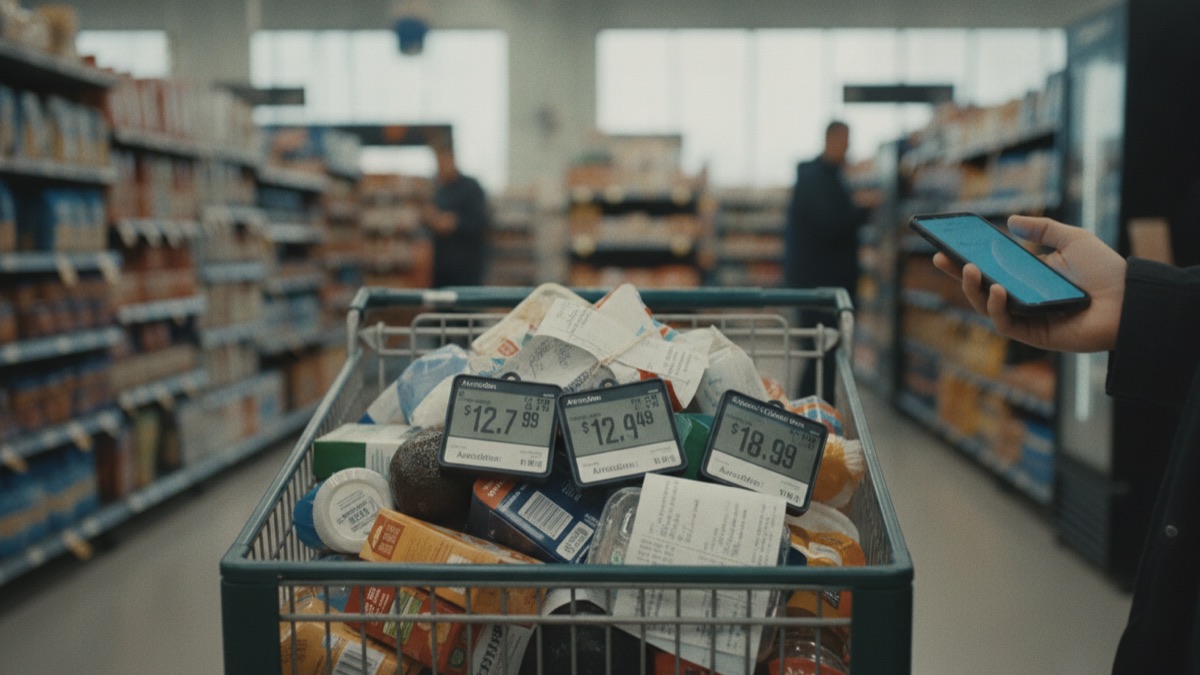
The retail grocery sector has begun adopting electronic shelf labels, digital price tags that can be updated remotely and instantly across an entire store, a technology that makes far more frequent price changes technically possible in categories that have historically changed prices only occasionally, such as weekly promotional cycles.
Grocery chains piloting this technology have generally stated their intent is to reduce food waste by discounting perishable items as they approach expiration and to respond more quickly to local supply conditions, rather than to implement the kind of aggressive real-time surge pricing seen in ride-hailing, but public reaction to the mere possibility of grocery prices fluctuating throughout the day has still been notably wary.
This wariness reflects how differently consumers regard staple goods compared to discretionary purchases like ride-hailing or event tickets: a fluctuating price for a taxi during a storm is viewed as opportunistic, but a fluctuating price for bread or milk touches a deeper sense that basic necessities should remain stable and predictable regardless of momentary supply and demand conditions.
Transparency as a Partial Fix
Some companies using dynamic pricing have responded to criticism by adding features that show customers why a price is elevated, such as displaying a surge multiplier explicitly rather than simply presenting a final number, or offering an estimated wait time as an alternative to paying the higher fare.
Research on pricing fairness suggests that transparency alone does not fully resolve consumer frustration, since customers can understand exactly why a price rose and still judge the outcome as unfair, particularly during moments of urgent need, but transparency does appear to reduce suspicion of arbitrary or personally targeted manipulation compared to an unexplained price simply appearing higher.
This suggests transparency functions best as a trust-preservation tool rather than a true satisfaction fix: customers who understand the mechanism are less likely to believe they are being individually and secretly targeted, even if they remain unhappy about the price itself.
What Consumers Can Actually Do
Practical countermeasures available to consumers include booking further in advance for predictable travel, avoiding the most obviously peak windows when possible, comparing prices using private browsing or a cleared browser session to reduce any possibility of session-based personalization, and using independent price-tracking tools that monitor a specific route or product over time rather than relying on a single snapshot search.
For ride-hailing specifically, waiting a short period during a surge, checking whether a nearby pickup point carries a lower multiplier, or switching between competing platforms that may not be surging simultaneously can meaningfully reduce cost, though none of these tactics is guaranteed to work in every situation.
None of these strategies fully neutralizes a system actively optimizing prices against demand signals in real time, and consumer advocates generally argue the more durable fix lies in stronger transparency requirements and regulatory guardrails rather than individual behavioral workarounds.
Where Dynamic Pricing Goes From Here
Dynamic pricing is unlikely to retreat from the industries where it is now firmly established, since the underlying economic incentive, extracting maximum value from perishable inventory and matching supply with fluctuating demand, remains as strong as ever and the technology to implement it has only become cheaper and more precise.
What is more likely to change is the regulatory and design environment surrounding it, with growing pressure for clearer disclosure requirements, restrictions on the most sensitive forms of personalized pricing based on individual data, and hard caps during declared emergencies, incremental guardrails rather than a wholesale rejection of algorithmic pricing itself.
The core tension driving public frustration, a genuinely efficient pricing mechanism colliding with deeply held expectations of fairness and stability, is unlikely to resolve cleanly in either direction. Instead, dynamic pricing will likely keep expanding into new categories while companies simultaneously face growing pressure to build in the kind of transparency, caps, and emergency exceptions that soften its harshest edges, a compromise that satisfies neither pure market efficiency nor pure consumer comfort but reflects the genuine difficulty of reconciling the two.
Sources
- Federal Trade Commission — U.S. consumer protection guidance and inquiries into algorithmic and personalized pricing practices.
- OECD — Cross-country research on algorithmic pricing, competition, and consumer protection.
- Harvard Business Review — Analysis of revenue management strategy and dynamic pricing across industries.
- International Air Transport Association — Industry data and standards on airline revenue management practices.
- Which? — Independent consumer research on pricing transparency and travel booking practices.
FAQ
What is dynamic pricing, exactly?
Dynamic pricing is a strategy in which a business adjusts prices continuously in response to real-time signals such as demand, supply, time of day, and competitor prices, rather than charging one fixed price for an extended period.
Is surge pricing the same thing as dynamic pricing?
Surge pricing is a specific, more aggressive form of dynamic pricing most associated with ride-hailing apps, where prices can rise sharply and quickly during short-lived spikes in demand, such as bad weather or a large event ending at the same time.
Why do flight prices seem to change every time I search?
Airline pricing systems continuously reprice seats based on booking pace, remaining inventory, and competitor fares, and search behavior itself can be one signal among many algorithms use to estimate demand, which is why repeated searches can coincide with price changes.
Is dynamic pricing legal?
Charging different prices for the same product based on demand, timing, or channel is broadly legal in most jurisdictions, though regulators in several countries have scrutinized specific practices, particularly around personalized pricing based on individual browsing or purchase data and a lack of transparency about how prices are set.
Why does dynamic pricing generate so much more anger than a simple price increase?
Behavioral economics research shows people judge price changes partly through a lens of perceived fairness, and prices that rise sharply at the exact moment a customer is most vulnerable, such as during an emergency, are experienced as exploitative even when the underlying economic logic of matching supply and demand is the same one used in ordinary retail discounting.
Can consumers do anything to avoid the worst effects of dynamic pricing?
Booking earlier, avoiding obviously peak windows, clearing cookies or using private browsing before comparing prices, and using independent price-tracking tools can reduce exposure to the highest dynamic prices, though none of these fully neutralizes an algorithm actively optimizing against demand signals.
About the Author
We reference the Federal Trade Commission, the OECD, Harvard Business Review, the International Air Transport Association, and Which? to explain the background and current understanding of this topic.
Loved This Article?
Share it on WhatsApp → Share it on WhatsApp
Get more guides in your inbox — Subscribe to our newsletter for weekly surprising stories from Egypt, Saudi Arabia, Dubai, and beyond.