The Cairo Metro opened in 1987 as the first full metro system in both Africa and the Middle East, and it remains one of the most heavily used urban transit networks in the region, moving millions of passengers a day across greater Cairo.
The network is built around several lines, commonly referred to by number, connecting central Cairo to Giza, Helwan, and other outlying districts, with additional lines added or extended over the following decades to expand coverage.
A Pioneering Regional Metro System
Lines, Tickets, and Women-Only Cars
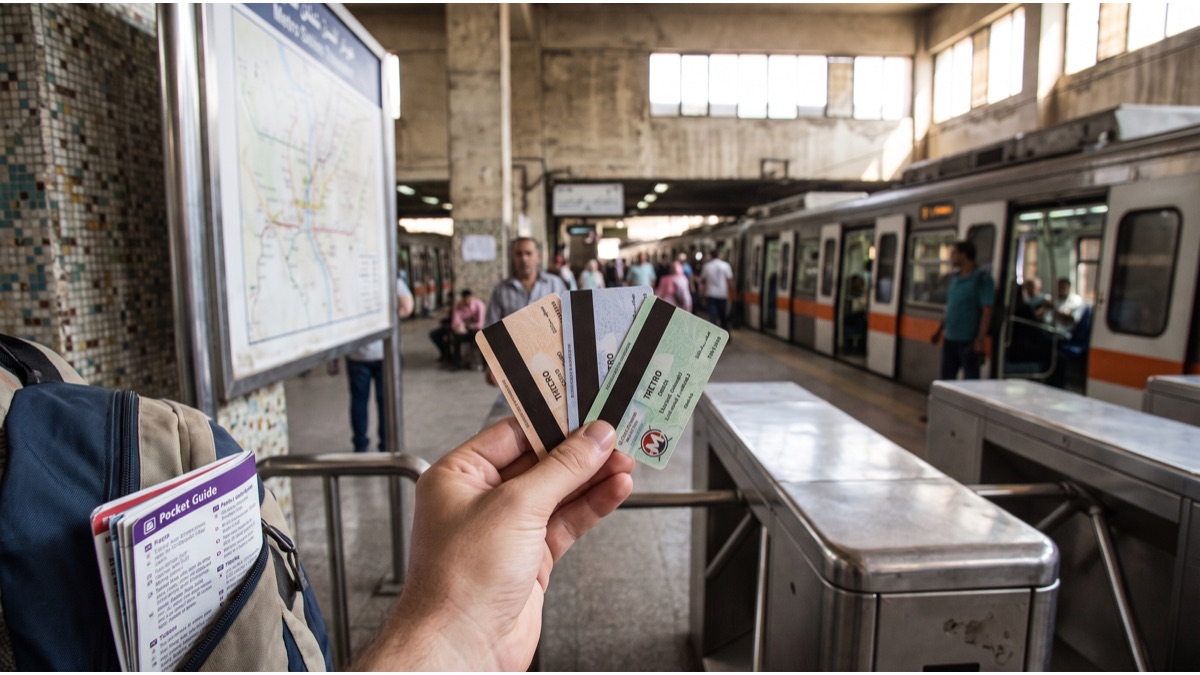
Tickets are typically bought as paper tickets or rechargeable cards at station kiosks and machines, priced based on the number of stations traveled rather than a single flat fare, and are checked at gated entry points.
Every train includes designated women-only cars, usually at the front of the train, an arrangement that has been in place for years to give female passengers an additional option, alongside general mixed cars that all passengers can also use.
Sources
FAQ
Is the Cairo Metro safe and easy for tourists?
It is widely used by both residents and tourists, with signage in Arabic and English at most central stations, though it can get very crowded during peak commuting hours.
How do Cairo Metro tickets work?
Fares are generally based on the number of stations traveled, paid via paper ticket or rechargeable card at station kiosks and machines rather than a single flat citywide fare.
What are the women-only cars for?
Certain cars, usually at the front of each train, are reserved for female passengers as an additional option alongside the general mixed cars.
About the Author
We reference Lonely Planet, Reuters, Al Jazeera to explain the background and current understanding of this topic.
Loved This Article?
Share it on WhatsApp → Share it on WhatsApp
Get more guides in your inbox — Subscribe to our newsletter for weekly surprising stories from Egypt, Saudi Arabia, Dubai, and beyond.