Introduction
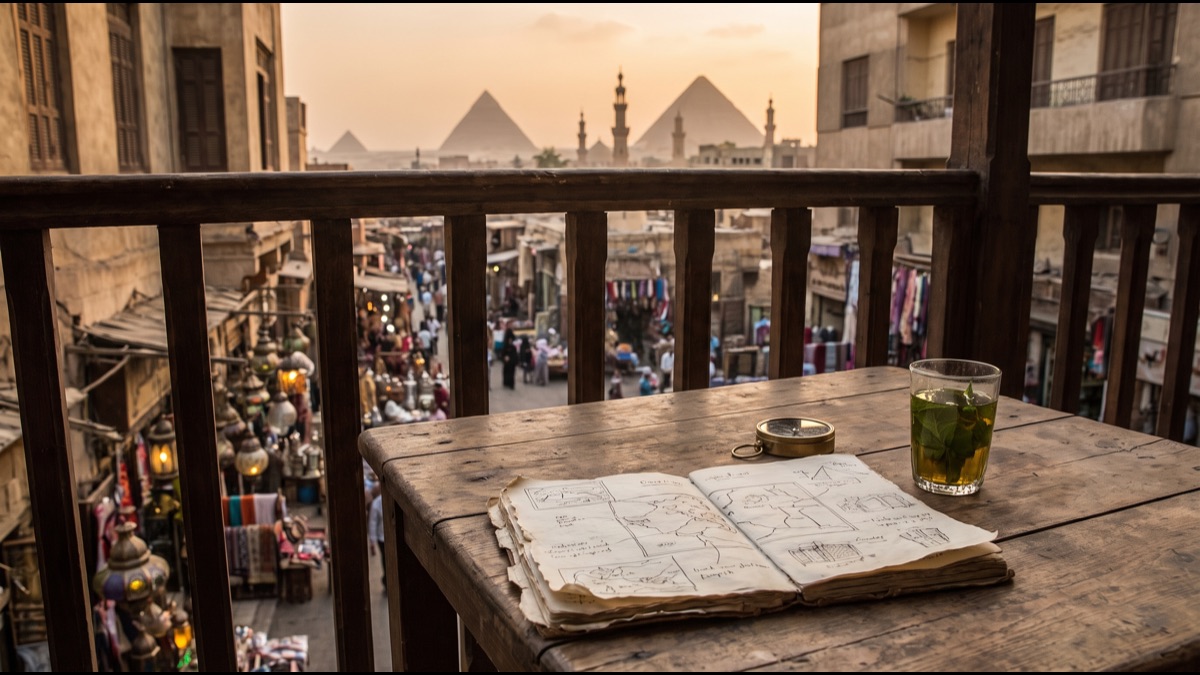
Cairo is Africa's largest city and one of the most historically dense urban areas on Earth, home to roughly 20 million people across its wider metropolitan area. It is a city of striking contrasts: medieval mosques and Ottoman-era markets sit within a few kilometers of modern high-rises, and the Giza pyramids rise directly at the edge of the urban sprawl rather than in some remote desert setting most visitors imagine.
For first-time visitors, Cairo can feel overwhelming — dense traffic, constant noise, and a sprawling layout with no single obvious center. Understanding the city's main districts makes it far easier to plan an efficient visit.
Key Neighborhoods to Know
Islamic Cairo, centered on al-Muizz Street, is the historic heart of the medieval city, packed with mosques, madrasas, and the sprawling Khan el-Khalili bazaar, one of the oldest and largest markets in the Middle East. Downtown Cairo was laid out in the 19th century with European-style boulevards and now mixes faded belle-époque architecture with budget hotels and street food.
Zamalek, an island in the Nile, is Cairo's leafier, more upscale district, home to embassies, galleries, and a calmer café scene. Giza, technically a separate city but functionally part of Greater Cairo, is where the pyramids and the Grand Egyptian Museum are located, on the western edge of the metropolitan area.
Top Sights Beyond the Pyramids
The Egyptian Museum in Tahrir Square remains open even after the Grand Egyptian Museum's opening, still holding a substantial historic collection, including many royal artifacts not transferred to the new museum. The Citadel of Saladin, a medieval fortress on a hill overlooking the city, houses the Ottoman-era Muhammad Ali Mosque and offers sweeping views across Cairo's skyline.
Old Cairo (Coptic Cairo) contains some of Egypt's oldest churches and the Ben Ezra Synagogue, reflecting the city's long history of religious coexistence, while a Nile dinner cruise remains a popular, low-effort way to see the city lit up at night.
Getting Around Cairo
The Cairo Metro is fast, cheap, and generally the most reliable way to avoid the city's notoriously heavy traffic, with women-only carriages available on every train. Ride-hailing apps such as Uber and Careem are widely used, generally cheaper and more reliable than hailing a street taxi, and are the most practical option for reaching sites the metro doesn't cover directly, such as the Giza Plateau.
Walking between sites within Islamic Cairo or Downtown is feasible and often the best way to experience street life, but crossing major roads can be genuinely hazardous given heavy, fast-moving traffic and limited pedestrian infrastructure in many areas.
When to Visit
The most comfortable months are November through March, when daytime temperatures are mild and manageable for walking and sightseeing. Summer, from roughly June through August, brings intense heat frequently exceeding 35–40°C, making early morning sightseeing and air-conditioned transport far more important.
Friday mornings tend to be quieter across the city due to the Muslim weekly prayer schedule, while the days around major Islamic holidays can see significant crowds and altered opening hours at major sites, so checking a specific site's holiday schedule in advance is worthwhile.
Sources
- Egyptian Ministry of Tourism and Antiquities — Official visiting information for Cairo's major sites
- UNESCO World Heritage Centre — Historic Cairo World Heritage listing
- Cairo Metro (Egyptian National Authority for Tunnels) — Official metro route and fare information
- Encyclopaedia Britannica — Cairo reference entry
FAQ
How many days do you need in Cairo?
Most visitors spend three to four days in Cairo to comfortably cover the pyramids, the Grand Egyptian Museum, Islamic Cairo, and Downtown, though a rushed one- to two-day visit can cover the highlights if time is limited.
Is Cairo safe for tourists?
Cairo is generally safe for tourists in the main visitor areas, though standard big-city precautions apply, including being alert for petty theft and pickpocketing in crowded markets and using licensed taxis or ride-hailing apps rather than unmarked vehicles.
What is the best way to get around Cairo?
The Cairo Metro is the fastest and most reliable option for avoiding traffic on routes it serves, while ride-hailing apps like Uber and Careem are the most practical choice for reaching sites such as the Giza Plateau that are not on the metro network.
Is the Egyptian Museum in Tahrir Square still open?
Yes. The Egyptian Museum in Tahrir Square remains open even after the Grand Egyptian Museum's opening, still displaying a substantial historic collection, including artifacts not transferred to the new museum.
What is the best time of year to visit Cairo?
November through March offers the most comfortable temperatures for walking and sightseeing. Summer months, particularly June through August, bring intense heat that makes early morning visits and air-conditioned transport far more important.
About the Author
doyouknow.app Editorial Team — We combine official tourism guidance with on-the-ground neighborhood knowledge to keep our Cairo coverage practical and current for first-time and repeat visitors alike.
Loved This Article?
Share it on WhatsApp → Share on WhatsApp
Get more guides in your inbox — Subscribe to our newsletter for weekly surprising stories from Egypt, Saudi Arabia, Dubai, and beyond.