Introduction
The Grand Egyptian Museum (GEM), located just a few kilometers from the Giza Plateau, is the largest archaeological museum in the world dedicated to a single civilization. Construction began in 2005, and after a long series of delays common to megaprojects of this scale, the museum held its official grand opening in November 2025, following a series of partial and trial openings in the preceding years that allowed limited public access to parts of the site.
The museum was purpose-built to finally display Egypt's most significant artifacts, many of which had previously been kept in storage or scattered across smaller institutions, in a single, climate-controlled facility designed using modern conservation standards, replacing the aging Egyptian Museum in Tahrir Square as the country's flagship antiquities institution.
What to See Inside
The undisputed centerpiece is the complete Tutankhamun collection — approximately 5,000 objects from his tomb, including the golden death mask, nested coffins, chariots, and jewelry — displayed together in one dedicated wing for the first time since Howard Carter's 1922 discovery. Previously, these objects were split between storage and limited display space at the old Egyptian Museum.
The Grand Staircase is lined with dozens of monumental statues arranged in roughly chronological order, offering a walkable timeline of Egyptian art history from the Old Kingdom to the Greco-Roman period, and leads visitors toward a panoramic window with a direct view of the Giza pyramids. A dedicated gallery also houses one of the solar boats of Khufu, a full-size wooden vessel buried near the Great Pyramid and intended to carry the pharaoh's spirit across the sky.
The Ramesses II Statue and Khufu Boat
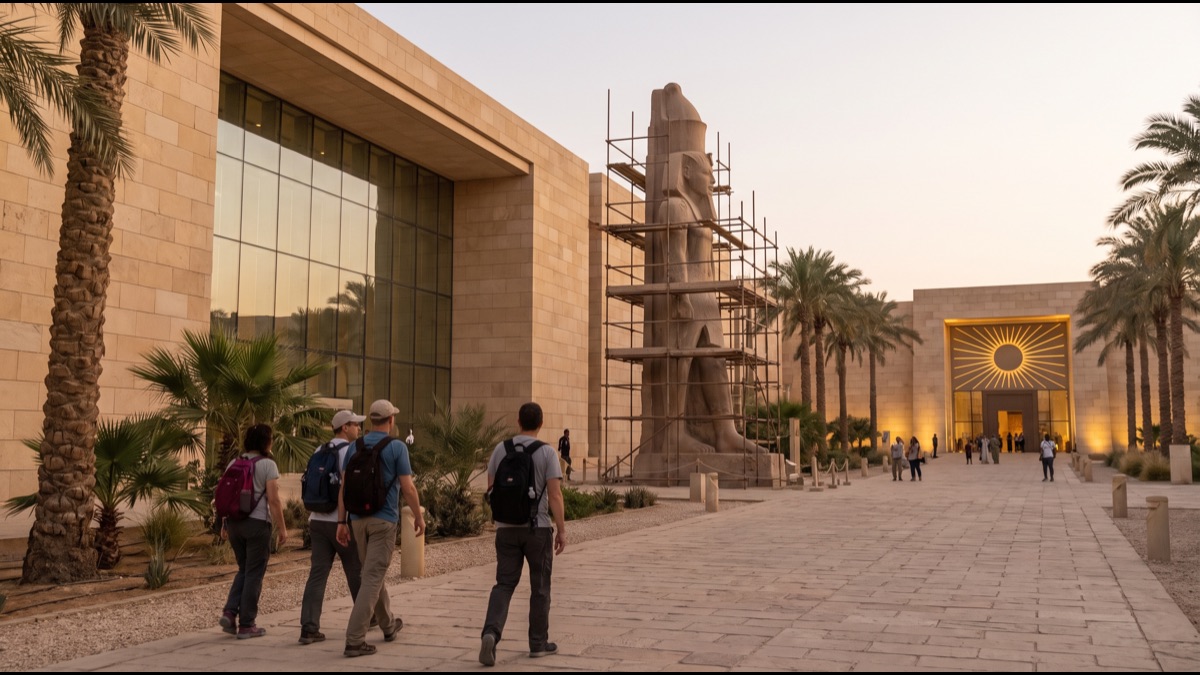
A colossal red granite statue of Ramesses II, standing roughly 11 meters tall and weighing around 83 tons, greets visitors in the main atrium; it was relocated from Cairo's Ramses Square in a carefully engineered move completed in 2018, years before the rest of the museum opened. The statue's move alone required specialized transport engineering due to its extreme weight and the risk of damage to the ancient granite.
The solar boat gallery displays one of two boats discovered disassembled in pits beside the Great Pyramid in 1954, painstakingly reconstructed from more than 1,200 individual wooden pieces, offering a rare, near-complete example of Old Kingdom shipbuilding technology.
Tickets, Hours, and Getting There
The museum offers tiered ticket options: a general admission ticket covering the main galleries, and a premium ticket that adds access to the Tutankhamun galleries specifically, which is generally worth the extra cost given that collection's significance. Tickets are sold online in advance and at the museum, though advance online booking is strongly recommended during peak season to avoid long queues and sold-out time slots.
The museum operates on a timed-entry system on most days, with specific entry windows assigned at booking, and is generally closed one day per week for maintenance; checking current opening days and hours on the official website before planning your visit is essential, since schedules have shifted during the museum's ongoing operational ramp-up.
Practical Visiting Tips
The museum sits close enough to the Giza Plateau that many visitors combine both in a single day, typically visiting the pyramids in the cooler morning hours and the climate-controlled museum in the afternoon heat. Allow at least three to four hours for a reasonably thorough visit, and closer to a full day if you want to see every gallery in detail, given the museum's enormous scale.
On-site amenities include cafes, a large gift shop, and a conservation center visible through viewing windows in some areas, allowing visitors to see restoration work in progress. As with other major Egyptian sites, arriving early in the day generally means smaller crowds and more comfortable temperatures for the walk between the pyramids and the museum entrance if combining both visits.
Sources
- Grand Egyptian Museum Official Website — Official ticketing, hours, and gallery information
- Egyptian Ministry of Tourism and Antiquities — Official government information on the Grand Egyptian Museum project
- UNESCO World Heritage Centre — Context on the Giza Plateau and Memphis Necropolis area
- Encyclopaedia Britannica — Grand Egyptian Museum reference entry
FAQ
When did the Grand Egyptian Museum open?
After a long construction period beginning in 2005 and a series of partial and trial openings in preceding years, the Grand Egyptian Museum held its official grand opening in November 2025.
What is the main attraction at the Grand Egyptian Museum?
The complete Tutankhamun collection, roughly 5,000 objects from his tomb including the golden death mask, is the museum's centerpiece, displayed together in a dedicated wing for the first time since the tomb's 1922 discovery.
Do I need a separate ticket for the Tutankhamun galleries?
Yes. The museum offers a general admission ticket for the main galleries and a premium ticket that adds access to the dedicated Tutankhamun galleries, which is generally recommended given the collection's significance.
Is the Grand Egyptian Museum close to the pyramids?
Yes. The museum is located just a few kilometers from the Giza Plateau, and many visitors combine both in a single day, typically visiting the pyramids in the cooler morning and the museum in the afternoon.
What replaced the old Egyptian Museum in Tahrir Square?
The Grand Egyptian Museum has become Egypt's flagship antiquities institution, taking over most major artifacts, though the older Egyptian Museum in Tahrir Square remains open with its own historic collection.
About the Author
doyouknow.app Editorial Team — We track official museum announcements and government antiquities updates directly to keep our Grand Egyptian Museum visiting information accurate as operations continue to expand.
Loved This Article?
Share it on WhatsApp → Share on WhatsApp
Get more guides in your inbox — Subscribe to our newsletter for weekly surprising stories from Egypt, Saudi Arabia, Dubai, and beyond.