Introduction
Egyptian cuisine is built around inexpensive, filling staples rather than elaborate presentation, reflecting the food culture of a country where legumes, bread, and vegetables have historically formed the backbone of the everyday diet far more than meat. It shares clear roots with the wider Levantine and Mediterranean culinary world while maintaining distinctly Egyptian dishes and preparations found nowhere else in the same form.
Street food and simple neighborhood eateries, rather than formal restaurants, are often the best way to experience authentic Egyptian cooking, and many of the country's most beloved dishes cost only a small amount even in central Cairo.
Koshari and Everyday Staples
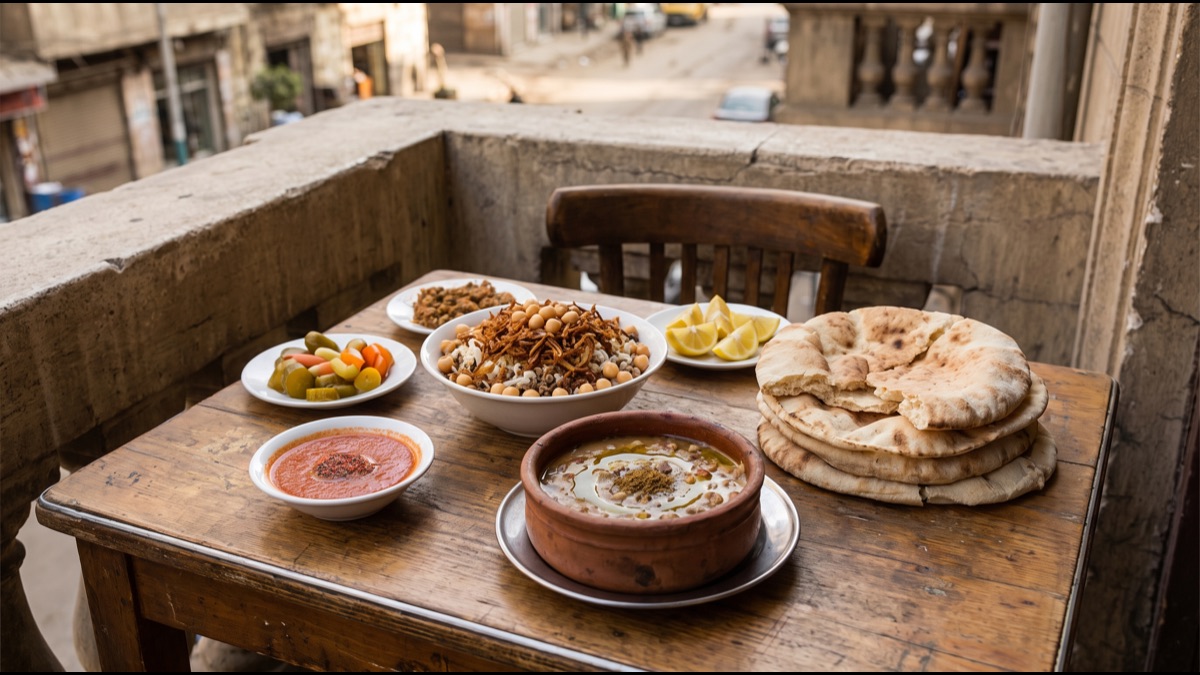
Koshari, widely considered Egypt's national dish, layers rice, lentils, macaroni, and chickpeas, topped with a spiced tomato sauce, garlic vinegar, and crispy fried onions. Ful medames, slow-cooked fava beans mashed and seasoned with oil, lemon, and garlic, is a standard breakfast dish eaten across all social classes, often alongside taameya, Egypt's distinct fava-bean version of falafel, made with fava beans rather than the chickpeas used in the Levantine version.
Aish baladi, a round, pocketed whole wheat flatbread baked in high-heat ovens, is the everyday bread of Egypt, served at essentially every meal and used to scoop up dips, stews, and salads rather than eaten as a side alone.
Main Dishes and Stews
Molokhia, a thick, garlicky green stew made from jute mallow leaves, is typically served over rice with chicken or rabbit and divides opinion among visitors due to its distinctive mucilaginous texture, though it remains a beloved comfort dish for most Egyptians. Mahshi, vegetables such as zucchini, eggplant, or grape leaves stuffed with spiced rice and herbs, is a labor-intensive dish typically associated with family gatherings and celebrations rather than quick everyday cooking.
Hamam mahshi, stuffed pigeon, is considered a delicacy across Egypt, often prepared for special occasions and available at specialized restaurants, particularly in Cairo, that focus specifically on pigeon dishes.
Street Food Culture
Beyond koshari and ful, Egyptian street food includes tirmis (salted lupini beans), sold from carts as a savory snack, and sobia, a sweet coconut milk drink particularly popular during Ramadan evenings. Shawarma stands are ubiquitous throughout Egyptian cities, generally served in a style closer to the Levantine tradition but with distinct local sauces and bread preferences.
Egyptian desserts lean heavily on syrup-soaked pastries, with basbousa (semolina cake soaked in syrup), kunafa (shredded pastry with cheese or cream filling), and umm ali (a bread pudding with nuts and raisins) among the most widely available across bakeries and dessert shops nationwide.
Where to Find Authentic Egyptian Food
In Cairo, the areas around Downtown and Islamic Cairo hold numerous long-established, unpretentious eateries serving koshari, ful, and grilled dishes at low prices, generally offering a more authentic experience than tourist-oriented restaurants near major sites. Regional specialties are worth seeking out outside the capital as well: Alexandria is particularly known for its seafood given its Mediterranean coastal setting, while Upper Egypt's cuisine along the Nile Valley leans more heavily on grains and simpler preparations.
As with food travel generally, busy stalls with high customer turnover are usually a more reliable indicator of freshness and quality than appearance alone, and most visitors find Egyptian street food safe when purchased from clearly popular, high-turnover vendors.
Sources
- Egyptian Ministry of Tourism and Antiquities — Official cultural and culinary tourism information for Egypt
- Food and Agriculture Organization of the United Nations — Information on Egyptian agricultural staples underpinning the cuisine
- Encyclopaedia Britannica — Egyptian cuisine reference entry
- Cairo tourism and dining resources — Local restaurant and street food guidance for Cairo neighborhoods
FAQ
What is Egypt's national dish?
Koshari is widely considered Egypt's national dish, a layered mix of rice, lentils, macaroni, and chickpeas topped with spiced tomato sauce, garlic vinegar, and crispy fried onions, sold cheaply at dedicated koshari shops throughout the country.
What is the difference between Egyptian and Levantine falafel?
Egyptian falafel, called taameya, is made primarily from fava beans rather than the chickpeas typically used in Levantine falafel, giving it a distinct texture and slightly different flavor while serving a similar role as a common street food.
Is Egyptian street food safe to eat?
Generally yes, particularly from busy, high-turnover vendors and stalls that are visibly popular with locals, which is usually a more reliable indicator of freshness than appearance alone. Standard travel food-safety precautions still apply.
What is molokhia?
Molokhia is a thick, garlicky green stew made from jute mallow leaves, typically served over rice with chicken or rabbit. Its distinctive mucilaginous texture divides opinion among first-time visitors but remains a beloved comfort dish for most Egyptians.
What bread is eaten in Egypt?
Aish baladi, a round, pocketed whole wheat flatbread baked in high-heat ovens, is Egypt's everyday bread, served at essentially every meal and used to scoop up dips, stews, and salads.
About the Author
doyouknow.app Editorial Team — We combine culinary research with on-the-ground neighborhood dining knowledge to present Egyptian food culture accurately, beyond a narrow tourist-restaurant view.
Loved This Article?
Share it on WhatsApp → Share on WhatsApp
Get more guides in your inbox — Subscribe to our newsletter for weekly surprising stories from Egypt, Saudi Arabia, Dubai, and beyond.