Introduction
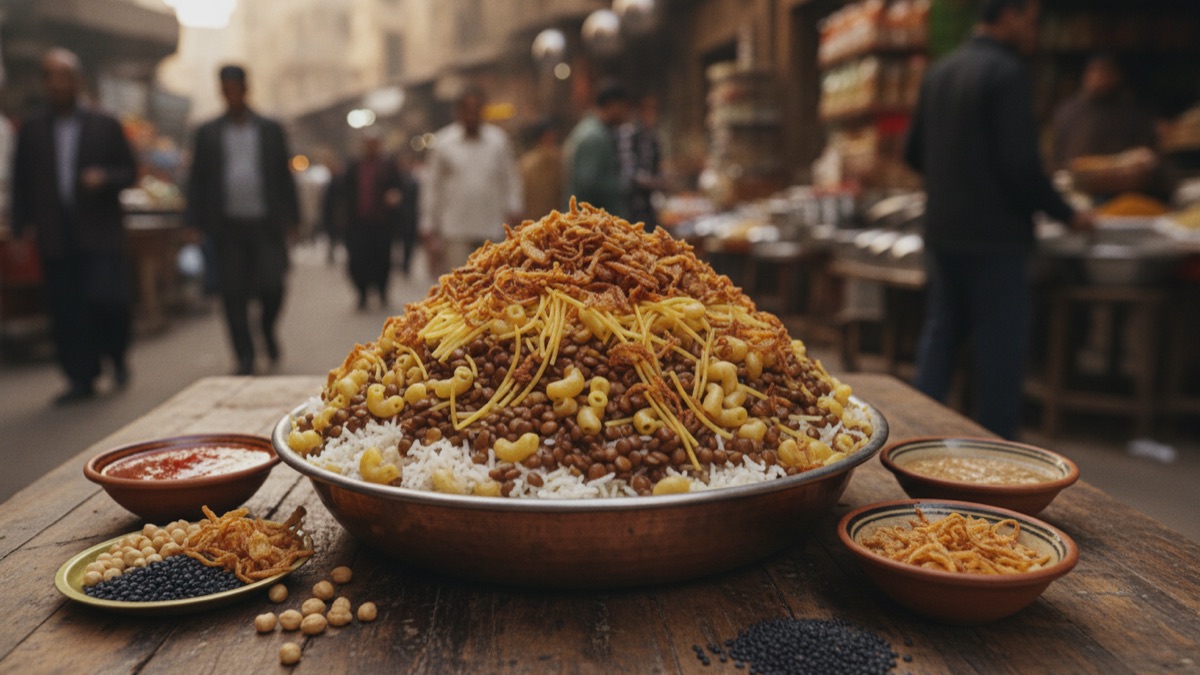
Koshari is widely regarded as Egypt's national dish, an unusual combination by global standards: a single bowl layering rice, brown lentils, macaroni, and chickpeas, topped with a tangy tomato sauce, garlic-vinegar sauce, and generous crispy fried onions. Despite — or perhaps because of — its simplicity and low cost, it is genuinely beloved across all social classes and remains a daily staple rather than an occasional treat.
Dedicated koshari shops, many operating for decades under the same family ownership, are found in virtually every Egyptian city and town, typically serving the dish quickly, cheaply, and in large portions.
The Dish's Layered History
Koshari's exact origins are debated, but food historians generally agree it developed in the 19th century through a blend of culinary influences arriving in Egypt via trade and migration: rice and lentils reflect older Egyptian and broader Middle Eastern staples, while the pasta component is widely attributed to Italian influence during that period, and some historians trace elements of the dish's name and format to South Asian khichdi, potentially introduced through British colonial-era connections.
Rather than any single inventor or origin story, koshari is best understood as a genuinely Egyptian synthesis of ingredients and techniques absorbed from multiple trading and colonial-era influences into a dish that became distinctly its own.
How Koshari Is Made
A proper bowl of koshari requires separately cooking rice, brown or green lentils, and short macaroni or vermicelli-style pasta, then layering them together, typically with the rice as a base. Chickpeas, either boiled or lightly fried, are added on top, followed by a spiced tomato sauce (often called shatta if made spicy) and a separate garlic-vinegar sauce that diners typically add to taste rather than having pre-mixed into the dish.
The final and arguably most important component is a generous topping of deeply caramelized, crispy fried onions, which provide the dish's signature textural contrast and are considered essential rather than optional by most koshari purists.
Regional and Modern Variations
While the core combination remains fairly consistent nationwide, individual shops distinguish themselves through their specific tomato sauce recipe, onion frying technique, and the ratio of ingredients used, leading to genuine loyalty among regular customers toward particular long-established koshari shops. Some modern restaurants have introduced upscale or fusion versions of koshari, though traditionalists generally consider the classic street-shop version definitive.
Spice levels vary by preference, with the garlic-vinegar sauce and optional chili-based shatta sauce allowing diners to customize heat and acidity to their own taste at the table rather than the dish arriving pre-seasoned to a fixed spice level.
Where to Try Authentic Koshari
Cairo's Downtown district holds several of the country's most famous, long-established koshari chains and independent shops, generally offering a more authentic experience and lower price than versions served at tourist-oriented restaurants near major monuments. As a simple, vegetarian, generally very affordable dish served quickly at high-turnover establishments, koshari is one of the most approachable and safe introductions to Egyptian street food for first-time visitors.
Portion sizes are typically generous, and most shops offer multiple size options, making koshari a practical, filling, and inexpensive meal choice throughout a day of sightseeing.
Beyond Cairo, most Egyptian cities and towns have their own well-regarded local koshari shops, and asking hotel staff or residents for a nearby recommendation generally yields a more authentic result than searching for the dish at a large international restaurant chain. Takeaway containers are standard, making koshari equally practical as a quick meal between sightseeing stops or a simple dinner brought back to a hotel room.
Sources
- Egyptian Ministry of Tourism and Antiquities — Official cultural and culinary tourism information for Egypt
- Encyclopaedia Britannica — Egyptian cuisine reference entry, including koshari's culinary history
- Food and Agriculture Organization of the United Nations — Information on rice, lentil, and chickpea staples in Egyptian agriculture
- Cairo tourism and dining resources — Local koshari shop guidance for Cairo neighborhoods
FAQ
What is in koshari?
Koshari layers rice, brown lentils, macaroni or vermicelli-style pasta, and chickpeas in one bowl, topped with a spiced tomato sauce, a garlic-vinegar sauce, and generous crispy fried onions, typically added to taste at the table.
Why is koshari considered Egypt's national dish?
Koshari is beloved across all social classes as an inexpensive, filling daily staple found in dedicated shops throughout virtually every Egyptian city, giving it a genuinely nationwide, cross-class popularity that few other dishes share.
Where did koshari come from?
Koshari's exact origins are debated, but food historians generally trace it to a 19th-century blend of influences: older Egyptian and Middle Eastern rice and lentil staples, Italian-influenced pasta, and possible South Asian khichdi influence introduced during that period.
Is koshari vegetarian?
Yes, in its standard form. Koshari's core ingredients — rice, lentils, pasta, chickpeas, tomato sauce, and fried onions — are entirely plant-based, making it a widely accessible vegetarian option for travelers.
Where is the best place to try koshari in Cairo?
Cairo's Downtown district holds several of the country's most famous, long-established koshari shops and chains, generally offering a more authentic experience and lower price than versions served near major tourist sites.
About the Author
doyouknow.app Editorial Team — We combine culinary history research with local dining guidance to explain koshari's origins and enduring popularity as accurately as possible.
Loved This Article?
Share it on WhatsApp → Share on WhatsApp
Get more guides in your inbox — Subscribe to our newsletter for weekly surprising stories from Egypt, Saudi Arabia, Dubai, and beyond.