Introduction
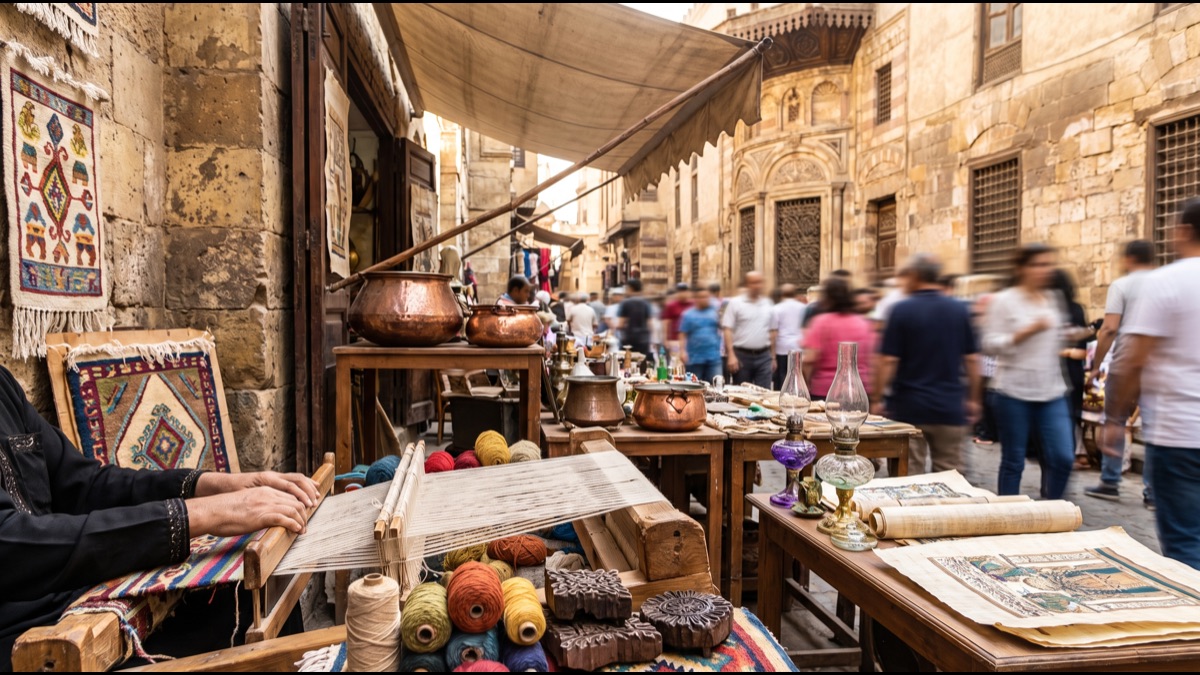
Egypt's traditional crafts reflect centuries of accumulated skill passed down through family workshops and guild-like apprenticeship systems, particularly concentrated in specific quarters of Islamic Cairo where individual streets have historically specialized in a single trade. While mass production has reduced demand for many of these crafts, a genuine core of working artisans continues to practice traditional techniques, often visible and open to visitors in their workshops.
Understanding a few of these crafts adds meaningful depth to a visit to Islamic Cairo or Khan el-Khalili beyond simple souvenir shopping, connecting purchases to specific techniques and neighborhoods with real historical continuity.
Khayamiya: Appliqué Tentmaking
Khayamiya, colorful appliqué textile work traditionally used to decorate ceremonial tents for weddings, funerals, and festivals, is produced almost exclusively today along Sharia Khayamiya (Tentmakers' Street), a covered market adjacent to Bab Zuweila gate in Islamic Cairo. Skilled craftsmen hand-stitch intricate geometric and figurative patterns onto fabric using techniques passed down through generations of family workshops concentrated in this single historic street.
While large ceremonial tent panels remain the traditional core product, smaller khayamiya pieces including cushion covers and wall hangings are widely sold as accessible, genuinely handmade souvenirs reflecting this specific craft tradition.
Copper, Brass, and Metalwork
Cairo's traditional metalworking district, historically centered around the area near al-Muizz Street, produces hand-hammered copper and brass items ranging from decorative trays and lanterns to functional cookware, using techniques including hand engraving, embossing, and inlay work with silver or other metals. Distinctive pierced-metal lanterns, casting intricate shadow patterns when lit, remain one of the most recognizable products of this tradition.
Quality and craftsmanship vary considerably between mass-produced tourist items and genuinely hand-worked pieces, and visitors interested in authentic metalwork are generally better served by workshops actively producing pieces on-site rather than purely retail stalls.
Alabaster Carving
Alabaster carving, a craft with direct roots in ancient Egyptian stoneworking traditions, remains particularly associated with workshops near Luxor and the West Bank, where craftsmen produce vases, statuettes, and decorative objects from locally quarried translucent stone. The craft's ancient lineage is visible in surviving pharaonic alabaster vessels found in tombs including Tutankhamun's, and modern workshops often reproduce ancient designs alongside original contemporary pieces.
As with metalwork, distinguishing hand-carved alabaster from painted resin imitations sold to tourists requires some attention; genuine alabaster has a distinct translucent quality and natural stone veining that mass-produced imitations typically lack.
Weaving and Textile Traditions
Egyptian cotton has an internationally recognized reputation for quality, and traditional handloom weaving continues in various regions, including specific villages in the Nile Delta and Upper Egypt known for particular weaving techniques and patterns passed down through generations. The village of Nazlet El Semman and workshops around Akhmim in Upper Egypt maintain particularly notable handloom weaving traditions, though much of Egypt's massive commercial cotton textile industry today operates through modern industrial production rather than traditional handwork.
Visitors specifically interested in handwoven textiles are generally better served seeking out workshops directly associated with these traditional weaving centers rather than mass-market shops in major tourist areas.
Where to See Artisans at Work
Islamic Cairo remains the most accessible place to see multiple traditional crafts practiced in close proximity, with Tentmakers' Street offering particularly reliable direct visibility into working khayamiya artisans given the craft's concentration in that single location. Many workshops welcome respectful visitors to observe work in progress, even without a purchase, though buying directly from producing artisans rather than resale shops generally offers both better prices and more direct support for the specific craft tradition.
Sources
- Egyptian Ministry of Tourism and Antiquities — Official cultural heritage information on Egyptian traditional crafts
- UNESCO World Heritage Centre — Historic Cairo World Heritage listing, including craft quarters
- Encyclopaedia Britannica — Egyptian cotton and textile industry reference entry
- UNESCO Intangible Cultural Heritage — Documentation on traditional craft practices and intangible heritage
FAQ
What is khayamiya?
Khayamiya is colorful appliqué textile work traditionally used to decorate ceremonial tents, produced almost exclusively today along Sharia Khayamiya (Tentmakers' Street) in Islamic Cairo, where craftsmen hand-stitch intricate patterns using techniques passed down through generations.
Where can I see traditional crafts being made in Cairo?
Islamic Cairo is the most accessible place to see multiple traditional crafts practiced closely together, with Tentmakers' Street offering particularly reliable direct visibility into working khayamiya artisans given the craft's concentration in that single location.
How do you tell real alabaster from fake?
Genuine alabaster has a distinct translucent quality and natural stone veining that mass-produced painted resin imitations typically lack. Workshops near Luxor that actively carve pieces on-site are generally more reliable sources than purely retail tourist stalls.
Is Egyptian cotton still handwoven?
Most of Egypt's massive commercial cotton textile industry today uses modern industrial production, but traditional handloom weaving continues in specific villages, including areas around Akhmim in Upper Egypt, known for particular weaving techniques passed down through generations.
Is it better to buy crafts directly from artisans?
Generally yes. Buying directly from producing artisans rather than resale shops typically offers both better prices and more direct support for the specific craft tradition, in addition to a more reliable guarantee of authentic, handmade work.
About the Author
doyouknow.app Editorial Team — We combine UNESCO intangible heritage documentation with on-the-ground workshop knowledge to help visitors find genuinely handmade Egyptian crafts.
Loved This Article?
Share it on WhatsApp → Share on WhatsApp
Get more guides in your inbox — Subscribe to our newsletter for weekly surprising stories from Egypt, Saudi Arabia, Dubai, and beyond.