Introduction
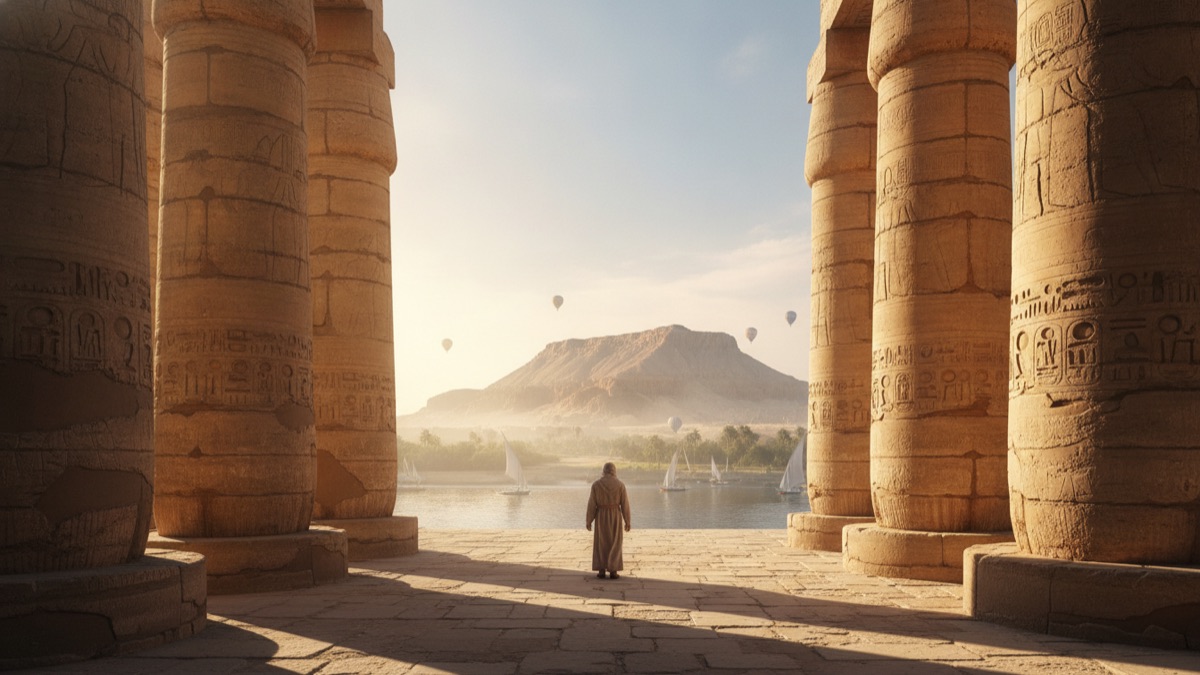
Luxor, built on the site of ancient Thebes, the capital of Egypt during much of the New Kingdom, is often described as the world's largest open-air museum, concentrating an extraordinary density of temples and tombs along both banks of the Nile. Unlike Cairo, Luxor is a compact, manageable city built almost entirely around its monuments, making it comfortable to explore even for visitors with limited time.
The city is conventionally divided by the Nile into the East Bank, associated with the temples of the living, and the West Bank, associated with the tombs and mortuary temples of the dead, a division that reflected the ancient Egyptian association of the sunrise with life and the sunset with the afterlife.
East Bank: Karnak and Luxor Temples
The Karnak Temple Complex is the largest religious building ever constructed, expanded continuously by successive pharaohs over roughly 2,000 years, and its Hypostyle Hall, containing 134 massive columns, remains one of the most awe-inspiring interior spaces in ancient architecture. Luxor Temple, closer to the city center, was historically connected to Karnak by a 2.7-kilometer processional avenue lined with sphinxes, much of which has been excavated and reopened to visitors in recent years.
Both temples are particularly striking in the late afternoon and evening, when they are illuminated and considerably cooler for walking than during the midday heat.
West Bank: Valley of the Kings and Mortuary Temples
The West Bank holds the Valley of the Kings, burial site of New Kingdom pharaohs including Tutankhamun, along with the nearby Valley of the Queens. The Mortuary Temple of Hatshepsut at Deir el-Bahari, built into a dramatic cliff face, is one of ancient Egypt's most distinctive pieces of architecture, designed by the female pharaoh's chief architect Senenmut.
The Colossi of Memnon, two massive seated statues of Amenhotep III visible directly from the road, are a free and easy stop for anyone passing through, while the tombs at Deir el-Medina, the village of the workers who built the royal tombs, offer a rare glimpse into ordinary life rather than royal grandeur.
Hot Air Balloon Rides
A sunrise hot air balloon ride over the West Bank is one of Luxor's signature experiences, offering aerial views over the Valley of the Kings, Hatshepsut's temple, and the surrounding agricultural fields along the Nile. Flights depart very early, typically well before dawn, to take advantage of calm morning winds, and should be booked through an established, licensed operator given the safety considerations inherent to ballooning.
Prices vary by operator and flight duration but are generally moderate relative to other bucket-list travel experiences worldwide; booking a day or two in advance is usually sufficient outside peak holiday periods.
Practical Visiting Tips
Luxor's sites are spread across both riverbanks, so most visitors either hire a driver for the day, join an organized tour, or rent bicycles for shorter West Bank distances. A short public ferry crosses the Nile cheaply between the two banks, while a bridge further south also connects them by road for those with a private vehicle.
Like the rest of Upper Egypt, Luxor experiences extreme summer heat, making a visit between October and April considerably more comfortable, and an early start essential at any time of year given how little shade most outdoor temple sites provide.
Sources
- Egyptian Ministry of Tourism and Antiquities — Official visiting information for Luxor's temples and tombs
- UNESCO World Heritage Centre — Ancient Thebes with its Necropolis World Heritage listing
- Theban Mapping Project — Archaeological documentation of Luxor's West Bank monuments
- Encyclopaedia Britannica — Luxor reference entry
FAQ
How many days do you need in Luxor?
Most visitors spend two to three days in Luxor to comfortably cover both the East Bank temples and the West Bank tombs and mortuary temples, though a single very full day can hit the main highlights if time is limited.
What is the difference between the East Bank and West Bank in Luxor?
The East Bank holds Karnak and Luxor Temples, associated with the living and the rising sun, while the West Bank holds the Valley of the Kings and mortuary temples, associated with the dead and the setting sun, reflecting ancient Egyptian religious symbolism.
Is the hot air balloon ride in Luxor safe?
Hot air ballooning carries inherent risk like any aviation activity, but booking through an established, licensed operator with a strong safety record significantly reduces risk; travelers should verify current operator credentials before booking.
What is the best time of year to visit Luxor?
October through April offers considerably more comfortable temperatures for visiting Luxor's largely shade-free outdoor sites, while summer months bring extreme heat that makes early morning visits essential.
How do you get between Luxor's East Bank and West Bank?
A short, inexpensive public ferry crosses the Nile between the two banks, while a bridge further south connects them by road for visitors with a private vehicle or driver.
About the Author
doyouknow.app Editorial Team — We combine official antiquities guidance with archaeological documentation to keep our Luxor visiting information accurate and genuinely useful for trip planning.
Loved This Article?
Share it on WhatsApp → Share on WhatsApp
Get more guides in your inbox — Subscribe to our newsletter for weekly surprising stories from Egypt, Saudi Arabia, Dubai, and beyond.