Introduction
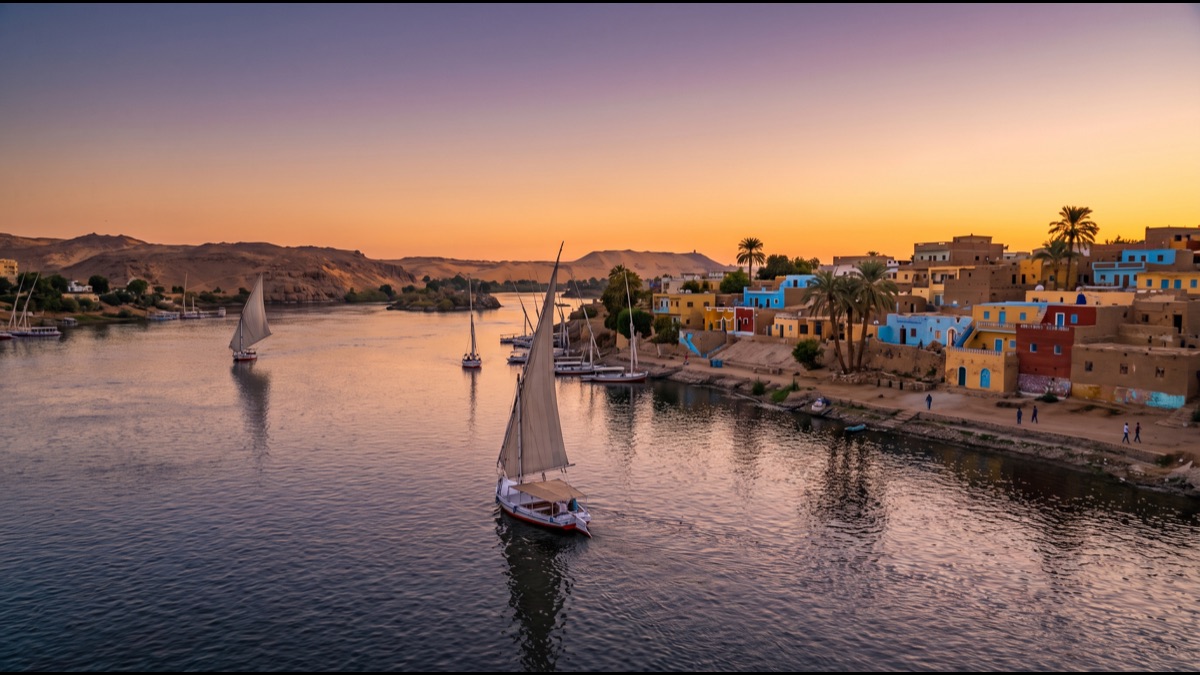
Aswan, Egypt's southernmost major city, sits where the Nile Valley narrows and the desert closes in on both banks, creating a landscape noticeably different from the flat, green expanse further north. It is also the cultural heart of Egypt's Nubian population, whose distinct language, music, and architecture set the city apart from anywhere else in the country.
Historically a frontier and trading post between Egypt and lands further south, Aswan today functions as a relaxed base for exploring the surrounding temples, islands, and Nubian villages, with a noticeably slower pace than Cairo or even Luxor.
The High Dam and Philae Temple
The Aswan High Dam, completed in 1970, transformed Egypt's relationship with the Nile by controlling the annual flood and creating Lake Nasser, one of the largest artificial lakes in the world. While the dam itself is more an engineering landmark than a scenic attraction, it fundamentally reshaped Egyptian agriculture and remains an important stop for understanding modern Egyptian history.
Philae Temple, dedicated to the goddess Isis, was relocated block by block to Agilkia Island in a major UNESCO-led rescue operation during the 1970s after its original site was threatened by rising water from the dam, and today it can only be reached by a short boat ride, adding to its atmospheric appeal.
Abu Simbel Day Trips
The temples of Abu Simbel, built by Ramesses II with four colossal 20-meter statues of the pharaoh at the entrance, are among the most spectacular monuments in Egypt, located roughly three hours south of Aswan near the Sudanese border. Like Philae, these temples were relocated in another major UNESCO rescue operation in the 1960s to save them from Lake Nasser's rising waters.
Most visitors reach Abu Simbel via an organized day trip by road, typically departing very early in the morning, or by a short domestic flight from Aswan; the temples are aligned so that twice a year, in late February and late October, sunlight penetrates the inner sanctuary to illuminate the statues, an event that draws special crowds.
Nubian Villages and Culture
Several Nubian villages around Aswan, particularly on Elephantine Island and along the west bank, welcome visitors into brightly painted homes for tea and, in many cases, informal meals, offering an accessible introduction to a culture distinct from mainstream Egyptian Arab identity. Nubian communities were significantly displaced by the construction of the High Dam, and many villages today are relocated or rebuilt settlements maintaining traditional design and community structure.
The Nubian Museum in Aswan provides useful historical and cultural context for these communities, covering Nubian history from ancient Kush through the modern displacement caused by dam construction.
Felucca Sailing and Practical Tips
A felucca sail, a traditional wooden sailboat, around Aswan's islands at sunset is one of the most relaxed and popular activities in the city, typically arranged informally with boat captains along the Corniche or through a hotel. Multi-day felucca trips downriver toward Luxor are also a popular, slower alternative to a formal Nile cruise ship.
Aswan is Egypt's hottest major city for much of the year, with summer temperatures regularly exceeding 40°C, making a visit between October and April strongly preferable for comfortable outdoor sightseeing.
Aswan's souk, running parallel to the Corniche, is generally more relaxed and less aggressive for shopping than markets in Cairo or Luxor, known particularly for spices, textiles, and Nubian handicrafts. English is spoken at most hotels and tourist-facing businesses, though a few basic Arabic phrases are always appreciated by local vendors and boat captains.
Sources
- Egyptian Ministry of Tourism and Antiquities — Official visiting information for Aswan and Abu Simbel
- UNESCO World Heritage Centre — Nubian Monuments from Abu Simbel to Philae World Heritage listing
- Encyclopaedia Britannica — Aswan reference entry
- EgyptAir — Domestic flight information for Aswan–Abu Simbel routes
FAQ
How far is Abu Simbel from Aswan?
Abu Simbel is roughly three hours south of Aswan by road, near the Sudanese border. Most visitors reach it via an early-morning organized day trip by road or a short domestic flight from Aswan.
Why was Philae Temple moved?
Philae Temple was relocated block by block to Agilkia Island in a major UNESCO-led rescue operation during the 1970s after its original island site was threatened by rising water from the Aswan High Dam.
What is special about Nubian culture in Aswan?
Aswan is the cultural heart of Egypt's Nubian population, whose distinct language, music, and brightly painted architecture differ from mainstream Egyptian Arab culture; several Nubian villages welcome visitors for tea and informal meals.
What is a felucca?
A felucca is a traditional wooden sailboat used on the Nile. Sunset felucca sails around Aswan's islands are one of the city's most popular relaxed activities, typically arranged informally with boat captains along the Corniche.
When is the best time to visit Aswan?
October through April is strongly preferable, since Aswan is one of Egypt's hottest cities, with summer temperatures regularly exceeding 40°C, making outdoor sightseeing considerably less comfortable.
About the Author
doyouknow.app Editorial Team — We rely on UNESCO documentation and official tourism sources to keep our Aswan and Nubian heritage coverage accurate and respectful of the region's living culture.
Loved This Article?
Share it on WhatsApp → Share on WhatsApp
Get more guides in your inbox — Subscribe to our newsletter for weekly surprising stories from Egypt, Saudi Arabia, Dubai, and beyond.