Introduction
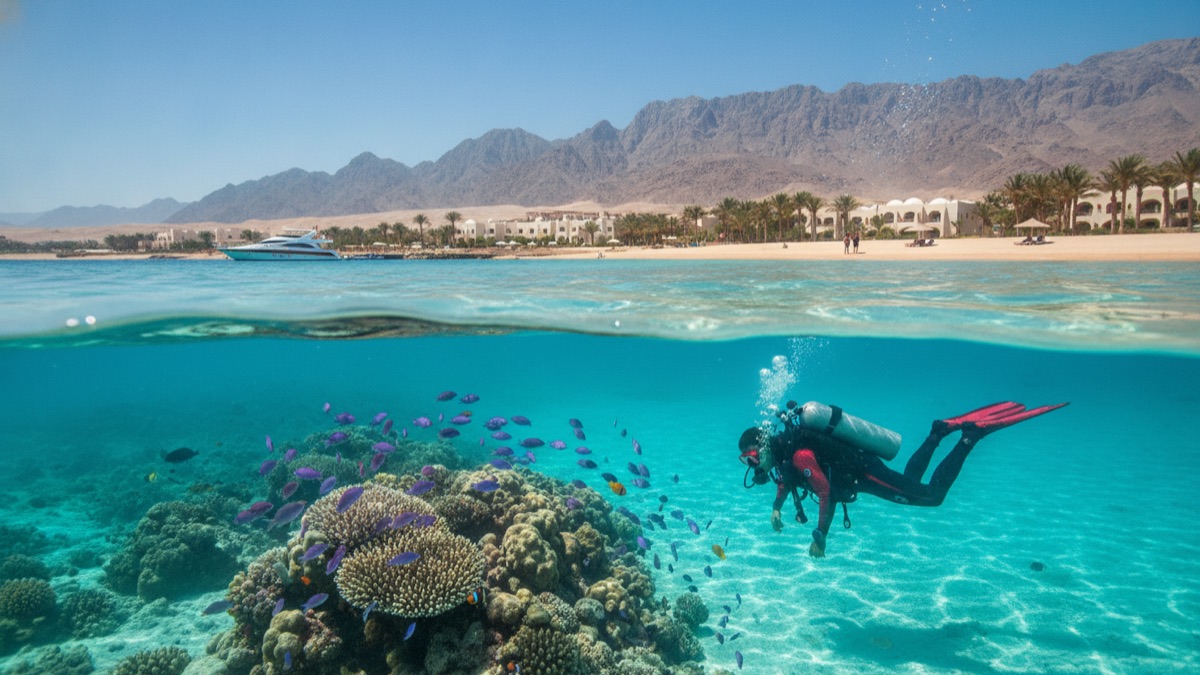
Egypt's Red Sea coast, stretching along the Sinai Peninsula and the country's eastern mainland shore, is one of the world's most consistently reliable diving and beach destinations, drawing millions of visitors annually for its warm water, extensive coral reef systems, and well-developed resort infrastructure. Unlike the Nile Valley's history-focused itineraries, a Red Sea trip is built primarily around water, sun, and marine life.
The coastline is dotted with several distinct resort towns, each with a different character and price point, making the choice of destination as important as the general decision to visit the Red Sea coast at all.
Why Egypt's Red Sea Reefs Are So Rich
The Red Sea's unusually warm, salty, and nutrient-poor water, combined with minimal freshwater river inflow along most of its length, creates conditions that favor exceptionally clear visibility and diverse, resilient coral growth compared to many other tropical reef systems. Scientific research has also identified sections of the northern Red Sea, including areas off Egypt's coast, as unusually resistant to the coral bleaching events that have damaged reefs elsewhere in the world under rising sea temperatures.
This combination of clarity, biodiversity, and relative resilience is a major reason Egypt's Red Sea coast has maintained its reputation among the global diving community for decades.
Choosing a Base: Sharm, Hurghada, El Gouna, or Dahab
Sharm El Sheikh offers the widest range of established resorts, direct international flights, and access to premier dive sites like Ras Mohammed National Park and Tiran Island. Hurghada is generally the most budget-friendly option with a large concentration of all-inclusive resorts, while nearby El Gouna offers a more curated, upscale lagoon-town atmosphere particularly popular with kitesurfers.
Dahab, further north on the Sinai coast, suits travelers who prefer a laid-back, low-rise town over a resort complex, with shore-accessible diving and a strong freediving community. None of these choices are mutually exclusive: many multi-week itineraries combine two towns, particularly Sharm or Dahab with a Sinai desert excursion.
Marine Life and Conservation
Egypt's Red Sea supports an exceptional diversity of marine life, including several hundred species of coral, over a thousand fish species, and regular sightings of dolphins, sea turtles, and reef sharks at established sites, along with occasional whale shark encounters in specific seasons. Several areas, including Ras Mohammed and parts of the Straits of Tiran, hold formal protected status as national parks or marine reserves.
Responsible operators generally follow reef-safe practices, including no-touch policies and mooring buoy use rather than anchoring directly on coral, and choosing operators who visibly follow these standards helps protect the reef systems that make the region worth visiting in the first place.
When to Visit the Red Sea Coast
Water temperatures remain comfortable for diving and swimming year-round across the Red Sea coast, generally ranging from the low 20s°C in winter to the high 20s°C in summer, making it one of the few Egyptian regions genuinely suitable for a trip in any season. For land-based comfort, however, October through April avoids the most extreme desert heat, which can make midday activities outside the water considerably less pleasant during summer months.
Sources
- Egyptian Ministry of Tourism and Antiquities — Official tourism information for the Red Sea coast
- PADI (Professional Association of Diving Instructors) — International diving certification and reef conservation guidance
- Encyclopaedia Britannica — Red Sea reference entry, including marine ecology
- International Union for Conservation of Nature (IUCN) — Research on Red Sea coral resilience and marine conservation
FAQ
Which Red Sea town in Egypt is best for beginners?
Sharm El Sheikh and Hurghada both offer extensive beginner-friendly infrastructure, including shallow reef sites and numerous dive centers with introductory courses, making either a solid choice for first-time divers or snorkelers.
Why is Egypt's Red Sea coral considered unusually resilient?
Scientific research has identified sections of the northern Red Sea, including areas off Egypt's coast, as unusually resistant to the coral bleaching events caused by rising sea temperatures that have damaged reefs elsewhere in the world.
Is Dahab or Sharm El Sheikh better for diving?
Both offer excellent diving, but they suit different preferences: Sharm has more established resort infrastructure and access to boat-based sites like Ras Mohammed, while Dahab offers shore-accessible diving and a stronger freediving culture in a more low-key town setting.
Can you see whale sharks in Egypt's Red Sea?
Yes, though sightings are seasonal and not guaranteed. Whale shark encounters occur at certain times of year at specific sites along the Red Sea coast, and specialized trips are sometimes organized around peak sighting periods.
Is the Red Sea coast a year-round destination?
Yes, largely. Water temperatures remain comfortable for diving and swimming year-round, though October through April offers more comfortable land temperatures for activities outside the water compared to the intense summer heat.
About the Author
doyouknow.app Editorial Team — We combine official tourism sources with international diving and marine conservation research to help travelers choose the right Red Sea base for their trip.
Loved This Article?
Share it on WhatsApp → Share on WhatsApp
Get more guides in your inbox — Subscribe to our newsletter for weekly surprising stories from Egypt, Saudi Arabia, Dubai, and beyond.