Introduction
Egypt has been the commercial and cultural center of the wider Arabic-language music industry for most of the past century, with Cairo functioning as the region's equivalent of a recording and film capital from the mid-20th century onward. Egyptian music draws on classical Arabic maqam (melodic mode) traditions while continuously absorbing new instrumentation and genres, from Western orchestral arrangements in the mid-1900s to electronic production in recent decades.
This combination of deep classical roots and constant reinvention has made Egyptian music influential far beyond the country's own borders, shaping popular music tastes across the Arabic-speaking world for generations.
The Golden Age and Umm Kulthum
Umm Kulthum, active from the 1920s until her death in 1975, remains the single most significant figure in modern Egyptian and broader Arab music history, known for extraordinarily long, emotionally intense performances often exceeding an hour for a single song, built around poetic Arabic lyrics and a powerful, technically masterful voice. Her monthly radio concerts drew such large audiences across the Arab world that daily life in several countries reportedly paused during broadcasts.
This mid-20th century 'golden age' also produced other major figures including composer Mohammed Abdel Wahab and singer Abdel Halim Hafez, whose work, alongside Umm Kulthum's, remains foundational listening in Egyptian and wider Arab musical culture today.
Classical Instruments and the Maqam System
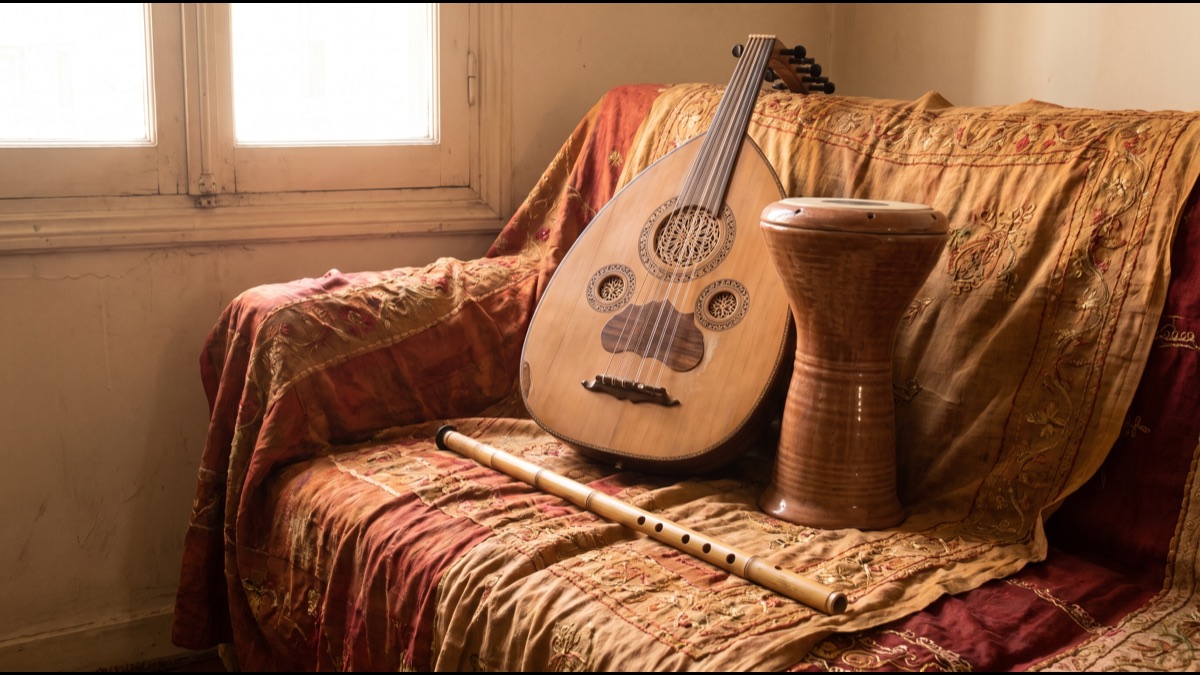
Traditional Egyptian and Arabic music is built around the maqam system, a set of melodic modes distinct from Western major and minor scales, often featuring microtonal intervals not found in Western music theory. Core instruments include the oud (a fretless lute), the qanun (a plucked zither), the nay (an end-blown reed flute), and hand percussion including the tabla (also called darbuka), still central to both classical ensembles and modern popular recordings.
These instruments and modal traditions remain audible even in heavily produced modern Egyptian pop, providing a continuous thread connecting contemporary music back to older classical forms.
Shaabi: The Music of the Streets
Shaabi (meaning 'popular' or 'of the people') emerged from working-class Cairo neighborhoods, characterized by direct, often socially or politically pointed lyrics, energetic rhythms, and a rawer production style than mainstream pop, historically performed at weddings and street celebrations before gaining wider commercial recognition. Artists like Ahmed Adaweya are widely credited with popularizing the genre from the 1970s onward, establishing shaabi as a distinct and commercially significant strand of Egyptian music separate from classical or Western-influenced pop.
Mahraganat: The Modern Street Sound
Mahraganat (meaning 'festivals'), which emerged from Cairo's working-class neighborhoods in the late 2000s and 2010s, blends shaabi's direct lyrical style with electronic production, auto-tuned vocals, and heavy bass, spreading rapidly through informal distribution on mobile phones and social media before achieving mainstream commercial success and international attention. The genre has been controversial within Egypt, periodically facing restrictions from the musicians' syndicate over lyrical content, while simultaneously becoming one of the country's most commercially dominant and internationally recognized contemporary music movements.
Artists associated with mahraganat, including Hassan Shakosh and Omar Kamal, have achieved streaming numbers and regional popularity rivaling more traditionally produced pop music, reflecting the genre's genuine grassroots commercial success.
Sources
- Egyptian Ministry of Tourism and Antiquities — Official cultural information on Egyptian music heritage
- Encyclopaedia Britannica — Umm Kulthum biography and golden age Arab music reference
- Encyclopaedia Britannica — Arabic music reference entry, including the maqam system
- Library of Congress — Ethnomusicology resources on Egyptian and Arab music traditions
FAQ
Who is Umm Kulthum?
Umm Kulthum, active from the 1920s until her death in 1975, is widely regarded as the single most significant figure in modern Egyptian and broader Arab music history, known for emotionally intense, technically masterful performances and enormous popularity across the Arab world.
What is shaabi music?
Shaabi (meaning 'popular') is a genre that emerged from working-class Cairo neighborhoods, characterized by direct lyrics and energetic rhythms, historically performed at weddings and street celebrations, with artists like Ahmed Adaweya credited with popularizing it from the 1970s onward.
What is mahraganat music?
Mahraganat (meaning 'festivals') is a modern genre that emerged from Cairo's working-class neighborhoods in the late 2000s and 2010s, blending shaabi's direct lyrical style with electronic production and auto-tuned vocals, achieving major commercial and regional popularity despite periodic controversy in Egypt.
What is the maqam system?
The maqam system is a set of melodic modes central to traditional Egyptian and Arabic music, distinct from Western major and minor scales and often featuring microtonal intervals not found in Western music theory.
What instruments are used in traditional Egyptian music?
Core traditional instruments include the oud (a fretless lute), the qanun (a plucked zither), the nay (an end-blown reed flute), and hand percussion including the tabla, all of which remain central to both classical ensembles and modern popular recordings.
About the Author
doyouknow.app Editorial Team — We combine musicological reference sources with cultural reporting to trace Egyptian music's evolution from classical golden-age forms to today's street-born genres.
Loved This Article?
Share it on WhatsApp → Share on WhatsApp
Get more guides in your inbox — Subscribe to our newsletter for weekly surprising stories from Egypt, Saudi Arabia, Dubai, and beyond.