Introduction
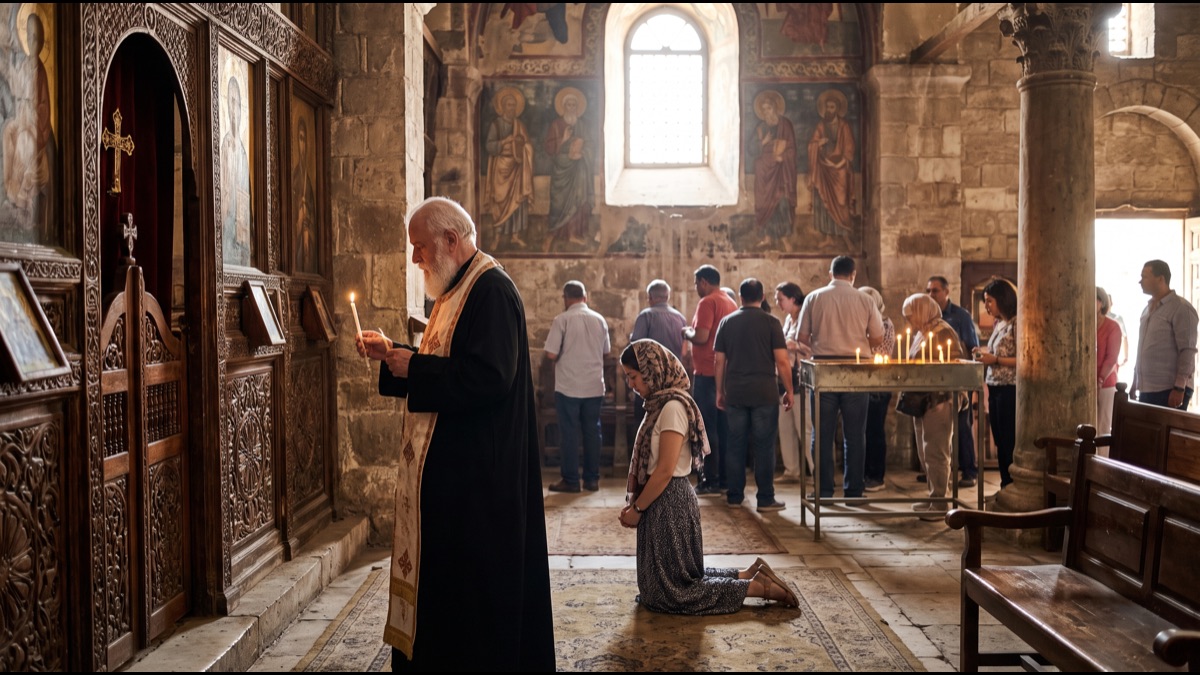
Coptic Christians represent Egypt's largest religious minority and one of the oldest continuous Christian communities in the world, tracing their origins to the arrival of Christianity in Egypt during the 1st century CE, traditionally associated with the evangelist Saint Mark. The word 'Coptic' derives from the Greek term for Egypt itself, and the Coptic Orthodox Church remains a distinct branch of Oriental Orthodox Christianity with its own patriarch, liturgy, and calendar.
Today's Coptic community, concentrated across Egypt but with significant historic and continuing presence in Cairo, Alexandria, and Upper Egypt, maintains living traditions — including a distinct liturgical language descended from ancient Egyptian — that connect directly back to the pharaonic era through an unbroken linguistic thread.
Early Christian History in Egypt
Alexandria became one of early Christianity's most important intellectual centers, home to influential theologians and the Catechetical School of Alexandria, which shaped early Christian doctrine well beyond Egypt's borders. Egypt's desert also gave rise to Christian monasticism itself: Saint Anthony, traditionally considered the founder of organized monastic life, retreated into the Eastern Desert in the 3rd century CE, establishing a practice that would later spread throughout the Christian world.
Following the Council of Chalcedon in 451 CE, a theological dispute over the nature of Christ led the Egyptian church to separate from what became mainstream Byzantine Christianity, forming the distinct Coptic Orthodox tradition that continues today.
Old Cairo's Churches
Old Cairo (Coptic Cairo) concentrates several of Egypt's oldest and most significant churches within a compact historic quarter, including the Hanging Church (El-Muallaqa), built partly over a Roman fortress gate and named for its elevated position, and Saints Sergius and Bacchus Church (Abu Serga), traditionally associated with a site where the Holy Family is believed to have rested during their flight into Egypt.
The neighborhood also contains the Ben Ezra Synagogue, one of Egypt's oldest synagogues, reflecting the area's broader history of religious coexistence across Christian, Jewish, and later Muslim communities within a few compact city blocks.
Desert Monasteries
Several ancient monasteries founded in the early centuries of Christian monasticism remain active today, including the Monastery of Saint Anthony near the Red Sea coast, widely regarded as the oldest continuously inhabited monastery in the world, and the cluster of monasteries in Wadi Natrun in the Western Desert, historically significant both as monastic centers and as sources of natron salt, the same substance used in ancient Egyptian mummification.
These monasteries remain active religious communities rather than museum sites, and visiting requires respecting their function as working places of worship, including modest dress and, at some sites, restrictions on visiting hours or areas open to non-residents.
The Coptic Calendar and Language
The Coptic calendar, still used liturgically by the Coptic Orthodox Church, descends directly from the ancient Egyptian civil calendar, with twelve 30-day months plus a short intercalary period, and its New Year, celebrated in September, traditionally coincided with the start of the Nile flood in antiquity. Coptic liturgical language descends directly from the language of ancient Egypt, written using a modified Greek alphabet with additional characters borrowed from Demotic script, making it the final stage of the ancient Egyptian language's long development.
While Copts today speak Arabic in daily life, the preservation of Coptic in church liturgy represents one of the most direct linguistic threads connecting modern Egypt to the pharaonic past.
Visiting Coptic Heritage Sites
Old Cairo's churches are generally open to respectful visitors during regular hours, though modest dress covering shoulders and knees is expected, and visitors should be mindful during active services. Desert monasteries typically require more advance planning, including confirming current visiting policies directly with the monastery or through a tour operator, since some restrict access during religious fasting periods or require advance permission.
Coptic Christmas, celebrated on January 7 following the Coptic calendar rather than December 25, and Coptic Easter, calculated separately from the Western date, are significant occasions to be aware of when planning travel, both for cultural interest and because some sites may see altered hours or increased local activity.
Sources
- Egyptian Ministry of Tourism and Antiquities — Official visiting information for Coptic heritage sites
- UNESCO World Heritage Centre — Tentative list documentation referencing Coptic and monastic heritage sites
- Encyclopaedia Britannica — Coptic Christianity reference entry
- Coptic Orthodox Church resources — Background on Coptic liturgy, calendar, and community life
FAQ
What does 'Coptic' mean?
The word 'Coptic' derives from the Greek term for Egypt itself. It refers both to Egypt's indigenous Christian community and to the final stage of the ancient Egyptian language, still used liturgically by the Coptic Orthodox Church today.
What is the oldest monastery in the world?
The Monastery of Saint Anthony, near Egypt's Red Sea coast, is widely regarded as the oldest continuously inhabited Christian monastery in the world, founded following Saint Anthony's retreat into the Eastern Desert in the 3rd century CE.
Why is Coptic Christmas celebrated on a different date?
Coptic Christmas is celebrated on January 7 because the Coptic Orthodox Church follows the Coptic calendar rather than the Gregorian calendar used for December 25 in Western Christianity, though both mark the same theological occasion.
What is the Hanging Church?
The Hanging Church (El-Muallaqa) in Old Cairo is one of Egypt's oldest and most significant churches, built partly over a Roman fortress gate and named for its elevated position above street level.
Can non-Christians visit Coptic monasteries in Egypt?
Generally yes, with respectful behavior and modest dress, though desert monasteries typically require confirming current visiting policies in advance, since some restrict access during religious fasting periods or require prior permission.
About the Author
doyouknow.app Editorial Team — We combine church historical records with academic sources on Coptic language and liturgy to present this living heritage accurately and respectfully.
Loved This Article?
Share it on WhatsApp → Share on WhatsApp
Get more guides in your inbox — Subscribe to our newsletter for weekly surprising stories from Egypt, Saudi Arabia, Dubai, and beyond.